A flue gas analyser makes safety decisions — so a reading is only worth anything if the instrument is healthy and in calibration. An analyser that's drifted can pass a dangerous appliance or fail a good one. This guide covers keeping one reliable. It's study material; only a Gas Safe registered engineer may carry out the work.
The sensors age — that's the core issue
Most analysers use electrochemical sensors for CO and O₂. These react chemically with the gas to produce a tiny electrical signal, and that chemistry wears out over time whether or not the instrument is used — typically lasting a few years. As a sensor ages it drifts, so the instrument needs checking against known gas and eventually re-sensoring.
Calibration with certified gas
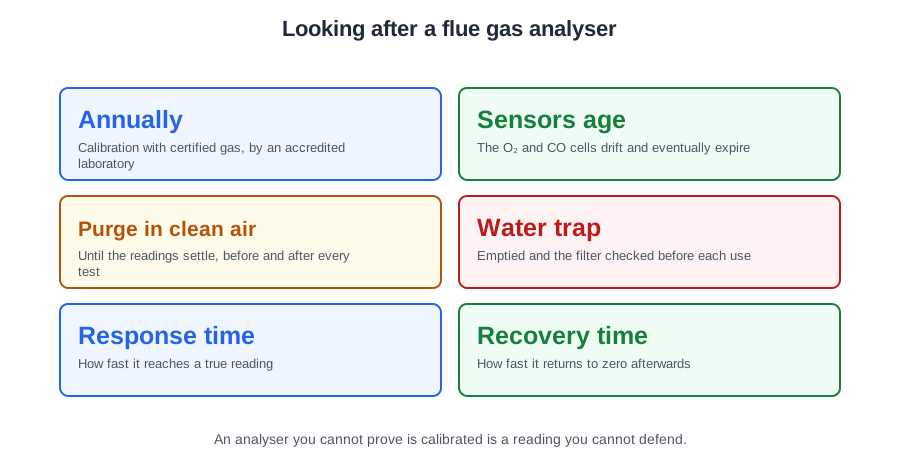
Calibration means comparing the analyser against certified reference gas of a known concentration and correcting any drift. The accepted requirement is calibration at least annually (and per the manufacturer), carried out by an approved facility that issues a calibration certificate. A reading from an out-of-calibration analyser isn't valid — and in an assessment, "is it in calibration?" is a question you should ask before trusting any figure.
Everyday care
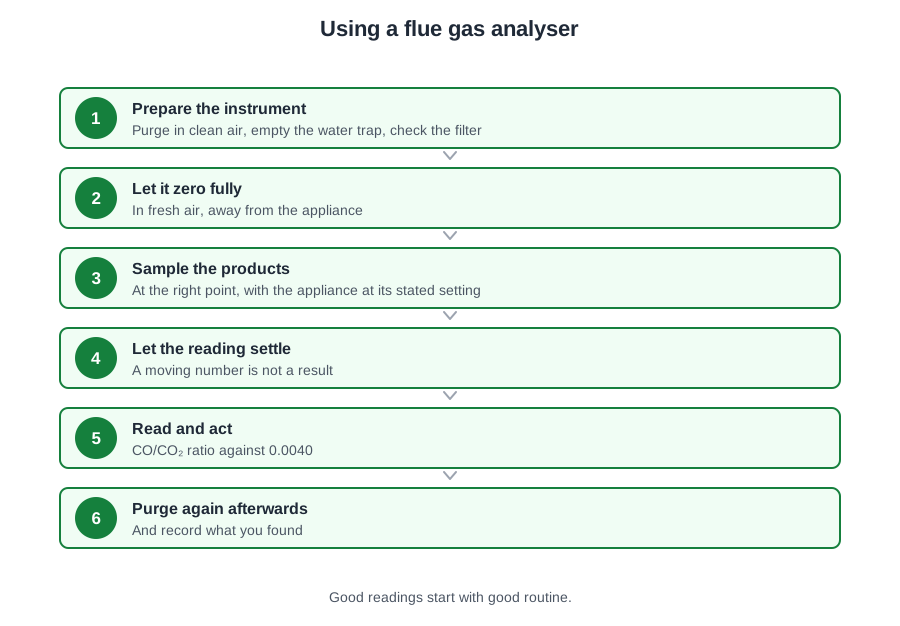
- Fresh-air purge: run the analyser in clean air before switching off so flue gas doesn't sit on the sensors. This protects sensor life.
- Water trap: empty it and check the trap before and after use — liquid reaching the cell damages it.
- Particulate filter: replace the filter when it's dirty; soot restricts the sample and protects the cell only while it's clean.
- Probe and hose: check for blockages, splits or perished seals that would let air dilute the sample.
- Storage and battery: store within the stated conditions and keep the battery charged so the instrument is ready and the sensors aren't stressed.
Response and recovery
Give the analyser time to respond (reach a steady reading in the flue) and to recover (return to zero in fresh air) — rushing either gives a misleading figure. A sensor that's slow to recover may be tired and due for attention.
- Electrochemical sensors age and drift over a few years, used or not.
- Calibrate at least annually against certified gas; keep the certificate.
- A reading from an out-of-calibration analyser is not valid.
- Zeroing ≠ calibration: zero every use, calibrate on schedule.
- Fresh-air purge before switching off to protect the sensors.
- Maintain water trap, filter, probe and hose; check for leaks.
- Allow response and recovery time for honest readings.
10-Question Mock Test
Click an option to see whether you got it right. Explanations appear instantly — no submitting at the end.
Electrochemical cells react with the gas to give a small electrical signal — and that chemistry ages over time.
The chemistry wears out with time whether used or not, which is why periodic calibration is required.
At least annually, using certified reference gas, with a certificate issued.
The analyser is compared against certified gas of a known concentration and corrected.
They're different: zero every use; calibrate on a schedule against certified gas.
If it's out of calibration the readings can't be trusted — check the certificate before relying on figures.
The fresh-air purge clears flue gas from the cells so they aren't left sitting in it.
The filter protects the cell only while clean — replace it when dirty; never run without it.
A leak lets fresh air in, diluting the sample so the readings are wrong — check the probe, hose and seals.
Slow recovery suggests an ageing sensor — give recovery time and have the instrument checked.
An analyser you can trust is a pass you can defend.
PlumbMate drills the CPA1 care-and-calibration detail with quizzes and spaced repetition mapped to the gas ACS tickets.
🔥 Open the gas course →Full ACS revision — CCN1, CPA1, CKR1, HTR1 & CENWAT · £29.99 for 60 days, or every course for a year at £59.99
Prefer to browse first? Back to the Gas Blog →