Before you can commission, fault-find or advise on a boiler, you need a clear picture of what kind of boiler it is — because the type decides how it makes heat and hot water, what controls it needs, and what can go wrong. This guide maps the main domestic types. It's study material; only a Gas Safe registered engineer may carry out the work.
Two ways to classify a boiler
It helps to keep two questions separate:
- How does it serve the home? — combi, system or regular (heat-only). This is about the water side.
- How does it burn and breathe? — condensing or not, room-sealed or open-flued, fan-assisted or natural draught. This is about combustion and flueing.
A modern boiler is usually a "condensing, room-sealed, fan-assisted combi (or system, or regular)" — you're combining answers from both lists.
Combi (combination) boiler
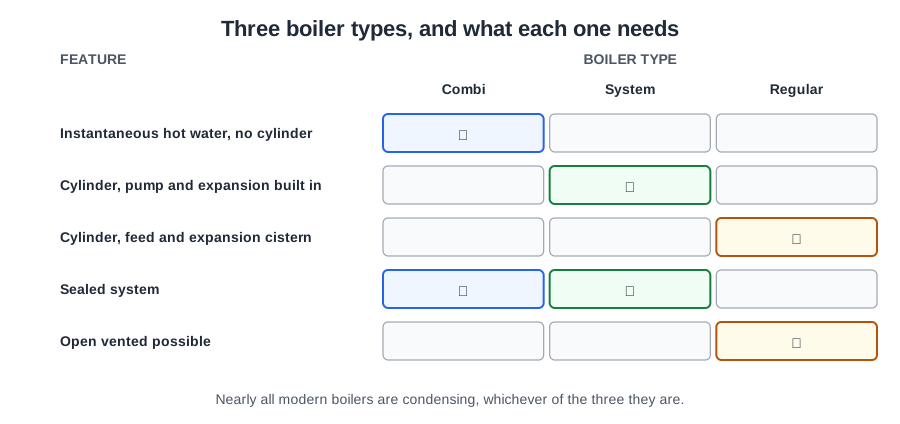
A combi provides central heating and instantaneous hot water from a single unit, with no separate cylinder or cold-water storage. When a hot tap opens, the boiler diverts to heat mains water on demand. Pros: compact, no stored water, mains-pressure hot water. Cons: hot-water flow rate is limited by the boiler's output, so simultaneous demands (two showers) struggle. The most common choice in smaller homes.
System boiler
A system boiler feeds a separate hot-water storage cylinder and the heating circuit, but has the expansion vessel and circulating pump built into the boiler. Fewer external components than a regular boiler, and good for homes needing more stored hot water (more bathrooms). Works well with a pressurised (unvented or sealed) cylinder.
Regular (heat-only) boiler
A regular (also "heat-only" or "conventional") boiler provides heat to a cylinder and radiators but relies on external components — typically a feed-and-expansion cistern and a separate pump, in a traditional open-vented layout. Common in older systems; often retained when replacing like-for-like in a property with a vented cylinder and loft tanks.
Condensing — why nearly all modern boilers are
A condensing boiler has a larger (or secondary) heat exchanger that extracts so much heat that the flue products cool below their dew point (around 55 °C). The water vapour in the products condenses, releasing its latent heat back into the system — which is why condensing boilers are far more efficient (typically 90%+ , ErP A-rated). The by-product is acidic condensate that must be drained (its own guide). Since 2005, condensing boilers have effectively been mandatory for new domestic gas installs.
Room-sealed and fan-assisted
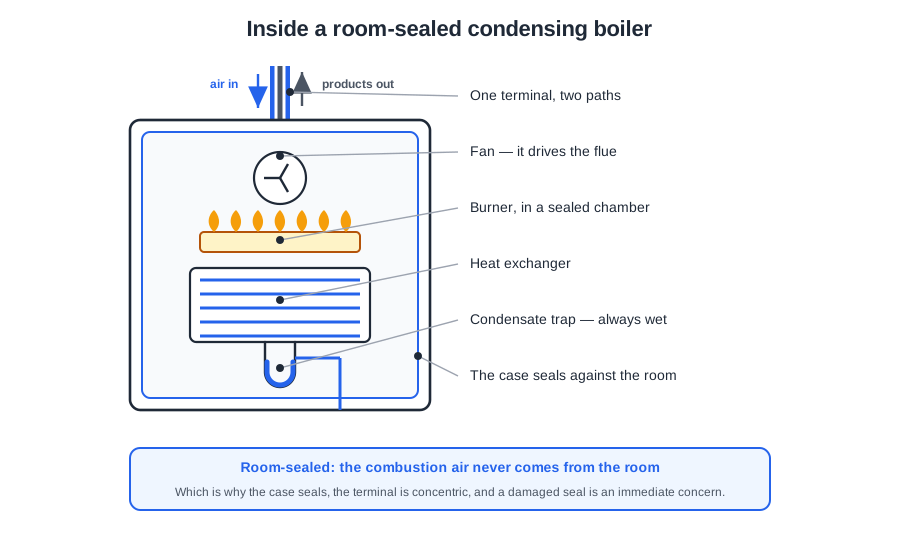
Modern boilers are room-sealed (Type C): they draw combustion air from outside and discharge products outside through a sealed concentric flue, so they need no combustion ventilation in the room and are safer from spillage. Most are also fan-assisted, which allows longer/flexible flue runs and (per the MIs) smaller terminal clearances. Older open-flued boilers still exist and need room ventilation and spillage testing.
Modulation and efficiency
A modern boiler modulates — it varies its output up and down to match demand rather than simply switching full-on/full-off, which improves comfort and efficiency and keeps the boiler condensing for longer. Efficiency is expressed through ErP energy labelling (which replaced the older SEDBUK ratings). In England, Boiler Plus (2018) sets minimum efficiency and controls — e.g. a combi must have time and temperature control plus one efficiency measure.
The CPSU and other variants
You'll also meet the CPSU (combined primary storage unit), which stores a large volume of hot primary water to give a strong, instant hot-water supply. Whatever the variant, the same disciplines apply: commission to the MIs and Benchmark, check gas rate and combustion, and set up the controls for full interlock.
- Water side: combi (instant DHW, no cylinder), system (cylinder; pump + vessel built in), regular (external components, open-vented).
- Combustion side: condensing, room-sealed, fan-assisted on modern boilers.
- Condensing recovers latent heat by cooling products below ~55 °C dew point — 90%+ efficient.
- Room-sealed needs no room combustion ventilation; open-flued does and is spillage-tested.
- Modulation matches output to demand; ErP labels efficiency (replaced SEDBUK).
- Boiler Plus (England, 2018) sets minimum controls/efficiency.
- BS 6798 + MIs govern; commission to Benchmark.
10-Question Mock Test
Click an option to see whether you got it right. Explanations appear instantly — no submitting at the end.
A combi gives heating and instant hot water from one unit, with no storage cylinder.
A system boiler feeds a cylinder but has the pump and expansion vessel built in; a regular boiler uses external components.
A regular boiler relies on external components in a traditional open-vented layout with a feed-and-expansion cistern.
By cooling products below the ~55 °C dew point, the water vapour condenses and its latent heat is recovered.
Products must cool below their dew point (around 55 °C) for the vapour to condense.
Room-sealed appliances take air from and discharge to outside, so they need no room combustion ventilation.
Modulation varies output up and down to match demand, improving comfort and efficiency and keeping the boiler condensing for longer.
ErP energy labelling replaced the older SEDBUK efficiency ratings.
Boiler Plus sets minimum efficiency/controls — a combi needs time and temperature control plus one efficiency measure (e.g. weather/load compensation, FGHR or smart controls). Confirm current requirements.
BS 6798 covers selection, installation and commissioning of gas boilers up to 70 kW net.
Know the type, and the rest of the boiler makes sense.
PlumbMate drills CENWAT — boiler types, controls, condensate, commissioning — with quizzes and spaced repetition mapped to the gas ACS tickets.
🔥 Open the gas course →Full ACS revision — CCN1, CPA1, CKR1, HTR1 & CENWAT · £29.99 for 60 days, or every course for a year at £59.99
Prefer to browse first? Back to the Gas Blog →