The efficiency of a condensing boiler comes at the price of a by-product: condensate, a steady trickle of mildly acidic water that has to be drained away safely. Handled badly, the condensate pipe freezes in winter and shuts the boiler down — one of the most common cold-snap callouts. This guide covers doing it properly. It's study material; only a Gas Safe registered engineer may carry out the work.
Where condensate comes from
When a boiler condenses, the flue products cool below their dew point (around 55 °C) and the water vapour in them turns to liquid, giving up its latent heat. An efficient condensing boiler produces roughly 2 litres of condensate an hour at around 30–40 °C. It's slightly acidic (around pH 3–4) from dissolved combustion gases — which is why the pipework material matters.
Pipe material and size
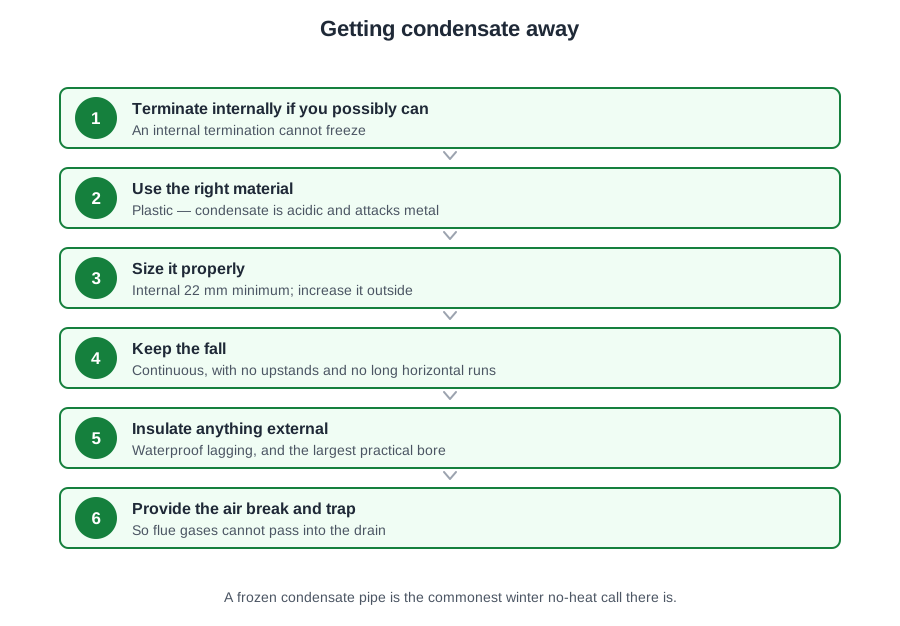
- Material: acid-resistant plastic (e.g. PVC) — never copper or steel, which the acidic condensate would corrode.
- Internal runs: minimum 19 mm internal diameter.
- External runs: upsized to at least 30 mm internal diameter (≈32 mm OD) and insulated with waterproof lagging to resist freezing.
- Fall: run with a continuous downward fall (around 3° / about 45 mm per metre as a guide) so condensate can't pool — no horizontal sags where it could sit and freeze.
Terminate internally if you possibly can
BS 6798 and HHIC are clear: wherever possible, terminate the condensate internally at a gravity foul-water point — an internal soil stack (preferred), or an internal sink/basin/bath/shower waste. An internal termination is far less likely to freeze. Run the pipe internally for as long as possible before any external section, and treat pipe in unheated internal areas (lofts, garages, basements) as if it were external — insulate it.
If it must go outside
Only run externally when there's genuinely no internal option. Then: upsize to ≥30 mm ID, insulate, keep the external run as short as possible (about 3 m maximum) by the most direct, vertical route, cut the end at 45°, and terminate appropriately — into a gully (about 25 mm below the grating but above water level), or a purpose-designed soakaway per BS 6798/MIs.
The air break and the trap
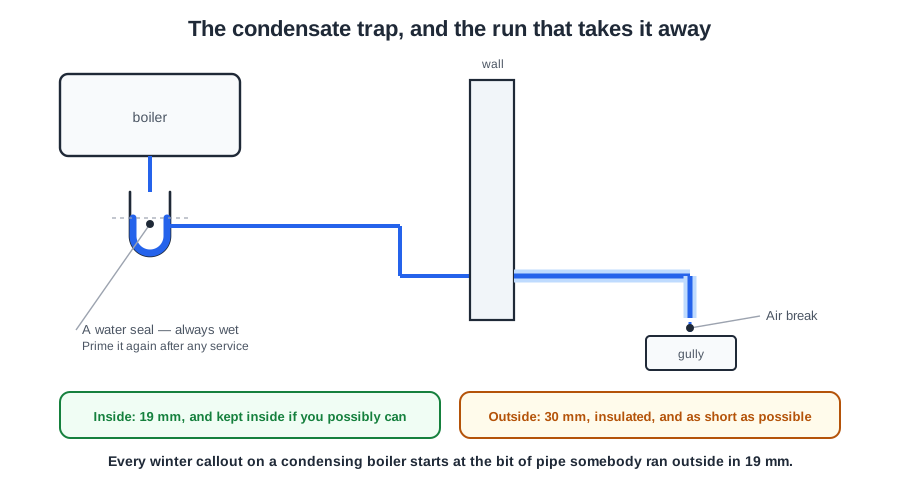
A boiler has a condensate trap (a water seal) to stop flue gases escaping down the drain pipe. Where the condensate joins an external drain or downpipe, an air break is provided to prevent sewage or water backing up into the boiler if the drain freezes, blocks or floods — unless the boiler's built-in trap already has the condensate seal the manufacturer specifies. Always follow the MIs on whether an additional external air break is required and its dimensions.
When gravity won't do it — the pump
Where the discharge point is above the boiler (a basement install, say), gravity drainage isn't possible and a condensate pump lifts the condensate to the drain. It collects condensate and pumps it on automatically; it must be installed and maintained to the maker's instructions.
- Condensate = acidic (≈pH 3–4) water, ~2 L/hour, as products cool below ~55 °C.
- Plastic pipe only (PVC) — never copper or steel.
- Internal ≥19 mm ID; external ≥30 mm ID (~32 mm OD), insulated.
- Terminate internally wherever possible (soil stack preferred); unheated internal pipe = treat as external.
- External: short (~3 m max), direct, sloped (~3°), 45° cut, into gully/soakaway.
- Air break prevents back-flow (unless the trap has the specified seal); boiler has a condensate trap.
- Condensate pump where gravity isn't possible; record on Benchmark; MIs take precedence.
10-Question Mock Test
Click an option to see whether you got it right. Explanations appear instantly — no submitting at the end.
It's mildly acidic (around pH 3–4) from dissolved combustion gases — which is why plastic pipe is used.
Plastic only — copper and steel would corrode in the acidic condensate.
Internal runs are a minimum of 19 mm internal diameter.
External runs are upsized to at least 30 mm internal diameter (~32 mm OD) and insulated to resist freezing.
Terminate internally wherever possible (soil stack preferred) — it's far less likely to freeze.
Pipe in unheated internal areas is treated as external and insulated, because it can still freeze.
Keep it short (~3 m max), direct and vertical, sloping down with no sags, and cut the end at 45°.
The air break stops back-flow into the boiler — unless the boiler trap already has the specified condensate seal.
A pump is used when gravity drainage isn't possible — e.g. the drain is above the boiler in a basement.
Undersized, uninsulated or over-long external pipe freezes — the fix is to terminate internally, upsize and insulate.
Internal, upsized, insulated. The three words that stop winter callouts.
PlumbMate drills the CENWAT detail — condensate, controls, commissioning — with quizzes and spaced repetition mapped to the gas ACS tickets.
🔥 Open the gas course →Full ACS revision — CCN1, CPA1, CKR1, HTR1 & CENWAT · £29.99 for 60 days, or every course for a year at £59.99
Prefer to browse first? Back to the Gas Blog →