A hob produces real heat and an open flame, and the things around a cooker — wall units, shelves, a cooker hood, curtains — are often combustible. Clearances exist so that heat and flame can't set fire to nearby materials or damage them over time. This guide explains the principles and where the numbers come from. It's study material; only a Gas Safe registered engineer may carry out the work.
Clearance above the hotplate
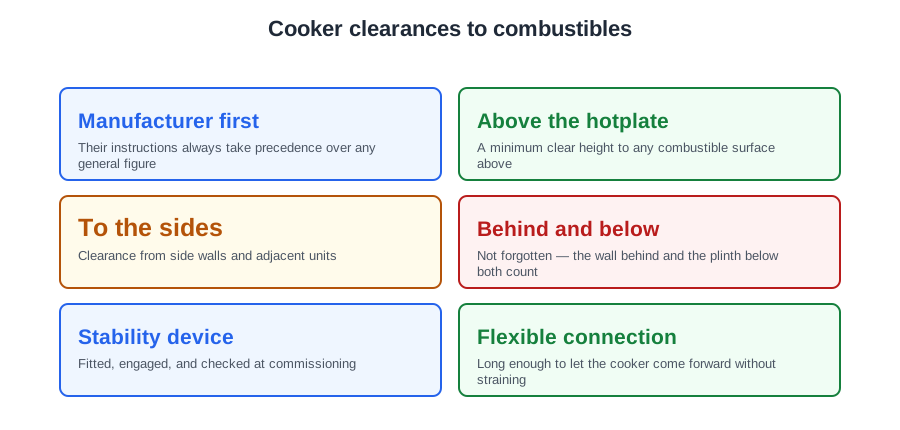
The biggest concern is what sits above the hob. There must be adequate vertical space to any overhead surface, and particular care where that surface is combustible (a wooden wall unit) or is a cooker hood. Cooker hoods state a minimum mounting height above a gas hob — commonly around 650 mm or more — and that figure comes from the hood manufacturer. A combustible surface directly above may need a greater clearance or protection, per the cooker's instructions.
Clearance to the sides
Side clearances matter too: a tall combustible panel, a fridge or a curtain hard against the edge of a hotplate can be scorched by a side burner. The instructions give minimum side distances to combustible surfaces; where they can't be met, a non-combustible spacer or shield may be required.
Behind and below
Consider the wall behind (especially if it's a combustible finish), and what's below an eye-level grill or oven. The aim throughout is that no combustible material sits within the heat-affected zone the manufacturer defines.
How it ties together at commissioning
When you commission a cooker you check the clearances above and beside the hotplate against the instructions, confirm any cooker hood is mounted at the right height, and make sure no combustible material encroaches. It sits alongside the other CKR1 checks — stability, FSDs, ventilation, gas rate and combustion — as part of leaving a safe installation.
- Why: hob heat and flame can ignite or damage nearby combustibles.
- Figures: from BS 6172 and the cooker (and hood) manufacturer's instructions — verify per model.
- Above: adequate vertical space; cooker hoods often need ≈650 mm+ over a gas hob.
- Combustible overhead may need greater clearance or protection.
- Sides: keep combustible panels, fridges and curtains clear; shield if needed.
- Behind/below: mind combustible wall finishes and what's under a grill/oven.
- Advise the customer to keep tea towels, curtains and packaging away from burners.
10-Question Mock Test
Click an option to see whether you got it right. Explanations appear instantly — no submitting at the end.
Clearances keep combustible materials out of the heat-affected zone, preventing fire and damage.
BS 6172 and the MIs, which take precedence and vary by model.
Overhead surfaces take the rising heat, so vertical clearance above the hob is the key concern.
Around 650 mm or more over a gas hob is typical — always confirm against the hood manufacturer's figure.
Combustible overhead surfaces need the greater clearance or protection the manufacturer specifies.
Side burners can scorch adjacent combustibles; meet the side clearance or fit a non-combustible shield.
Check the wall behind (if combustible) and below an eye-level grill/oven too.
Tea towels, curtains and packaging near burners are a frequent cause of kitchen fires — advise keeping them clear.
Figures vary by model — always confirm against the cooker's (and hood's) instructions.
Clearances are one of the CKR1 commissioning checks alongside stability, FSDs, ventilation, gas rate and combustion.
Clearances are a manufacturer's-instructions habit. Build it.
PlumbMate drills the CKR1 detail with quizzes and spaced repetition mapped to the gas ACS tickets.
🔥 Open the gas course →Full ACS revision — CCN1, CPA1, CKR1, HTR1 & CENWAT · £29.99 for 60 days, or every course for a year at £59.99
Prefer to browse first? Back to the Gas Blog →