CKR1 covers domestic gas cookers — freestanding, slide-in and built-in hobs and ovens. A cooker is usually a flueless (Type A) appliance: its products go into the room, so siting, ventilation and stability all matter. This guide maps the topic and links to a full guide on each part. You need CCN1 as well as CKR1 to work on cookers, and only a Gas Safe registered engineer may do so.
Siting and connection
A cooker must be sited away from anything that could catch fire and where it can be used safely. A freestanding cooker is usually connected with a flexible hose (BS EN 14800) to a self-sealing bayonet connector — push-and-twist, sealing automatically when the cooker is pulled out. The hose must not pass through walls or be kinked, and the cooker still needs a tightness-tested supply.
Stability — the anti-tip device
A freestanding cooker can tip if someone leans or sits on an open oven door, so it must be secured with a stability device — a chain or bracket. It's a required safety item, checked at commissioning. Read the full guide to cooker stability & anti-tip devices →
Flame supervision
A flame supervision device (FSD) shuts the gas off if a burner flame goes out — protecting against a hob being left on unlit or a flame being blown out. Modern hobs, grills and ovens have them; you test they operate correctly. Read the full guide to flame supervision devices →
Ventilation by room volume
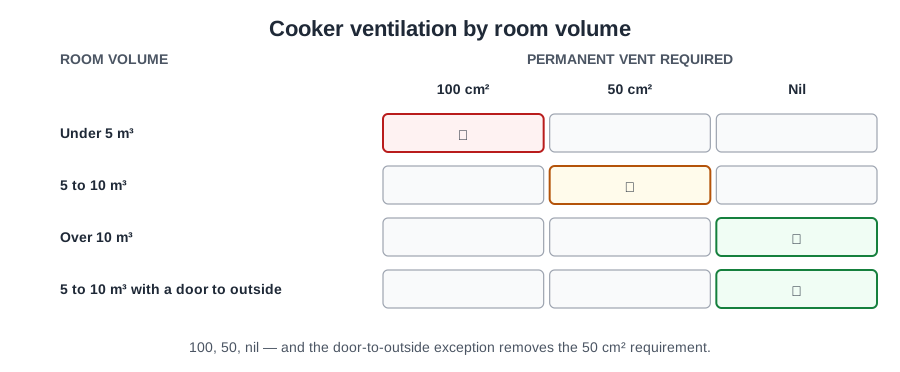
Because a cooker is flueless, the room must be big enough and have an air supply. The rules step with room volume — a very small room needs purpose-provided ventilation, a larger one may need only an openable window. Read the full guide to cooker ventilation by room volume →
Clearances to combustibles
There must be safe space above and beside the hotplate, and care taken with nearby combustible surfaces and overhead cupboards or canopies. The figures come from BS 6172 and the manufacturer's instructions. Read the full guide to clearances to combustible surfaces →
Commissioning checks
Bringing a cooker into use pulls the topics together: tightness test the supply, check the gas rate and burner pressure, confirm each FSD operates, verify the stability device, check ventilation and clearances, and check combustion (a clean blue hob flame; yellow tipping warns of a problem). Hand over the instructions to the customer.
- Standard: BS 6172 (ventilation via BS 5440-2); MIs take precedence.
- Cooker = flueless (Type A): products enter the room.
- Connection: BS EN 14800 hose to a self-sealing bayonet; no passing through walls.
- Stability device (chain/bracket) is required and checked on commissioning.
- FSD shuts off gas on flame loss — test it operates.
- Ventilation steps with room volume; small rooms need a permanent vent.
- Clearances per BS 6172/MIs; check combustion (blue flame, no yellow tipping).
10-Question Mock Test
A sweep across CKR1. Click an option to see whether you got it right — explanations appear instantly.
BS 6172 covers installation, servicing and maintenance of domestic gas cooking appliances.
A cooker discharges products into the room — it's flueless (Type A), which is why ventilation matters.
A self-sealing bayonet seals automatically when the cooker is unplugged. The hose must lock fully home.
A chain or bracket stops the cooker tipping forward — a required safety item checked at commissioning.
An FSD holds the gas valve open only while it senses a flame, shutting off the gas on flame loss.
Because it's flueless, the rules step with room volume; smaller rooms need purpose-provided ventilation.
The flexible hose must be visible and accessible — not routed through walls, concealed or kinked.
Clearances to combustibles come from BS 6172 and the MIs, which take precedence.
A hob should burn crisp and blue; yellow tipping warns of incomplete combustion (unlike DFE/ILFE fires, designed to burn yellow).
Commissioning ties the checks together: supply test, gas rate, FSDs, stability, ventilation, clearances and combustion, then customer handover.
Cookers look simple — the detail is where marks are won.
PlumbMate drills CKR1 — stability, FSDs, ventilation by room volume, clearances — with quizzes and spaced repetition mapped to the gas ACS tickets.
🔥 Open the gas course →Full ACS revision — CCN1, CPA1, CKR1, HTR1 & CENWAT · £29.99 for 60 days, or every course for a year at £59.99
Prefer to browse first? Back to the Gas Blog →