It sounds mundane next to gases and flues, but cooker stability is a genuine safety item — and a near-certain assessment question. A freestanding cooker that can tip forward risks scalding from spilled pans and can strain or pull off its gas connection. This guide explains the requirement and the check. It's study material; only a Gas Safe registered engineer may install or commission a cooker.
Why a cooker can tip
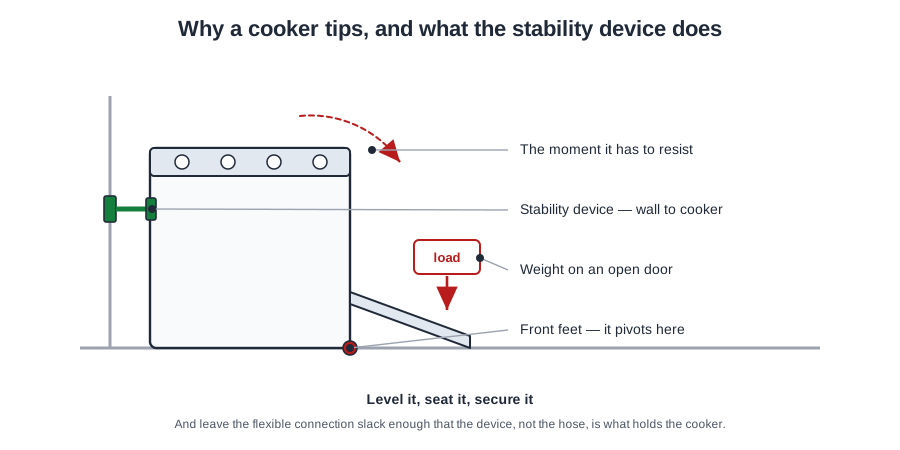
A freestanding cooker is tall, fairly light and top-heavy when the oven is empty. Put downward force on an open oven door — a child sitting or standing on it, someone leaning to lift a heavy roasting tin — and the centre of gravity moves forward of the front feet. Without something holding it back, the cooker tips. Hot pans and their contents come with it.
The stability device
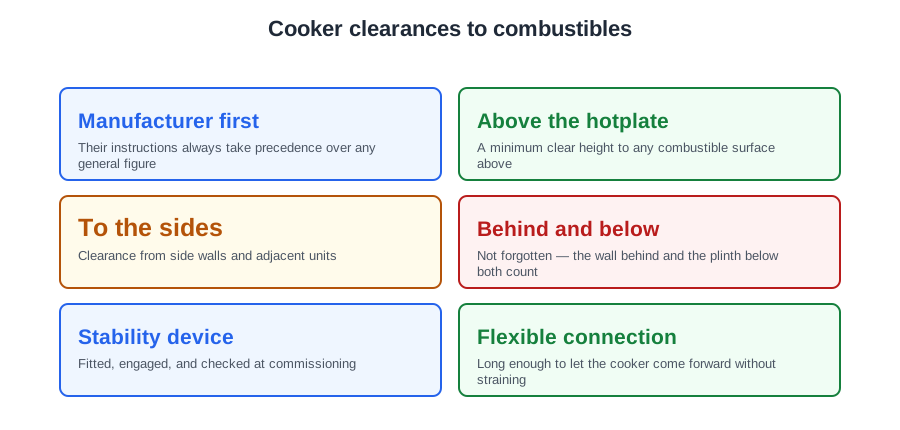
To prevent this, a freestanding cooker must be fitted with a stability device — typically a chain or bracket anchored to the wall (or floor) and connected to the cooker at the point the manufacturer specifies. It restrains the cooker so that, even with weight on the oven door, it can't tip forward. The device is supplied or specified by the manufacturer; you fit it to their instructions.
Levelling and seating
Before the stability device matters, the cooker should sit level and stable on its adjustable feet, not rocking on an uneven floor. A cooker that rocks is both a hazard and a sign it isn't seated properly. Levelling also helps the oven cook evenly and the hotplate sit true.
The flexible connection works with it
Stability and the gas connection go together. A freestanding cooker is usually fed by a flexible hose on a self-sealing bayonet, positioned so the cooker can be pulled out for cleaning without straining the hose. The stability chain is set so it allows that limited movement but still prevents a tip. The hose must not be taut, kinked or routed through a wall.
The commissioning check
At commissioning you confirm the cooker is level, the stability device is fitted to the manufacturer's instructions and actually restrains the appliance, and the flexible connection is sound and correctly orientated. You then demonstrate it to the customer so they understand not to remove the chain. Record the check with the rest of the commissioning.
- Why: a freestanding cooker can tip forward when weight is applied to an open oven door.
- Requirement: a stability device (chain or bracket) per the manufacturer's instructions.
- Not optional: a missing device is a safety defect handled under the GIUSP.
- Level first: the cooker must sit level and stable on its feet, not rocking.
- Connection: flexible hose on a bayonet, not taut or kinked; chain allows limited pull-out.
- Commission: confirm level, device fitted and effective, connection sound; show the customer.
- BS 6172 and the MIs govern; record the check.
10-Question Mock Test
Click an option to see whether you got it right. Explanations appear instantly — no submitting at the end.
Downward force on an open oven door moves the centre of gravity forward, and the cooker can tip with hot pans on it.
It's a chain or bracket fixed to the structure and connected to the cooker per the manufacturer's instructions.
Freestanding cookers, which can tip, must have the stability device fitted.
A missing required stability device is a recognised defect, dealt with under the GIUSP.
BS 6172, alongside the manufacturer's instructions which take precedence.
Level it on its feet so it's stable — a rocking cooker is a hazard and a sign it isn't seated.
It permits the limited movement needed to clean behind the cooker while still preventing it tipping.
The hose must be slack enough, not kinked, and never run through a wall — it should remain visible and accessible.
You confirm it's level, the device is fitted to the MIs and effective, and the connection is sound.
So the customer knows to reconnect/keep the chain if they pull the cooker out to clean.
The small checks win marks. Don't lose easy ones.
PlumbMate drills the CKR1 detail — stability, FSDs, ventilation, clearances — with quizzes and spaced repetition mapped to the gas ACS tickets.
🔥 Open the gas course →Full ACS revision — CCN1, CPA1, CKR1, HTR1 & CENWAT · £29.99 for 60 days, or every course for a year at £59.99
Prefer to browse first? Back to the Gas Blog →