A flame supervision device (FSD) — also called a flame failure device — answers one question continuously: "is there still a flame?" If the answer becomes no, it shuts the gas off. On a cooker, that stops raw gas pouring into the kitchen if a hob burner is blown out or boils over, or a pilot fails. This guide explains how it works and how it's tested. It's study material; only a Gas Safe registered engineer may carry out the work.
The job it does
Without supervision, an unlit burner with the gas tap open simply leaks gas. An FSD only holds the gas valve open while it can sense a flame; lose the flame and the valve closes, cutting the supply to that burner. It's a safety interlock between "flame present" and "gas allowed."
Type 1: the thermocouple (thermoelectric)
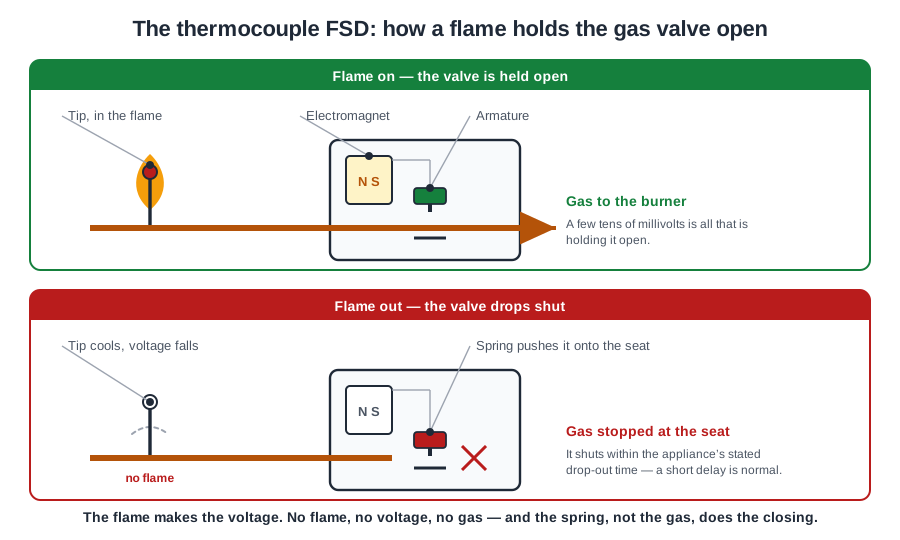
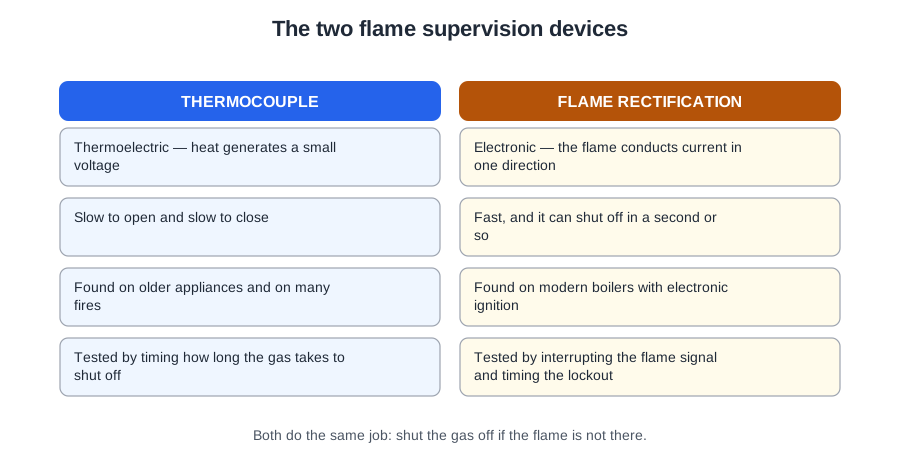
The most common type on cookers uses a thermocouple. The flame heats the tip of the thermocouple, which generates a small voltage (a few tens of millivolts). That tiny voltage energises an electromagnet holding the gas valve open. While the flame heats it, the valve stays open; when the flame goes out, the thermocouple cools, the voltage falls away, the magnet releases and the valve drops out, shutting off the gas.
Type 2: flame rectification
Electronic appliances often use flame rectification. A flame conducts electricity and acts as a one-way valve (a rectifier) for a small current passed through it via a probe. The control electronics detect that rectified current; if the flame goes out, the current stops and the gas valve is closed. It responds faster than a thermocouple.
Where FSDs are fitted
Modern cookers have flame supervision on the hob burners, the grill and the oven. Older appliances may have it only on the oven, or not at all — which is one of the things you assess. The manufacturer's instructions confirm what's fitted and the expected behaviour.
Testing an FSD
The principle of the test is simple: light the burner, let the FSD heat up and establish, then extinguish the flame (without turning the control off) and confirm the gas shuts off — you should hear/see the supply cut and stop smelling gas — within the manufacturer's stated time. If a burner keeps passing gas after the flame is out, the FSD has failed and the appliance must not be left in that state. Always follow the manufacturer's test method and timing.
- Purpose: shut off the gas to a burner when its flame goes out.
- Thermocouple type: flame heats it → millivolts → electromagnet holds the valve open; cools → drops out.
- Built-in delay: short heat-up/cool-down, so cut-off isn't instant (normal).
- Flame rectification: electronic, uses the flame's one-way current; faster response.
- Fitted on hob, grill and oven on modern cookers; older ones vary.
- Test: light, establish, extinguish the flame, confirm gas shuts off within the MI time.
- Failed FSD = unburnt gas escaping = unsafe situation under the GIUSP.
10-Question Mock Test
Click an option to see whether you got it right. Explanations appear instantly — no submitting at the end.
It holds the gas valve open only while a flame is present, cutting the gas if the flame fails.
Raw gas escapes — exactly the hazard the FSD exists to prevent.
The heated thermocouple produces a few millivolts that energise an electromagnet holding the valve open.
As it cools the voltage drops, the magnet releases and the valve drops out, shutting the gas off.
There's a normal heat-up/cool-down delay; cut-off happens within the manufacturer's stated time.
A flame conducts and rectifies a small current; the electronics sense it and keep the valve open while it flows.
The electronic current-based method reacts faster than a thermocouple's heat/cool cycle.
Modern cookers supervise hob, grill and oven; older appliances vary, which you assess.
Put the flame out with the control still open and confirm the gas cuts off within the manufacturer's time.
Gas continuing after flame loss means the FSD has failed — unburnt gas escaping, handled under the GIUSP.
Thermocouple or rectification — know how it fails, and how to prove it works.
PlumbMate drills the CKR1 safety devices with quizzes and spaced repetition mapped to the gas ACS tickets.
🔥 Open the gas course →Full ACS revision — CCN1, CPA1, CKR1, HTR1 & CENWAT · £29.99 for 60 days, or every course for a year at £59.99
Prefer to browse first? Back to the Gas Blog →