A flue's job is simple to state and critical to get right: carry the products of combustion safely to outside air, so they never spill back into the room. When a flue fails, the danger is carbon monoxide — which is why flue inspection and testing sit at the heart of CCN1. This guide explains the types, where terminals can go, and the two tests you must know. It's revision material; only a Gas Safe registered engineer may work on a flued appliance.
The three appliance/flue types
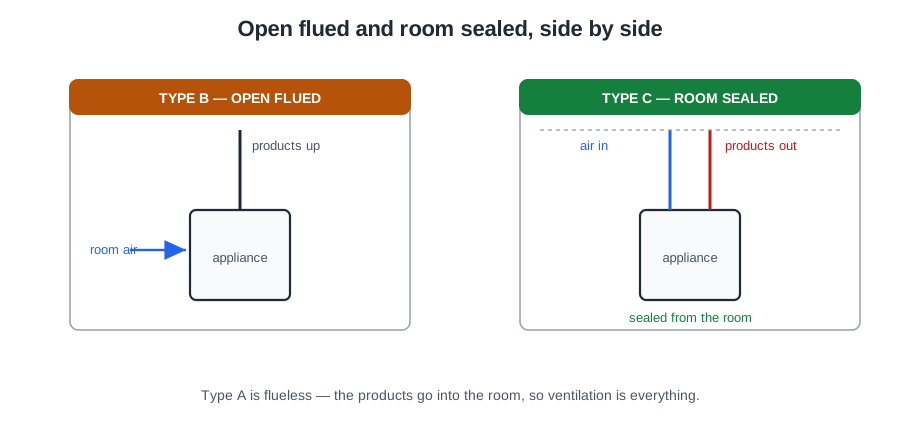
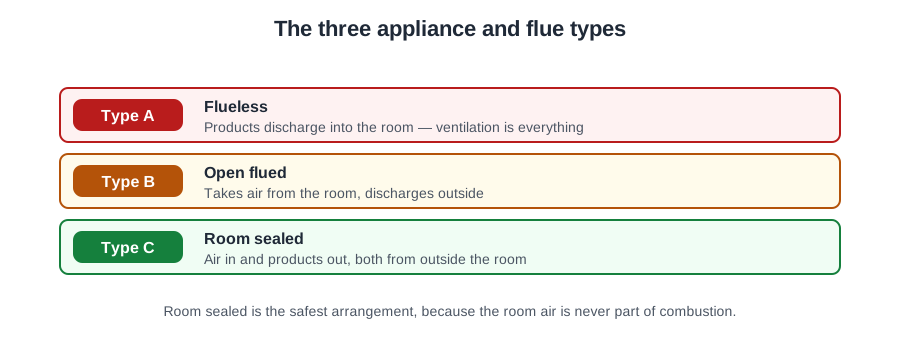
- Open-flued (Type B) — takes combustion air from the room and discharges up a flue. It needs room ventilation and a spillage test. The flue has a draught diverter that breaks downdraught; below it is the primary flue, above it the secondary flue.
- Room-sealed (Type C) — air in and products out through a sealed circuit to one terminal. A balanced flue has its inlet and outlet in the same pressure zone, so wind affects both equally. A fan-assisted version uses a fan, allowing longer runs and (per the MIs) smaller terminal clearances.
- Flueless (Type A) — no flue at all; products go into the room (e.g. a cooker), so it relies on room-volume ventilation.
Where a terminal can go
A flue terminal must discharge where the products disperse safely and can't be drawn back into the building. BS 5440-1 sets minimum clearances from windows, doors, air vents, corners, eaves and the ground. Common figures to know (always verify against the current table and the MIs) include keeping a terminal at least around 300 mm from an openable window, door or air vent, and clear of internal/external corners. Any terminal within reach or below about 2 m from the ground should have a terminal guard to protect it and people from the hot surface.
Inspecting the flue
Before any test, look at the whole system: the right materials and size, sound joints, correct support, a liner where a masonry chimney needs one, a debris/catchment space where required, and no signs of staining, corrosion or blockage. A loose or disconnected connection on a shared/communal flue is Immediately Dangerous.
The flue flow test
The flue flow test proves the empty flue draws and is clear along its length, before you rely on the appliance. With the appliance off (or before it's connected), you introduce smoke (a smoke pellet) at the appliance position and watch that it's drawn up and discharges cleanly at the terminal, with none escaping back into the room. If it doesn't clear, the flue is blocked or not drawing and must be put right before going further.
The spillage test
The spillage test proves that, with the appliance actually running, the products go up the flue and don't spill into the room. The method in BS 5440-1:
- Run the appliance until it's up to temperature (about 5 minutes).
- Hold a smoke match at the edge of the draught diverter (or appliance spillage point) and watch that the smoke is drawn in, not pushed out.
- Repeat with any extract fans and the worst-case room conditions running (windows/doors shut, extractor on) — these can pull the flue into reverse.
- If spillage is detected, run on for a further 10 minutes and recheck; if it still spills, switch off, classify the fault and don't leave the appliance in use.
Appliances in sleeping accommodation
An appliance with a rated input above 12.7 kW net (14 kW gross) installed in a bedroom or bed-sitting room must be room-sealed. Below that, a non-room-sealed appliance in sleeping accommodation must have an atmosphere-sensing device (ASD) that shuts it down before products build up. This is a favourite assessment point.
- Types: open-flued (Type B), room-sealed (Type C), flueless (Type A).
- Balanced flue: inlet and outlet in the same pressure zone; fanned flues allow longer runs.
- Draught diverter separates primary (below) and secondary (above) flue.
- Terminal: ~300 mm from openable windows/doors/vents; guard if below ~2 m — verify against BS 5440-1.
- Flue flow test: empty flue draws and is clear (smoke pellet).
- Spillage test: appliance running, smoke match at the draught diverter, repeated with extract fans on; recheck after 10 min.
- Sleeping accommodation: >12.7 kW net must be room-sealed; smaller non-room-sealed needs an ASD.
10-Question Mock Test
Click an option to see whether you got it right. Explanations appear instantly — no submitting at the end.
Products spilling back into the room can contain CO — the reason flue testing is safety-critical.
Type C is sealed from the room — air in and products out through the same terminal circuit, so no room spillage test is needed.
The draught diverter breaks downdraught and sits between the primary flue (appliance side) and secondary flue (to terminal).
A guard protects a low or exposed terminal and stops people touching the hot surface.
A smoke pellet shows the unobstructed flue draws and discharges at the terminal, before relying on the appliance.
You watch the draught diverter: the smoke should be drawn in, not pushed back into the room.
An extractor can overcome the flue's natural draught and cause spillage, so you test the realistic worst case.
Continued spillage is an unsafe situation. Turn off, don't leave it in use, and act under the GIUSP.
Above 12.7 kW net (14 kW gross) in sleeping accommodation, the appliance must be room-sealed. Smaller non-room-sealed appliances need an ASD.
Products could enter other dwellings — a loose or uncapped communal flue connection is Immediately Dangerous.
Flow test, spillage test, terminal clearances — get them automatic.
PlumbMate drills the flue details examiners love, with quizzes, flashcards and spaced repetition mapped to the gas ACS tickets.
🔥 Open the gas course →Full ACS revision — CCN1, CPA1, CKR1, HTR1 & CENWAT · £29.99 for 60 days, or every course for a year at £59.99
Prefer to browse first? Back to the Gas Blog →