A flueless heater has no flue — it burns gas and releases the products straight into the room. That sounds alarming, and it's only acceptable because of two things working together: strict ventilation and an oxygen-depletion system that shuts the heater off before the air becomes dangerous. This guide explains how flueless heaters stay safe. It's study material; only a Gas Safe registered engineer may carry out the work.
The problem with no flue
As a flueless heater runs, it consumes oxygen and adds products of combustion to the room — the air gradually vitiates (becomes oxygen-depleted). As oxygen falls, combustion would start to go incomplete and produce carbon monoxide. The safety system has to act before that point.
The oxygen-depletion system (ODS)
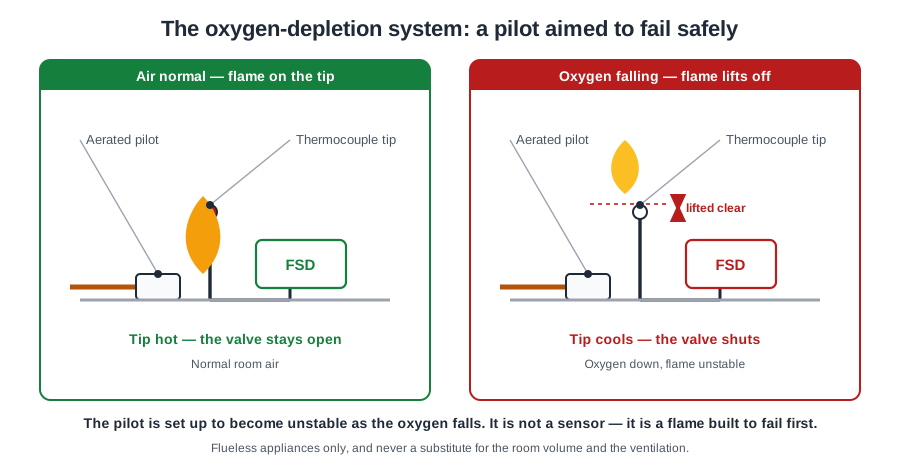
Every flueless heater is fitted with an oxygen-depletion system (ODS) — also called an atmosphere-sensing device (ASD). It's a specially designed pilot: as room oxygen falls, the pilot flame lifts away from a thermocouple, the thermocouple cools, and the gas valve shuts the heater down — before the atmosphere becomes dangerous and before CO is produced. It's the flueless heater's primary safeguard, and it must never be defeated or bypassed.
Ventilation and room volume
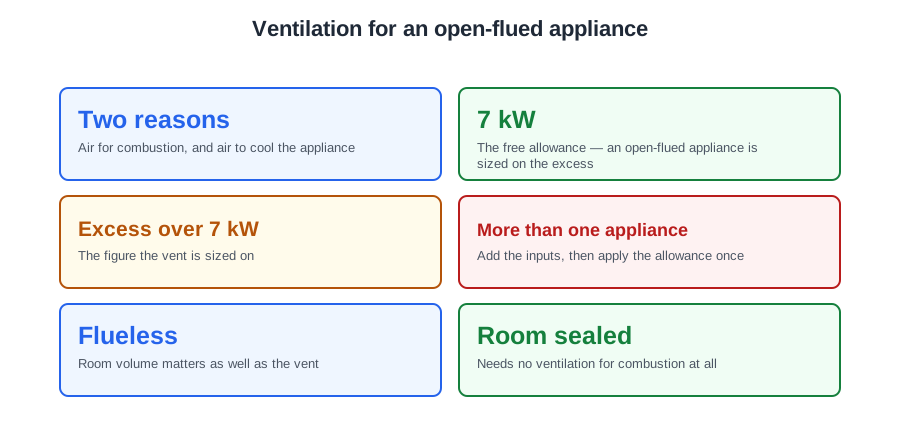
Because products enter the room, ventilation is sized on room volume (like a cooker), using BS 5440-2 and the MIs — a flueless appliance typically needs a minimum of around 100 cm² of purpose-provided ventilation plus the room meeting a minimum volume, with an openable window or equivalent. A bigger room dilutes the products more, so the requirement steps with volume.
Where they can — and can't — go
Flueless heaters are restricted in rooms where people are most vulnerable to a build-up of products. Be especially careful in bathrooms and bedrooms/sleeping accommodation: there are siting limits and, where a non-room-sealed appliance is permitted in sleeping accommodation, the ODS/ASD is essential. Remember the wider rule that an appliance above 12.7 kW net (14 kW gross) in sleeping accommodation must be room-sealed. Always check the appliance's stated permitted locations.
Commissioning
Confirm the room volume and ventilation meet the requirement, the vents are correctly sited (not disturbing the ODS), the gas rate and flame are right, and the ODS operates. Hand over the instructions and explain to the customer that the heater will shut itself off if the room air gets low — and that the ventilation must be kept clear.
- Flueless = products enter the room; safe only with ventilation + a working ODS.
- Vitiation: running depletes oxygen; CO risk rises as oxygen falls.
- ODS/ASD: a pilot that lifts off the thermocouple as oxygen drops, shutting the heater down before danger.
- Never defeat the ODS; don't site vents where they disturb it (per MIs, often not within ~500 mm).
- Ventilation by room volume (≈100 cm² minimum + openable window), per BS 5440-2/MIs.
- Siting limits in bathrooms/bedrooms; >12.7 kW net in sleeping accommodation must be room-sealed.
- Commission: volume, ventilation, vent placement, gas rate, flame, ODS operation.
10-Question Mock Test
Click an option to see whether you got it right. Explanations appear instantly — no submitting at the end.
It has no flue, so products enter the room — which is why ventilation and the ODS matter so much.
The heater consumes oxygen and adds products, so the air vitiates — raising CO risk if not controlled.
The oxygen-depletion system shuts the heater off before vitiation reaches a dangerous level.
As oxygen falls the specially designed pilot lifts off the thermocouple; it cools and the gas valve closes.
The ODS is the heater's primary safeguard and must never be defeated or bypassed.
A draught at the ODS can stop it sensing the room correctly; MIs often forbid vents within ~500 mm.
Like a cooker, a flueless heater's ventilation steps with room volume, with a typical ~100 cm² minimum plus an openable window.
Above 12.7 kW net (14 kW gross) in sleeping accommodation it must be room-sealed; smaller non-room-sealed appliances need an ASD.
Catalytic heaters are a common flueless type and rely on ventilation and an ODS.
There's no flue, so you confirm volume, ventilation, correct vent siting, gas rate, flame and that the ODS works.
No flue, no margin for error. The ODS is everything.
PlumbMate drills flueless-heater safety with quizzes and spaced repetition mapped to the gas ACS tickets.
🔥 Open the gas course →Full ACS revision — CCN1, CPA1, CKR1, HTR1 & CENWAT · £29.99 for 60 days, or every course for a year at £59.99
Prefer to browse first? Back to the Gas Blog →