Plumbing is one of the few UK trades where you can qualify in three to four years, earn a wage while you learn, and land in a career paying £45,000+ at the experienced end — without a university debt attached. Here's exactly how to become a plumber in the UK in 2026, route by route.
This guide is aimed at both school leavers and career-changers. The three routes below work very differently depending on your age and circumstances, so it's worth reading through even if you think you already know which one suits you.
The three routes into the trade
There are three real ways in. Most people pick the wrong one at least once before settling on the right one, so take your time over this bit.
1. The apprenticeship route
This is the standard route and the one most employers respect the most. You work for a plumbing employer four days a week and study at college one day a week.
- Duration: 3–4 years
- Qualification at the end: Level 3 NVQ Diploma in Plumbing and Domestic Heating
- Cost to you: £0 — funded by the government and the employer
- Pay: apprentice minimum wage is £8.00 an hour from April 2026 (under 19s, and 19+ in year one), rising to the age-appropriate minimum wage after that
- Entry requirements: typically Grade 4 (C) in GCSE Maths and English, though individual employers often ask for more
The catch: you need an employer willing to take you on, and placements are competitive. Apply to several.
2. The college (Diploma) route
A full-time college course leading to a Level 2 Diploma, often followed by a Level 3 Diploma.
- Duration: 1–2 years for Level 2
- Cost: free for 16–18s; often free or funded for 19+ learners, otherwise roughly £1,500–£3,500 for Level 2
- What it gives you: the theory and workshop skills that make you employable
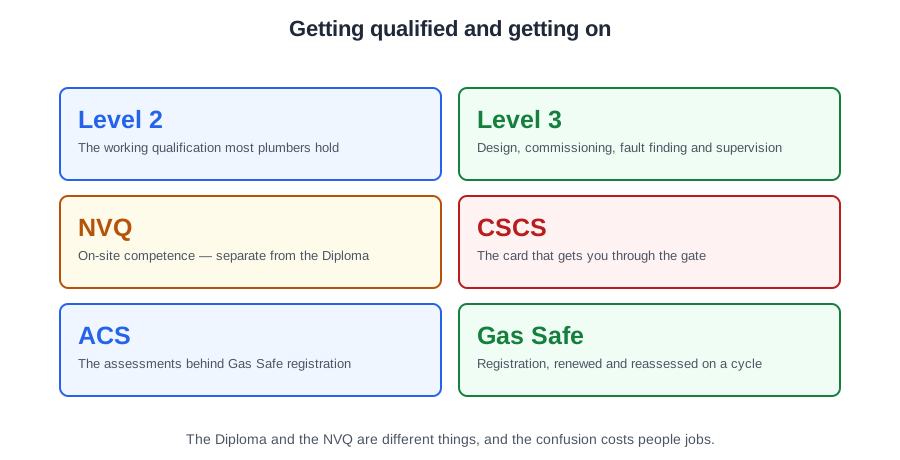
Important to understand: a Diploma on its own does not make you a fully qualified plumber. You still need an NVQ portfolio built from real site work to reach "qualified" status.
The practical advantage: a completed Diploma shortens your eventual apprenticeship. A Level 2 Diploma typically knocks a year off; a Level 3 Diploma knocks off two. For career-changers who can't walk straight into an apprenticeship, this is often the most realistic way in.
3. The fast-track (private provider) route
Intensive short courses aimed at career-changers who can't commit to a multi-year apprenticeship.
- Duration: typically 6–15 weeks
- Cost: £3,000–£6,000
- What to watch for: many of these courses do not lead to a genuine NVQ, and an NVQ is what employers actually want
If you're considering this route, read the next section first.
The qualification pathway
The framework sits in three stages: Level 2 → Level 3 → specialism. In that order.
Level 2 covers cold and hot water systems, sanitation, and basic installation. Level 3 adds complex central heating, electrical principles for controls, and environmental technologies like heat pumps. Specialisms — Gas Safe, MCS, unvented hot water — sit on top of Level 3.
For the full breakdown of what each level lets you do and earn, see the detailed Level 2 vs Level 3 comparison.
The cards and registrations you'll need
Getting qualified is only part of the picture. To actually work on sites and take on paying jobs, you need specific cards and registrations.
CSCS card
Without one of these, most commercial sites won't let you past the gate.
- Red (Trainee) — while you're studying
- Blue (Skilled Worker) — once you've completed your Level 2 NVQ
- Gold (Advanced Craft) — once you've completed your Level 3 NVQ
Gas Safe Register
Working on gas boilers, fires, cookers or hobs without being on the Gas Safe Register is a criminal offence in the UK. To join, you need your Level 3 NVQ plus the relevant ACS assessments.
MCS certification
MCS is the scheme that allows you to install heat pumps under the £7,500 Boiler Upgrade Scheme. You need your Level 3 plus ASHP-specific training. Heat pump installation is currently one of the highest-paid specialisms in the trade.
Typical costs in 2026
| Item | Cost | Notes |
|---|---|---|
| Apprenticeship | £0 | Fully funded |
| Level 2 Diploma | Free – £3,500 | Free for 16–18s; often funded for 19+ learners |
| Fast-track course | £3,000 – £6,000 | Verify the NVQ pathway before paying |
| Starter tool kit + PPE | ~£150 | Boots, overalls, basic hand tools |
| CSCS card | ~£36 | Per card |
| Gas Safe registration | Annual fee | Confirm the current year's figure on the Gas Safe website |
| MCS certification | Varies | Required for heat pump grant work |
The common mistake: the fast-track trap
I see this in class every year. A career-changer spends £5,000 on an intensive course, finishes in a few months with a certificate that sounds impressive, and then discovers they can't get a Gold CSCS card, can't register with Gas Safe, and can't work on most commercial sites. The course covered the theory but never included the NVQ portfolio — and the provider quietly implied the NVQ would "follow" without explaining how.
Before you hand over money to any fast-track provider, get clear answers to three questions:
- Exactly which NVQ does this course lead to?
- How will I get onto a real jobsite to build my portfolio?
- Does the assessor come to my site, or do I have to arrange that myself?
A vague answer to any of those is a red flag. The fast-track route can work, but only if the NVQ pathway is properly built in from day one.
Your first practical steps
If you're a school leaver: apply for several apprenticeships at once through the government's apprenticeship finder — placements are competitive. Enrolling on a Level 2 Diploma at a local college is a sensible backup if applications don't land.
If you're a career-changer: a Level 2 Diploma at a local college is usually the most realistic starting point. Hunt for a placement in parallel — your Diploma shortens the apprenticeship by a year, so the time at college isn't wasted. Paid weekend labouring or helper work with a local plumber is how most career-changers get onto an employer's radar.
Either way: check you have Grade 4 (C) in GCSE Maths and English. If you don't, most colleges offer free Functional Skills courses alongside your plumbing training.