How much do plumbers actually earn in the UK in 2026? The honest answer ranges from about £12,000 in year one of your apprenticeship to £70,000+ in turnover as a busy Gas Safe sole trader. The gap between the two ends of that scale is mostly down to qualifications and specialism — not luck, not "being a good talker," and not simply location.
This post leans slightly toward career-changers weighing up whether the numbers make sense. If you're an apprentice, it's still worth a read — especially if a mate at college has just told you his uncle earns "a hundred grand a year." (He might. Probably not the way you think he does.)
Apprentice pay: year one to year four
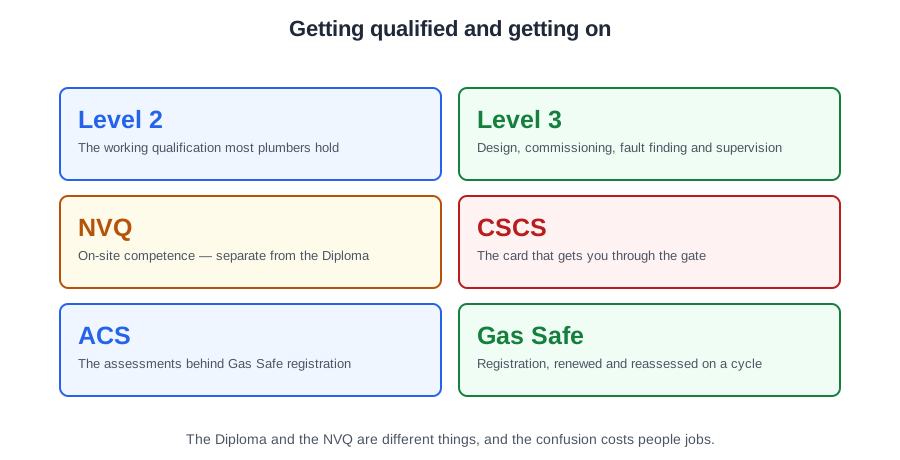
From 1 April 2026, the apprentice National Minimum Wage is £8.00 an hour for anyone under 19 and for those aged 19+ in their first year. That works out to roughly £15,600 a year on a 37.5-hour week before tax.
In practice, plumbing employers often pay above the minimum because they want to keep you on site:
- Year 1 (Level 2 apprentice): £12,000 – £16,000
- Year 3–4 (Level 3 advanced apprentice): £22,000 – £30,000
The real jump comes when you move from Level 2 to Level 3. By that stage you're largely on the tools with minimal supervision, and your wages tend to follow.
Newly qualified: your first "proper" plumber salary
Once you've finished your Level 3 and can work unsupervised, UK data for 2026 puts the typical newly-qualified plumber at £26,000 – £32,000, with around £29,000 a fair middle-ground figure. In London and the South East, newly-qualified pay can start closer to £34,000.
Adding Gas Safe registration straight after your Level 3 lifts your earning floor immediately. Boilers, central heating and gas appliances are where the service calls and margins are — and where employers are actively bidding for staff.
Experienced and specialist: where the money opens up
With five-plus years of experience — ideally Gas Safe plus a renewables qualification — you're typically looking at £45,000 – £55,000+ as an employee, and more if you go out on your own.
Specialism is the multiplier. General maintenance plumbing pays a reasonable wage. Heat pump installation, commercial plant rooms, and landlord gas certificates pay considerably more.
Employed (PAYE) vs self-employed
This is the biggest fork in the road — and it's also where most people read the numbers wrong.
Working for a company gives you:
- Base salary of roughly £35,000 – £45,000 once experienced
- Paid holiday, sick pay, pension, company van, fuel card, funded training
- A realistic ceiling of around £42,000 – £48,000 unless you move into management
Large employers like British Gas typically list base salaries of £33,000 – £38,000, but the total package comfortably exceeds £45,000 once you add performance bonuses, a van (often with personal use), pension contributions and private healthcare. Heat pump engineer roles inside those firms are currently paying more again.
A busy self-employed sole trader typically charges:
- Hourly rate: £45 – £75
- Day rate: £250 – £500
- Annual turnover: £45,000 – £70,000
Here's the classroom mistake I see every year: apprentices read "self-employed plumbers earn £70k" and assume that figure lands in their bank account. It doesn't. From that £70k you need to deduct van costs, tools, materials, public liability insurance, accountancy fees, pension and tax. The take-home on a £70k turnover is often closer to £40k–£45k.
That's still a good living. But it's roughly what an experienced PAYE plumber takes home with someone else paying for the van. The case for going self-employed is freedom and an uncapped ceiling — not an automatic pay rise.
The "Green Premium": why heat pumps matter in 2026
The UK's shift toward low-carbon heating has opened up a clear earnings gap:
- Typical Air Source Heat Pump install cost: £11,000 – £13,500
- Boiler Upgrade Scheme (BUS) grant in 2026: £7,500
- Net cost to the customer: roughly £3,500 – £6,000
Because the grant absorbs most of the customer's bill, demand is strong for installers who are properly qualified. Moving into ASHP installation straight after your Level 3 can add £5,000 – £10,000 a year on top of what a general plumber earns. If you're choosing where to put your training hours in 2026, renewables is the obvious place.
The 2026 numbers at a glance
| Career stage | Annual pay range | Key qualification |
|---|---|---|
| Apprentice (Year 1) | £12,000 – £16,000 | Level 2 (starting) |
| Apprentice (Year 3–4) | £22,000 – £30,000 | Level 3 (advanced) |
| Newly qualified | £29,000 – £34,000 | Level 3 NVQ + Gas Safe |
| Experienced / specialist | £45,000 – £55,000+ | Renewables or senior lead |
| Self-employed (turnover) | £45,000 – £70,000 | Level 3 + Gas Safe + solid admin |
So, is plumbing worth it in 2026?
If you're looking for a trade with stable demand, genuine progression, and a realistic path to £45,000–£55,000 on PAYE or £40k+ take-home self-employed — yes, the numbers add up.
Two things decide whether you hit the upper end:
- Whether you push through to Level 3 rather than stopping at Level 2.
- Whether you add a specialism — Gas Safe is now baseline; heat pumps are the 2026 lever.