Three boiler types, three very different system designs — and reliably tested in the Level 2 exam. The differences matter because each boiler type comes with its own requirements for cylinders, cisterns, expansion vessels and pumps. If you can't tell one from another on a schematic, you'll lose marks on several questions across the paper.
This is the second post in the Level 2 heating sub-cluster. For the others, see the system types, controls, system layouts, open-vented vs sealed, and commissioning posts.
What a boiler actually does
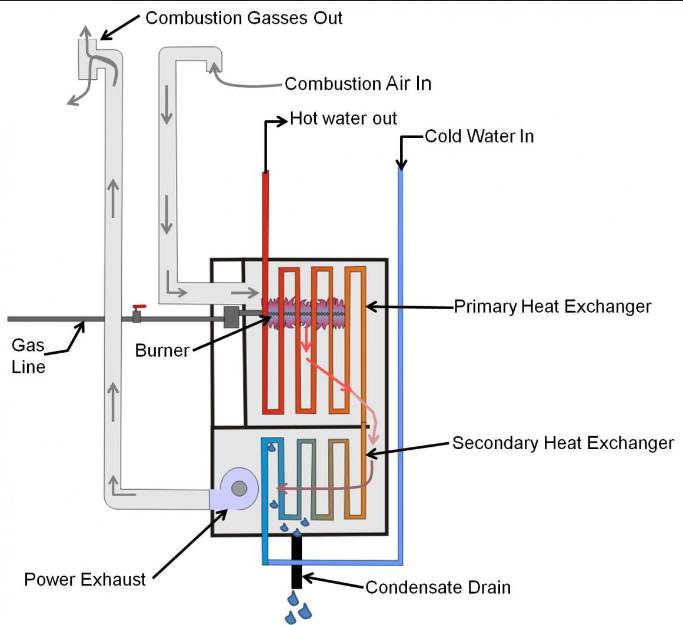
A boiler heats water. That's it. Everything else — cylinders, cisterns, controls, radiators — is the support system around the boiler to make sure the hot water gets where it needs to go and comes back when it's cooled.
The three boiler types differ in what they include built-in versus what they need alongside. That's the single most useful way to understand them.
Conventional boilers (sometimes called "regular" boilers)
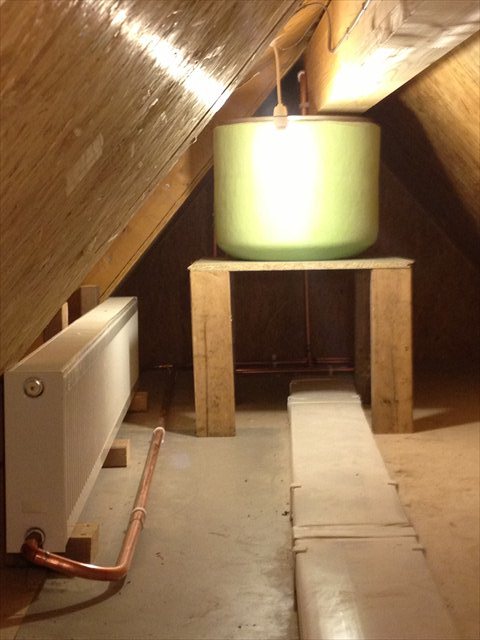
The traditional boiler. Designed to be installed on open-vented heating systems.
What it does:
- Heats water, which is then circulated through the heating and hot water primary circuits
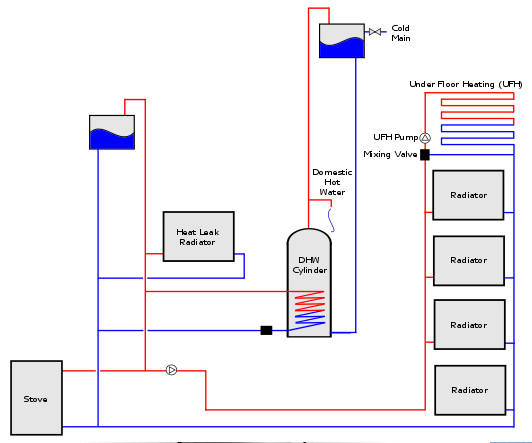
- All the control components — pump, expansion vessel, F&E cistern, hot water cylinder, cold water storage cistern — are installed separately from the boiler
What it needs alongside it:
- Cold water storage cistern (CWSC) — usually in the loft
- Feed and expansion cistern (F&E) — also in the loft
- Hot water cylinder — usually in the airing cupboard
- Circulating pump — external to the boiler
- Programmer, thermostats, motorised valves — external controls
Because all the components sit separately, a conventional boiler installation takes up the most space. You need a loft for the cisterns and a cupboard for the cylinder. The trade-off is flexibility — the system can feed multiple zones, complex layouts, and can handle gravity circuits if needed.
System boilers
A system boiler is like a conventional boiler that's had some of the components moved inside the boiler casing.
What's built in:
- The pump is inside the boiler
- The expansion vessel is inside the boiler
What's still needed outside:
- A hot water cylinder — still required
- Motorised valves, programmer, thermostats — still external
System boilers are designed for sealed systems — high-pressure systems without an F&E cistern or open vent. The expansion vessel inside the boiler absorbs the volume change as water heats up (in a conventional open-vented system, the water expands into the F&E cistern instead).
Compared to conventional:
- Less space needed (no F&E cistern, no external pump)
- Faster to install
- Works at higher pressure (better showers)
- But still needs a cylinder, so it's not as space-efficient as a combi
Combi boilers
A combi boiler combines (hence "combi") central heating and instantaneous hot water in one appliance.
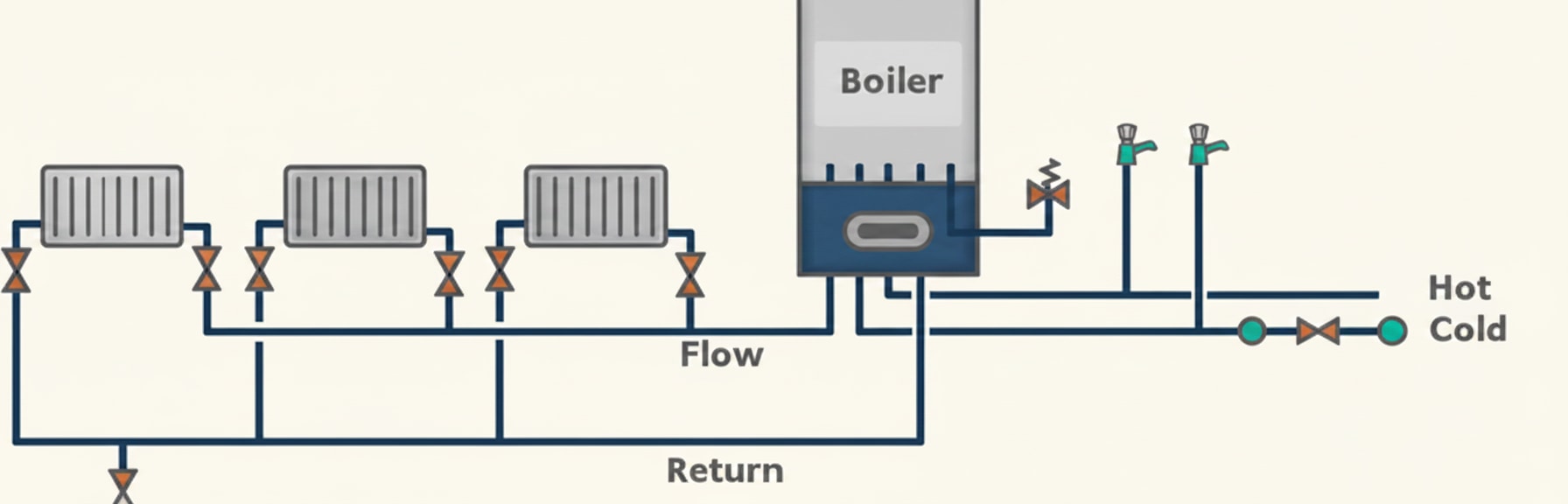
What's built in:
- Pump — inside the boiler
- Expansion vessel — inside the boiler
- Hot water heat exchanger — inside the boiler
What's eliminated entirely:
- No hot water cylinder
- No cold water storage cistern
- No F&E cistern
How hot water works in a combi:
- You turn on a tap
- The combi detects the flow and fires on demand
- Cold mains water passes through the combi's heat exchanger and comes out hot
- The hot water is instantaneous — no storage, no waiting for a cylinder to heat up
Combi boilers still need a programmer and a room thermostat installed externally.
Advantages:
- Smallest footprint of the three — no cylinder, no cisterns
- Unlimited hot water (as long as you don't exceed the flow rate the combi can heat)
- Fast install compared to conventional
Disadvantages:
- Flow rate limited by the boiler's output — multiple outlets at once may struggle
- If the boiler fails, you lose heating and hot water in one go
- Not suitable for large properties with high simultaneous hot water demand
Condensing boilers
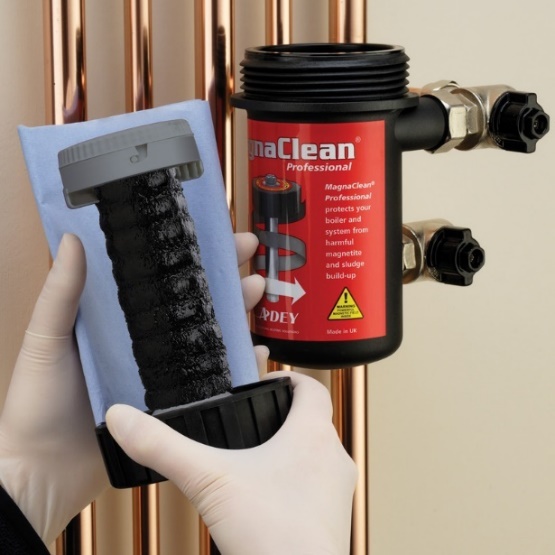
Almost every new gas or oil boiler installed today must be of the condensing type — Part L of the Building Regulations requires it.
In practice this means:
- Any new conventional, system, or combi boiler you install will be a condensing boiler
- Older traditional (non-condensing) conventional boilers are still in service in many existing properties and you'll meet them on maintenance and replacement jobs — these typically date from before current Building Regs took effect
- When you replace an old non-condensing boiler, the replacement will almost always have to be condensing to meet current standards
What condensing means:
- Traditional (non-condensing) boilers release hot exhaust gases to the outside, wasting that heat
- Condensing boilers extract additional heat from the exhaust gases as they pass back over the heat exchanger
- The water vapour in the exhaust condenses in the flue, releasing latent heat into the system
The result: much higher efficiency (typically 90%+ for modern condensing boilers, compared to 60–70% for older non-condensing boilers).
Every condensing boiler needs a condense pipe to take the condensed water away — usually to a drain or external soakaway.
Fuel types
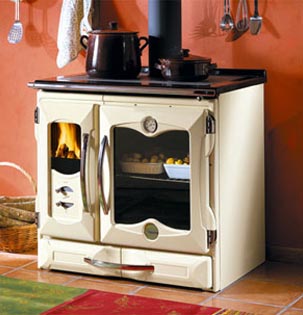
Five main fuel types for Level 2:
- Natural gas — most common UK domestic fuel. Burned in gas boilers. Mostly methane, distributed through the mains gas network. A fossil fuel.
- LPG (Liquefied Petroleum Gas) — Propane, Butane, or MAPP. Used where mains gas isn't available, typically supplied from a storage tank. A fossil fuel.
- Oil — Kerosene. Used in rural properties without mains gas, typically supplied from a storage tank. A fossil fuel. Two types of oil-firing boilers exist: vaporising and pressure jet.
- Electricity — used in electric boilers and immersion heaters. Because there's no combustion, no flue, and no exhaust heat loss, electric boilers are 100% efficient at the point of use — every watt of electricity becomes a watt of heat in the water. The catch: the electricity itself has to come from somewhere, and generating and transmitting electricity involves significant losses upstream of your house. Electric heating is often a good match for properties without a gas connection or very well-insulated homes where running costs are manageable.
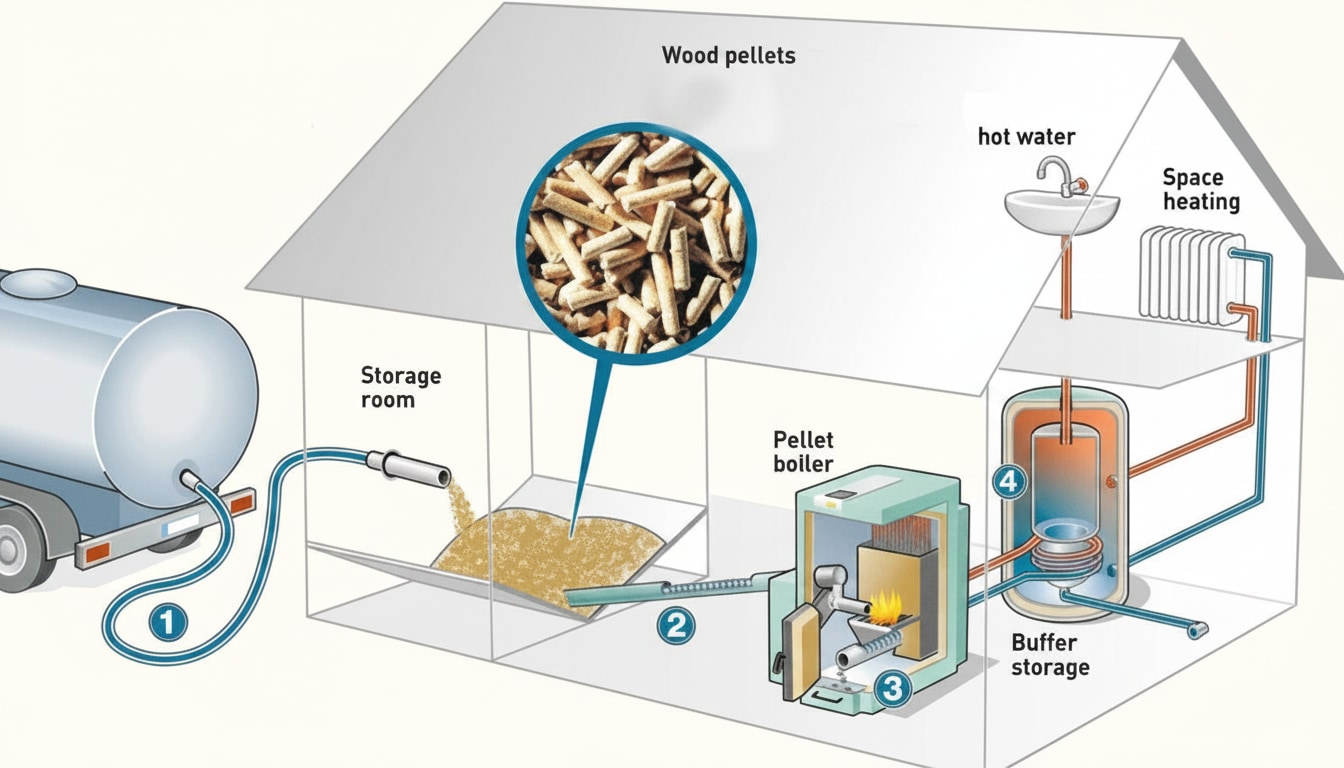
- Biomass — typically wooden pellets burned in a biomass boiler. A renewable fuel (the wood regrows on human timescales) and a low-carbon alternative to gas. Considered a solid fuel. Biomass burns continuously, which makes it difficult to regulate system temperatures — so biomass systems normally need a heat leak radiator (a radiator that the primary water can circulate through to "dump" excess heat when the cylinder reaches its maximum temperature).
All fuels except electricity and biomass are fossil fuels. Biomass is renewable. Electricity's carbon footprint depends entirely on how it was generated — increasingly low-carbon as the UK grid decarbonises.
Solid fuel boilers (wood, coal, biomass) are rare in new installations of conventional radiator systems but you might meet them in existing properties, particularly room heaters, open fires with high-output back boilers, or dedicated biomass systems.
Open-flued vs room-sealed
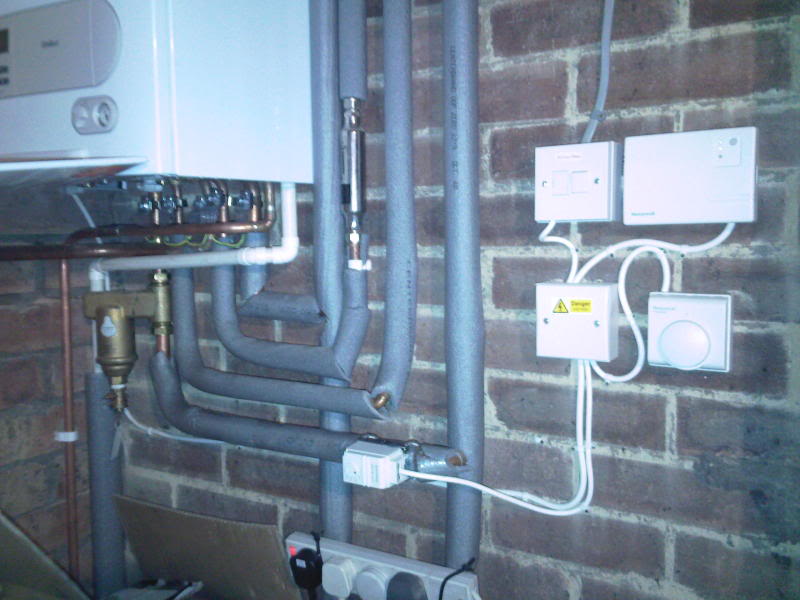
Two ways a boiler handles combustion air and exhaust gases:
- Open-flued: the boiler draws combustion air from the room it's installed in, and the flue carries exhaust to outside. Requires adequate ventilation in the room.
- Room-sealed: the boiler operates independently of the air supply of the room it's in. Combustion air is drawn from outside through a dedicated duct, and exhaust is vented directly outside. The combustion process is completely sealed from the room.
Most modern boilers are room-sealed with fan-assisted flues — the fan ensures enough air for efficient combustion and pushes the exhaust out through the flue. Room-sealed is safer and more efficient.
Common exam traps
Trap 1: "Which boiler removes the need for a cold water storage cistern?" Combi. Only combi eliminates both the CWSC and the F&E. System boilers run on sealed systems (so no F&E) but still need a cylinder. Conventional needs everything.
Trap 2: What's built into a system boiler. The pump and expansion vessel are inside the system boiler. The cylinder is NOT inside — you still need an external one.
Trap 3: Instantaneous vs stored hot water. Combi = instantaneous (heats on demand). Conventional and system = stored (heated in a cylinder). "Provides hot water and heating from one appliance" without a cylinder is a combi.
Trap 4: Condense pipe. Every condensing boiler needs one. The condense pipe takes away the water vapour that's condensed out of the exhaust gases.
Quick revision summary
Before the mock test, six things you need to be able to produce from memory:
- Conventional boiler: open-vented system, needs CWSC, F&E, external cylinder, external pump
- System boiler: sealed system, pump and expansion vessel built in, still needs external cylinder
- Combi boiler: sealed system, pump + expansion vessel + DHW heat exchanger built in; no cylinder or cisterns; instantaneous hot water
- New gas or oil boiler installations must be condensing under Part L; condensing boilers extract heat from exhaust gases and need a condense pipe
- Fuels: natural gas, LPG (propane/butane/MAPP), oil (kerosene), electricity, biomass. Electricity is 100% efficient at the point of use; biomass is renewable (all others are fossil fuels)
- Room-sealed boilers operate independently of room air; most modern boilers are room-sealed with fan-assisted flues
📝 10-Question Mock Test
Click an option to see whether you got it right. Explanations appear instantly — no submitting at the end.
A combi boiler eliminates the need for a cylinder, a cold water storage cistern, and a feed and expansion cistern. It heats water on demand directly from the mains. The other options are all older or specialised appliance types that don't fit this description.
The pump is built into a system boiler but installed separately on a conventional boiler. The expansion vessel is also built into a system boiler. Heat exchanger (A), burner (C) and flue (D) are in every boiler type — they're not what distinguishes the three.
Conventional boilers are designed for open-vented systems with an F&E cistern to absorb expansion. System and combi boilers both operate on sealed systems with internal expansion vessels. Option D is wrong because only conventional fits this description.
When you turn on a hot tap, the combi detects the flow, fires up, and heats cold mains water as it passes through the heat exchanger. No storage, no cylinder, no waiting. Options A and C describe stored hot water systems.
The water vapour in the exhaust condenses, releasing latent heat that's recovered by the system. This is what gives condensing boilers their efficiency advantage. Option A is wrong — modern condensing boilers actually run best at lower flow temperatures, because that allows the vapour to condense fully.
The condensed water has to go somewhere — normally a drain or external soakaway. Without the condense pipe, the water would back up in the flue. Options A, C and D are components of specific system types, not universal requirements of every condensing boiler.
Biomass (wood, pellets, chips) is a renewable fuel, not a fossil fuel — it regrows on human timescales. Natural gas, LPG and kerosene are all fossil fuels formed over geological timescales. Biomass boilers exist but are uncommon in domestic UK heating.
LPG stands for Liquefied Petroleum Gas, which in practice means propane, butane or MAPP gas. Natural gas (B) is methane distributed through mains — not the same as LPG. Kerosene (C) is the fuel for oil boilers.
Combustion air is drawn from outside through a dedicated duct, and exhaust vents directly outside. The room where the boiler sits doesn't need to provide combustion air. Option A is the opposite — it's the room-sealed nature that means ventilation isn't required.
No cylinder, no cisterns, everything inside the boiler casing. Just hang it on a wall and pipe it up. Conventional needs loft space for two cisterns and cupboard space for a cylinder; system eliminates the cisterns but still needs cylinder space. Combi is the most space-efficient.
How PlumbMate puts this into practice
Boiler-type questions are a classic example of material that spaced repetition handles quickly — three distinct system designs, specific components, and examiners who test the differences reliably.
- Flashcards, not essays. One prompt, one answer — the format that research has consistently shown works best for active recall.
- Wrong answers are logged. Every question you get wrong goes into a dedicated collection that resurfaces more frequently in future sessions.
- The 3× rule. You need to get a question right three times before it clears — one lucky guess isn't enough.
- Explanations on every question. Like the ones above, but on every single question in the app.