Once you understand the individual components — pumps, valves, cylinders, thermostats — the next question is: how do they combine into a complete heating system? The answer is that there's a small number of named layouts that show up reliably in both the exam and on real sites. Learn to identify each one from a diagram and you'll pick up several marks across the exam paper, plus you'll be able to read any existing installation you walk into on site.
This is the fourth post in the Level 2 heating sub-cluster. For the others, see the system types, boilers, controls, open-vented vs sealed, and commissioning posts.
Why "fully pumped" is the modern standard
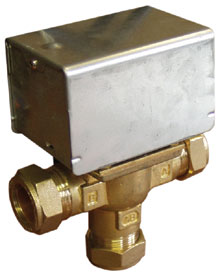
Before the named layouts, a foundational point: Part L of the Building Regulations tells us almost all new installations should be fully pumped.
"Fully pumped" means both the heating circuit and the hot water primary circuit are pumped (by the same centrifugal pump). This replaces older "gravity" or "semi-gravity" systems where the hot water side relied on convection — slow, inefficient, and no longer compliant for new installations.
Every layout below is a variation on a fully pumped design, except the C Plan / semi-gravity exception covered later.
S Plan: two × 2-port valves
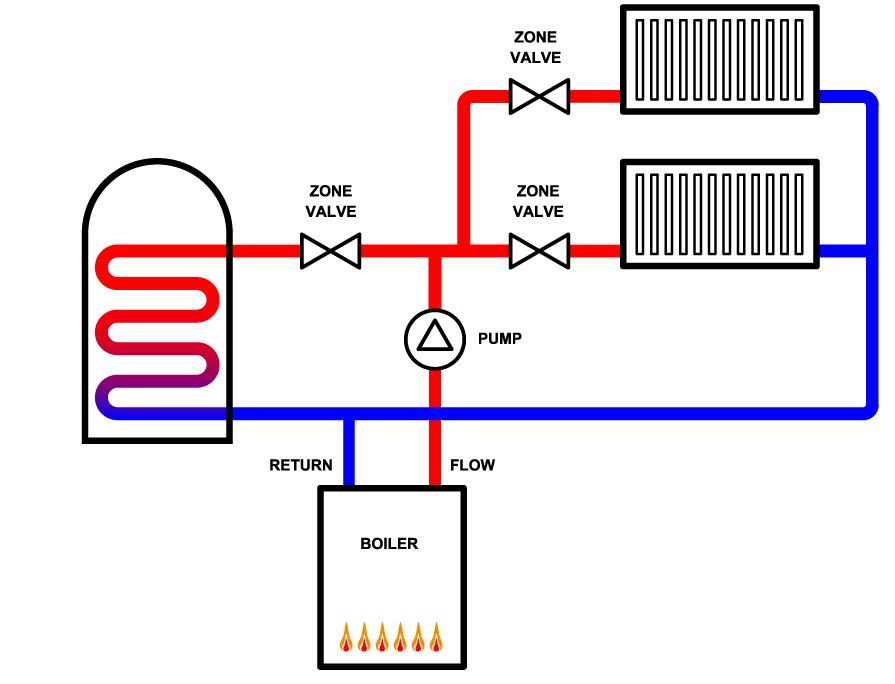
The S Plan is a fully pumped system with two separate two-port motorised valves — one controlling the heating circuit, one controlling the hot water circuit.
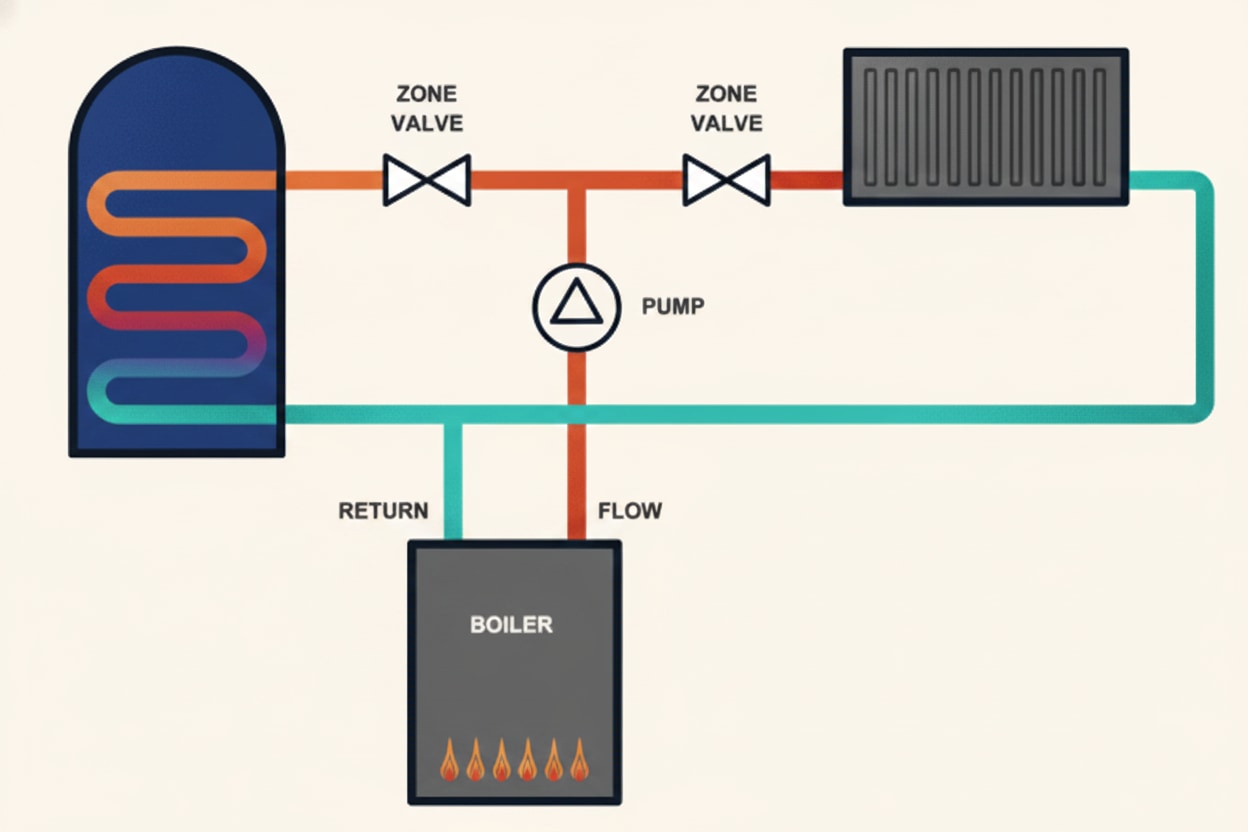
How it works:
- The boiler feeds a single flow pipe
- That flow splits in two, with one 2-port valve on each branch
- When heating is called for, the heating 2-port opens
- When hot water is called for, the hot water 2-port opens
- Both can be open at the same time — heating and hot water simultaneously
Key facts:
- A plain S Plan gives one heating zone plus the hot water, so in a new dwelling it only meets Approved Document L under 150 m²
- Two 2-port valves means two separately-controllable zones
- Each valve has its own end switch that tells the boiler and pump to fire when the valve opens
Why two 2-port valves rather than one 3-port? Larger systems benefit from the more independent control, and 2-port valves handle higher flow rates better than a single 3-port valve trying to feed both circuits.
S Plan Plus: multiple 2-port valves
S Plan Plus is S Plan scaled up — more than two 2-port valves, used for larger properties or where there are additional zones needed. A new dwelling of 150 m² or more needs at least two independently controlled heating circuits (Approved Document L 2021, paragraph 5.14), and two heating zones plus the hot water is three 2-port valves: an S Plan Plus.
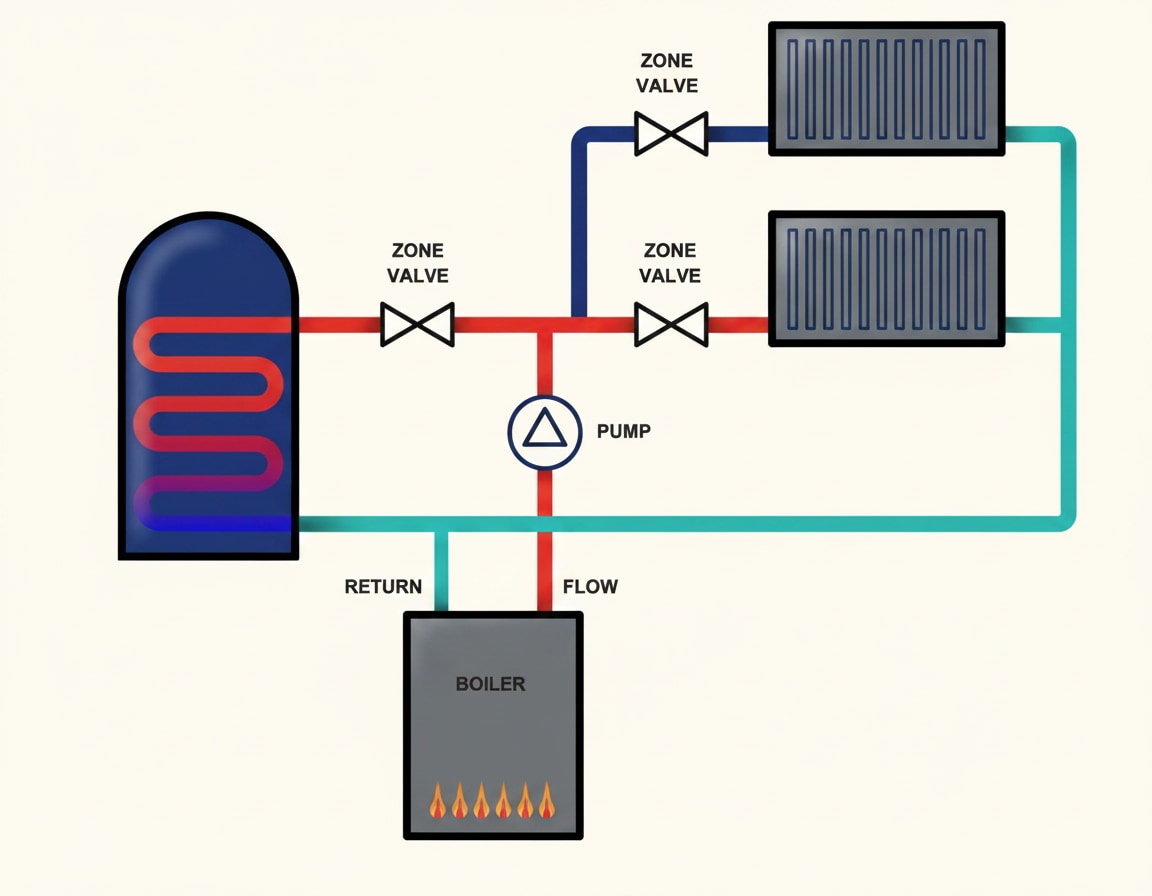
Common uses:
- Underfloor heating as a separate zone from radiators
- Commercial and domestic property sharing the same boiler
- Multi-zone residential properties (e.g. upstairs/downstairs as separate zones)
- Properties with both conventional radiators and towel rails needing different control
The principle is the same as S Plan — each zone has its own 2-port valve, and each valve controls its own section of the system independently.
Y Plan: one 3-port mid-position valve
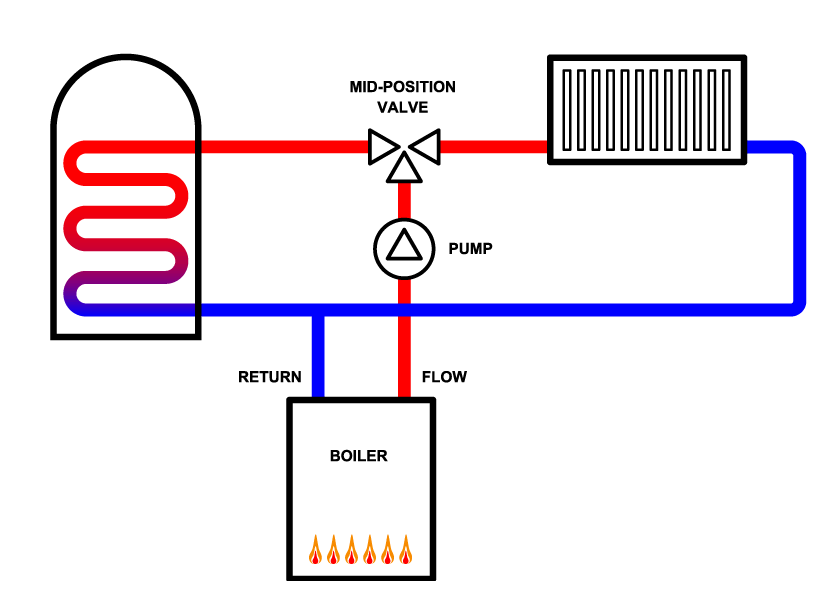
The Y Plan uses a single three-port mid-position valve instead of two 2-port valves.
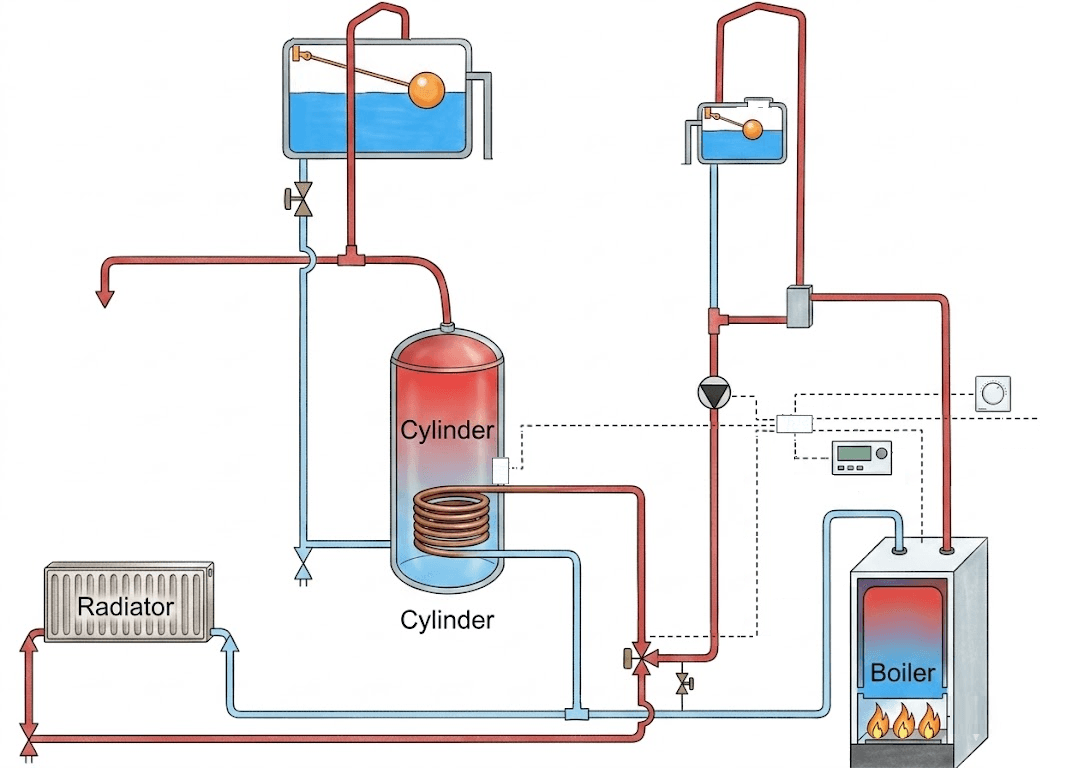
How it works:
- Boiler flow enters the mid-position valve at port AB (the common port)
- Port A feeds the heating
- Port B feeds the hot water cylinder
- The mid-position valve can be set to feed heating only, hot water only, or both at the same time
Key facts:
- Y Plan gives one heating zone, so in a new dwelling it only meets Approved Document L under 150 m². At 150 m² or more a new dwelling needs two heating circuits, which means an S Plan Plus
- The single valve is cheaper and uses less space than two 2-port valves
- Still fully pumped
If you see "mid-position valve" in an exam question, think Y Plan. If you see "two 2-port valves", think S Plan.
W Plan: three-port diverter valve
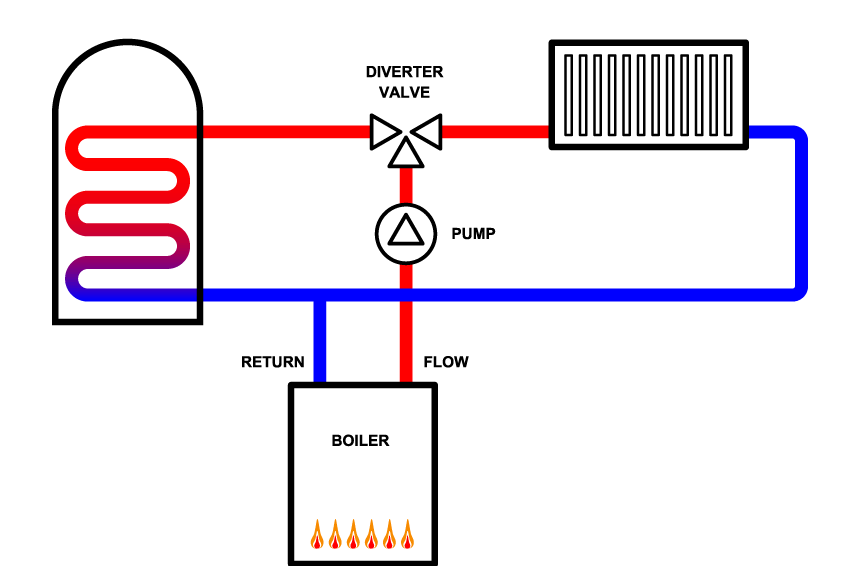
W Plan is an older layout using a 3-port diverter valve instead of a mid-position valve.
How a diverter valve differs from a mid-position valve:
- A mid-position valve can feed heating and hot water simultaneously — the valve can sit mid-way between the two ports
- A diverter valve diverts flow to one circuit only at a time — hot water takes priority, so when hot water is called for, the heating circuit closes until the hot water is satisfied
You won't install W Plan on a new system — they're no longer specified — but you'll meet them in older properties and exam questions reliably test whether you can tell a diverter from a mid-position valve.
C Plan: pumped heating with gravity hot water (semi-gravity)
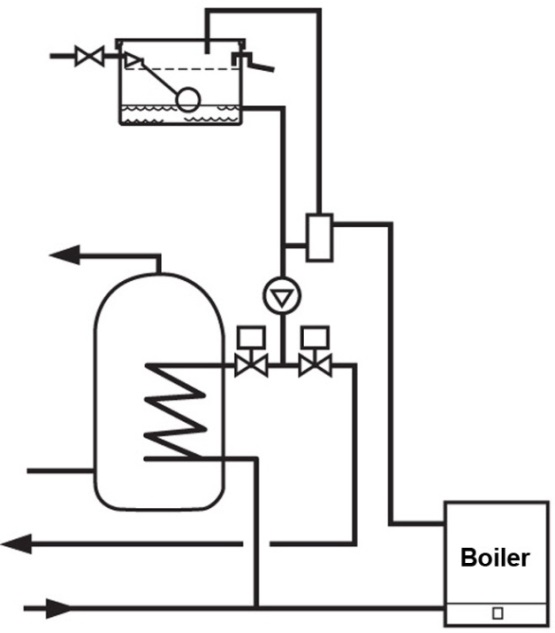
C Plan (sometimes called semi-gravity) is a hybrid: the heating circuit is pumped, but the hot water circuit relies on gravity (convection).
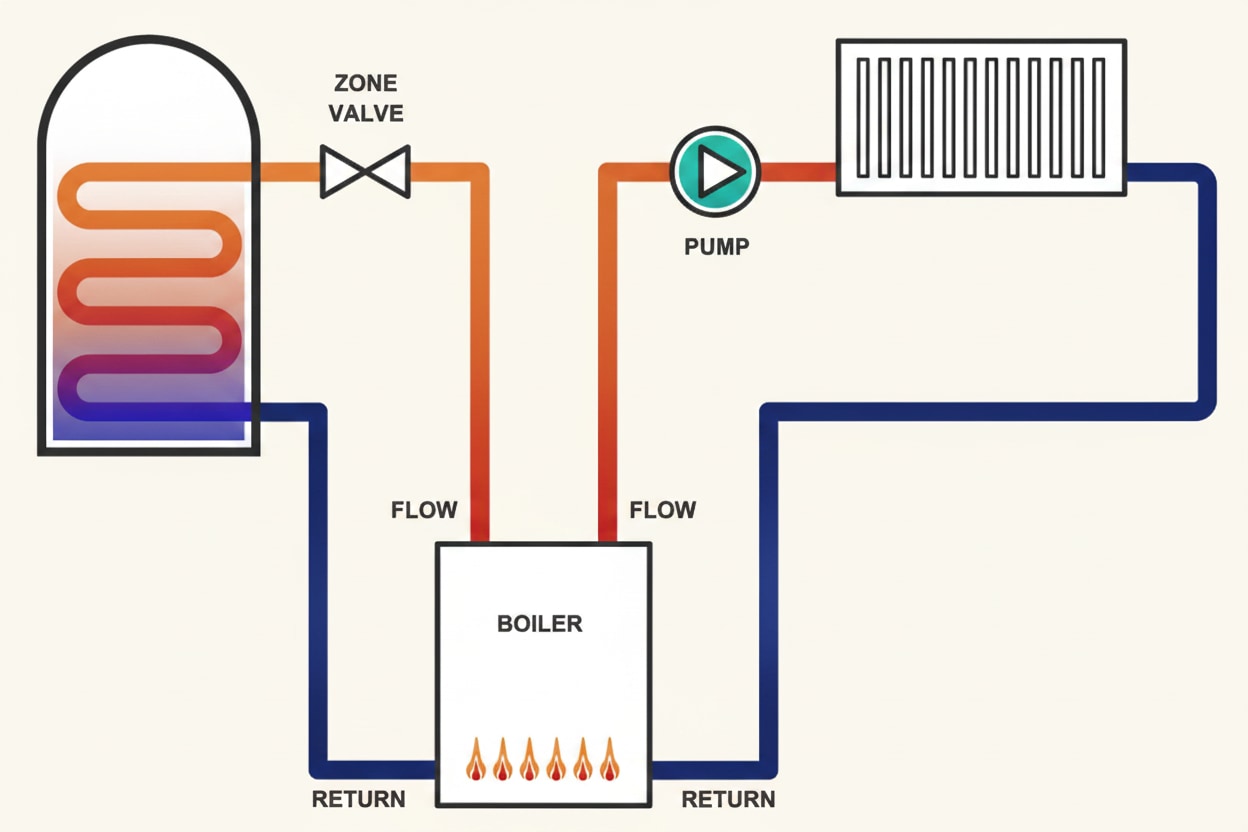
How it works:
- The heating circuit runs through motorised valves, radiators, and the pump — same as a fully pumped system
- The hot water primary circuit (between boiler and cylinder coil) has no motorised valve — water circulates to the cylinder by convection alone
- Because gravity/convection is slow, the hot water primary pipework needs to be large — minimum 28mm between boiler and cylinder — to minimise friction
Anti-gravity protection:
- Because the heating pipework and hot water pipework often share sections near the boiler, you can get unwanted convection through the heating circuit when only hot water is called for
- The fix is an anti-gravity valve on the heating pipework — a valve that only opens when the pump pushes water through it
- Modern semi-gravity systems often use a check valve for the same purpose (check valves need pressure to open, which only happens when the pump runs)
C Plan systems aren't installed new any more — Part L pushes everything to fully pumped — but you'll meet them in older properties. If you replace a cylinder on a C Plan system, best practice is to fit a thermostat and zone valve to bring the installation up to current standards. If the budget doesn't stretch to that, the minimum legal protection against scalding is a thermo-mechanical cylinder control valve.
Pumped heating only systems
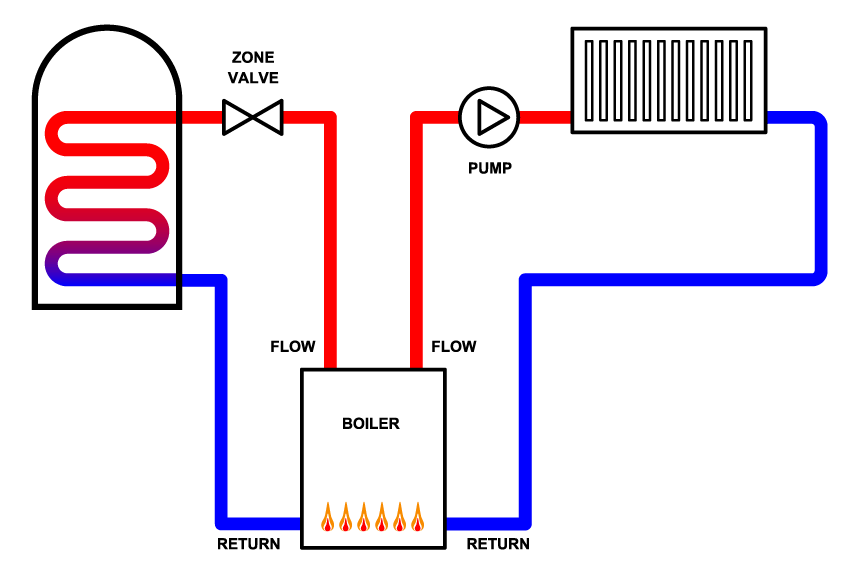
An unusual type — just a heat source, a pump, and radiators. No hot water cylinder, no hot water circuit. Used in properties where hot water comes from a separate appliance (typically a combi for domestic hot water, with a separate boiler feeding the radiators).
Rare in exam questions, but worth recognising on a diagram.
Telling layouts apart on a diagram
The single most reliable way to identify a layout from a schematic:
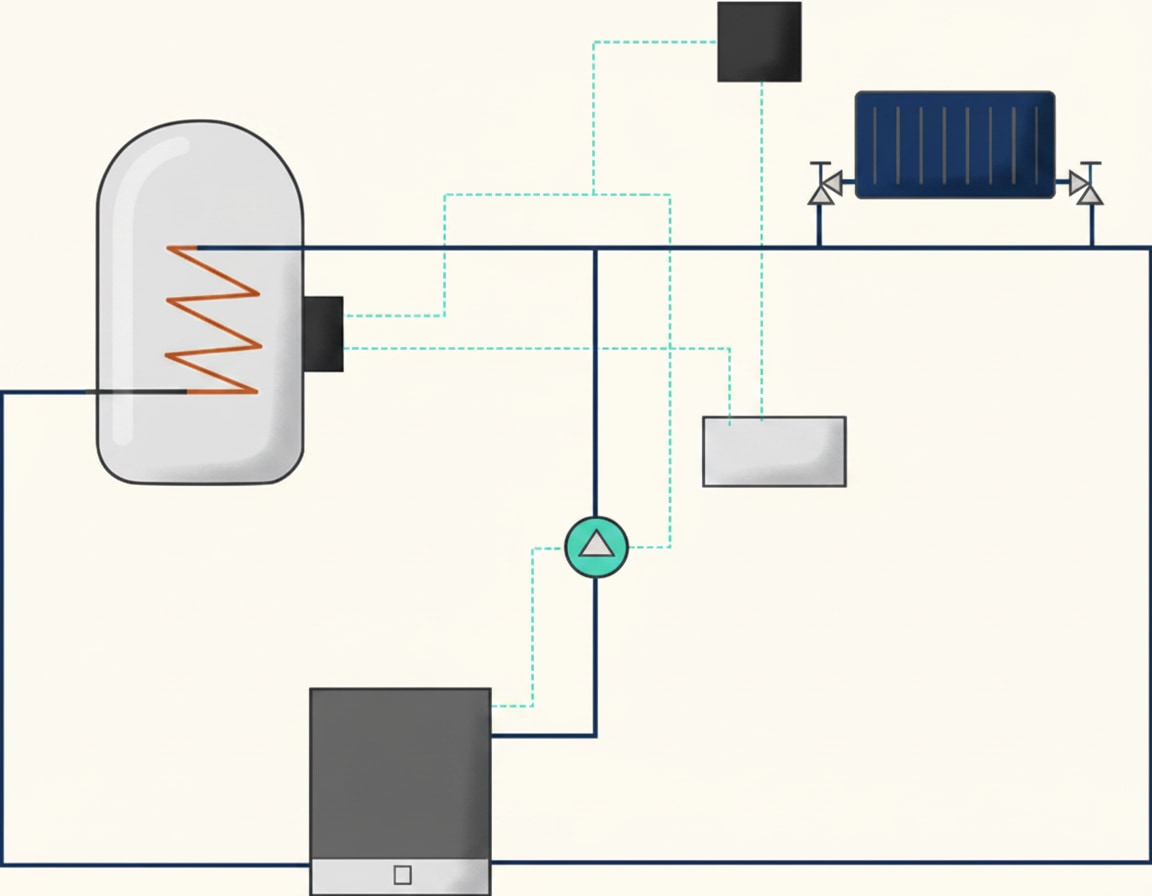
- Count the motorised valves. Two 2-port valves = S Plan. Three or more 2-port valves = S Plan Plus. One 3-port valve = Y Plan or W Plan.
- Check whether the 3-port valve is a mid-position or diverter. Mid-position has port AB marked as the common. Diverter may just have A and B (older labelling).
- Look for the hot water primary circuit. If the pipework from the boiler to the cylinder coil goes through a motorised valve, it's fully pumped. If it bypasses all motorised valves and goes direct to the cylinder, it's C Plan (semi-gravity).
- Check pipe sizes. Semi-gravity systems have 28mm primary pipework to the cylinder; fully pumped typically uses 22mm.
Common exam traps
Trap 1: Two 2-port vs one 3-port. S Plan = two 2-port valves (one for heating, one for hot water). Y Plan = one 3-port mid-position valve. Getting this back-to-front costs a mark every time a layout diagram appears.
Trap 2: The 150 m² line is about zones, not plan names. A new dwelling of 150 m² or more needs at least two independently controlled heating circuits (Approved Document L 2021, paragraph 5.14). Two heating zones plus the hot water is an S Plan Plus. Under 150 m² a single heating zone is allowed, so a Y Plan or a plain S Plan will do.
Trap 3: Mid-position vs diverter. Mid-position can do heating and hot water simultaneously. Diverter can't — it prioritises hot water and closes heating until hot water is satisfied.
Trap 4: C Plan pipework. Semi-gravity primary pipework to the cylinder is minimum 28mm. Fully pumped is typically 22mm. The larger pipework is to reduce friction in gravity circulation.
Trap 5: Anti-gravity valve purpose. An anti-gravity valve prevents unwanted convection through the heating pipework when only hot water is called for. Don't confuse it with a non-return valve protecting against backflow in water supply.
Quick revision summary
Before the mock test, six things you need to be able to produce from memory:
- S Plan: two 2-port motorised valves, one heating zone plus hot water
- S Plan Plus: more than two 2-port valves, multiple zones: what a new dwelling of 150 m² or more needs
- Y Plan: one 3-port mid-position valve, one heating zone, so under 150 m² in a new dwelling
- W Plan: 3-port diverter valve (hot water priority, older systems only)
- C Plan / semi-gravity: pumped heating, gravity hot water, 28mm minimum primary pipework
- Part L requires almost all new systems to be fully pumped
📝 10-Question Mock Test
Click an option to see whether you got it right. Explanations appear instantly — no submitting at the end.
Two × 2-port valves is the defining feature of the S Plan layout. The "S" stands for the layout shape. Y Plan (A) uses one 3-port valve. W Plan (B) uses a 3-port diverter. "T Plan" (D) isn't a recognised standard layout.
A single 3-port mid-position valve is the Y Plan. S Plan uses two 2-ports; W Plan uses a 3-port diverter (different behaviour from mid-position); C Plan has no motorised valve on the hot water side at all.
A new dwelling of 150 m² or more needs at least two independently controlled heating circuits (Approved Document L 2021, paragraph 5.14). Two heating zones plus the hot water is three 2-port valves: an S Plan Plus. The Y Plan (A), the plain S Plan (B) and the W Plan (D) each give only one heating zone.
The diverter valve is the historic hallmark of the W Plan. Y Plan uses a mid-position valve (related but different behaviour). S Plan uses no 3-port valve at all. Pumped heating only has no hot water circuit to divert to.
The mid-position valve's distinguishing feature is that it can genuinely sit mid-way between the two ports — allowing both circuits to be fed simultaneously. Option C describes a diverter valve.
Diverter valves divert — they feed one circuit at a time, with hot water normally taking priority. Option B describes a mid-position valve. Options C and D are incorrect.
Gravity circulation relies on convection (hot water rises, cooler water falls). Because convection is slow, the pipework has to be large to minimise frictional resistance. Fully pumped systems can use smaller pipework because the pump overcomes the friction. Getting this size right is one of the reliably-tested facts on C Plan.
An anti-gravity valve requires pump pressure to open — so when the pump is off, it stays closed, preventing convection carrying heat to the radiators when you've only called for hot water. Modern systems often use a check valve for the same purpose.
Y Plan uses a 3-port mid-position valve. S Plan uses two 2-ports. C Plan doesn't use a motorised valve on the hot water side. "G Plan" (D) isn't a standard layout — a plausible-sounding distractor.
Part L requires fully pumped systems for almost all new installations — pumping is faster and more efficient than gravity circulation, so older semi-gravity designs don't meet current efficiency requirements.
How PlumbMate puts this into practice
Layout identification is the kind of content where spaced repetition shines — specific differences between named systems that examiners test reliably.
- Flashcards, not essays. One prompt, one answer — the format that research has consistently shown works best for active recall.
- Wrong answers are logged. Every question you get wrong goes into a dedicated collection that resurfaces more frequently in future sessions.
- The 3× rule. You need to get a question right three times before it clears — one lucky guess isn't enough.
- Explanations on every question. Like the ones above, but on every single question in the app.