Every wet central heating system you'll ever install falls into one of a small number of layouts. Get the differences straight and you'll understand every system schematic you meet on site — and you'll reliably pick up the exam questions that test whether you can tell one from another.
This post is the first in the Level 2 heating sub-cluster. For the others, see the boilers, controls, system layouts, open-vented vs sealed, and commissioning posts. For wider revision strategy, pair this with the spaced repetition guide.
Wet vs dry heating
Before the system types, the distinction you need to know first:
- Wet systems use water as the heat transfer medium, carrying heat from the heat source (boiler, heat pump) to emitters (radiators, underfloor coils). As plumbers, this is almost all of what we install.
- Dry systems use electrical elements inside the emitter itself — direct-acting electric panel heaters, storage heaters. No pipes, no water, typically installed by electricians.
Everything in this post is about wet systems.
Full, background and selective heating
Three approaches to heating design — worth knowing because exam questions reliably test the distinction:
- Full central heating — heats the whole property to an agreed comfortable temperature
- Background heating — heats the whole property to a lower temperature, which can be topped up as required by space heaters
- Selective heating — only heats selected parts of the property
The main purpose in every case is thermal comfort — keeping the property warm enough for the people in it, regardless of how efficient the system is.
Design room temperatures
"An agreed comfortable temperature" is not one number. Every room gets its own design temperature, chosen for what people actually do in it, and those figures are what the heat loss calculation for each room is built on.
| Room | Design temperature |
|---|---|
| Bathroom | 22°C |
| Lounge / sitting room, living room, dining room | 21°C |
| Breakfast room, kitchen/breakfast room | 21°C |
| Study, games room, dressing room | 21°C |
| Bed sitting room, bedroom/study | 21°C |
| Kitchen | 18°C |
| Bedroom, bedroom with en-suite | 18°C |
| Hall, landing, cloakroom, toilet, utility room | 18°C |
| Storeroom | 16°C |
The bathroom is the odd one out, and it is the one worth remembering. At 22°C it is the warmest room in the house — higher than the lounge — because you are wet and undressed in it, and evaporation off wet skin makes you feel far colder than the air temperature suggests. A bedroom sits lower at 18°C because you are under a duvet and asleep, and a storeroom lowest at 16°C because nobody lingers in it.
Where the occupants are elderly or infirm, raise each of these by one or two degrees. That is a standard adjustment, not a nicety — older people are less able to regulate body temperature and are at real risk in a cold room.
Why the cold end matters
The design temperatures are not just about comfort. Health effects are well documented as room temperature drops:
- 18°C — the recommended minimum bedroom temperature
- 16°C — resistance to respiratory disease begins to be weakened
- 12°C — more than two hours at this temperature raises blood pressure and increases the risk of heart attack and stroke
- 5°C — significant risk of hypothermia
External design temperature
The heat loss calculation also needs an outside temperature to work against. The UK typically sees −2°C to −6°C in winter, and occasionally −15°C or lower — but you do not design to the extreme. Sizing a system for −15°C would badly oversize it, and an oversized boiler "hunts" on its thermostat, cycling on and off, which wastes fuel and shortens its life. The sensible external design temperature is based on the lowest average temperature for the location, not the lowest ever recorded.
One-pipe systems
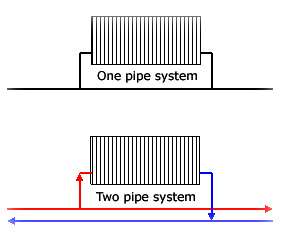
A one-pipe system uses a single continuous loop that acts as both the flow and the return. Hot water leaves the boiler, goes through or past a series of radiators, and returns to the boiler along the same pipe.
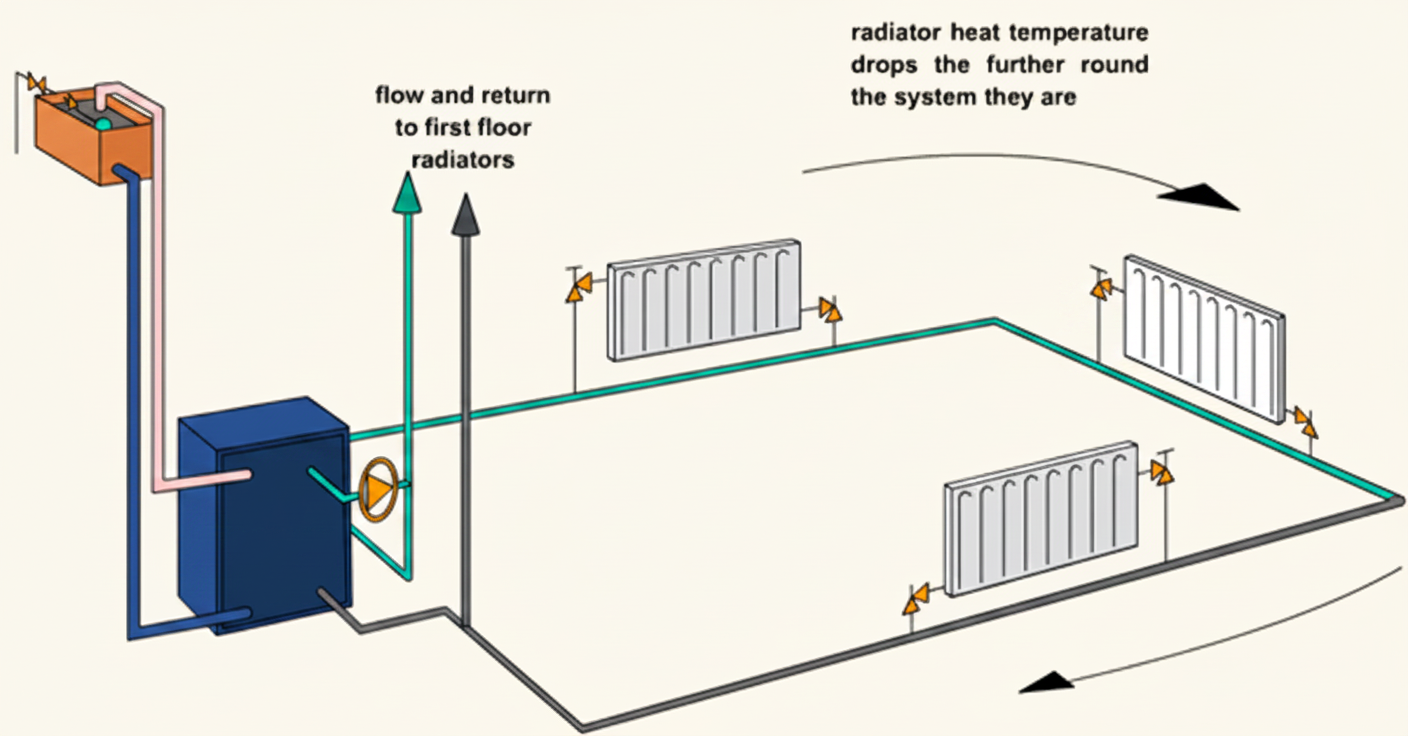
How it works:
- The combined flow/return is pumped
- Water travels through each radiator by convection (hotter, less dense water rises into the top of the radiator; cooler, denser water drops back into the main pipe)
- Because the pipe has to loop, it's hard to extend or branch off
The problem: cooler water coming out of each radiator mixes with the hot water in the main flow, so the radiators further along the loop receive cooler water than the first radiator.
Balancing: radiators at the end of the loop need to be oversized to give similar heat output to the first radiators on the circuit. This is the key one-pipe balancing fact.
One-pipe systems are not installed new today as they don't meet modern Building Regulation standards, but you'll meet them in older properties.
Two-pipe systems
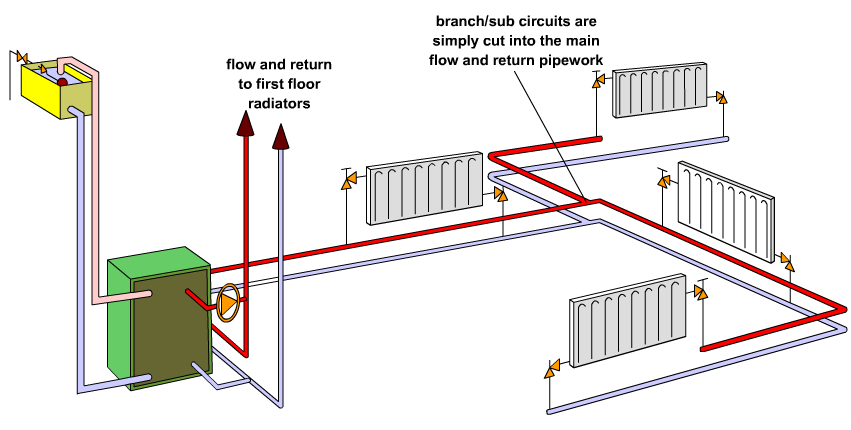
The modern standard. In a two-pipe system, the flow and return are separate. Hot water leaves the boiler on the flow pipe, is forced through each radiator in parallel, and returns to the boiler through the separate return pipe.
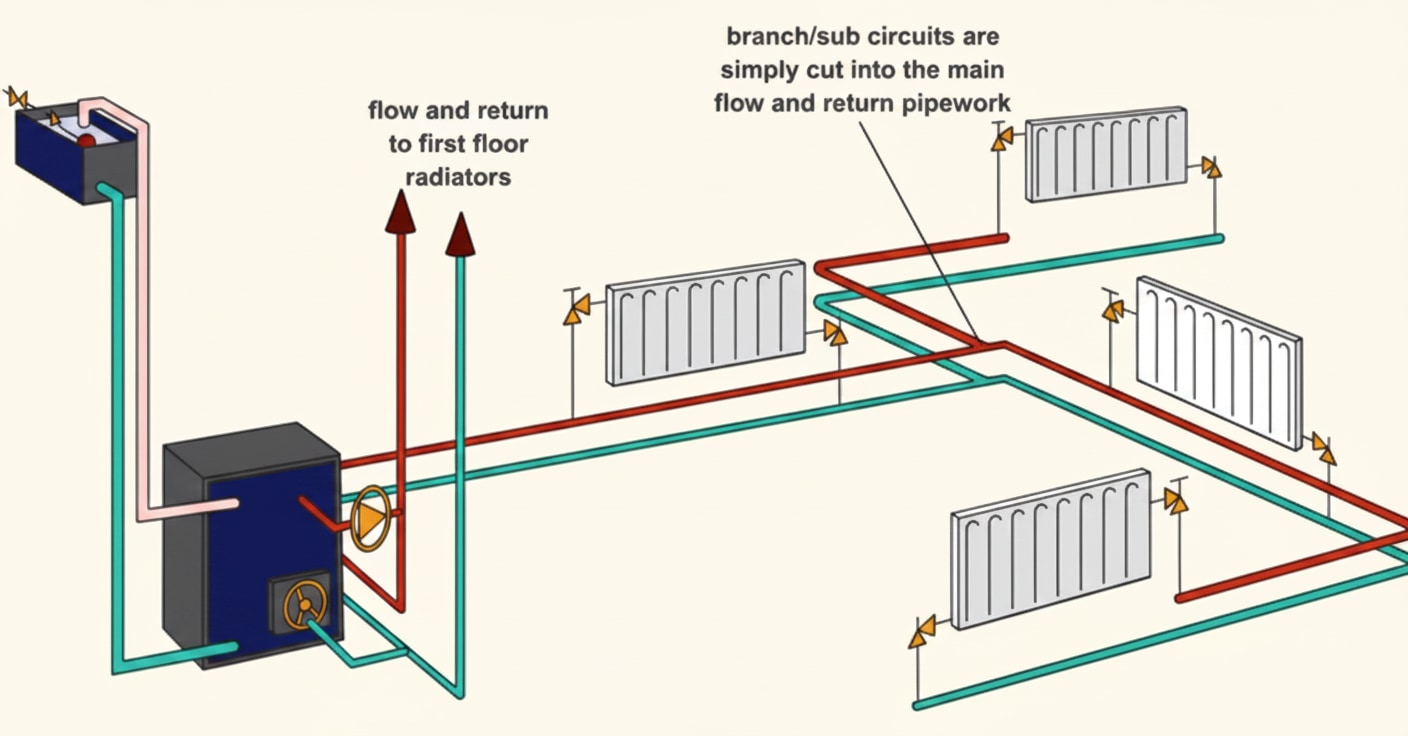
How it works:
- The system is pumped — water is forced through each radiator in parallel (not relying on convection within the radiator itself)
- Heat-up times are fast
- Easy to extend and branch off
Balancing is essential. Water takes the path of least resistance, so without balancing it would flow mostly through the radiators closest to the pump and barely reach the furthest ones. The fix: lockshield valves on one side of each radiator.
How the lockshield balancing works:
- Radiators furthest from the pump: lockshield fully open
- Radiators closer to the pump: lockshield gradually closed down
Closing the lockshields on near radiators increases resistance through them, forcing water out to the furthest radiators. When balanced correctly, all radiators heat up at similar rates.
Microbore
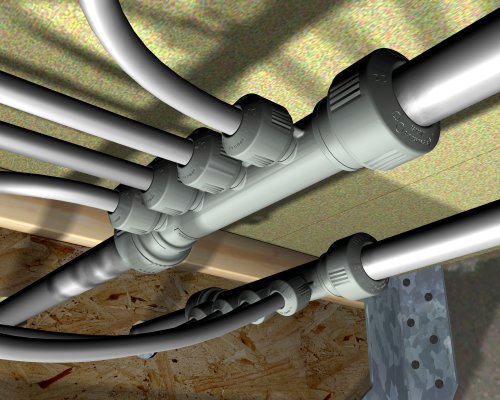
Microbore is a pipework variant rather than a different system type — it's still two-pipe in its design, but it uses very small-bore pipework to feed the radiators.
How microbore is laid out:
- 22mm flow and return run to a central point in the property
- At the central point, the pipe feeds into a manifold
- From the manifold, 10mm or 8mm pipes run out to each individual radiator
A manifold is a fitting that allows many small pipes to be connected to a main run. The advantage is neat, easier installation — all the small pipes run from one central point rather than snaking through the building. The disadvantage is that the small-bore pipes are easier to block with sludge, so regular system maintenance matters more.
Underfloor heating
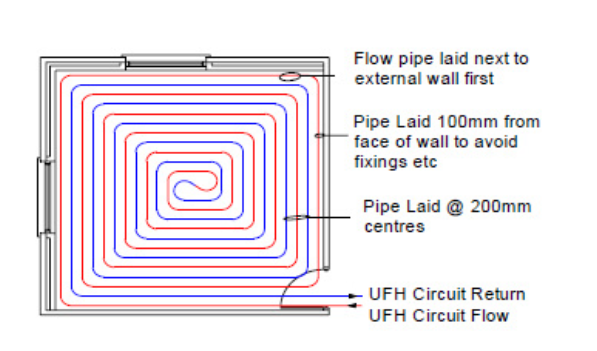
Increasingly common in modern properties — either in parts of the house (typically kitchens and bathrooms) or throughout.
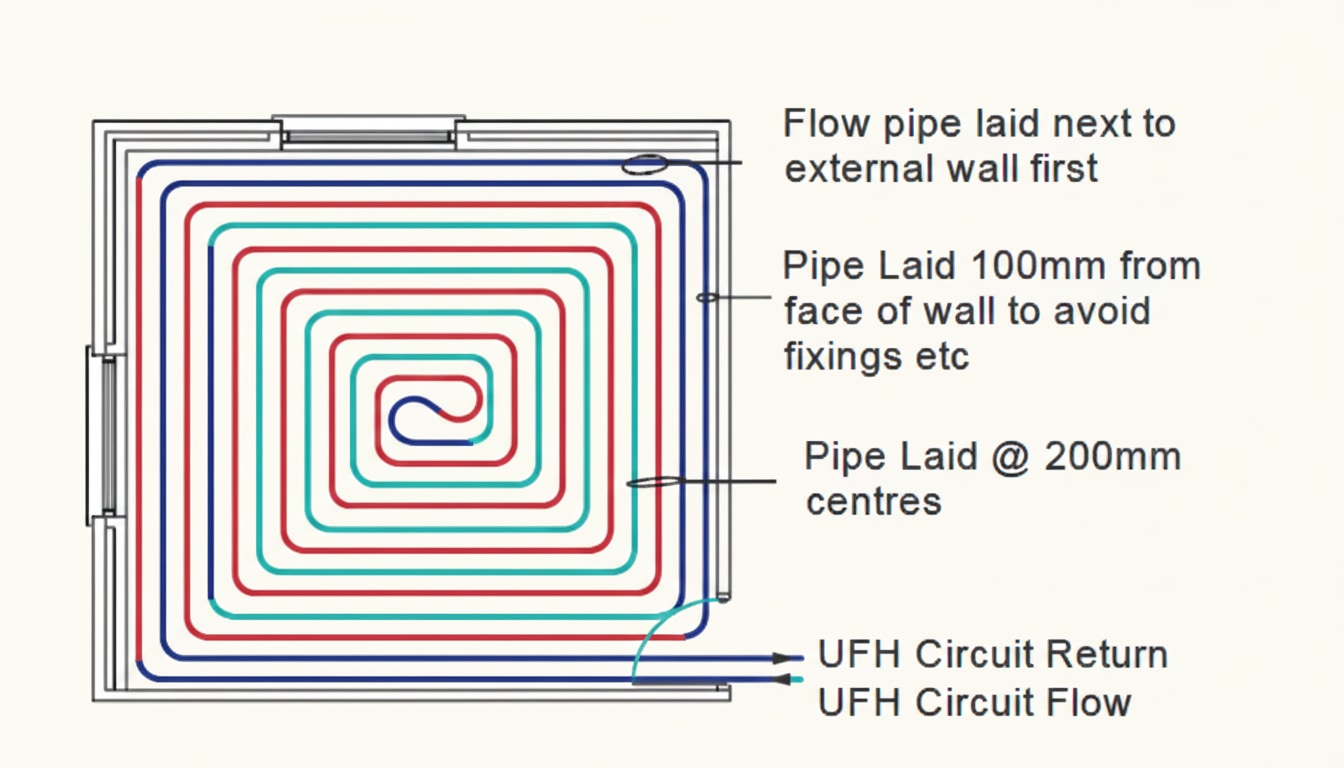
Key characteristics:
- Low operating temperature — typically 35°C up to a maximum of 60°C, depending on floor type. Much lower than a traditional radiator system running at 70°C+
- Even heat distribution across the whole floor area, rather than localised hot spots near radiators
- Longer heat-up times because it's heating a large thermal mass (the floor itself)
- Works extremely efficiently with condensing boilers and is a natural match for heat pumps, both of which are most efficient at low flow temperatures
Can be wet (hot water through pipework laid in the floor, feeding into a manifold) or dry (electric heating mats). As plumbers, we're concerned with wet underfloor.
An important design point: you must not exceed the maximum flow temperature for the floor type — too much heat can damage certain flooring and cause discomfort.
Common exam traps
Trap 1: Confusing how one-pipe radiators are fed. One-pipe systems use convection through each radiator — hot water rises into the radiator, cooler water drops back into the loop. Two-pipe systems force water through the radiator. Questions often test which system uses which mechanism.
Trap 2: Lockshield balancing direction. Lockshields on the furthest radiators are fully open; the ones on the closest radiators are closed down. Get this the wrong way round and you starve the end of the circuit.
Trap 3: Microbore pipe sizes. 22mm to the manifold, 10mm or 8mm from the manifold to each radiator. The 22mm portion is normal two-pipe sizing; the small-bore is what makes it "micro".
Trap 4: Underfloor temperatures. Around 35°C up to max 60°C depending on floor. Don't confuse with traditional radiator temperatures (70°C+).
Quick revision summary
Before the mock test, six things you need to be able to produce from memory:
- Wet systems use water; dry systems use electrical elements
- Full / background / selective heating — the three design approaches
- One-pipe: single loop, water moves through radiators by convection, end radiators oversized to balance
- Two-pipe: separate flow and return, forced circulation, lockshield valves on one side of each radiator for balancing
- Microbore: 22mm to manifold, 10mm or 8mm from manifold to radiator
- Underfloor: low operating temperature (~35–60°C), even heat distribution, good match for heat pumps and condensing boilers
📝 10-Question Mock Test
Click an option to see whether you got it right. Explanations appear instantly — no submitting at the end.
The main purpose is comfort — keeping occupants warm. Cost-effectiveness and energy efficiency are desirable but secondary. Option A (ventilation) is a completely separate building service.
Separate flow and return pipework is the defining feature of a two-pipe system. A one-pipe system uses a single combined flow/return loop. The term "three-pipe" isn't a standard domestic central heating system type.
In a one-pipe system, the water in the main pipe is pumped, but at each radiator the hot water rises into the top of the radiator by convection (it's less dense), and cooler water drops back into the main pipe. This is the fundamental mechanism that makes a one-pipe system work — and limits how well it balances.
Each radiator cools the water slightly as it passes, and the cooler water rejoins the main flow for the next radiator. By the end of the loop, water temperature has dropped noticeably. The fix is to oversize the end radiators so their larger surface area compensates for the cooler water.
Lockshields are anti-tamper valves used specifically for balancing. Wheel head valves (A) are older manual radiator controls. TRVs (B) sense room temperature and open/close accordingly. Service valves (D) are isolation valves used elsewhere in the system.
The furthest radiators should be fully open on the lockshield so maximum flow reaches them. The closer radiators are progressively closed down to increase resistance, forcing water out to the furthest ones. Option A (fully closed) would stop flow entirely to the end of the circuit.
A manifold distributes small-bore pipes from a single central point. One-pipe and two-pipe systems use uniform pipe sizes throughout rather than a central manifold. "Gravity-fed" refers to how water moves (by convection), not how it's distributed.
Microbore feeds individual radiators in 10mm or 8mm pipe from the central manifold. The 22mm (A) is the size of the main run to the manifold. The combination — large main run, small runs to radiators — is what "microbore" means.
Underfloor heating warms the whole floor area evenly. Options A and B are disadvantages or incorrect — underfloor is slower to heat up and runs at lower temperatures. Option C is misleading; the total pipework is usually comparable.
Underfloor operates at much lower flow temperatures than a radiator system, which is why it pairs particularly well with condensing boilers and heat pumps — both of which are most efficient at low flow temperatures.
How PlumbMate puts this into practice
System-type questions are exactly what PlumbMate drills you on — with the spaced repetition engine making sure the distinctions stay clear.
- Flashcards, not essays. One prompt, one answer — the format that research has consistently shown works best for active recall.
- Wrong answers are logged. Every question you get wrong goes into a dedicated collection that resurfaces more frequently in future sessions.
- The 3× rule. You need to get a question right three times before it clears — one lucky guess isn't enough.
- Explanations on every question. Like the ones above, but on every single question in the app.