You wire up a new boiler. The first time the homeowner runs the immersion at the same time, an MCB trips and the kitchen sockets go dead. Why those sockets, and not the boiler itself? That's discrimination — and it's one of the things circuit protective devices are designed to do.
This post covers everything Level 2 expects you to know about the devices that protect electrical circuits: fuses, MCBs, RCDs, RCBOs and how they work together. The wiring standard behind all of it is BS 7671:2018+A4:2026, the 18th Edition of the IET Wiring Regulations with Amendment 4 — the document an electrician works to, and the one the figures in this post come from. For the rest of the cluster, see Ohm's Law and Power Law, earthing and bonding, safe isolation, and circuits and cables.
The two faults a protective device guards against
Every protective device in an installation is there to deal with one of two electrical faults:
- Overcurrent. Too much current flowing through the cable. Comes in two flavours: an overload (a slow, sustained excess — like plugging too many appliances into one socket) and a short circuit (a sudden massive current caused by live touching neutral or earth).
- Earth fault. Current escapes the live conductor and finds an unintended path to earth — through a damaged cable, a faulty appliance, or a person. This is the fault that kills.
Different devices handle different faults. Fuses and MCBs handle overcurrent. RCDs handle earth faults. RCBOs handle both.
Fuses
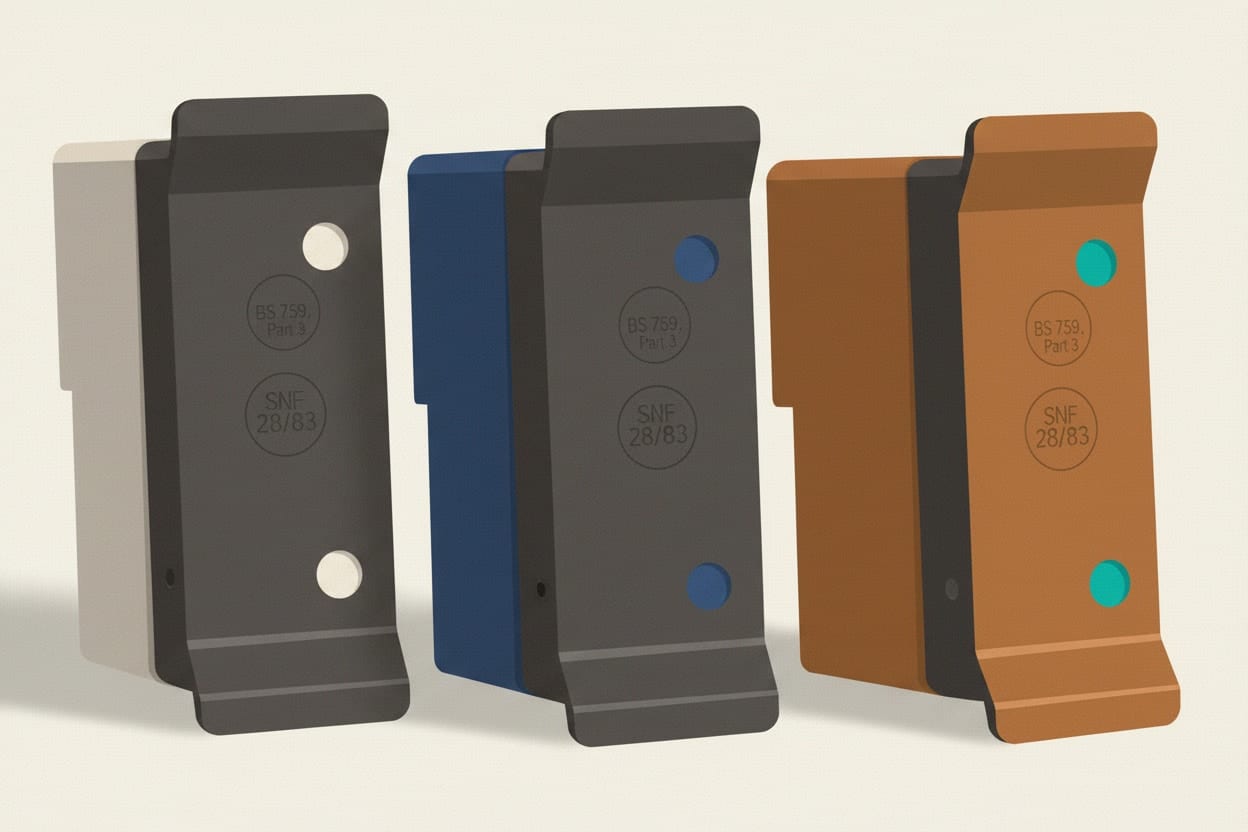
The original protective device. A thin wire or filament inside the fuse melts when too much current flows through it, breaking the circuit. Three types you'll meet at Level 2:
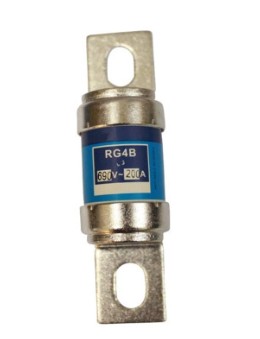
- Rewireable fuse (BS 3036). Fuse wire stretched between two terminals in a porcelain holder. Cheap, but slow to operate and easy to fit the wrong size of wire by mistake. No longer permitted in new installations — but you'll still see them in older houses.
- Cartridge fuse. A sealed glass or ceramic tube with the fuse element inside. Faster than rewireable, and impossible to refit with the wrong rating. Used in plug tops (3 A, 5 A, 13 A) and as the supplier's main fuse on the cut-out.
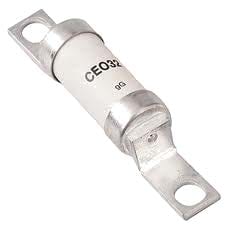
- HBC fuse (high breaking capacity). A heavy-duty cartridge fuse used in commercial and industrial distribution where short-circuit currents can be very high. The "high breaking capacity" means it can interrupt a much larger fault current safely without the fuse body shattering.
Common fuse ratings to memorise: 3 A for boilers and clocks, 5 A for older lighting, 13 A for general appliances, and the supplier's main fuse is typically 60 A, 80 A or 100 A depending on the property.
MCBs (miniature circuit breakers)
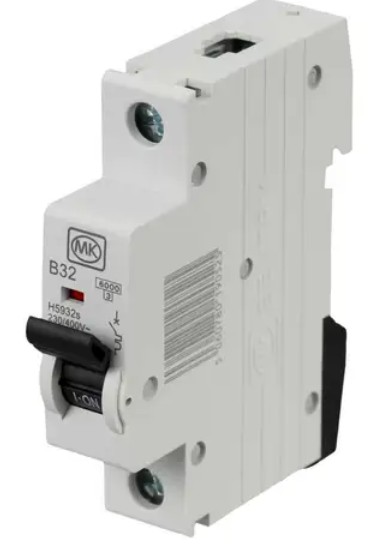
The modern replacement for circuit fuses. An MCB does the same job — protecting against overcurrent — but uses a switch mechanism rather than a meltable wire.
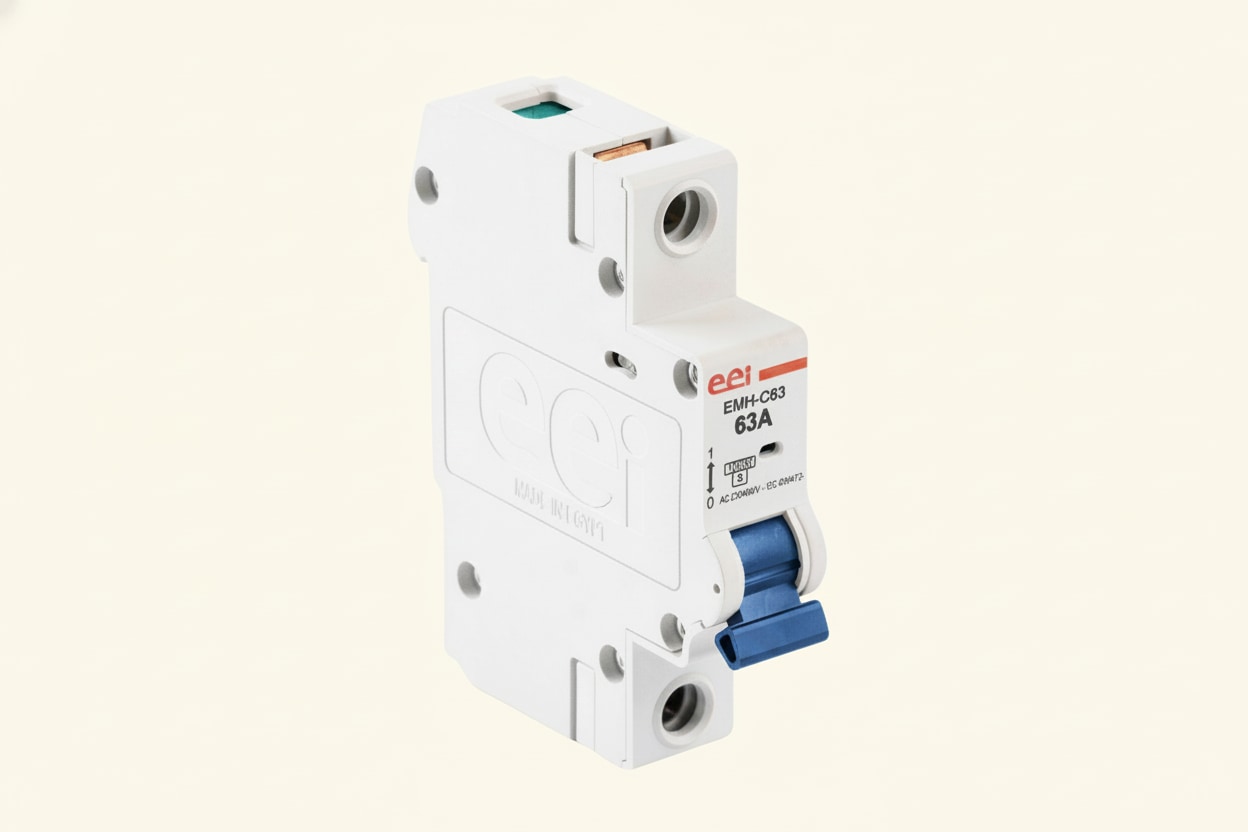
How it works: a small electromagnet inside the MCB pulls the contacts open the instant a short circuit occurs (fast trip), and a thermal strip warms up over time and trips the contacts open under a sustained overload (slow trip). Two mechanisms, one device.
The big practical advantage: when an MCB trips you just switch it back on after fixing the fault. With a fuse you have to find a spare and replace it.
Common MCB ratings in domestic plumbing context:
- 6 A — lighting circuits
- 16 A — immersion heater dedicated radial
- 32 A — ring final circuit
- 40 A or 50 A — electric shower (depending on power rating)
RCDs (residual current devices)
An RCD does something completely different to a fuse or MCB. It doesn't measure the size of the current — it measures whether the current going down the live conductor matches the current coming back through the neutral.
In a healthy circuit those two currents are equal. If some of the current is leaking to earth — through a damaged cable, a faulty appliance, or a person touching a live part — the live and neutral currents won't match, and the RCD trips the circuit off in milliseconds.
The standard rating for personal protection is 30 mA with a maximum trip time of 40 ms. That's fast enough to interrupt the supply before electrocution under most fault conditions.
Where you'll meet RCDs as a plumber:
- Bathroom circuits — RCD protection is mandatory across all bathroom zones
- Sockets in domestic premises — generally required to have RCD protection
- Outdoor circuits — higher risk of dampness reaching live parts
- Cables buried in walls at less than 50 mm depth without mechanical protection
The bathroom zones
The reason RCD protection is mandatory in bathrooms is the zone classification. BS 7671:2018+A4:2026 — the 18th Edition of the IET Wiring Regulations with Amendment 4 — defines three zones in a bathroom, numbered 0, 1 and 2, based on how exposed each part is to water. Everything beyond them is simply outside the zones:
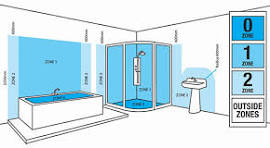
- Zone 0 — inside the bath or shower tray itself. The wettest place. Only SELV (≤12 V) equipment is permitted here.
- Zone 1 — directly above the bath or shower up to 2.25 m. Equipment in Zone 1 needs an IP rating of IPX4 minimum (water-spray rated).
- Zone 2 — 0.6 m horizontally beyond the bath or shower, up to 2.25 m height. Also IPX4 minimum.
- Outside zones — the rest of the bathroom. Standard fittings allowed, but the whole installation must still be RCD-protected.
Sockets are not permitted in Zones 0, 1 or 2. The exception is a shaver socket fed via an isolating transformer, which can be fitted in Zone 2 at the appropriate height.
RCBOs — the all-in-one
An RCBO (residual current breaker with overcurrent) combines an MCB and an RCD in a single device. One unit does both jobs: trips on overcurrent, trips on earth fault.
RCBOs are now standard in modern domestic consumer units. Each circuit gets its own RCBO, so a fault on one circuit only takes that circuit out — not the whole house.
The older arrangement (one RCD covering several circuits) was simpler and cheaper, but had a downside: a single earth fault on any circuit would trip the RCD and kill power to all the circuits it protected. Modern installations use individual RCBOs to avoid this nuisance tripping.
Discrimination — how the system fits together
Discrimination (sometimes called selectivity) means: when a fault happens, only the protective device nearest to the fault should operate. The whole house shouldn't go off because of a fault on one immersion heater.
For discrimination to work, the device ratings need to step up as you move from the appliance back to the supplier:
- The fuse in the appliance plug or fused spur (e.g. 3 A in a boiler) is the smallest
- The MCB on that circuit is bigger (e.g. 16 A or 32 A)
- The main switch on the consumer unit is larger still (typically 100 A)
- The supplier's main fuse is the largest (typically 100 A)
If the ratings are correctly graded, an overload at the boiler blows the 3 A plug fuse first — leaving everything else intact. If they're wrongly graded, the overload could trip the circuit MCB instead, taking out the whole circuit unnecessarily.
You don't need to be doing the calculations. But you do need to understand why the supplier's main fuse is bigger than the consumer unit's main switch, and why the plug fuse is smaller than the circuit MCB. The principle gets tested directly.
Common exam traps
Fuse vs MCB. Both protect against overcurrent. The exam likes asking which has the advantage of not needing replacement after operating — that's the MCB.
RCD vs MCB. They do different things. An RCD detects earth faults; an MCB detects overcurrent. A circuit can have both — or use an RCBO to combine the two. Don't confuse the trip mechanisms.
The 30 mA figure. Standard sensitivity for an RCD providing personal protection. If you see 100 mA or 300 mA in an answer, those are time-delayed RCDs for fire or equipment protection only — not for protecting people from shock.
Discrimination order. Smaller devices closer to the appliance, larger devices closer to the supply. The plug fuse blows first, the supplier's main fuse last.
Quick revision summary
- Fuses and MCBs protect against overcurrent (overload + short circuit)
- RCDs protect against earth faults by detecting current imbalance — typically 30 mA, 40 ms
- RCBOs combine MCB and RCD in one device; standard in modern consumer units
- Common MCB ratings: 6 A lighting, 16 A immersion, 32 A ring main, 40–50 A shower
- Common plug/spur fuse ratings: 3 A (boiler), 5 A (old lighting), 13 A (general)
- Discrimination: ratings step up from the appliance back to the supplier so only the nearest device operates
- Rewireable fuses (BS 3036) are no longer permitted in new installations
- BS numbers, if you want them: rewireable = BS 3036; cartridge fuses in a consumer unit or cut-out = BS 88 (older ones to BS 1361); the fuse in a plug top = BS 1362. You are very unlikely to be asked for these at Level 2 — know the fuse types and ratings first
📝 10-Question Mock Test
Click an option to see whether you got it right. Explanations appear instantly — no submitting at the end.
An RCD detects the imbalance between live and neutral currents that occurs when current is leaking to earth. Overload and short circuit are detected by fuses or MCBs; voltage spikes need a surge protective device.
30 mA is the standard for personal protection — fast enough to interrupt before electrocution under most fault conditions. Higher ratings (100 mA, 300 mA) are time-delayed RCDs used for fire or equipment protection only.
A boiler runs the electronics, controls and pump only — very low current draw. A 3 A fuse is sufficient and provides better protection than a higher-rated fuse if a fault develops.
RCBO stands for Residual Current Breaker with Overcurrent. It performs the function of both an MCB (overcurrent) and an RCD (earth fault) in one device.
An MCB simply switches back on after the fault is cleared. A fuse has to be replaced — and you might not have a spare of the right rating to hand.
An MCB has two trip mechanisms. The electromagnet trips instantly on short circuits (very high current). The thermal strip trips slowly on sustained overloads.
Rewireable fuses are slow to operate and prone to being fitted with the wrong size of fuse wire. They've been replaced by MCBs in new work but remain in older properties.
Discrimination (sometimes called selectivity) ensures that only the device closest to the fault operates, leaving the rest of the system running. Without it, a small fault could take out the entire installation.
MCBs protect against overcurrent — overload or short circuit. Earth faults to a person require an RCD; voltage drop and insulation breakdown are addressed by other measures (cable sizing and insulation testing respectively).
For discrimination to work, the smallest device closest to the appliance should operate first, working back to the largest device closest to the supply. The supplier's main fuse is the largest in the chain and operates last — only if every smaller device has failed to clear the fault.
How PlumbMate puts this into practice
Protective devices are the kind of topic spaced repetition is built for: lots of specific values (RCD sensitivities, MCB ratings, fuse colours and ratings) that have to be at your fingertips in the exam.
- Flashcards, not essays. One prompt, one answer — the format that research has consistently shown works best for active recall.
- Wrong answers are logged. Every question you get wrong goes into a dedicated collection that resurfaces more frequently in future sessions.
- The 3× rule. You need to get a question right three times before it clears — one lucky guess isn't enough.
- Explanations on every question. Like the ones above, but on every single question in the app.