When you connect a boiler, an immersion heater, a central heating pump, or a shower to the electrical supply, you're extending an existing circuit or adding a new one. You don't need to know everything an electrician knows — but you do need to know enough to choose the right cable, the right connection method, and the right protection. Get this wrong and you can cause fires, unsafe installations, or failed appliances.
Cables get protected by devices — see the dedicated circuit protective devices post for fuses, MCBs, RCDs and discrimination. For the rest of the cluster, see the Ohm's Law and Power Law, earthing and bonding, and safe isolation posts.
Ring mains
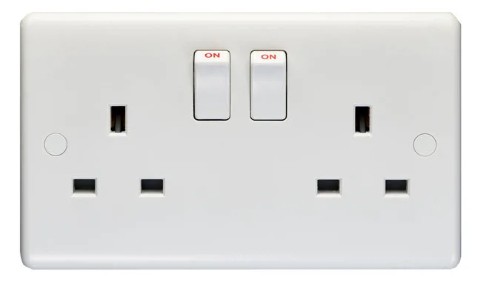
A ring main (or ring circuit) is the most common way of wiring socket outlets in UK homes. As the name suggests, it's a loop: the cable starts at the consumer unit, goes around a number of sockets, and returns to the same terminal at the consumer unit.
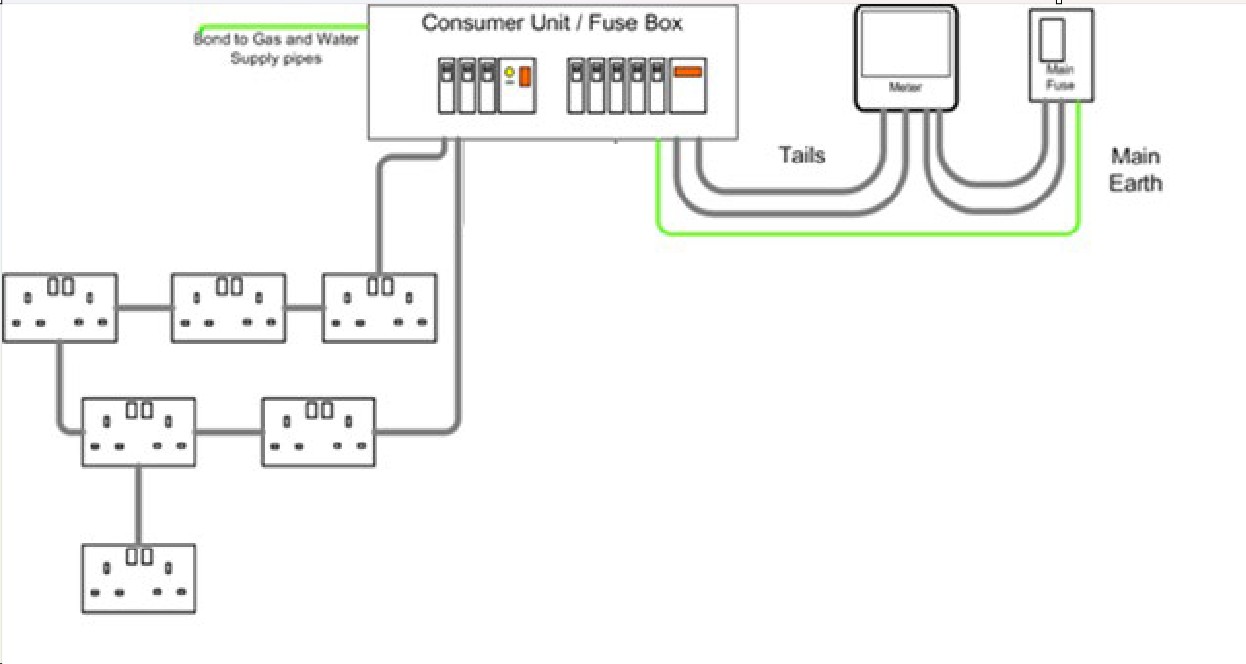
The key facts for the exam:
- Protected by a 32 A MCB (or 30 A fuse in older installations)
- Maximum power draw: 7,200 W (= 32 A × 230 V, near enough)
- Maximum floor area covered: 100 m² per ring main
- Minimum cable: 2.5 mm² twin and earth
- Because there are two paths back to the consumer unit (the current can flow either way round the ring), the load on each section of cable is roughly half what it would be on a single run — so a thinner cable can carry the same total current safely
That's why a large house often has two separate ring mains — one upstairs, one downstairs — because a single ring can't cover the full floor area.
Radial circuits
A radial circuit is simpler: the cable goes from the consumer unit to a series of points and stops at the last one. No return loop. These are typically used for:
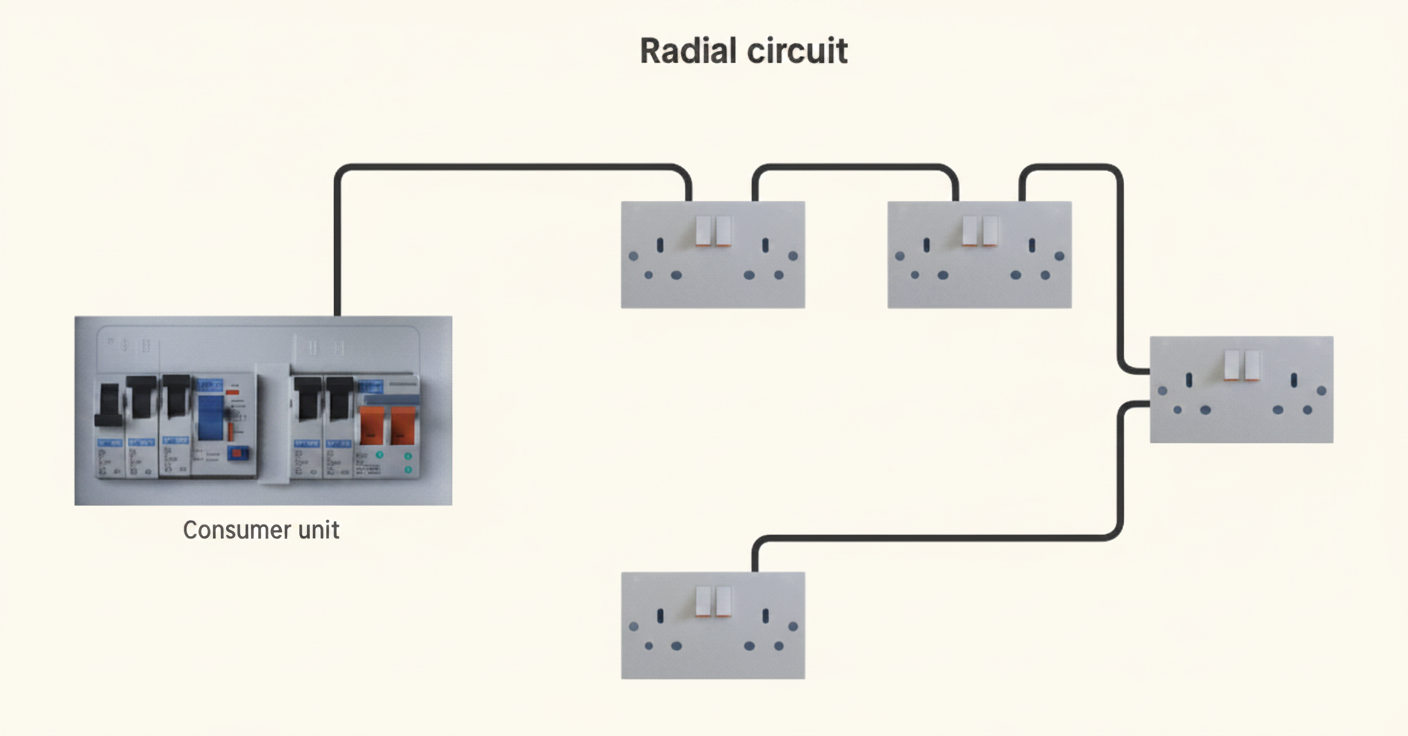
- Individual high-power appliances on their own dedicated circuit — cookers, electric showers, immersion heaters
- Smaller networks of sockets where a full ring main would be over-specification
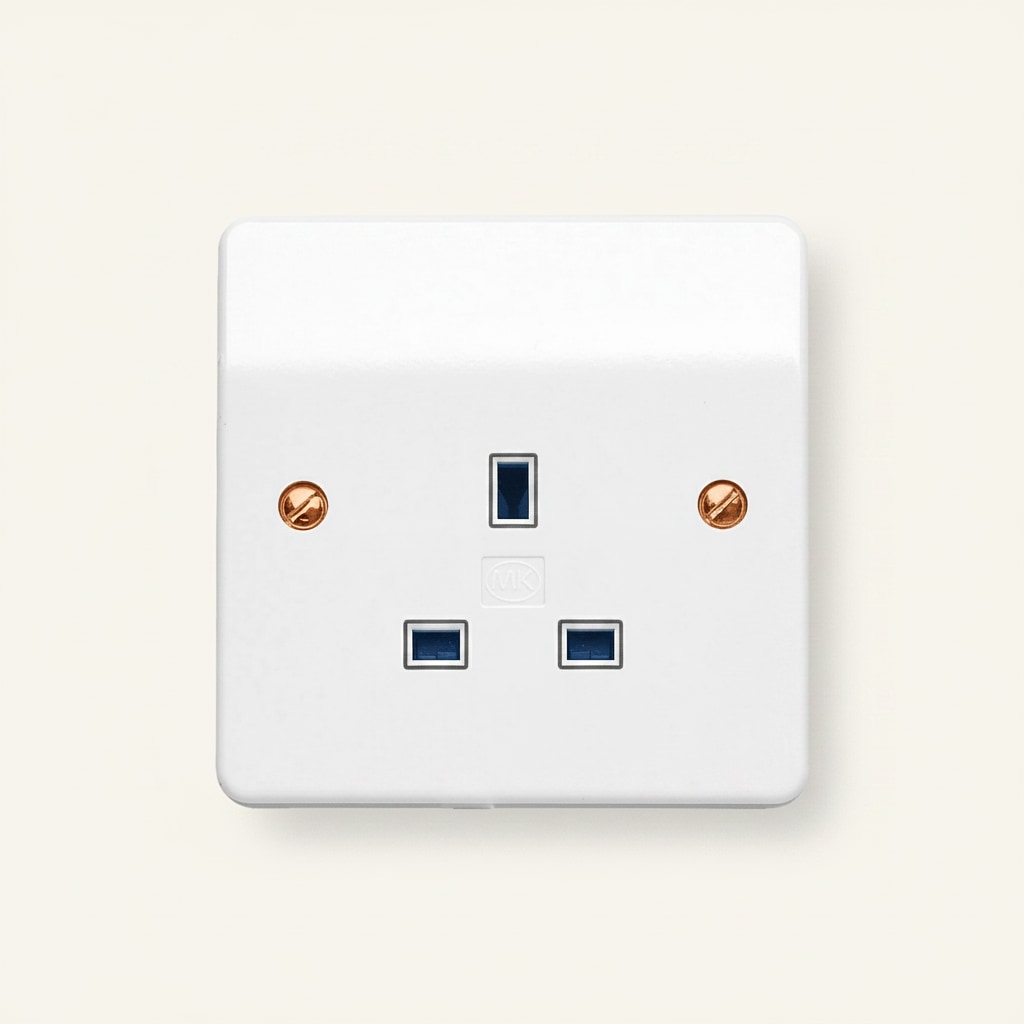
High-power appliances like electric showers and immersion heaters almost always sit on their own dedicated radial circuit with a fused switched double-pole switch near the appliance for isolation. Putting them on a shared circuit would risk overload.
Spurs
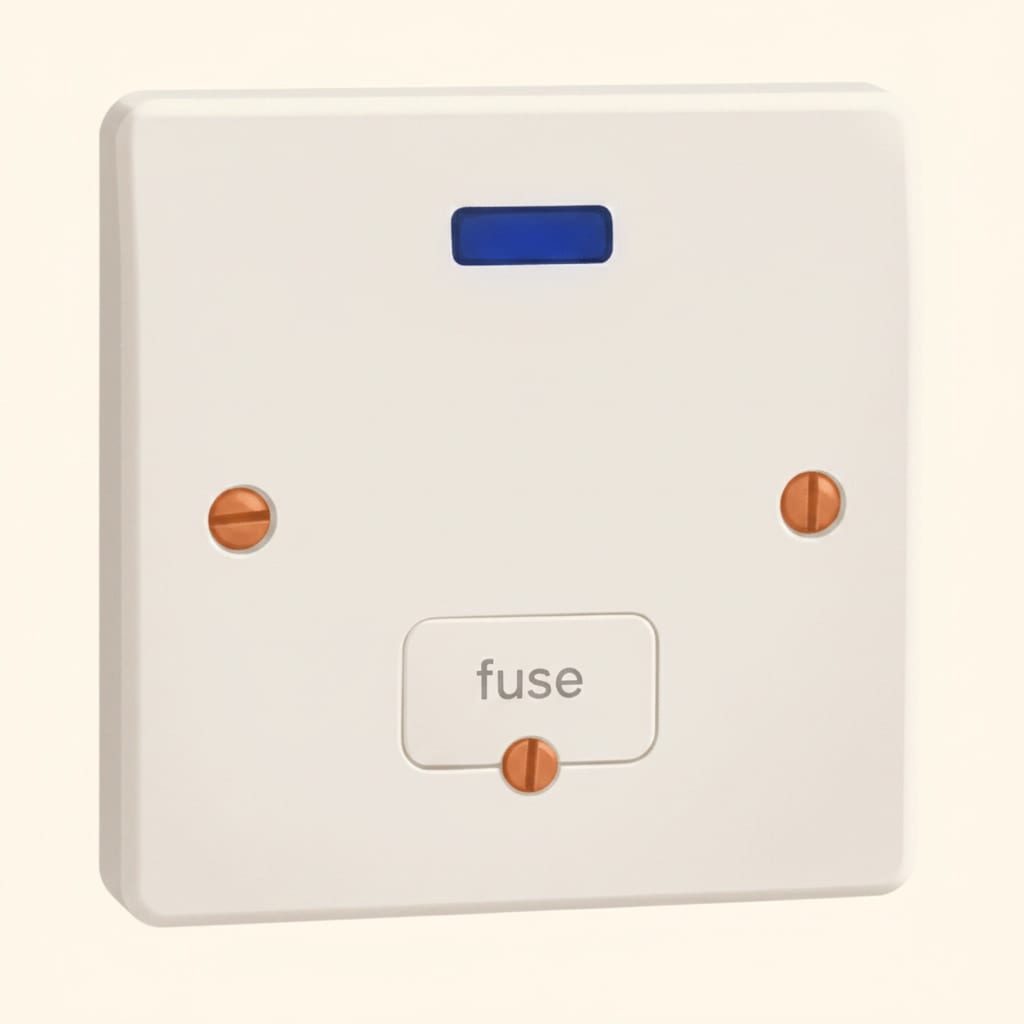
A spur is a short branch taken off an existing circuit — typically a ring main — to supply one additional point. Rules on spurs are tightly constrained, but for plumbing work the common applications are:
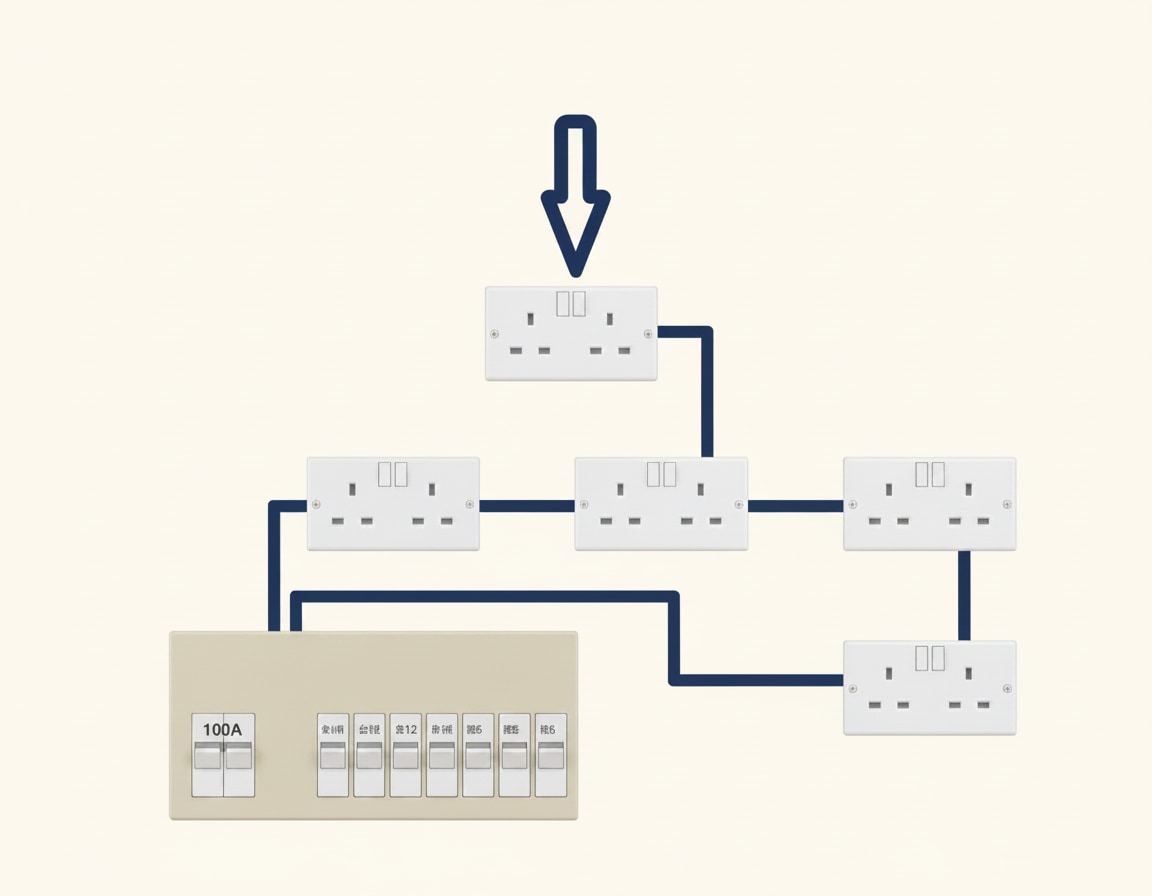
- Fused switched spurs for gas boilers (typically with a 3 A fuse, because boilers draw very little current)
- Spurs for shower pumps
- Spurs for additional sockets
A spur takes its power from the existing circuit, so the load on that circuit has to be able to cope. You can't just spur off any circuit for any appliance — high-power appliances need their own dedicated radial circuit.
The common plumbing appliance arrangements
These are the wiring arrangements you'll meet most often as a plumber. Learn them because they come up reliably in exam questions:
Immersion heater (typically ~3 kW):
- Own dedicated radial circuit
- 16 A MCB at the consumer unit
- 2.5 mm² twin and earth from consumer unit to the fused switched spur
- 13 A fuse in the fused switched spur
- 1.5 mm² heat-resistant flex from the spur to the immersion heater itself (because the cylinder cupboard is warm)
Gas boiler (low power — electronics and controls only):
- Usually a fused switched spur off the ring main
- 3 A fuse in the spur
- Connected to 230 V AC
Electric shower (high power — often 8.5–10 kW):
- Own dedicated radial circuit with its own MCB
- Protected by an RCD (residual current device) — showers are high-risk because wet hands operating a switch are dangerous
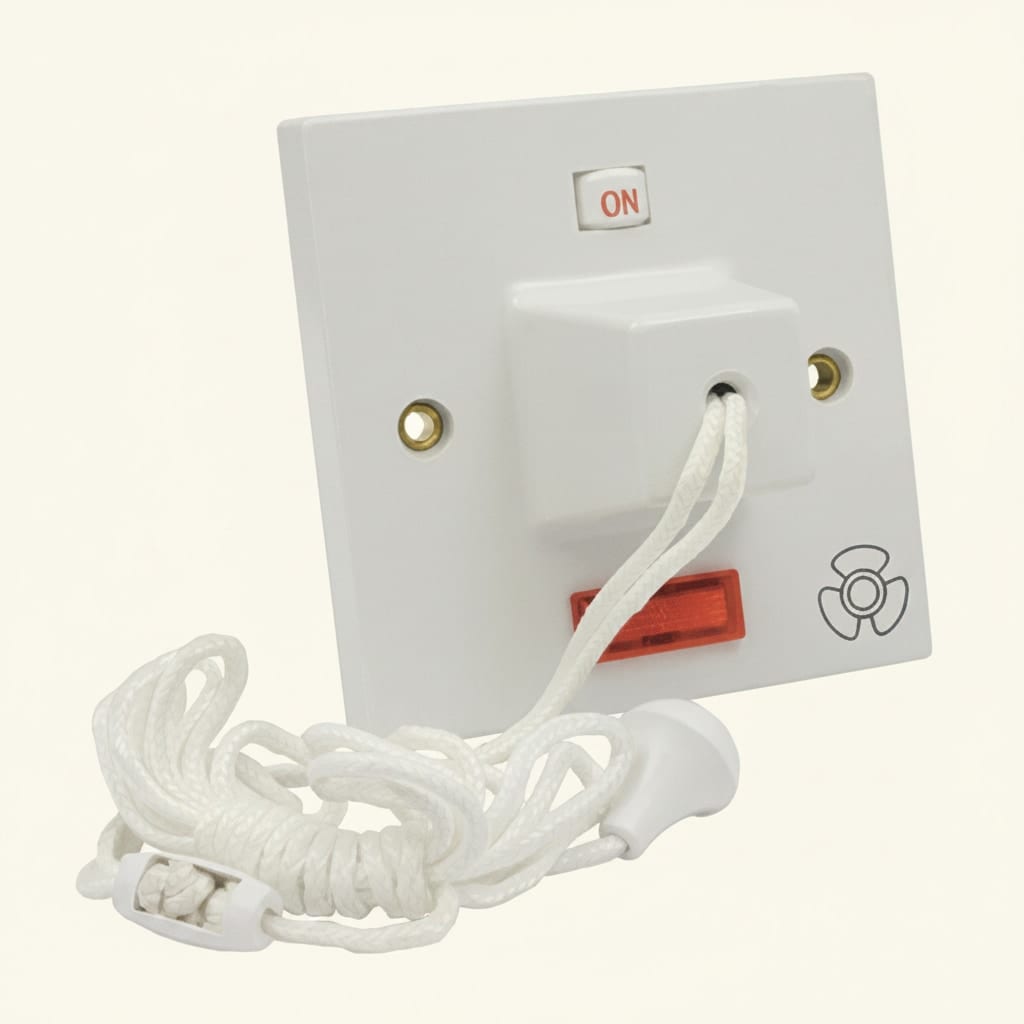
- Isolation switch: double-pole pull cord with neon indicator (or a double-pole rocker switch outside the bathroom), because wet hands must not operate it directly
Cable types plumbers need to recognise
Four common cable types:
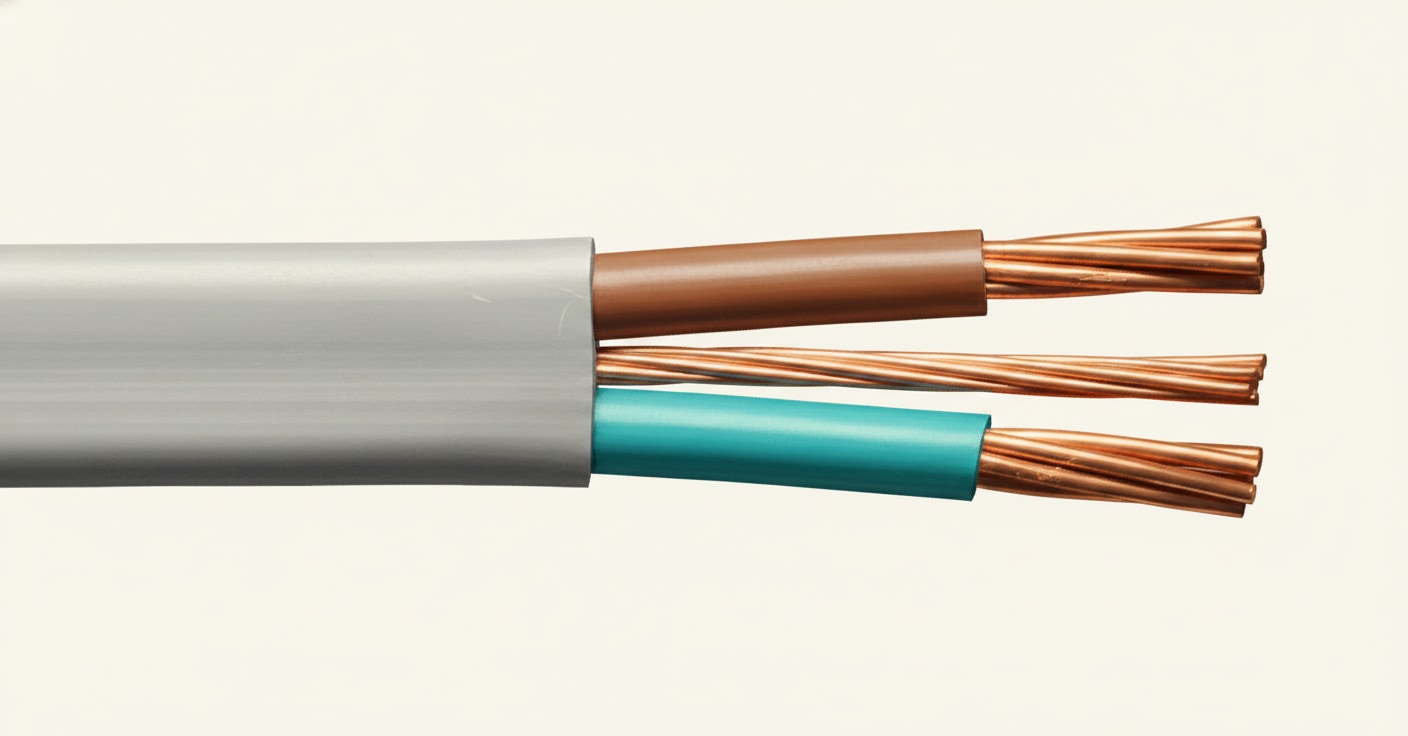
Twin and earth. Flat profile, usually grey. Two insulated cores (line brown, neutral blue) and one bare earth between them. Used for ring mains and socket circuits. Minimum 2.5 mm² for ring mains.
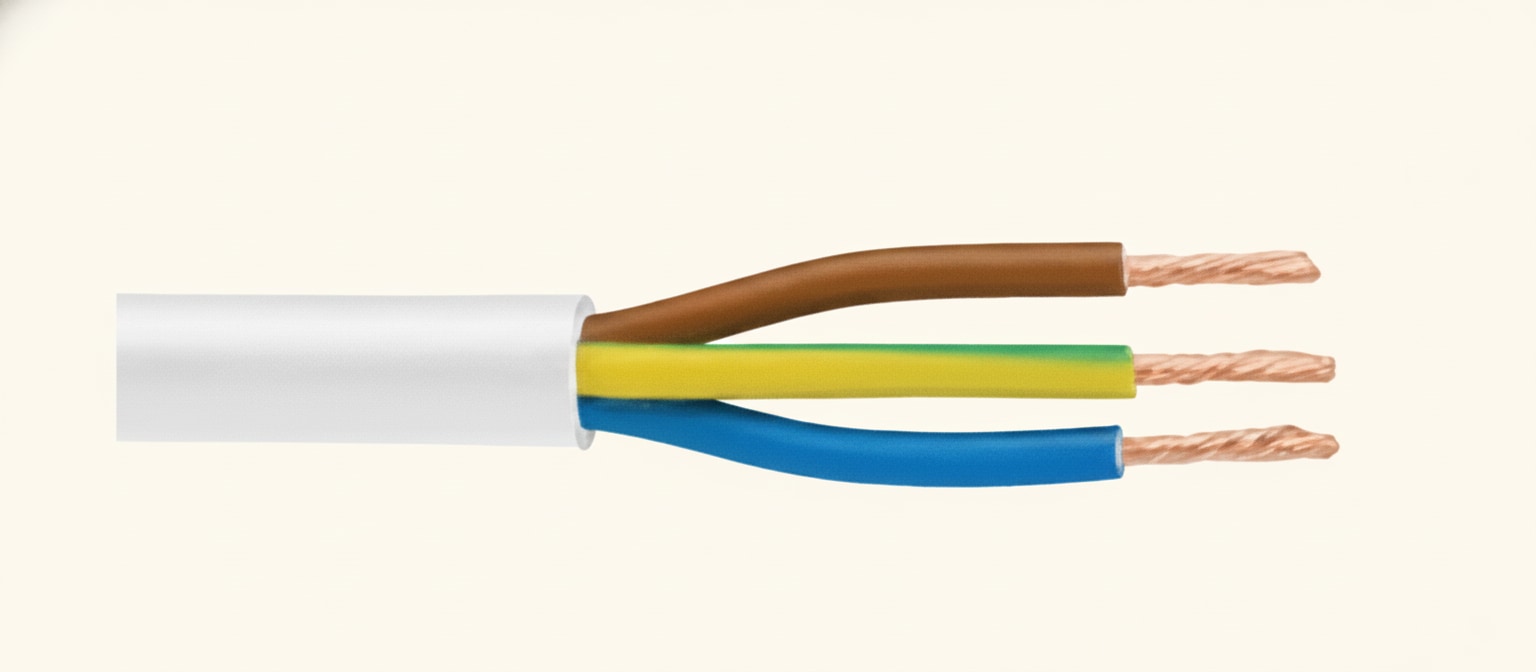
Three-core flex. Round profile, flexible. Three individually insulated cores (line brown, neutral blue, earth green-and-yellow). Used to connect appliances to their supply — from a spur to a boiler, pump, or similar.
Three-core and earth. Flat profile, similar to twin and earth but with three insulated cores plus a bare earth. Used for two-way switching (lights controllable from two positions).
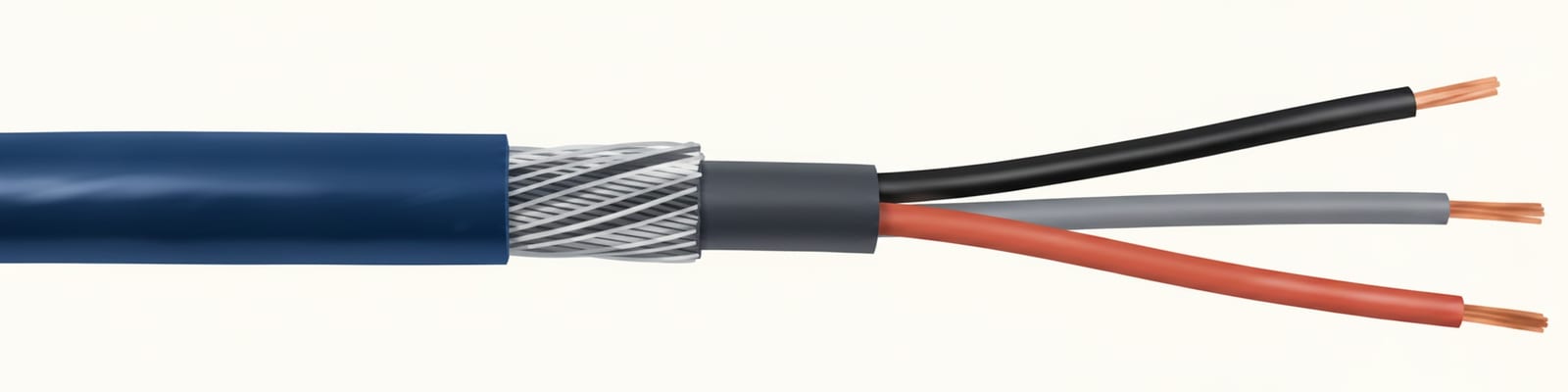
Armoured (SWA) cable. Steel wire armour surrounding insulated cores. Used for outdoor runs, underground cables, and the supplier's incoming cable — and in a TN-S earthing arrangement, the steel armour serves as the earth conductor.
Heat-resistant flex is a variant used for wiring in warm environments — specifically from a fused switched spur to an immersion heater in the cylinder cupboard.
Colour codes
Standard UK modern colour codes (post-2006):
- Live (line): brown
- Neutral: blue
- Earth (CPC): green and yellow
Older installations may use the pre-2006 colours (red for line, black for neutral, green for earth), which you'll still encounter in existing houses. The changeover was not a single date: harmonised colours were permitted from 31 March 2004 and became compulsory for new work from 1 April 2006. During that two-year window an installation could use either set — but never both — so on anything from that era, test rather than assume. Any bare earth conductor should be sleeved in green and yellow wherever it's exposed.
Cable protection: the 50 mm rule
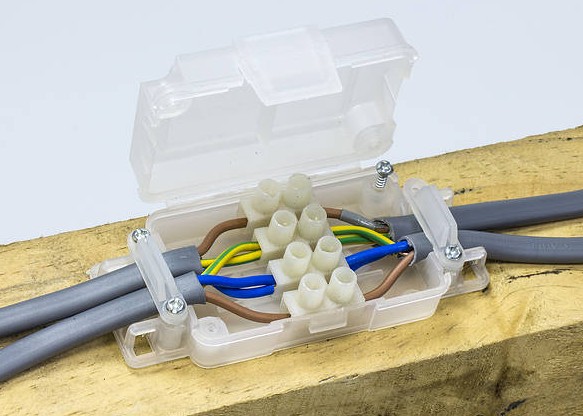
Cables run in walls or floors are vulnerable to being pierced by nails or screws. There are two ways to protect them:
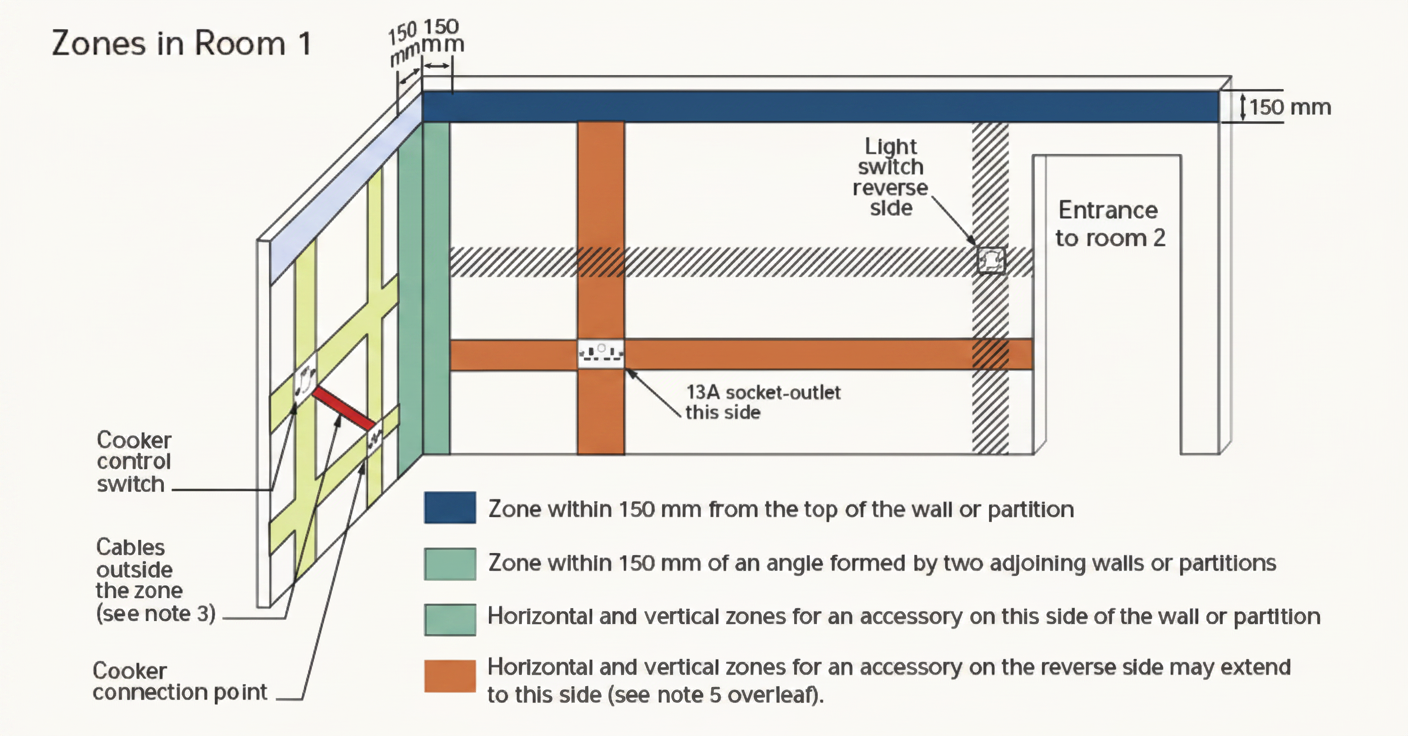
- Run the cable at least 50 mm away from any surface (wall face, floor surface)
- If that's not possible, protect the cable with conduit or trunking
Single-core cables must always be run in conduit — they don't have the sheath protection of twin and earth or flex.
For the exam, remember: 50 mm clearance or conduit is the rule, and if a cable passes through metalwork (e.g. a hole in a stud or a cable tray), it should be protected with a rubber bush or grommet to prevent the metal damaging the soft insulation.
Fused switched spurs for boilers
A gas boiler needs an electrical supply for its controls, pump and fan — but the actual current draw is small (measured in milliamps for the electronics). The standard arrangement:
- Fused switched spur with a 3 A fuse
- 230 V AC supply
- Usually taken as a spur off the ring main serving the boiler's area
- The switch lets you isolate the boiler for servicing without affecting the rest of the circuit
- A neon indicator on the spur tells you at a glance whether it's live
This is why, when you look at the electrical connection to a boiler, you'll see a small single-gang fused spur on the wall nearby — that's your isolation point when servicing.
Common exam traps
Trap 1: Confusing ring main and radial specifications. Ring main = 32 A, 7,200 W, 100 m², 2.5 mm². Radial for high-power appliances = own circuit, appropriately sized for the load. Don't mix them.
Trap 2: Wrong cable for the immersion heater run. The run from consumer unit to spur is 2.5 mm² twin and earth. The run from the spur to the immersion heater must be heat-resistant flex, minimum 1.5 mm² — because the cylinder cupboard is warm. Using standard flex here is wrong.
Trap 3: Boiler fuse size. Boilers run on a 3 A fuse in a fused switched spur — not 13 A. A boiler drawing ~1 A won't protect itself properly with a 13 A fuse.
Trap 4: Forgetting the 50 mm rule. Cables must be either at least 50 mm from any surface or protected by conduit. Any question involving a cable route through a wall, floor or under a skirting is testing this rule.
Trap 5: Shower isolation. Electric showers use a double-pole switch (isolates both line and neutral) either by pull-cord inside the bathroom or rocker switch outside. Single-pole switches are wrong because they only break the live conductor.
Quick revision summary
Before the mock test, six things you need to be able to produce from memory:
- Ring main: 32 A, 7,200 W, 100 m², 2.5 mm² twin and earth
- Radial circuits for high-power appliances with dedicated MCBs
- Immersion heater arrangement: 16 A MCB → 2.5 mm² T&E → fused switched spur with 13 A fuse → 1.5 mm² heat-resistant flex → heater
- Gas boiler: fused switched spur with 3 A fuse, 230 V AC
- Colour codes: line brown, neutral blue, earth green and yellow
- Cable protection: 50 mm from surface or run in conduit
📝 10-Question Mock Test
Click an option to see whether you got it right. Explanations appear instantly — no submitting at the end.
Domestic ring mains are protected by a 32 A MCB (or 30 A fuse in older installations). The logic: the ring provides two paths back to the consumer unit, so the total current the circuit can carry safely is higher than a single 2.5 mm² cable would otherwise allow. Option B (13 A) is the standard plug fuse and socket rating, not the circuit rating.
A single ring main should not cover more than 100 m² of floor area. This is why larger houses have separate upstairs and downstairs rings — one can't cover the whole building safely.
Minimum cable size for a domestic ring main. Option B (1.5 mm²) is used for lighting circuits, not ring mains. Option D (4 mm²) is over-specified for a standard domestic ring.
A boiler supplied from a spur off the ring main would normally be connected using twin and earth — the same cable type used for the ring itself. Option D (multi-core flex) is wrong because flex is used to connect appliances to their supply, not to run fixed wiring from the consumer unit. Option C (single-core thermoplastic) would need to be run in conduit.
A gas boiler draws very little current — mostly for the pump, fan and controls. The 3 A fuse protects against fault conditions while comfortably covering the normal load. Option C (13 A) would fail to protect the boiler's small-load wiring during a fault.
The immersion heater sits in a warm cylinder cupboard, so the flex from the fused switched spur to the heater needs to withstand the heat. Standard flex (non-heat-resistant) would degrade over time. Minimum 1.5 mm² heat-resistant flex is the standard answer.
Single-core cables don't have a sheath, so they must run in conduit to prevent damage and accidental contact. Twin and earth and flex have their own outer sheath, which is why they can be run exposed or clipped to surfaces.
The 50 mm rule: cables within 50 mm of any surface must be protected by conduit or trunking. The alternative is routing them at least 50 mm away from the surface. RCDs protect against earth faults — they don't physically protect a cable from a nail.
Electric showers are high-risk because they're in wet areas. The isolation switch must be a double-pole (breaks both line and neutral) and must not be operable by wet hands — so either a pull cord inside the bathroom or a rocker switch outside. Option A (single-pole rocker) would leave the neutral connected even when "off", and option D (standard 13 A plug) isn't rated for the current an electric shower draws.
Modern UK colour codes (post-2006): line brown, neutral blue, earth green and yellow. Older installations use red/black/green, which you'll still meet in existing properties. Option D (black) was the pre-2006 neutral colour — still correct in old wiring but no longer the current standard.
How PlumbMate puts this into practice
Circuits and cables is the kind of topic spaced repetition is built for: lots of specific values (cable sizes, fuse ratings, floor areas, circuit arrangements) that have to be at your fingertips in the exam.
- Flashcards, not essays. One prompt, one answer — the format that research has consistently shown works best for active recall.
- Wrong answers are logged. Every question you get wrong goes into a dedicated collection that resurfaces more frequently in future sessions.
- The 3× rule. You need to get a question right three times before it clears — one lucky guess isn't enough.
- Explanations on every question. Like the ones above, but on every single question in the app.