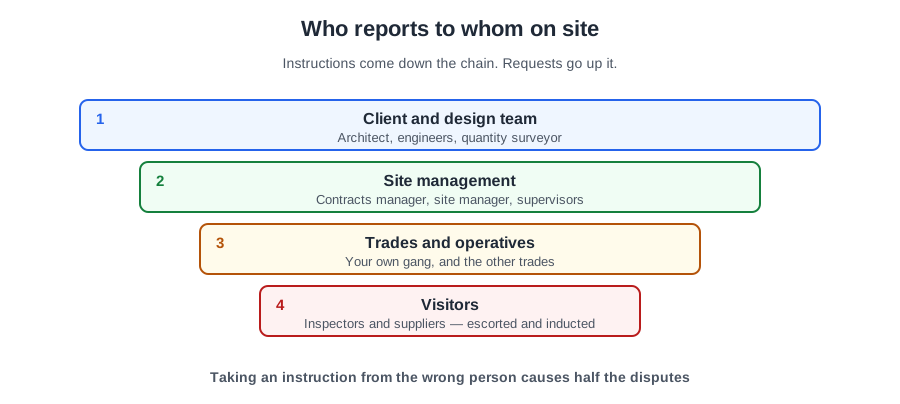
On a large construction site you might work alongside bricklayers, groundworkers, electricians, and half a dozen trades you'd never encounter on a domestic job. All of them report into a management structure that runs from the client at the top down to the individual trades workers at the bottom. Level 2 expects you to know who each role is, what they do, and how the hierarchy fits together — because you can't communicate effectively on site without knowing who to speak to about what.
This post is the first in the Level 2 Communicating With Others sub-cluster. For the others, see the workplace documents, customer communication, employment and conflict resolution posts.
Why understanding site structure matters
A plumber starting on a new-build site might need:
- The site manager for a question about the overall schedule
- The foreman for task allocation or day-to-day problems
- The site engineer for setting-out information
- The buyer for materials they haven't yet been supplied
- The structural engineer (via the site manager) if they spot a potential structural issue
Ask the wrong person and you slow everyone down. Ask the right person and the problem gets solved. Knowing the roles is what lets you navigate a site efficiently.
Small domestic jobs usually have a much simpler structure — often just the customer, the plumber, and maybe one or two other trades. But Level 2 is tested on the full commercial site hierarchy because that's what most plumbers encounter once they move beyond domestic work.
The site management team
The ten key roles Level 2 expects you to recognise. These sit at the top of the site hierarchy and make the major decisions about the project.
Architect. Designs the building and produces the initial drawings. Responsible for the overall look, layout, and specification of the finished structure.
Project manager (or Clerk of Works). Oversees the project on behalf of the client. Makes sure the work is progressing to schedule, to budget, and to specification. The "eyes of the client" on site.
Structural engineer. Designs the load-bearing elements — foundations, beams, walls that support the building. Calculates loadings and specifies materials. Involved at the design stage and consulted during construction if structural issues arise.
Surveyor. Inspects and measures the site, checks boundaries, produces survey drawings, and advises on condition of existing structures. Different from a quantity surveyor (see below).
Building services engineer. Designs the mechanical and electrical systems — heating, ventilation, air conditioning, plumbing, electrical distribution. On a commercial project, the plumbing you install has been designed by a building services engineer.
Quantity surveyor (QS). Estimates costs, measures completed work, and handles the financial side of the project. Tracks materials and labour against the budget.
Buyer. Orders materials and manages suppliers. Works with the estimator and QS to get the best prices on required materials.
Estimator. Prices up the job — works out what the full cost of the work will be. Produces the quote or estimate that wins the contract.
Contracts manager. Oversees multiple projects or the commercial side of a specific project. Handles the contract itself — terms, variations, payments, dispute resolution.
Construction manager. Sometimes used interchangeably with site manager, sometimes a higher-level role managing multiple sites. In some companies, the construction manager is the most senior site role; in others, the project manager holds that position.
Individuals who report to the site management team
Below site management are the people actually doing the building work. Level 2 expects you to recognise these roles too.
Subcontractors. Specialist trades or trade companies brought in by the main contractor for specific parts of the work. A plumbing firm might subcontract to a main building contractor for the plumbing on a new housing development.
Site supervisor. Oversees day-to-day operations on site. Reports up to the site manager. Sometimes called a "site foreman" on smaller jobs.
Trade supervisor. Leads a specific trade team (e.g., a plumbing supervisor leading a team of plumbing operatives). Reports to the site supervisor or directly to the site manager.
The trades themselves. The workers actually building the building. Level 2 expects you to recognise at least:
- Bricklayer — lays bricks and blocks; builds external and internal walls
- Joiner (carpenter) — works in timber; roofs, floors, doors, stairs, first fix carpentry
- Plasterer — plasters walls and ceilings; some also do dry lining
- Tiler — fits ceramic, porcelain, or stone tiles
- Electrician — wires and fits electrical systems (consumer unit, circuits, outlets)
- Heating and Ventilating (H&V) fitter — installs heating and ventilation systems (including your plumbing work on commercial sites)
- Gas fitter — installs and services gas appliances and pipework (Gas Safe registered)
- Decorator — paints, papers, and finishes internal surfaces
- Groundworker — digs foundations, lays drains, prepares the site before the building starts
Site visitors
Not part of the permanent site team but regularly on site to inspect or assess specific things.
Building control inspector. From the local authority. Checks that the work complies with Building Regulations — structural integrity, fire safety, drainage, energy efficiency. Signs off completed work.
Water inspector. From the water undertaker (water company). Checks that plumbing installations comply with the Water Regulations. Inspects backflow prevention, pipework layout, and commissioning records.
HSE inspector. From the Health and Safety Executive. Visits to check safe working practices. Can issue improvement or prohibition notices (covered in the H&S cluster's legislation post). Has legal powers to enter without warning.
Electrical services inspector. Checks electrical installations comply with the Wiring Regulations (BS 7671) and Part P of the Building Regulations.
The specific roles in detail
Three roles worth knowing in more detail because they come up directly on exam papers.
Site manager (site agent / construction manager)
In overall charge of all on-site working operations — including health and safety. The most senior person physically on the site.
Specific responsibilities:
- Organises the work using a schedule of work (ensures all trades work efficiently and in the right order)
- Handles complaints or problems on site during construction
- Makes decisions about resource allocation
- Liaises with the project manager or client representative
- Overall responsibility for site safety
Also known as the site agent or construction manager on different sites.
Foreman (site supervisor)
Liaises with the site manager and passes on information about tasks to tradespersons. The direct day-to-day leader of the workers.
Specific responsibilities:
- Allocates tasks to individual trades
- Solves day-to-day problems
- Reports back to the site manager
- If a "groundworker foreman," leads the groundworkers specifically
On smaller projects, the foreman might report directly to the project manager or even the client; on larger projects, they sit below a site manager.
Site engineer
One of the first people on site — arrives before construction starts.
Specific responsibilities:
- Setting out — marking out where the building will go, based on the architect's drawings
- Short-term planning
- Liaising with other site staff and operatives
- Monitoring safety
- Implementing training
- Input into method statements and risk assessments (covered in the H&S cluster)
"Setting out" means marking out where a building or structure is going to be. Site engineers use corner pegs and string lines to establish the exact position of walls, corners, and features on the ground — the first physical manifestation of the architect's drawings on the actual site.
The programme of works and project phases
Construction projects run in a specific sequence. Knowing the phases helps you understand where your work fits in the bigger project.
Phase 1: Setting out. Site engineer marks out the building position.
Phase 2: Foundations. Groundworkers dig, pour concrete, lay drains to boundary.
Phase 3: External walls to roof line. Bricklayers build walls on the foundations.
Phase 4: Roof structure. Carpenters build the roof on top of the walls.
Phase 5: First fix. Plumbers and electricians install pipework and cabling before walls are finished. Often called "roughing out" because the pipework and wires end up hidden under floors and behind walls.
Phase 6: Internal walls. Stud walls built and plastered.
Phase 7: Second fix (finishing). Plumbers, electricians, carpenters install the visible finished fixtures — bathrooms, kitchens, boilers, radiators, light fittings.
Phase 8: Commissioning and testing. Systems are tested and brought into use.
Phase 9: Snagging. Fixing any issues identified after the customer starts using the building.
First fix vs second fix is a reliably-tested distinction:
- First fix = pipework/wiring installed before walls are plastered (hidden in structure)
- Second fix = visible components installed after walls finished (radiators, taps, appliances)
Who handles what on a site
A useful mental model for Level 2:
- Architect + Structural Engineer = design and structure questions
- Building Services Engineer = heating/plumbing/electrical system design
- Quantity Surveyor + Buyer + Estimator = money and materials
- Project Manager + Site Manager = delivery of the project
- Site Engineer = setting out and short-term planning
- Foreman / Site Supervisor = day-to-day task allocation
- Trades = doing the work
- Site visitors (Building Control, Water, HSE, Electrical) = compliance checks
Common exam traps
Trap 1: Project manager ≠ construction manager. Different roles, though both senior. Project manager represents the client; construction manager oversees delivery.
Trap 2: Clerk of Works is the same as Project Manager in the course material's framing.
Trap 3: Site engineer ≠ site manager. Site engineer does setting out and short-term planning; site manager runs the whole site.
Trap 4: First fix is before plastering; second fix is after.
Trap 5: Setting out is done by the site engineer. Not the architect (who designs, doesn't mark out), not the site manager (different role), not the foreman.
Trap 6: Site visitors are inspectors — building control, water, HSE, electrical. They visit to check compliance; they're not permanent site staff.
Trap 7: The site manager is in overall charge of site safety. Not the HSE (who enforces from outside), not the architect (not on site).
Quick revision summary
Before the mock test, eight things you need to be able to produce from memory:
- Site management team: architect, project manager/clerk of works, structural engineer, surveyor, building services engineer, quantity surveyor, buyer, estimator, contracts manager, construction manager
- Trades that report to site management: subcontractors, site supervisor, trade supervisor, bricklayer, joiner, plasterer, tiler, electrician, H&V fitter, gas fitter, decorator, groundworker
- Site visitors: building control inspector, water inspector, HSE inspector, electrical services inspector
- Site manager = in overall charge of on-site operations and safety; uses schedule of work
- Foreman / site supervisor = liaises with site manager; passes tasks to trades
- Site engineer = sets out building position; short-term planning; input into risk assessments
- First fix = pipework/wiring before plastering; second fix = visible finished fixtures
- Setting out = marking out where the building will be
📝 10-Question Mock Test
Click an option to see whether you got it right. Explanations appear instantly — no submitting at the end.
Designs load-bearing elements and calculates loadings. The architect (A) designs the overall building but the structural engineer handles the structural calculations. Quantity surveyor (C) is financial. Site manager (D) runs the site but doesn't design structures.
The financial specialist on the site management team. Estimates costs and measures work for payment purposes. The buyer (A) orders materials. Project manager (B) oversees delivery. Building services engineer (D) designs mechanical and electrical systems.
The site engineer's core functions. Option A is the site manager's role. Option C is the project manager. Option D is the buyer.
Specifically described in the course material as liaising with the site manager and passing on task information to tradespersons. Site engineer (A) does setting out. Architect (B) isn't permanent site staff. Building control (D) is an inspector, not a foreman.
Bricklayers are tradespeople who report TO the site management team — they're not part of it. Surveyors (A), quantity surveyors (B) and estimators (D) are all members of the site management team.
From the water undertaker; specifically checks Water Regulations compliance. HSE (A) checks general safety. Electrical (C) checks electrical installations. Building control (D) checks Building Regulations overall.
The specific definition — site engineers use corner pegs and string lines to establish the physical position of the building on the ground. Options A, C and D describe other tasks.
First fix = the work done before plastering and finishing, typically hidden in the finished building. Options A, B and D are second-fix or commissioning activities.
The person physically in charge of the whole site, including safety. The architect (A) isn't usually on site. The structural engineer (C) is a design role. The quantity surveyor (D) handles finances, not overall site operations.
The standard definition. Subcontractors report to the main contractor, not directly to the client (A). They're not inspectors (C) or designers (D).
How PlumbMate puts this into practice
Construction role content is heavy on matching names to responsibilities — ideal spaced-repetition material.
- Flashcards, not essays. One prompt, one answer — the format that research has consistently shown works best for active recall.
- Wrong answers are logged. Every question you get wrong goes into a dedicated collection that resurfaces more frequently in future sessions.
- The 3× rule. You need to get a question right three times before it clears — one lucky guess isn't enough.
- Explanations on every question. Like the ones above, but on every single question in the app.