Every domestic cold water installation in the UK is either direct or indirect — and the difference drives almost every decision you'll make about pipe sizes, valves, cistern capacities, and backflow protection. Get the system type clear in your head and every question about cold water pipework becomes easier. Miss it and you'll be guessing at questions that are actually straightforward.
This is the second post in the Level 2 cold water sub-cluster. For the others, see the water sources and supply, cold water storage cisterns, fluid categories, hard and soft water, and commissioning posts.
The fundamental difference
The difference between direct and indirect cold water systems comes down to one question: where does the water at each outlet come from?
In a direct system: every cold water outlet in the property — every tap, every WC, every washing machine — is fed directly from the mains. The water at every outlet is high pressure and drinkable.
In an indirect system: only the kitchen sink is fed directly from the mains. Every other cold water outlet — bathroom basin, bath, shower, WC — is fed from a cold water storage cistern (CWSC) in the loft. Water at most outlets is low pressure, gravity-fed from the cistern.
That single distinction drives everything else.
Direct cold water system
Typical domestic direct system:
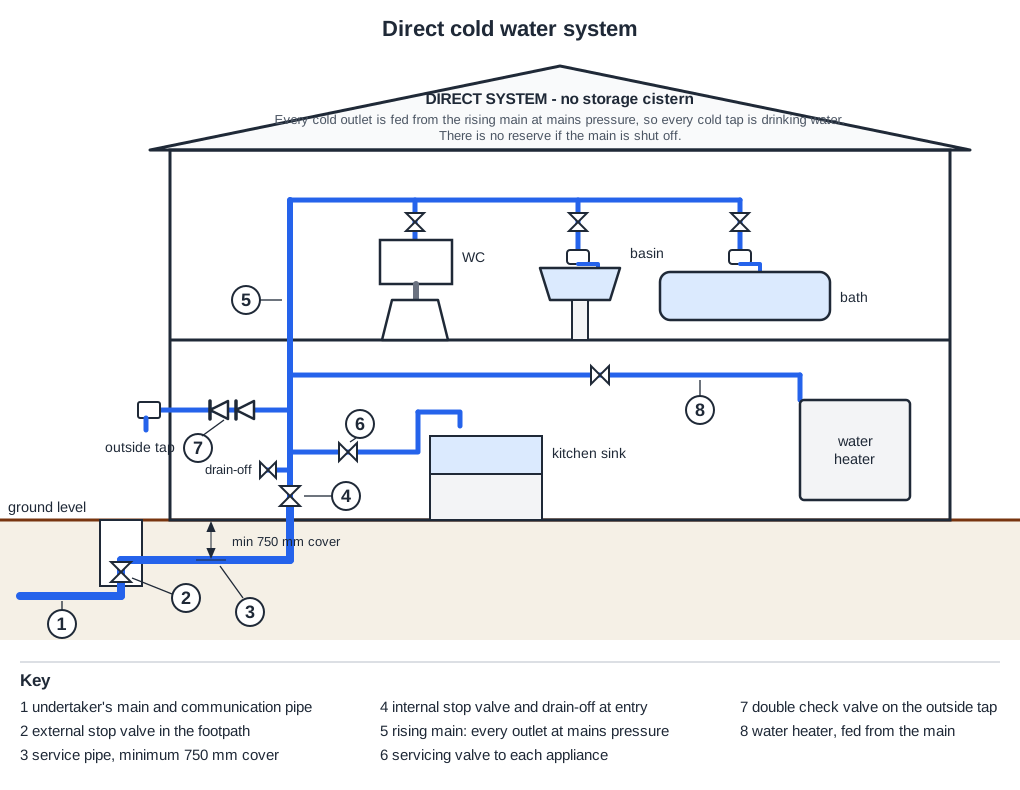
- Mains comes in through the internal stop valve
- Branches off to feed every cold water outlet in the property — kitchen sink, bathroom basin, bath, shower, WC cisterns, outside taps
- If there's a hot water cylinder that needs a cold feed (a gravity hot water system), there's also a cold water storage cistern specifically for that — minimum capacity 110 litres, and never smaller than the cylinder it feeds — fitted high in the property (usually the loft)
Key facts to commit to memory:
- All cold outlets fed directly from the mains at high pressure
- Every cold outlet delivers drinking water (wholesome mains water)
- If fitted alongside a gravity hot water system, the cistern supplying the cylinder must be at least 110 litres — and at least as big as the cylinder it serves. Those are two conditions, not one: a floor of 110 litres, and a comparison against the cylinder, with whichever is larger being the one that applies. A typical cylinder holds around 140 litres, so in practice the comparison usually decides it and the cistern ends up at 140 litres rather than 110.
- Pipes running from the mains are called cold water supply pipes (high pressure)
- Stop valves (not gate valves) are used on supply pipework
- Can use smaller pipework because mains pressure pushes water through efficiently — cheaper to install
Indirect cold water system
Typical domestic indirect system:
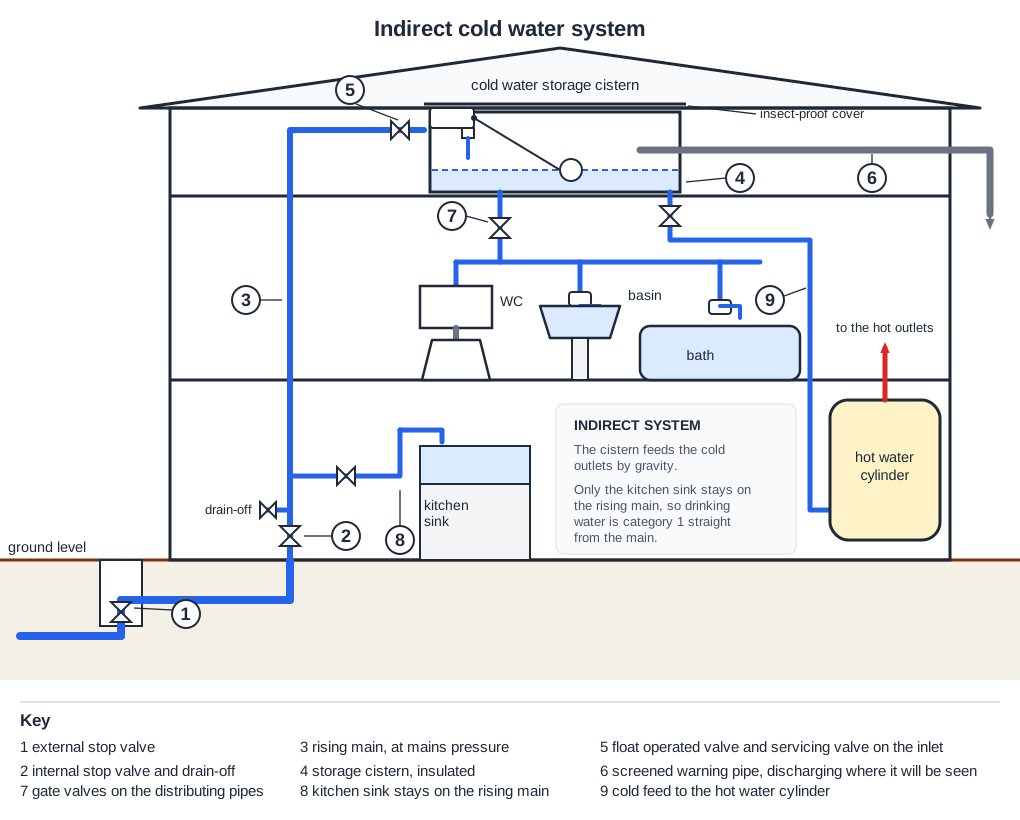
- Mains comes in through the internal stop valve
- Only the kitchen sink is fed directly from the mains
- The mains also fills a cold water storage cistern in the loft, controlled by a float valve
- The cistern feeds all the other cold water outlets by gravity through distribution pipework
- If the cistern also feeds the hot water cylinder (it usually does in an indirect system), its minimum capacity is 230 litres
Key facts:
- Kitchen sink = direct from mains (for drinking water; reduced contamination risk where food is prepared)
- All other outlets = fed from the cistern at low pressure
- Cistern feeding both hot and cold = 230 litres minimum
- Pipes running from the cistern to outlets are called cold water distribution pipes (low pressure)
- Gate valves are used on distribution pipework (stop valves only on the high-pressure supply side)
- Distribution pipework main runs are typically 22mm (though minimum size is 15mm); larger bore compensates for the lower pressure
Why the kitchen sink is always fed from mains
In both systems — even the indirect system — the kitchen sink is always fed from mains. Two reasons:
1. Contamination risk in cisterns. A cold water storage cistern is a reservoir that holds water for hours or days. Even with a tightly fitting lid and proper insulation, there's always a small risk of contamination over time (dust, insects, bacterial growth if temperatures rise). The kitchen sink is used for drinking water and food preparation, so it should get the freshest, cleanest water available — straight from the mains.
2. It's a legal requirement under the Water Regulations. The kitchen sink tap must provide wholesome water (Category 1 — the highest quality). Only water straight from the mains reliably meets that standard.
The pipe feeding the kitchen sink is a supply pipe (high pressure) in both direct and indirect systems. Every other outlet in an indirect system is on distribution pipework (low pressure, from the cistern).
Supply pipe vs distribution pipe vs cold feed
Getting the pipe terminology right is half the exam. Three terms you need fluent:
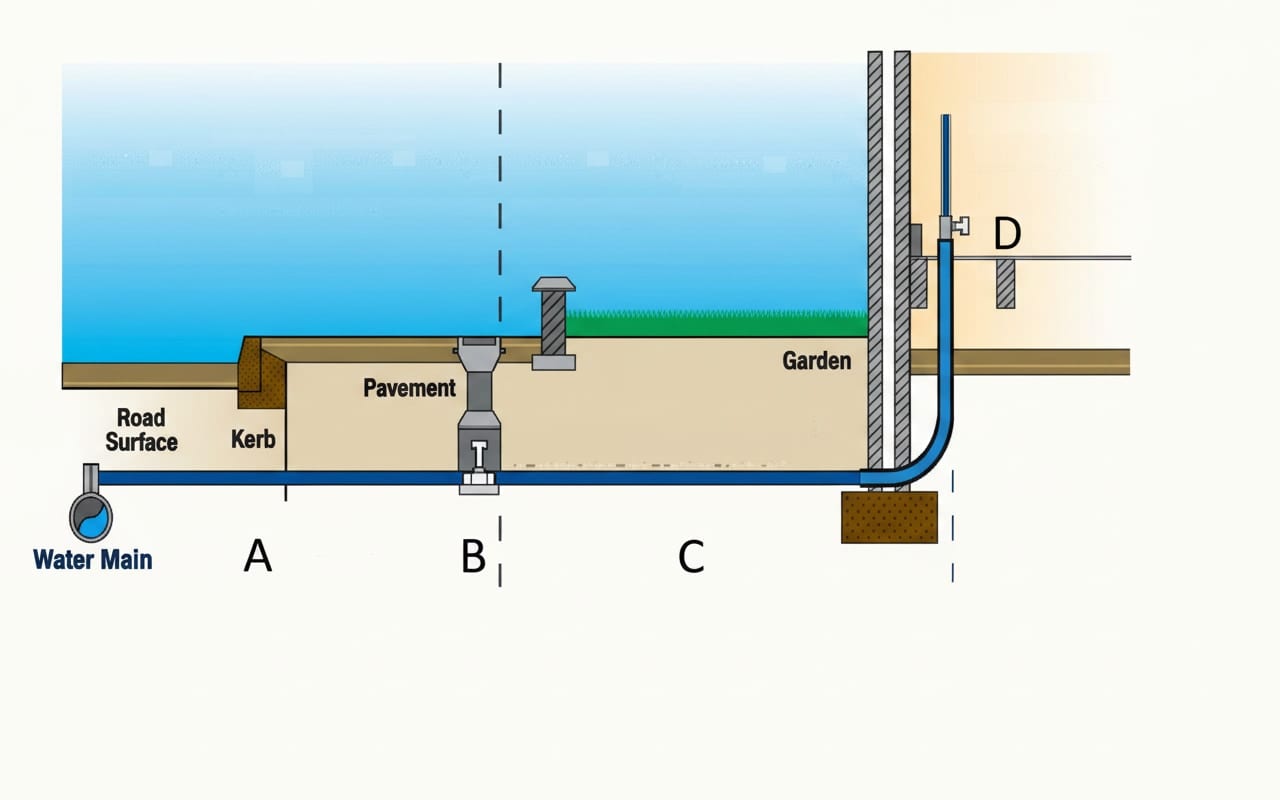
Supply pipe. Any pipe connected directly to the mains. High pressure. Minimum 15mm. Used throughout a direct system, and on the kitchen sink in an indirect system. Also supplies combi boilers and unvented cylinders (which operate at mains pressure).
Distribution pipe. Any pipe fed from a cold water storage cistern. Low pressure (gravity). Minimum 15mm, main runs typically 22mm. Feeds almost all outlets in an indirect system. Also feeds gravity hot water systems.
Cold feed. A specific type of distribution pipe — the one that runs from the CWSC to a hot water cylinder. It has its own name because it has a specific dual job: initially filling the cylinder, and then accommodating the expansion of heated water back up into the cistern. The cold feed is minimum 22mm and must have a valve (usually a gate valve) fitted for maintenance.
The one caveat: in an unvented or combi hot water system, there's no cistern and no cold feed — those systems use supply pipework throughout because they operate at mains pressure.
Valves in each system
Direct system (all supply pipework):
- Stop valves at the point of mains entry and at major branches
- Service valves (ball/isolation type) on individual appliance connections for easy maintenance
- Drain valves at low points for drain-down
Indirect system (mixed pipework):
- Stop valve at mains entry
- Stop valve on the pipe to the kitchen sink and float valve (high pressure)
- Gate valves on distribution pipework from the cistern (low pressure)
- Service valves on individual appliances fed from the distribution
Why the distinction? Gate valves are designed for low-pressure applications and would be damaged by mains pressure. Stop valves are designed for high-pressure applications and would be unnecessarily expensive and restrictive on low-pressure distribution.
Pros and cons — direct system
Pros:
- Drinking water at every tap — any outlet delivers wholesome water
- Cheaper to install — smaller pipework feasible because mains pressure does the work
- Less loft space required — no large cistern needed (unless there's a gravity hot water cylinder, in which case you still need a 100L cistern)
- Simpler pipework — mains feeds everything
- Good water pressure at every outlet — high mains pressure drives showers and taps strongly
Cons:
- No backup water supply — if the mains fails, the whole property is without water
- Higher risk of contamination from backflow — because every outlet is connected to the mains, any backflow goes straight back into the drinking water supply. Protection has to be built in carefully (see the fluid categories and backflow prevention post).
- Mains pressure variations affect all outlets — low pressure at rush hour means weak showers everywhere
Pros and cons — indirect system
Pros:
- Storage reserve — the cistern holds enough water to supply the property for a short period if the mains fails
- More consistent pressure at outlets — cistern-fed outlets see gravity pressure only, unaffected by mains variations
- Reduced strain on the mains — most outlets draw from the cistern, not the mains
- Backflow risk is limited — only the kitchen sink and the cistern inlet are connected to mains, so backflow protection is needed only at those points
Cons:
- Drinking water only at the kitchen sink — other outlets deliver cistern water, which is still wholesome but not mains-fresh
- Needs loft space for a large cistern (200L if feeding hot water too)
- More pipework to install — distribution runs from the cistern add complexity
- Lower pressure at upper-floor outlets — gravity pressure depends on how far below the cistern the outlet is
- Cistern maintenance required — periodic cleaning, float valve maintenance, overflow checks
Which system is used where
In modern UK domestic installations:
- Combi boilers have pushed most new builds towards direct systems — with a combi, you don't need a hot water cylinder, which means you don't need a cistern at all
- Unvented hot water cylinders also work with direct cold systems — because unvented cylinders are fed from the mains at high pressure
- Indirect systems are more common in older UK properties — traditional gravity hot water cylinder in the airing cupboard, cistern in the loft, all outlets except the kitchen sink fed from the cistern
Combined systems
The course material mentions "combined" as a third system type — a hybrid in which some elements of direct and indirect systems exist together. In practice, most UK installations are clearly one or the other, and "combined" is worth knowing as a recognition-level term but not a major design category.
Common exam traps
Trap 1: Kitchen sink fed from mains in both systems. The kitchen sink is always fed from the mains at high pressure — in both direct AND indirect systems. Students sometimes assume the indirect cistern feeds everything including the kitchen sink. It doesn't.
Trap 2: Cistern capacities. 110 litres if supplying a gravity hot water cylinder only (in a direct cold water system) — and at least the size of that cylinder, whichever is larger. 230 litres if supplying both hot and cold (in an indirect system). Getting these the wrong way round costs a mark, and quoting 110 without the cylinder comparison costs another.
Trap 3: Supply pipe vs distribution pipe vocabulary. Supply = from the mains (high pressure). Distribution = from the cistern (low pressure). The one with the "s" (supply) is high pressure; the one with the "d" (distribution) is low pressure — a simple way to remember.
Trap 4: Stop valve vs gate valve. Stop valves on supply pipework (high pressure). Gate valves on distribution pipework (low pressure). Fitting one where the other should go is a classic site mistake and a classic exam question.
Trap 5: Cold feed is its own thing. The pipe from the cistern to the hot water cylinder is specifically called the "cold feed" — a type of distribution pipe, but with its own name because of its dual filling/expansion role. Minimum 22mm, needs a gate valve.
Trap 6: Drinking water at every outlet. Only true in a direct system. In an indirect system, only the kitchen sink delivers mains-fresh drinking water.
Quick revision summary
Before the mock test, seven things you need to be able to produce from memory:
- Direct system: all cold outlets fed from mains; drinking water at every tap; if a gravity hot water system is fitted alongside, cistern minimum 110 litres and at least cylinder size
- Indirect system: kitchen sink from mains; all other cold outlets from cistern; cistern feeding hot + cold minimum 230 litres
- Kitchen sink always direct from mains in both systems (drinking water, food prep area)
- Supply pipe = from mains (high pressure); distribution pipe = from cistern (low pressure); cold feed = specific pipe from cistern to cylinder
- Stop valves on supply pipework; gate valves on distribution pipework
- Supply minimum 15mm; distribution minimum 15mm but main runs typically 22mm; cold feed minimum 22mm
- Direct system pros: drinking water everywhere, cheaper install, simpler; indirect system pros: storage backup, consistent pressure, limited backflow risk
📝 10-Question Mock Test
Click an option to see whether you got it right. Explanations appear instantly — no submitting at the end.
The defining feature of a direct cold water system is that every cold outlet is fed directly from the mains. In an indirect system (A), only the kitchen sink is on mains — everything else is on the cistern. "Combined" (C) is a rarely-used hybrid. "Gravity" (D) isn't a standard cold water system name.
The kitchen sink is always fed from the mains in both direct and indirect systems — for drinking water quality and to reduce contamination risk where food is prepared. Baths, basins and WCs are all fed from the cistern in an indirect system.
There are two conditions and you need both: a floor of 110 litres, and at least the capacity of the cylinder it serves — whichever is larger wins. Option C states the rule correctly but with the wrong floor, which is the whole point of the pair: knowing the shape of the rule is not enough, you have to know the number is 110 and not 150. 230 litres is the figure when the cistern also feeds coldoutlets (indirect system). Easy to swap these two around under exam pressure, so drill them until the distinction is automatic.
If the cistern is doing double duty — feeding the hot water cylinder AND the cold outlets in an indirect system — it needs to be at least 230 litres. The larger capacity handles the combined demand and still leaves reserve if the mains is interrupted.
Pipes from a cistern to an outlet are distribution pipes — low pressure, gravity-fed. Communication pipe (A) is the supplier-owned section from the local main to the boundary. Supply pipe (B) is any pipe from the mains, not from a cistern. "Service pipe" (C) isn't standard UK terminology.
Gate valves are designed for low-pressure applications like distribution pipework. They open to the full bore of the pipe, which is important for gravity-fed systems where pressure is limited. Stop valves (A) are for high-pressure supply pipework only — fitting one on distribution would unnecessarily restrict flow.
That's an advantage of a direct system, not indirect. In an indirect system, only the kitchen sink delivers mains-fresh water. Options A, C and D are all genuine indirect advantages — the cistern provides reserve and steady pressure.
The cold feed from the cistern to the cylinder is minimum 22mm — larger than the 15mm minimum for other distribution pipework because it has to carry larger flows and needs to accommodate expansion from the heating water coming back up.
An over-the-rim bidet with a flexible hose is a Category 5 risk — the hose can fall into contaminated water in the bidet and potentially allow contamination back into the mains. Bidets of this type should not be fed directly from a supply pipe without proper backflow protection (covered in more detail in the fluid categories post). Kitchen sinks, showers, and baths with mixer taps are all standard supply-pipe appliances.
All outlets in a direct system are fed through supply pipework directly from the mains. Distribution pipework (A) is cistern-fed. "Cold feed at high pressure" (C) is a contradiction — cold feeds are from cisterns, not mains. "Primary pipework" (D) is a heating-system term, not relevant to cold water.
How PlumbMate puts this into practice
Direct vs indirect is a classic example of where spaced repetition pays off — two system types, specific capacities, specific vocabulary, and examiners who test the differences reliably.
- Flashcards, not essays. One prompt, one answer — the format that research has consistently shown works best for active recall.
- Wrong answers are logged. Every question you get wrong goes into a dedicated collection that resurfaces more frequently in future sessions.
- The 3× rule. You need to get a question right three times before it clears — one lucky guess isn't enough.
- Explanations on every question. Like the ones above, but on every single question in the app.