Every plumber in the UK is required by law to prevent contamination of the mains water supply. That law is the Water Supply (Water Fittings) Regulations 1999 — usually just called the Water Regulations, and in Scotland the equivalent Water Byelaws. They classify water into five categories of risk and specify exactly which protection device is required for each — from the simple air gap between a tap and a basin to the sophisticated reduced pressure zone valve used on commercial installations. Miss the rules and you haven't just created a plumbing fault; you've created a public health hazard.
This is the fourth post in the Level 2 cold water sub-cluster. For the others, see the water sources and supply, direct vs indirect systems, cisterns, hard and soft water, and commissioning posts.
Why this topic matters more than most
Most Level 2 content is about making plumbing systems work. Fluid categories and backflow prevention is about stopping them from poisoning people. Contamination of a mains supply doesn't affect just the property where the fault is — it can affect every property downstream sharing the same mains. Legal penalties are real, and the moral stakes are higher than the exam marks suggest.
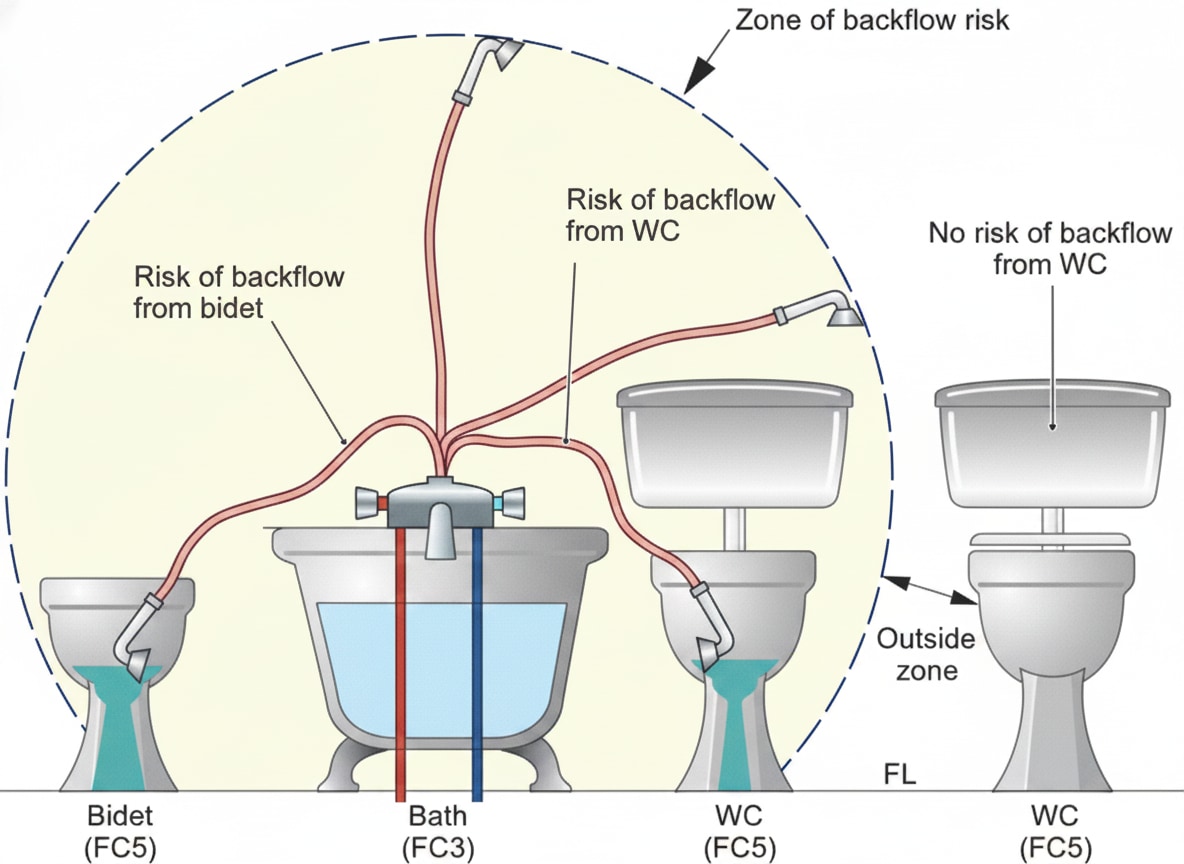
The five fluid categories
The Water Regulations classify water into five categories — from completely safe (Cat 1) to seriously hazardous (Cat 5). Learning these by example rather than abstract definition is the fastest route to fluency.
Category 1 — Wholesome water. Water supplied directly from the supply pipe. Safe to drink, cook with, and use for any purpose. Mains water at the kitchen tap is Category 1.
Category 2 — Wholesome water whose aesthetic quality is impaired. Safe but not pleasant. The classic example: hot water supplies. Heating water changes its taste and appearance but doesn't make it a health hazard. Water that's sat in copper pipework long enough to take on a slight metallic taste is also Cat 2.
Category 3 — Slight health hazard. Water domestic washing machines and dishwashers, water in heating systems (with or without inhibitor), and hose union bib taps (outside taps) in a domestic property. The hazards are low-level but real — detergents in washing machines, inhibitor chemicals in heating systems, potential garden contamination on an outside tap.
Category 4 — Significant health hazard. Commercial clothes washing machines, runoff from a farmer's treated field. Examples where there's a genuine and significant health risk but not an immediate danger.
Category 5 — Serious health hazard. The highest risk category. Grey water recycling cisterns, kitchen sinks (blood/meat contamination risk), WCs and bidets (faecal contamination), hose union taps used in abattoirs or mortuaries. Contact with pathogens, faecal matter, or toxic substances.
A useful way to learn these: the higher the category number, the worse it is for you. Cat 1 is safe to drink; Cat 5 could make you seriously ill.
What counts as Cat 5 water might surprise you
Two Cat 5 classifications that students reliably get wrong:
Kitchen sinks are Cat 5. Not because the water coming out of the tap is Cat 5 (that's Cat 1 from the mains), but because the water sitting in the sink bowl may have been in contact with raw meat, blood, or other food-prep contamination. That's why kitchen sink taps need AUK3 air gap protection.
WCs and over-the-rim bidets are Cat 5. Faecal contamination risk. The water in the bowl is Category 5 — which is why the water supply to these appliances needs the highest level of backflow protection.
Back pressure vs back siphonage
Two mechanisms cause backflow (contaminated water flowing back into the supply):
Back pressure. Higher pressure on one side forces water back towards the mains. Example: a combi boiler on a sealed heating system generating more pressure than the mains supply can push against. Without protection, heating water (Cat 3) could be pushed back into the mains.
Back siphonage. Negative pressure in the pipework sucks water back towards the mains. Example: a water main is repaired and the supply is briefly cut. As the water drains out of the system, the low pressure pulls water from open outlets back up the pipes. A garden hose left in a pond would siphon pond water back into the mains.
Both are genuinely common. Backflow prevention has to defend against both.
Backflow prevention — the hierarchy of protection
The Water Regulations prefer non-mechanical protection (air gaps) over mechanical protection (check valves, RPZ valves). The reason is simple: mechanical devices can fail. An air gap cannot — it's just physical distance between the water outlet and anything that could contaminate it.
From most to least protective:
- Air gap (non-mechanical) — physical vertical gap between outlet and spillover level
- Reduced pressure zone (RPZ) valve — two check valves with a relief chamber between
- Double check valve — two check valves in series
- Single check valve — one spring-loaded disc
And the legal rule: the protection device must match the category of water being protected. Cat 5 water needs Cat 5 protection; Cat 2 water only needs Cat 2 protection. Using less protection than the category requires is a Water Regs breach.
Air gaps — three types
Air gaps are classified by the letter "A" (air gap) followed by codes. Level 2 focuses on the three commonly used in UK domestic installations — all marked "AUK" (Air gap, United Kingdom):
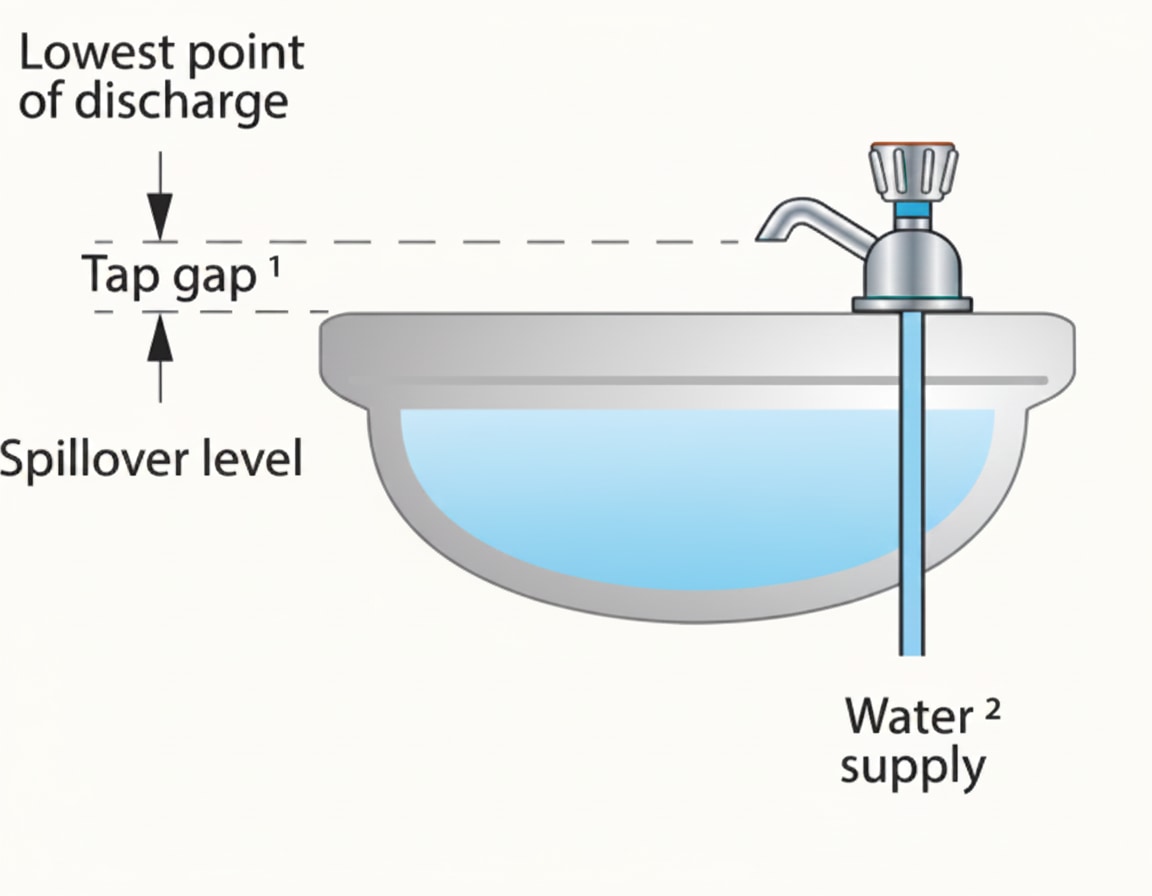
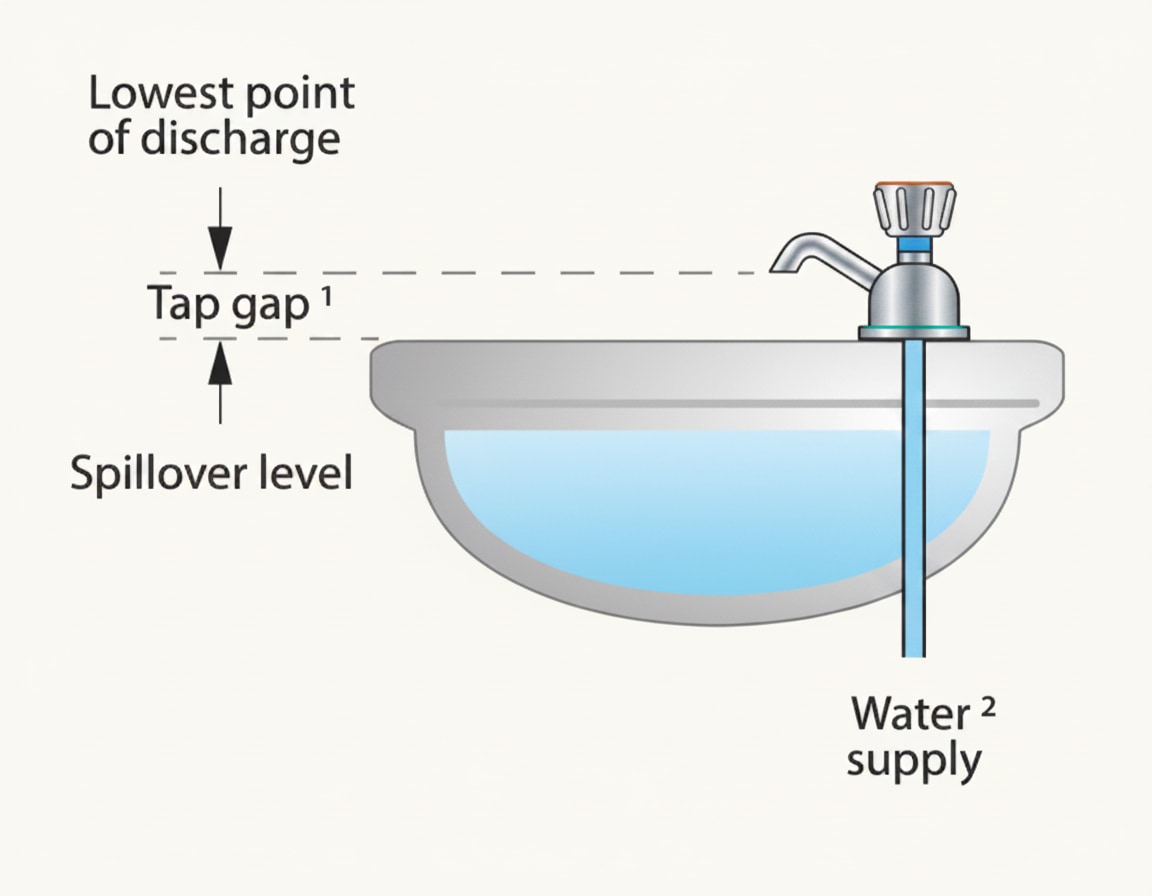
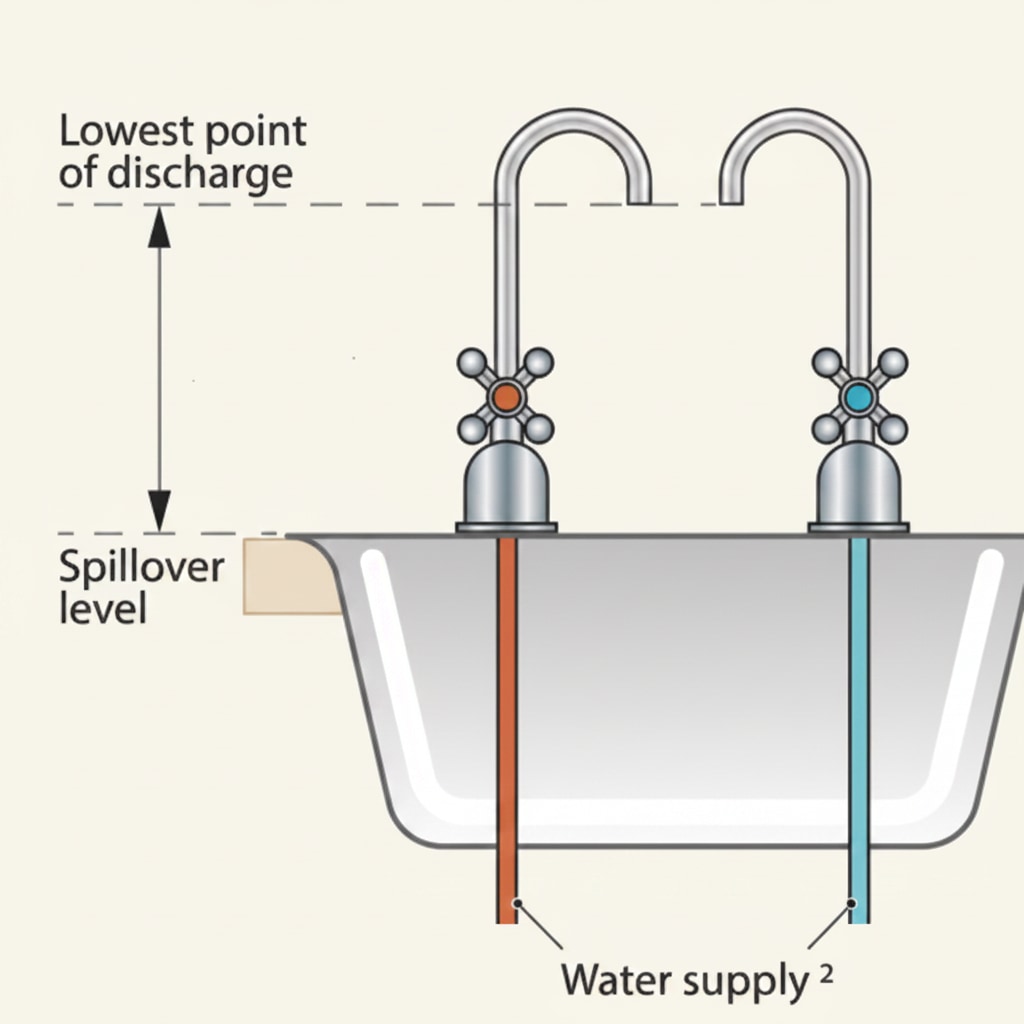
AUK1 air gap. The vertical gap between a WC cistern and a WC pan. Protects up to Category 5. You'll see one on every WC in the country — the cistern is mounted above the pan and water falls through air before reaching the bowl. Gives the highest level of protection because contaminated water from the pan can never physically reach the incoming supply.
AUK2 air gap. Used on basins, baths and showers. Protects up to Category 3. Sized by the inlet pipe:
- 15mm (½") pipe inlet: 20mm minimum air gap between the tap outlet and the spillover level of the appliance
- 22mm (¾") pipe inlet: 25mm minimum air gap
The "spillover level" is the point at which water would start to overflow the basin/bath/shower — typically just below the overflow outlet.
AUK3 air gap. Used on over-the-rim bidets and kitchen sinks. Protects up to Category 5. Sized as:
- Minimum 20mm, AND
- At least twice the diameter of the inlet pipe
For a 15mm pipe feeding a kitchen sink tap, the minimum air gap is 30mm (twice the 15mm diameter, which exceeds the 20mm absolute minimum). For a 10mm pipe, 20mm (the absolute minimum; 2× 10mm = 20mm). For a 22mm pipe, 44mm (2× 22mm).
Mechanical backflow prevention devices
Three mechanical devices, each with its own level of protection:
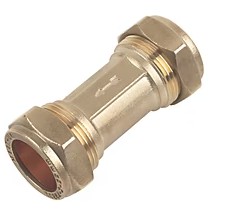
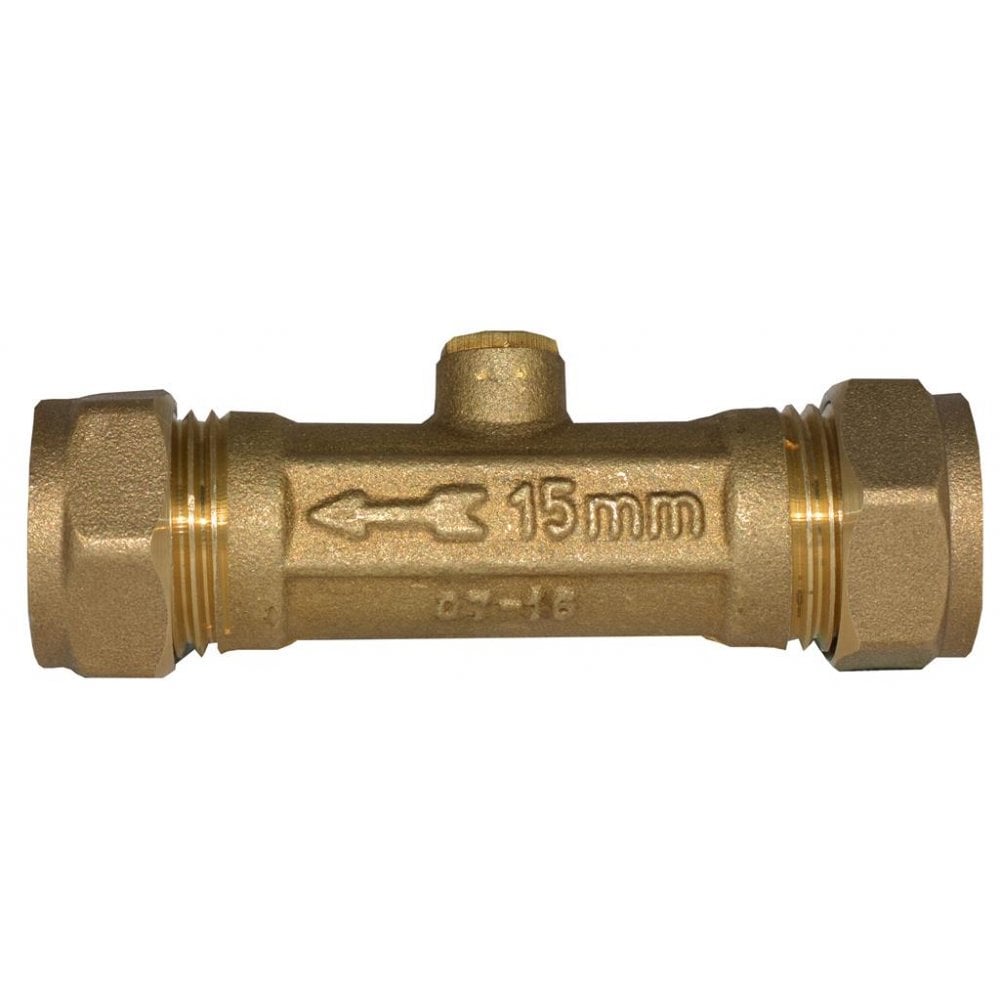
Single check valve. A single spring-loaded disc allowing water to flow in the intended direction only. Low-level protection. Used for:
- Mixer taps where hot and cold mix in the body (one check on each of the hot and cold supplies)
- Water softeners, blending valves
Protects against Cat 2 water.
Double check valve. Two single check valves in series. If one fails, the other still works. Medium-level protection. Used for:
- Outside taps (hose union bib taps) — the standard requirement
- Filling loops on sealed heating systems
- Showers fed from mains
Protects against Cat 3 water.
Reduced pressure zone (RPZ) valve. Two check valves with a relief chamber between them kept at a lower pressure than the mains. If backflow occurs, the middle chamber opens and discharges to a waste pipe — visibly indicating the valve has activated. Highest level of mechanical protection.
Protects against Cat 4 water.
No mechanical device alone protects Cat 5 water. Cat 5 always requires an air gap (AUK1 or AUK3), or in commercial contexts specific Cat 5-rated devices beyond Level 2 scope.
See an RPZ valve do its job
An RPZ is the hardest device on this page to picture, because everything that matters happens inside it and only under fault conditions. So here is the simulator from the Level 3 course. Drop the supply pressure and watch the relief port open — which is the whole reason it is the only mechanical device trusted against Fluid Category 4.
No account needed. Nothing to install.
One of eight simulators in the course, alongside 750 interactive tasks. Try it all free for 14 days — no card needed.
Category-to-device matching table
| Category | Minimum acceptable protection |
|---|---|
| 1 | None required |
| 2 | Single check valve |
| 3 | Double check valve |
| 4 | RPZ valve |
| 5 | Air gap (AUK1 or AUK3) |
Get this table into long-term memory and a large slice of the exam paper falls into place automatically.
Practical scenarios
The Water Regulations apply in real situations that exam questions test reliably:
Outside taps (hose union bib taps). Cat 3 (domestic) or higher (commercial/farm). Double check valve required before every outside tap. Good practice: fit a service valve inside the property so the outside tap can be isolated and drained to prevent freezing in winter.
Mixer taps where hot and cold mix in the tap body. Risk of cold water being pushed back through the hot pipe (back pressure) or vice versa. Single check valve on the hot supply AND single check valve on the cold supply.
Biflow mixer taps (separate hot and cold paths through the tap, mixing only at the outlet). The hot and cold never touch each other inside the tap. No backflow protection required on the internal pipework — the tap design itself prevents cross-contamination.
Showers where the shower head can fall below the spillover level of a bath/shower tray. If the shower head could dangle in contaminated water, there's a Cat 3 risk. Options:
- Fit double check valves on both hot and cold supplies to the shower, OR
- Fit a retaining ring to hold the shower head above spillover level, combined with single check valves on hot and cold (the retaining ring provides an air gap, reducing the requirement)
Hose retaining rings are mandatory on showers anywhere a WC or bidet (Cat 5 risk) could be reached — for example, small bathrooms where a dangling shower hose could reach the WC bowl.
Dead legs and stagnation
A dead leg is a section of pipework where water doesn't flow regularly — for example, a capped pipe left behind when an appliance was removed but the pipework wasn't. Problems:
- Water in dead legs stagnates
- Stagnant water supports bacterial growth (Legionella in particular)
- Oversized cisterns with low turnover have the same problem
When removing any hot or cold water appliance, cut the dead leg back to the branch. Don't leave capped pipes sticking out from the main run. This is also why the drainage decommissioning rule is "cap as far back as possible" — same principle, same reasoning.
Common exam traps
Trap 1: Cat 5 examples. Grey water, WCs, bidets, kitchen sinks, abattoir taps. Not just obvious things like sewage — kitchen sinks catch students out because the tap delivers Cat 1 water but the bowl itself is Cat 5.
Trap 2: AUK2 sizing. 20mm for 15mm pipe, 25mm for 22mm pipe. Both figures come up.
Trap 3: AUK3 sizing. Minimum 20mm OR twice the inlet diameter (whichever is greater).
Trap 4: Biflow vs mixer-in-body taps. Biflow = no internal mixing = no protection needed on pipework. Mixer-in-body = internal mixing = single checks required on both. Read the question carefully.
Trap 5: Outside tap = double check. Not single check, not RPZ. Specifically double check for Cat 3 risk.
Trap 6: Non-mechanical preferred. The Water Regs prefer air gaps over check valves. In multiple-choice questions where an air gap is offered against a check valve for the same scenario, the air gap is usually the correct answer.
Trap 7: Dead legs. Cut back to the branch when decommissioning. Not "cap at the valve" — that leaves a stagnating dead leg.
Quick revision summary
Before the mock test, seven things you need to be able to produce from memory:
- Five categories: 1 wholesome, 2 aesthetic change, 3 slight hazard, 4 significant hazard, 5 serious hazard
- Cat-to-device table: 1 = nothing; 2 = single check; 3 = double check; 4 = RPZ; 5 = air gap
- Three air gaps: AUK1 (WC cistern to pan, Cat 5); AUK2 (basins/baths/showers, Cat 3, 20mm/25mm for 15/22mm pipe); AUK3 (over-rim bidets/kitchen sinks, Cat 5, min 20mm OR 2× inlet)
- Two causes of backflow: back pressure (higher pressure pushing back) and back siphonage (negative pressure sucking back)
- Outside taps: double check valve, plus service valve inside for isolation
- Mixer taps mixing in body: single checks on both hot and cold; biflow taps: no internal protection required
- Dead legs: cut back to branch when decommissioning to prevent bacterial growth
📝 10-Question Mock Test
Click an option to see whether you got it right. Explanations appear instantly — no submitting at the end.
Cat 4 is significant but not immediately dangerous — commercial washing machines, farm field runoff. Cat 3 (A) is slight; Cat 5 (C) is serious; Cat 1 (D) is wholesome.
Cat 2 is safe to drink but compromised in taste or appearance — classically hot water supplies. Options A and B are Cat 3 and Cat 4 respectively. Wholesome unimpaired water (C) is Cat 1.
The entire purpose of the air gap rules. Options C (back pressure) is one of the two mechanisms of backflow but not the only one; A (aeration) and D (pressure loss) are unrelated phenomena.
The standard requirement for every outside tap — hose union bib taps are Cat 3 risk because a hose attached to them could draw contaminated water back. Single check (D) gives only Cat 2 protection and isn't enough. Options B and C are not backflow-prevention devices.
Sink tap outlets use an AUK3 air gap — a vertical clearance between the tap and the spillover level. Kitchen sinks are Cat 5 (food contamination risk in the bowl), and only an air gap provides Cat 5 protection at the point of use.
AUK2 air gap for 15mm pipe inlet is 20mm minimum; 25mm for 22mm pipe. Option D would be correct if the question said 22mm pipe.
Mixer taps that mix in the body allow hot and cold water to meet inside the tap. Single check valves on both the hot and cold supplies prevent one from being pushed back into the other. Double check (B) is overkill for this low-level risk. Pipe interrupter (C) and air gap (D) aren't the right device types for this application.
A single check valve has one spring-loaded disc that opens in the direction of intended flow and closes against reverse flow. A double check valve has two. Options B and D describe other valve types entirely.
An outlet below spillover level means the outlet is submerged in the water of the appliance (basin, bath, sink). This creates a direct contamination route — any change in pressure can draw contaminated water back into the supply. Back pressure (B) is one specific cause of backflow but not the only mechanism; C and D are unrelated to this specific configuration.
Dead legs have stagnant water — the ideal condition for Legionella and other waterborne bacteria to multiply. Options B, C and D don't describe genuine risks from dead legs.
How PlumbMate puts this into practice
Backflow prevention is heavy on specific rules and specific matchings — classic spaced repetition content.
- Flashcards, not essays. One prompt, one answer — the format that research has consistently shown works best for active recall.
- Wrong answers are logged. Every question you get wrong goes into a dedicated collection that resurfaces more frequently in future sessions.
- The 3× rule. You need to get a question right three times before it clears — one lucky guess isn't enough.
- Explanations on every question. Like the ones above, but on every single question in the app.