Most drainage problems that turn up on site — leaks, blockages, failed joints, brittle pipework — trace back to the same handful of issues: wrong material for the location, wrong jointing method for the material, or the right joint made badly. Get materials and jointing right and you'll have drainage that lasts as long as the building. Get it wrong and you'll be back on the same job within a year. Level 2 expects you to know the common plastics, the three jointing methods, and the common fittings.
This is the third post in the Level 2 drainage sub-cluster. For the others, see the traps, stack systems, underground drainage, rainwater and guttering, and testing and maintenance posts.
The common drainage plastics
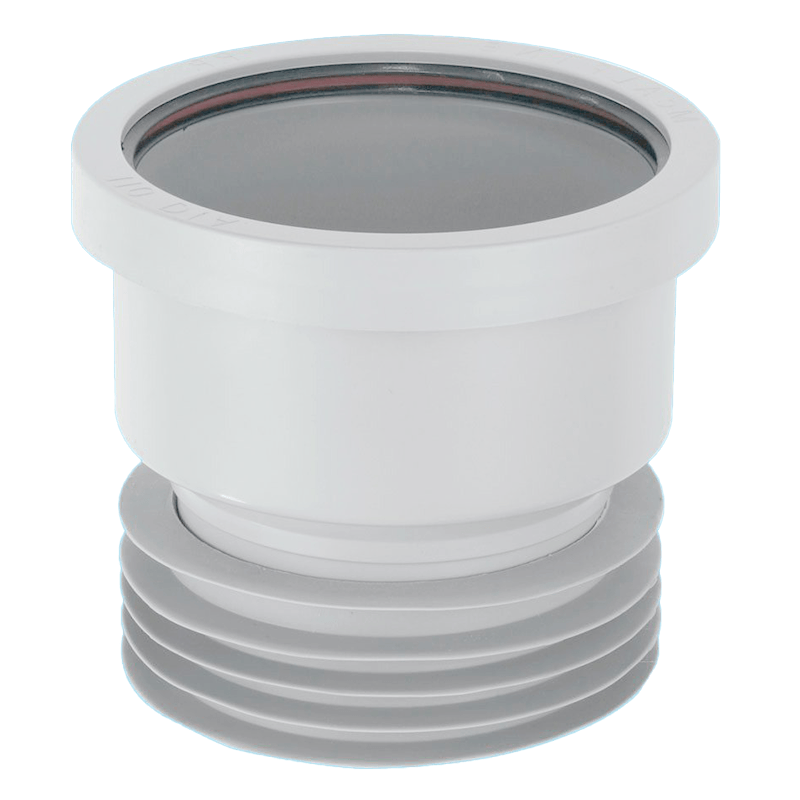
Almost every new drainage installation uses plastic pipework. Five main plastics you'll meet:
Polypropylene (PP). Used mainly for branch discharge pipes (waste pipework). Two things to remember:
- Slightly different external diameter from the other plastics, so it doesn't fit pushfit fittings designed for the others
- Can only be jointed using pushfit or compression — not solvent weld
ABS (Acrylonitrile Butadiene Styrene). Used mainly for branch discharge pipes. Can be connected using any of the three jointing methods (but won't fit pushfit fittings designed for PP). The downside: ABS is the most susceptible of the drainage plastics to UV damage. Sunlight causes UV degradation, which makes the pipe brittle and reduces impact resistance. So ABS shouldn't be used outdoors unless it's protected from direct sunlight.
PVC (Polyvinyl Chloride). Probably the most common drainage pipe overall. Can be jointed using any of the three methods.
uPVC (unplasticised PVC). A PVC variant designed to have slightly better UV resistance than plain PVC. Used for discharge stacks and branch pipes, above and below ground.
MuPVC (Modified unplasticised PVC). Another PVC variant with slightly better UV resistance again. Same uses as uPVC.
A general rule to remember: all plastics become more brittle in low temperatures, so extra care is needed when installing or handling drainage pipework in winter — particularly cutting and jointing.
What damages plastic pipework
Three things to watch for:
- UV radiation (sunlight) — all plastics degrade over time; ABS is most susceptible
- Heat — plastic deforms if overheated, which can happen if soldering nearby. Use a heat mat or wait for soldered joints to cool before connecting to plastic
- Oil and oil-based materials — including linseed oil putty. These will damage plastic over time and should never be used on plastic soil systems. If you're replacing traditional putty-jointed pipework with plastic, change the jointing material as well as the pipe.
The three jointing methods
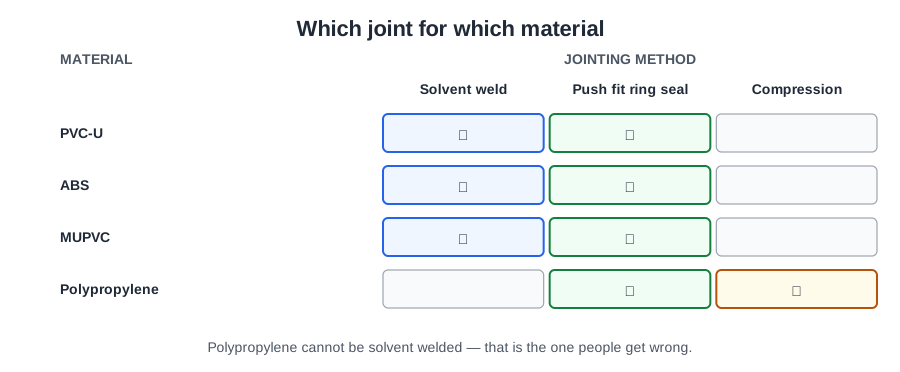
Three ways to connect drainage pipework. Each has a specific procedure and specific applications.
1. Solvent weld
How it works. Solvent cement is applied to the outside of the pipe and the inside of the fitting. The solvent chemically dissolves a thin layer of each, and when the two are pushed together, the surfaces fuse as the solvent evaporates.
Procedure:
- Cut the pipe squarely and deburr
- Dry-assemble the joint first — push the pipe into the fitting, mark both pipe and fitting to show the correct alignment, then pull apart
- Apply solvent cement to the inside of the fitting
- Apply solvent cement to the outside of the pipe end
- Push the pipe fully into the fitting with a quarter turn to spread the cement evenly
- Align with the marks made in step 2
- Hold firmly for at least 30 seconds while the cement sets
Key points:
- Solvent cement dries very quickly — work fast and accurately, because once it starts setting you can't reposition
- Solvent cement is a hazardous substance under COSHH Regulations — read the data sheet, use in a well-ventilated area, follow safety instructions
- Once set, the joint is permanent — cutting out and replacing is the only way to correct a mistake
- Polypropylene cannot be solvent welded — the plastic doesn't react with solvent cement the same way PVC and ABS do
Solvent welded joints are air and watertight, strong, and suitable for both above-ground soil and branch discharge pipework. They're ideal for permanent installations where disassembly won't be needed.
2. Pushfit (ring seal)
How it works. A rubber ring (O-ring) inside the fitting socket seals against the outside of the pipe when the pipe is pushed in. The seal comes from the compression of the rubber — no cement, no heat.
Procedure:
- Cut the pipe end square
- Chamfer the end using a file or rasp (a chamfer is an edge at less than 90° — it stops the pipe catching on or damaging the rubber ring)
- Deburr with a file
- Check all seals and socket surfaces are clean and free from swarf or debris
- Apply silicone-based lubricant around the pipe end
- Mark the pipe at the full depth of the fitting socket
- Align and push the pipe fully into the socket
- Pull the pipe out 10mm to allow for thermal expansion
Key points:
- The 10mm expansion gap is essential. Plastic drainage pipework expands and contracts significantly with temperature, and a joint pushed fully home with no expansion gap will fracture or spring apart when the pipe heats up
- Only use silicone-based lubricant — other lubricants may damage the rubber seal
- Pushfit is the most common jointing method for drainage pipework in modern installations
- Joints can be dismantled and remade — useful where future access might be needed
3. Compression
How it works. A rubber seal inside the fitting is squeezed against the pipe when a threaded nut is tightened. As the nut tightens, the seal is compressed between the nut and the fitting body, gripping the pipe and making a watertight joint.
Procedure:
- Cut the pipe squarely
- Deburr with a file
- Slip the nut onto the pipe (take it off the fitting first if needed)
- Insert the pipe into the fitting
- Tighten the nut firmly by hand
Key points:
- Compression joints are ideal for connecting pipes of slightly different diameters — for example, polypropylene to ABS or PVC
- Compression joints can be used on all types of waste pipe — no incompatibility issues
- The joint can be dismantled and remade — useful for servicing or replacement
Which joint for which material
A quick reference:
| Material | Solvent weld | Pushfit | Compression |
|---|---|---|---|
| PVC / uPVC / MuPVC | ✓ | ✓ | ✓ |
| ABS | ✓ | ✓ | ✓ |
| Polypropylene | ✗ | ✓ | ✓ |
ABS pushfit fittings won't accept PP and vice versa — the external diameter of PP is slightly different. If you need to connect PP to another plastic, use a compression fitting.
Common fittings
Drainage fittings are typically designed with smooth sweeping curves — this allows the low-pressure waste water to flow through without building up deposits or losing velocity. Tight-radius fittings exist but should only be used where space genuinely doesn't allow a swept fitting.
Standard fitting shapes:
- Tee — a three-way fitting for adding a branch to a straight run
- Straight coupling — joins two lengths of pipe in-line
- Swept 90° elbow — a 90° turn with a long curve, preferred for soil pipework
- 45° elbow — a 45° turn
- 90° knuckle bend — a tight 90° turn, used only where space is restricted
Special drainage fittings:
- Access bend — a fitting with a screw-on access cover, positioned where blockages might need to be cleared from
- Soil manifold — a fitting with multiple inlets on different sides, used to avoid crossflow when several branches need to connect at similar heights
- Strap-on boss — fitted to the outside of an existing stack to allow a new branch connection (available with pushfit or solvent weld adaptor)
- 40–32mm reducer — connects a 40mm pipe to a 32mm pipe, for example where a 40mm bath waste connects to a 32mm basin waste on the same branch
- Flexible coupling — used to connect different materials (for example, plastic pipe to existing clay or cast iron)
Access caps and rodding points
Access caps (screw-on covers on access fittings) serve one purpose: providing access for the removal of blockages. Expect this to be tested directly — common wrong answers include alignment checking or secondary filling, neither of which is what they're for.
Pipe supports and clipping
Plastic drainage pipework needs proper clipping. Two reasons:
- Unclipped pipework sags over time, creating low spots where waste can pool
- Unclipped pipework moves when water discharges, which causes knocking sounds and loosens joints
Specific clipping distances vary by pipe size and orientation, but the general rule is vertical runs need fewer clips than horizontal runs because gravity helps support them.
Common exam traps
Trap 1: Polypropylene and solvent weld. PP cannot be solvent welded — it doesn't react with the solvent cement. Only pushfit or compression work for PP. This is a reliably-tested question.
Trap 2: ABS and UV. ABS is the most susceptible of the drainage plastics to UV damage. Questions often test whether you know it's ABS specifically, rather than plastic in general.
Trap 3: Pushfit expansion gap. Pull the pipe out 10mm after pushing it fully home. Forget this step and the joint will fail the first hot discharge.
Trap 4: Putty on plastic. Oil-based materials like putty damage plastic. Never use linseed oil putty on plastic pipework. This one surprises students who've only worked with older systems.
Trap 5: Access cap purpose. Access caps exist for removal of blockages. Not for alignment checks, not for secondary filling, not for air release.
Trap 6: Solvent weld and COSHH. Solvent cement is a hazardous substance under COSHH Regulations. Ventilation and safety data sheets apply.
Quick revision summary
Before the mock test, seven things you need to be able to produce from memory:
- Five drainage plastics: PP, ABS, PVC, uPVC, MuPVC
- PP jointing: pushfit or compression only — cannot be solvent welded
- ABS is most susceptible to UV damage (becomes brittle, lower impact resistance)
- Three jointing methods: solvent weld (permanent, COSHH hazard), pushfit (10mm expansion gap), compression (tightened by hand, connects different materials)
- Pushfit procedure: cut square, chamfer, deburr, silicone lubricant, push home, pull out 10mm
- Solvent weld: dry-assemble first, apply to pipe and fitting, quarter turn on insertion, hold 30 seconds
- Oil and putty damage plastic — never use on plastic soil systems
📝 10-Question Mock Test
Click an option to see whether you got it right. Explanations appear instantly — no submitting at the end.
All drainage plastics degrade with UV exposure, but ABS is the most susceptible — direct sunlight causes it to become brittle and lose impact resistance. PVC and its variants (uPVC, MuPVC) have better UV resistance. Polybutylene (D) isn't used for drainage — it's a water supply pipe.
Polypropylene doesn't react with solvent cement the way PVC and ABS do, so solvent weld joints can't be made on PP. You're limited to pushfit or compression fittings. PP also has a slightly different external diameter from other plastics, so it won't fit pushfit fittings designed for PVC or ABS — use PP-specific pushfit fittings or a compression joint.
Plastic expands and contracts significantly with temperature, and a pushfit joint pushed fully home has no room for expansion — the pipe would fracture or spring the joint apart. The 10mm pull-back gives the pipe room to grow without stressing the joint.
Silicone lubricant is compatible with the rubber ring seal. Oil-based lubricants (B) can damage the rubber over time, and grease-based (A) isn't the standard choice either. Without lubricant (D) the pipe can catch and damage the seal on insertion.
Solvent cement sets quickly and needs the joint held firm during the initial setting. Any less and the joint may spring back before the solvent has fully fused the surfaces. Much longer isn't necessary but also doesn't cause problems.
Oil-based materials damage plastic pipework over time. Linseed oil putty is an obvious example — it was commonly used on older cast iron and clay systems but should never touch plastic. PTFE tape (A), silicone sealant (B) and sheet gaskets (D) are all safe for use with plastic.
Solvent welded systems, being permanently fused along every joint, need dedicated expansion joints at regular intervals to absorb thermal movement. Pushfit systems have built-in expansion allowance (the 10mm gap at each joint), so they need fewer dedicated expansion joints. Options A, B, and D aren't standard fitting types.
That's the only purpose. The screw-on cover lets you open the pipe to push drain rods through, clear a blockage with a plunger, or inspect the inside. The other options describe things access caps aren't for.
Silicone sealant makes a waterproof, flexible seal between the waste fitting and the plastic basin. Putty (A) damages plastic. Jointing paste (B) and flux paste (D) are for different applications entirely (B is for threaded steel joints, D for soldered copper).
This is compression's key advantage — the rubber seal accommodates minor size differences that wouldn't work with pushfit or solvent weld. Options A and B are both wrong because compression works on all plastics; D is wrong because compression fittings are widely used on plastic.
How PlumbMate puts this into practice
Materials and jointing content is a classic mix of facts (which plastics, which joints, which restrictions) and sequences (the jointing procedures). Spaced repetition handles both quickly.
- Flashcards, not essays. One prompt, one answer — the format that research has consistently shown works best for active recall.
- Wrong answers are logged. Every question you get wrong goes into a dedicated collection that resurfaces more frequently in future sessions.
- The 3× rule. You need to get a question right three times before it clears — one lucky guess isn't enough.
- Explanations on every question. Like the ones above, but on every single question in the app.