A drainage installation isn't finished until it's been tested. And once it's in service, it needs periodic maintenance to keep working reliably. Level 2 expects you to know two different kinds of test (soundness and performance), the specific procedure for plastic above-ground pipework, how to remove common blockages, and the role of maintenance schedules and records in keeping a system running.
This is the sixth and final deep-dive in the Level 2 drainage sub-cluster. For the others, see the traps, stack systems, materials and jointing, underground drainage, and rainwater and guttering posts.
Two different tests
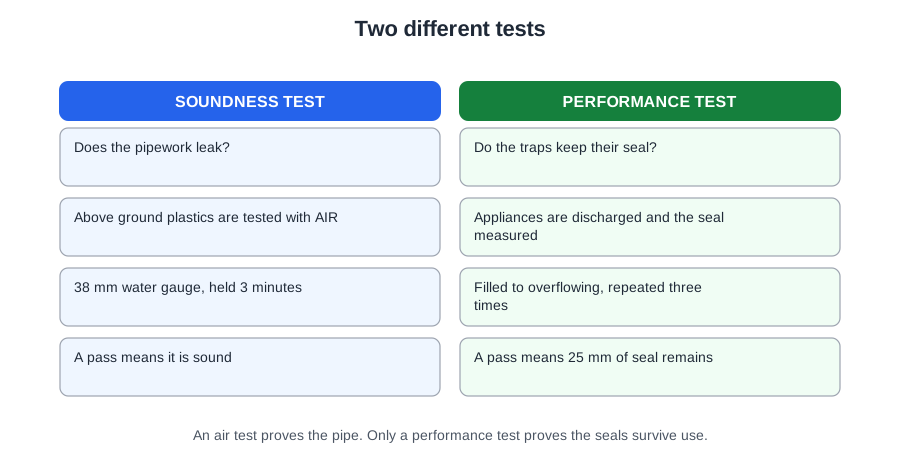
Two separate tests are required on a new drainage installation, and they test different things:
- Soundness testing checks the pipework is airtight — no leaks through joints, no cracks, no faulty fittings
- Performance testing checks the system works correctly when appliances are actually used — traps keep their seals, water drains away quickly, and no siphonage occurs
Both are part of commissioning a new installation. Skipping either leaves you handing over a system that may well fail the first time it's put into real service.
Soundness testing: above-ground plastic pipework is tested with AIR
One of the most distinctive facts about drainage testing — and one that catches students out because it's the opposite of what happens with water pipework.
Plastic above-ground sanitary pipework is soundness tested with AIR, not water.
Why? Three reasons:
- Water would discharge through any open traps (rainwater pipes, floor waste, unfinished appliance connections) and mean you couldn't build up pressure
- Water pressure tests would wet the inside of the pipework and make subsequent commissioning untidy
- Air tests can be held at the very low pressures required (38mm water gauge) far more easily than water tests
The test procedure:
- Carry out a visual inspection — check there are no open ends
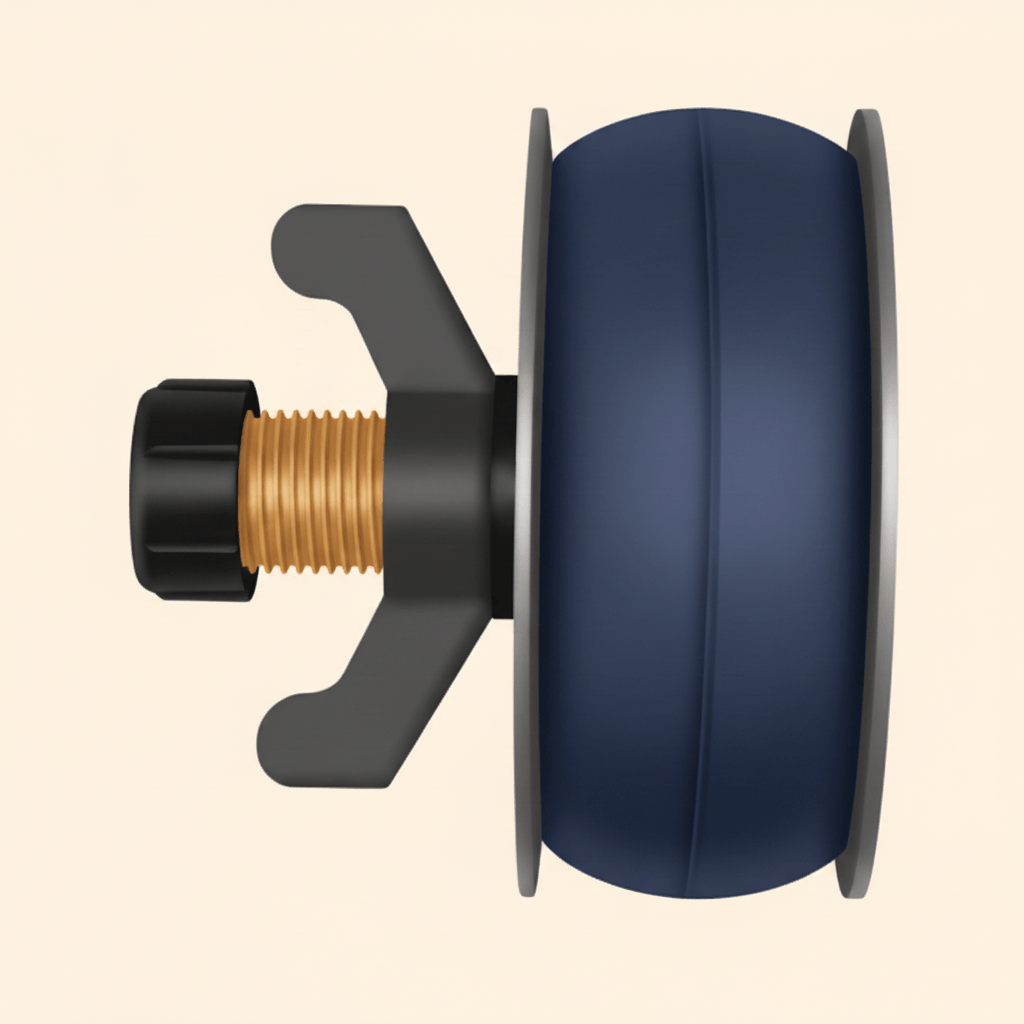
- Fit test plugs at each open end (appliance connections, rodding points, end of stack vent)
- One test plug is fitted with the test equipment (a manometer and air pump)
- Pump air into the system until the pressure reaches 38mm water gauge
- The pressure must remain constant for at least 3 minutes — if it drops, you have a leak
If you find a leak: two accepted methods for locating it:
- Soap solution — put some pressure in the pipework, then brush soap solution onto each joint. Bubbles form where air is escaping.
- Smoke testing — a smoke machine introduces smoke into the pressurised pipework. Smoke escaping reveals the leak location.
Critical exam point: smoke testing should NOT be used on plastic pipework — the smoke damages the plastic. Smoke is for cast iron or clay systems. On plastic, stick to soap solution.
Performance testing: checking the traps work
Once the pipework is sound, the performance test checks the system actually works under real use — specifically that trap seals are maintained.
The procedure (covered in more detail in the traps post):
- Fill the appliance to overflowing level and remove the plug (WCs are flushed)
- When the appliance has finished draining, check the depth of seal remaining in the trap using a dipstick or small transparent tube
- The minimum acceptable seal remaining is 25mm
- Repeat the test at least 3 times, refilling (recharging) the trap between each test
- Take the lowest seal depth across all tests as the significant result
For multiple appliances on a shared branch:
- First test each appliance individually for self-siphonage
- Then fill all appliances and let them drain simultaneously to test for induced siphonage
- Check trap seals in both cases
What a failed performance test means:
- If traps fail during self-siphonage tests: the appliance's own discharge is breaking its seal — likely a venting or pipework layout issue
- If traps fail during induced siphonage tests: another appliance's discharge is breaking the seal — likely too close together on the branch or inadequate venting between them
Fixes involve revisiting the installation (adding anti-siphon traps, improving venting, or reconfiguring pipework) rather than accepting the failed test.
What draining should look like
Beyond formal testing, every appliance should drain quickly and quietly:
- Watch the water drain — slow drainage suggests undersized or partially blocked pipework
- Listen — gurgling, bubbling or glugging sounds indicate air being pulled through the trap (signs of siphonage) or pipe sizing/fall issues
These quick sense-checks can spot problems before a formal performance test even starts.
Maintenance schedules and records
On large installations (factories, colleges, airports, commercial buildings), disruption from drainage failures costs money and causes real problems. Two strategies to minimise disruption:
Planned preventative maintenance. Components are replaced at convenient times by maintenance staff before they fail, rather than waiting for breakdowns. Scheduled using a maintenance schedule; outcomes recorded on a maintenance record.
Regular checks. Routine inspections to catch problems early — looking for leaks, failed clips, loose pipework, blocked traps.
What a maintenance schedule covers:
- Visual inspection for leaks, hazards, adequate clipping, water levels in storage cisterns and WCs
- Annual performance test to confirm the system still works within its design specification
- Replacement of consumable components — particularly ring seals on soil and waste fittings, which perish over time
What maintenance records capture
A maintenance record typically includes:
- The date and nature of the inspection or work
- Any faults found and actions taken
- Replacement parts used
- The installer/inspector's details
For something like a bidet connected to a discharge stack, a useful record entry might note that the minimum trap seal is retained after operation — confirming the performance test passed.
Which document lists the maintenance works?
For large systems, the document that specifies the maintenance works to be completed is the maintenance schedule. Not the Building Regulations, not the Water Regulations Guide — the maintenance schedule is the site-specific document for the specific installation.
Removing blockages
Four common tools you'll need to know:
Force cup. The familiar "plunger" — a rubber cup on a handle. Used on basins, sinks, baths, and WCs. Pumped up and down to create alternating positive and negative pressure that dislodges the blockage.
Gully grab. A long-handled tool designed for reaching into a gully and manually pulling out leaves, silt, and other debris.
Drain rods. Rigid rods that screw together end-to-end, with interchangeable heads (plunger, corkscrew, scraper). Pushed through an access point (rodding eye or inspection chamber) to clear below-ground blockages.
Drain auger. A long flexible cable with a coiled "snake" at the end, used to clear blockages in waste pipes and small-bore drains where rigid drain rods won't go around bends.
Matching the tool to the blockage type is what Level 2 tests. Drain rods for below-ground clearance; force cup for appliance waste; gully grab for gullies; drain auger for flexible pipework blockages.
Decommissioning
Two types — same concept as in other clusters:
Temporary decommissioning. Taking part of the system out of service for maintenance, with the expectation it will return to service. If you're isolating water to a property (for example, at the external stopcock), check whether it affects more than one property, and inform anyone affected before turning off.
Permanent decommissioning. Removing an appliance and its pipework for good.
For permanent decommissioning of sanitary appliances, remove the trap and associated pipework back as far as the stack before capping off the pipe. Leaving a dead leg of pipe still connected to the stack means the water in the trap will eventually evaporate (trap seal loss by evaporation — see the traps post), letting sewer gases into the property. Removing the pipework eliminates the risk.
For a washing machine discharging to a gully on the ground floor: permanent decommissioning means removing the waste trap and pipework. The gully itself stays in place because it's still part of the below-ground drainage serving other appliances.
When leaving an open-ended pipe connected to a live plumbing system, seal it with stop ends — not with crimping, tape, or timber plugs. Stop ends are the only reliable way to prevent contamination or leaks from an abandoned pipe.
Preventing use during maintenance
If you're working on a system and need to stop the occupier using it:
- Isolate the water supply and post a warning notice — best practice
- Alternatively, place warning notices on all affected appliances
On commercial sites, consider whether maintenance work can be done outside normal working hours to minimise business disruption.
Common exam traps
Trap 1: Plastic above-ground sanitary is tested with AIR. Not water, not smoke (which damages plastic). Air at 38mm water gauge, held for at least 3 minutes. This one reliably catches students who've memorised "water at 1.5× working pressure" for pipe testing in other contexts.
Trap 2: Minimum trap seal after performance test. 25mm — the seal that must remain after discharge. Not 50mm or 75mm, which are design minimums at installation.
Trap 3: Performance test repeat. Carried out at least 3 times, refilling between tests, taking the lowest result as the significant one.
Trap 4: Smoke test on plastic. NEVER. Smoke damages plastic pipework. Use soap solution instead.
Trap 5: Decommissioning to prevent stagnation. Cap the pipe as far back as possible — typically to the stack. Not just at the appliance connection.
Trap 6: Open-ended pipes seal with stop ends. Not tape, crimping, or timber plugs. Stop ends are the specific answer.
Trap 7: Maintenance schedule document. The maintenance schedule — the site-specific document — lists the works. Not BS EN 12056, not the Building Regulations, not the Water Regulations Guide.
Quick revision summary
Before the mock test, seven things you need to be able to produce from memory:
- Plastic above-ground sanitary pipework: soundness tested with AIR at 38mm water gauge, held for minimum 3 minutes
- Smoke testing NOT on plastic — damages the material; use soap solution instead
- Performance test: discharge appliance fully, measure seal with dipstick, minimum 25mm remaining, repeat 3 times
- Planned preventative maintenance — replace components before they fail; logged in maintenance schedule and maintenance record
- Four blockage tools: force cup, gulley grab, drain rods, drain auger
- Permanent decommissioning: cap the pipe as far back as possible (to the stack) to prevent stagnation
- Open-ended live pipework sealed with stop ends (not tape, crimping, or plugs)
📝 10-Question Mock Test
Click an option to see whether you got it right. Explanations appear instantly — no submitting at the end.
Plastic above-ground sanitary pipework is tested with air — water would discharge through any open traps or incomplete connections, and smoke (A) damages plastic. Nitrogen (C) isn't the standard answer for this test.
A very low pressure — just enough to reveal leaks without stressing the pipework. Options C and D are figures for water pressure testing of supply pipework, which is a completely different test on rigid water pipes.
The pressure must remain constant for at least 3 minutes. Shorter periods wouldn't give slow leaks time to show; longer wouldn't add any useful information.
Smoke from a smoke-testing machine attacks the plastic and shortens its life. Soap solution is the alternative — brush it onto joints under pressure and look for bubbles where air escapes.
Minimum seal remaining after a performance test. Design seal depth at installation is 75mm (or 50mm for WCs, baths and showers); the test is a check that discharge hasn't destroyed the seal, not that it's retained at full depth.
The test is repeated three times to confirm the trap seal reliably holds. A single test could be a lucky result; three tests with recharging between gives a proper check. The lowest seal depth across the three is taken as the result.
Long-handled, specifically designed for reaching into gullies and pulling out debris. Force cups are for basins and sinks; drain rods for below-ground clearance; drain augers for flexible pipework.
The site-specific maintenance schedule lists the planned works for a specific installation. BS EN 12056 (A) is the underlying standard for drainage design but doesn't list site-specific works. Options C and D are regulatory documents, not works schedules.
Capping at the stack eliminates the dead leg where trap water would evaporate and let sewer gases in. Option A leaves a long dead leg connected to the stack; B is an arbitrary distance; D creates a genuine safety risk.
Stop ends are the specific, approved way to seal an open pipe that's still connected to a live system. Options A and B are dramatic overkill for a work-site situation; D is both impractical and would contaminate the cold water supply.
How PlumbMate puts this into practice
Testing and maintenance content is heavy on specific procedures and specific numbers — exactly the kind of material spaced repetition handles best.
- Flashcards, not essays. One prompt, one answer — the format that research has consistently shown works best for active recall.
- Wrong answers are logged. Every question you get wrong goes into a dedicated collection that resurfaces more frequently in future sessions.
- The 3× rule. You need to get a question right three times before it clears — one lucky guess isn't enough.
- Explanations on every question. Like the ones above, but on every single question in the app.