Level 2 expects you to identify plumbing tools from a picture, state what each is used for, name the safety risks and know the maintenance requirements. That's four things per tool, across dozens of tools. The good news: once you understand the patterns (cutting tools need blade checks, gripping tools need clean teeth, bladed tools need guards), the list becomes a lot more manageable than it first looks.
This post is the first in the Level 2 Plumbing Processes sub-cluster. For the others, see the power tools, pipe materials, jointing, bending and installation posts.
The four things you need to know about every tool
Whether it's a hammer or a pipe cutter, every tool entry in the Level 2 syllabus follows the same four-part structure:
1. Name. What the tool is called. Specific and unambiguous — "adjustable spanner," not "that spanner thing."
2. Use. What the tool is designed to do. One clear purpose per tool.
3. Safety requirements. What could go wrong when using it — blade risks, slipping risks, blunt edges, situations to watch for.
4. Maintenance requirements. What you need to do to keep it working — cleaning, lubricating, replacing blades or cutting wheels.
Learn all four for every tool, and you've covered the classic "tools" section of the paper.
Before using any tool
A standard pre-use check sequence that applies to virtually every plumbing tool:
- Check the tool has been correctly maintained — clean and working correctly
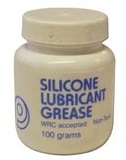
- Check all moving parts move easily — if stiff, apply a lubricant like WD40 (not oil on plastic tools, it degrades the plastic)
- For bladed tools, visually check the blade or cutting wheel — well-secured and undamaged; replace if blunt or damaged
- Bladed tools should be stored closed or with a blade guard fitted to prevent accidents
- Check manufacturer instructions if you're not familiar with the tool
- Use appropriate PPE — gloves, goggles, or dust mask as required
- Only use tools for the task they were designed for — using tools for purposes other than this can cause injury
- If a tool is damaged, take it out of use immediately until it has been fixed
Spanners and wrenches
Adjustable spanner. Used for tightening compression fittings and general nut-tightening. The adjustable jaw lets one tool handle a range of sizes. Common site tool; every plumber has one.
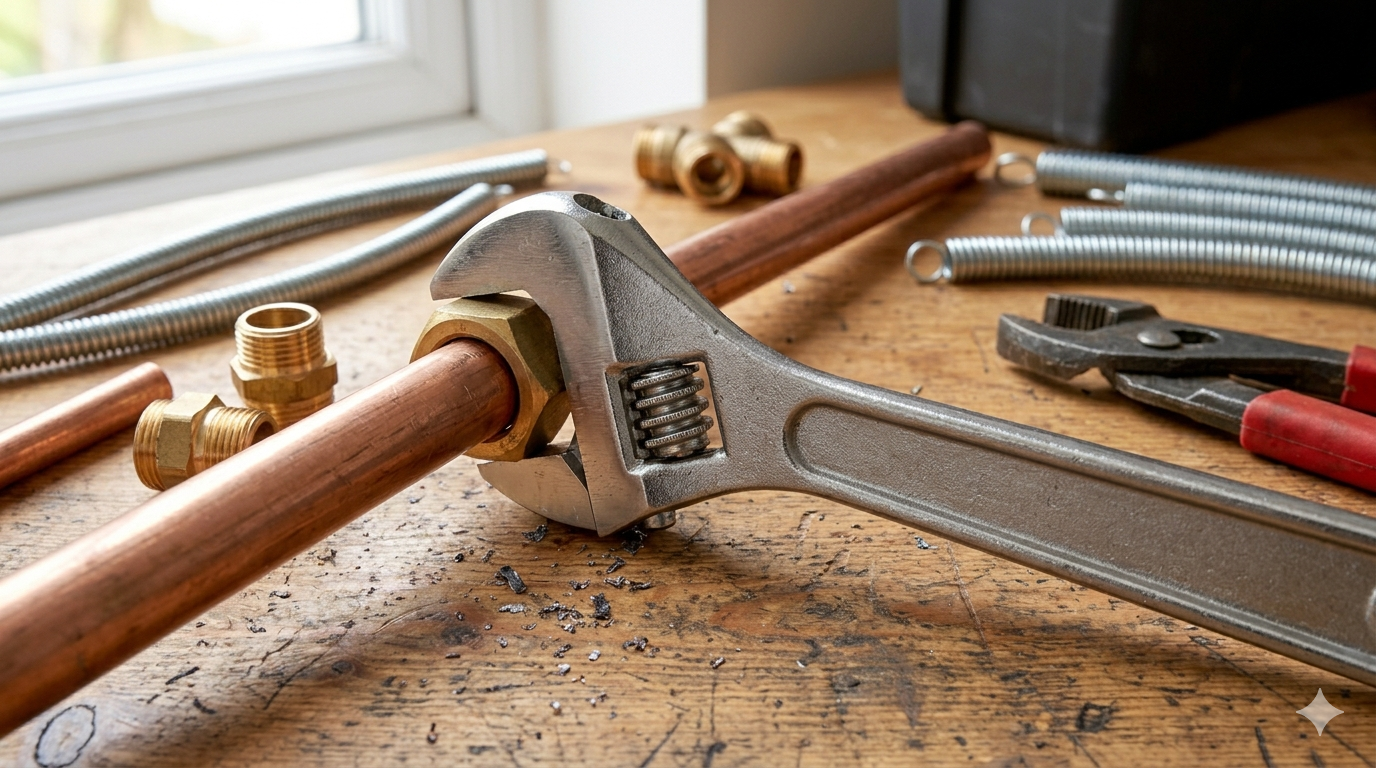
Ring spanner. Fixed-size spanner with a closed ring at one end. Grips nuts more securely than open-ended spanners, reducing the chance of rounding the corners.
Open-ended spanner. Fixed-size spanner with an open fork. Quicker to use in tight spaces but more prone to slipping and rounding nuts if worn or used on tight connections.
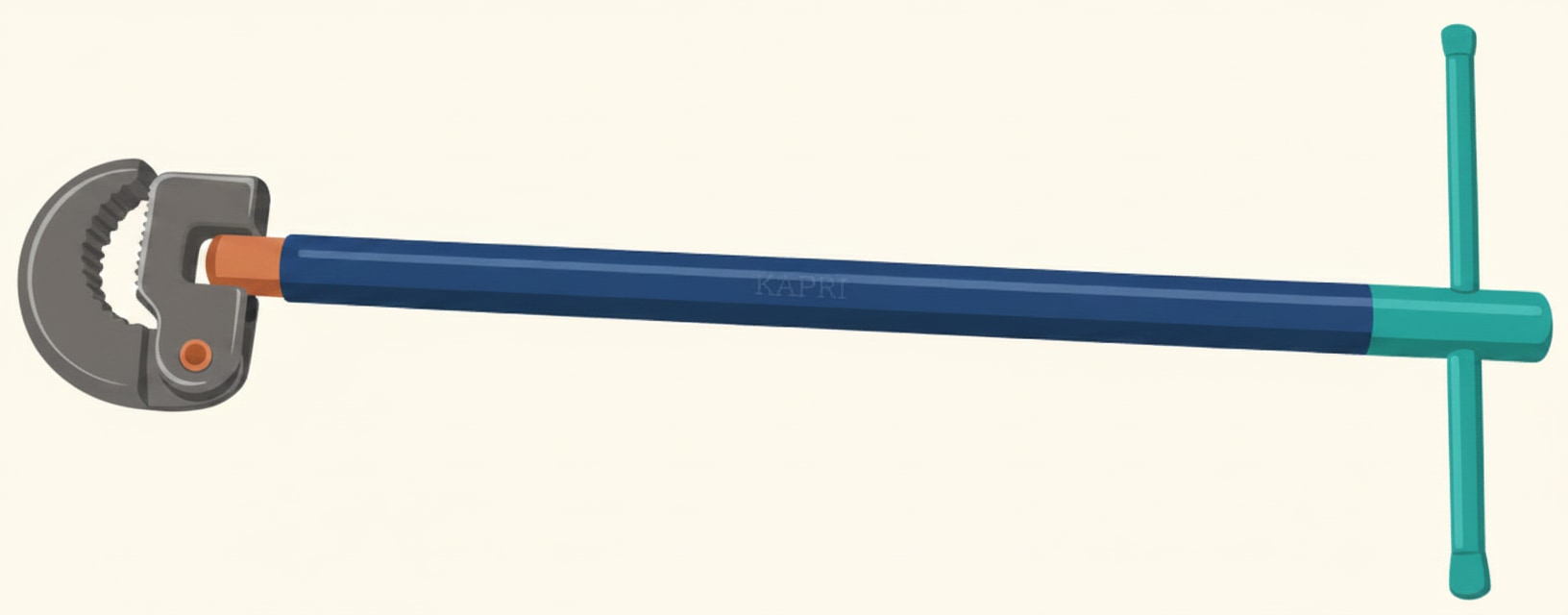
Adjustable tap spanner (basin wrench). Specifically designed for the nuts underneath basin and sink taps, where standard spanners can't reach. Long handle, pivoting jaw. The correct tool for removing a nut from a basin tap.
Box spanner. Tube-shaped, fits over the nut completely. Driven with a tommy bar through cross-holes. Useful for deep-set nuts (e.g. on radiator air release valves or tap back nuts).
Immersion spanner. Specifically designed for installing and removing immersion heaters. Slotted opening fits the immersion's flange.
Safety requirements:
- Adjustable spanners: ensure the adjustor is tightened correctly so it doesn't slip under load
- Ring and open-ended: check for worn or deformed jaws; replace if rounded
- Basin wrench: check the pivoting jaw moves freely and locks securely
Maintenance: lubricate moving parts lightly; clean teeth and grips of debris; check adjusters and jaws for wear.
Pipe wrenches and gripping tools
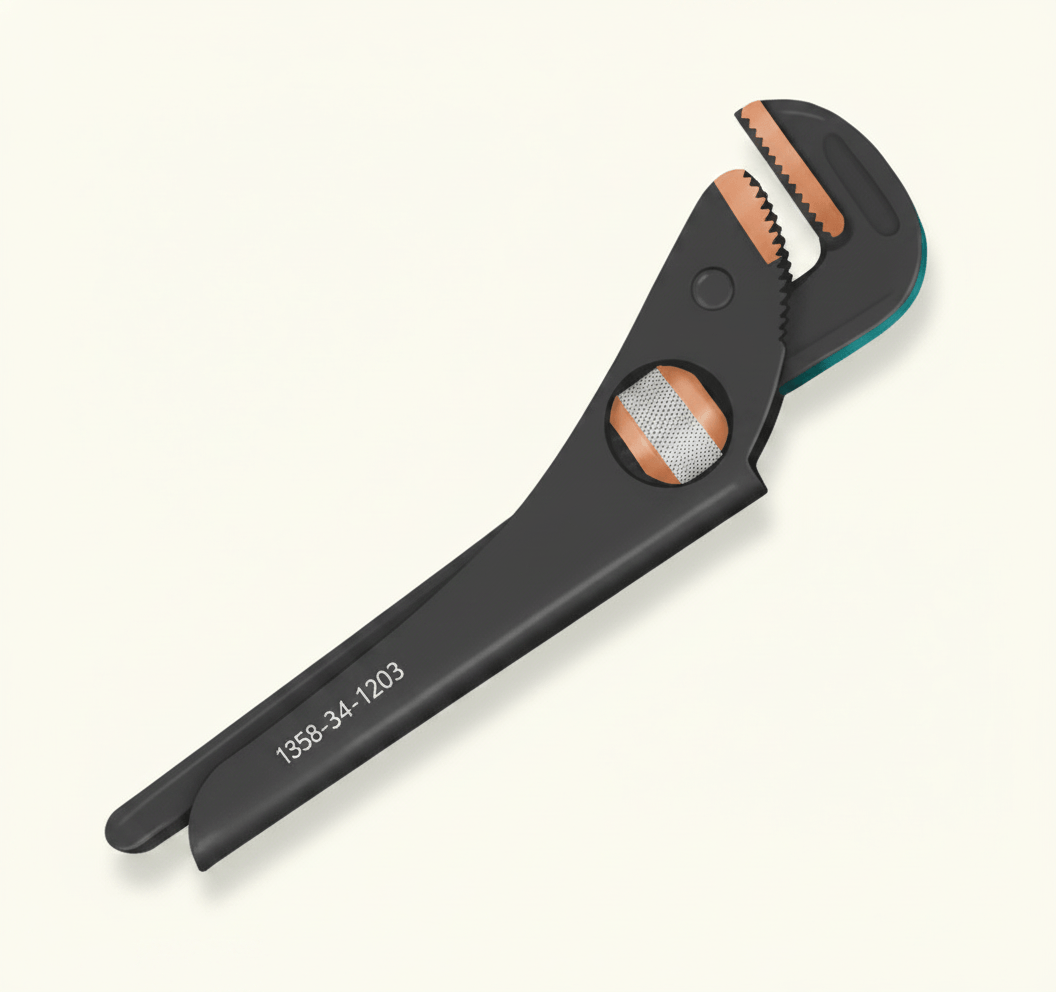
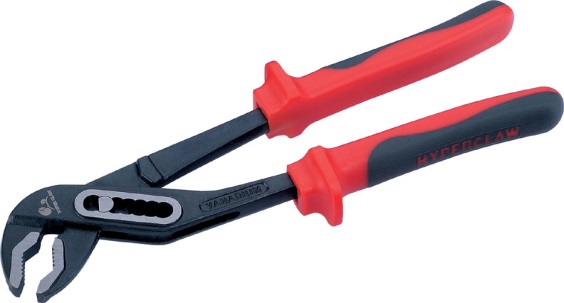
Stillsons (also called Stillson wrench). Heavy-duty pipe wrench with serrated jaws. Tightens as you pull, grips harder the more force you apply. Used for holding or turning round pipework.
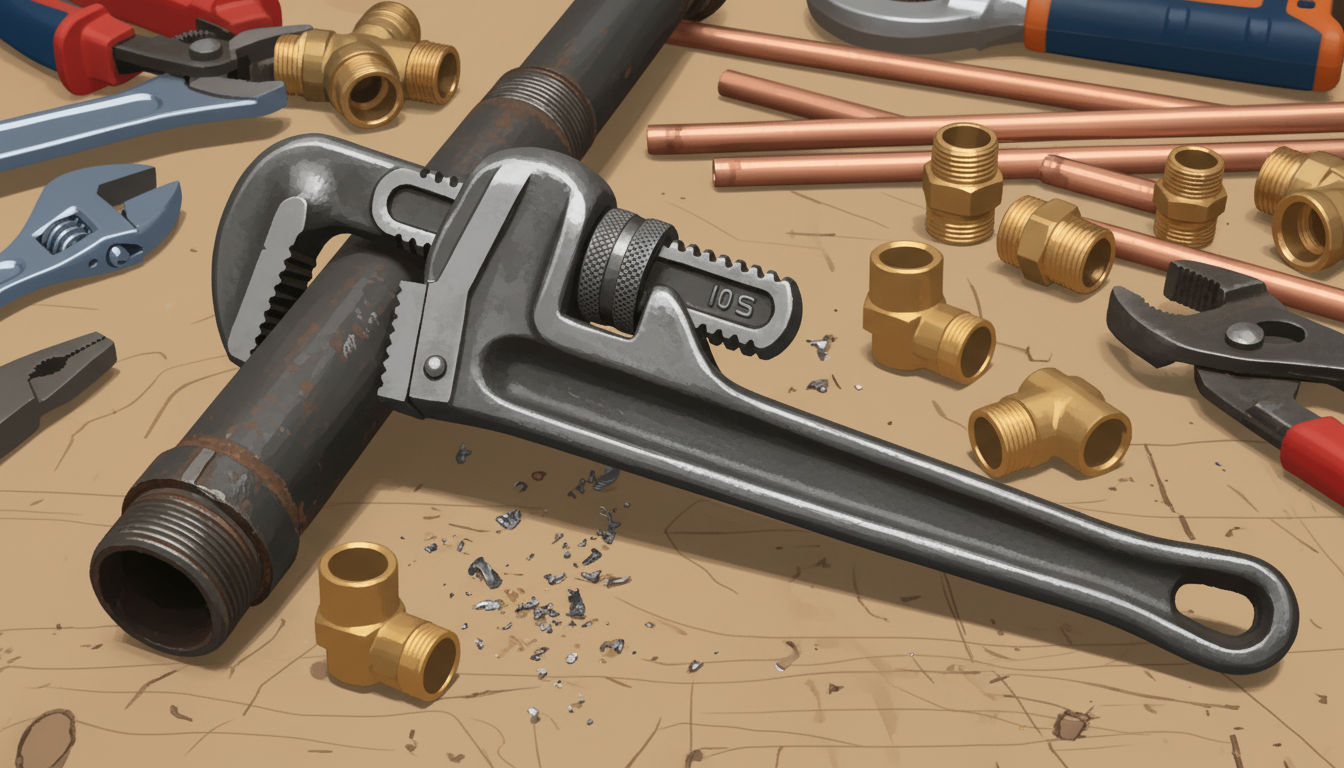
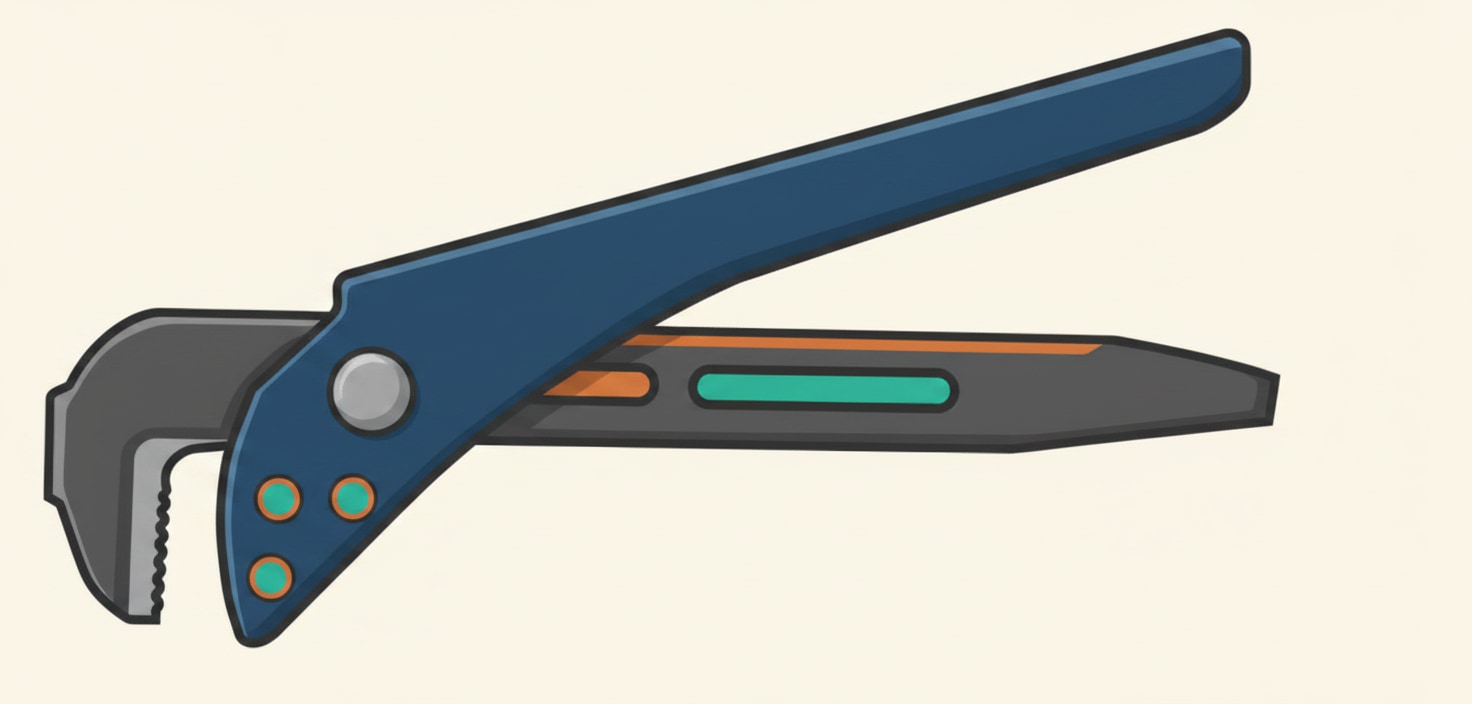
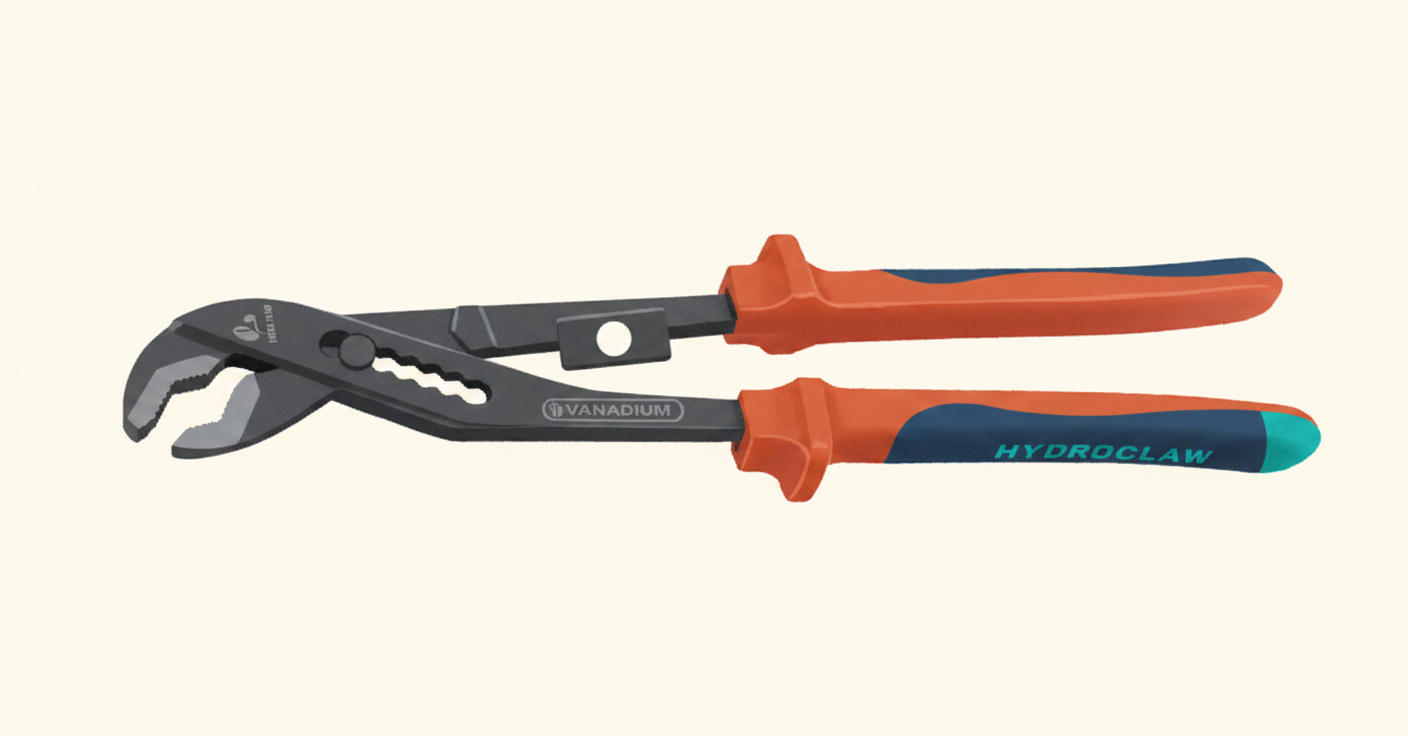
Footprint grips (or "footprints"). Similar to Stillsons but with a different jaw shape. Used for gripping pipe and tightening fittings.
Pump grips / water pump pliers. Long-handled pliers with adjustable jaw opening via a sliding pivot. Versatile — grips pipes, fittings, nuts.
Mole grips (locking pliers). Adjustable pliers that lock closed with a lever, freeing your hands. Useful when you need to hold something steady while working.
Safety requirements: check teeth aren't filled with debris (slippery grip = dangerous); ensure jaws close tightly on the target; keep fingers clear of closing jaws.
Hammers
Claw hammer. General-purpose hammer with a split claw on the back for pulling nails. Used for hammering in and removing nails.
Lump hammer (club hammer). Short-handled heavy hammer. Used for hitting a plugging chisel, cold chisel or bolster — driven tools that need a substantial strike.
Sledge hammer. Long-handled heavy hammer. Used for knocking down walls and heavy demolition work. Two-handed tool.
Ball pein hammer. Small hammer with a rounded "pein" on the back. Used for metalwork — shaping, riveting, general light metal striking.
Chisels
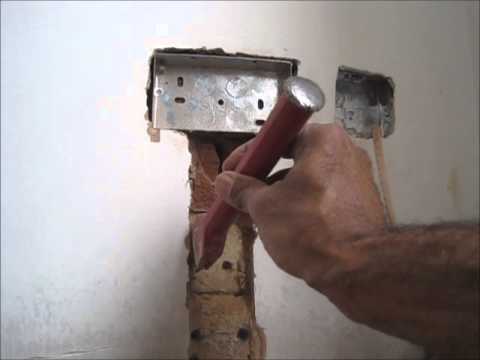
Wood chisel. Bevel-edged chisel for cutting wood. Used with a wooden-handled mallet (not a metal hammer, which damages the handle). Used for knocking out pieces of wood.
Cold chisel. Heavy all-metal chisel for cutting metal or masonry. Hit with a lump hammer. Used for cutting holes in concrete and cutting cement out from around bricks.
Plugging chisel. Narrow chisel for removing mortar from between bricks (when re-pointing).
Bolster chisel. Wide-bladed chisel for cutting bricks cleanly.
Safety requirements: eye protection mandatory (chips fly); check the struck end of the chisel isn't mushroomed from heavy use (mushrooming means fragments can shear off on impact); maintain chisels with regular sharpening.
Saws for plumbers
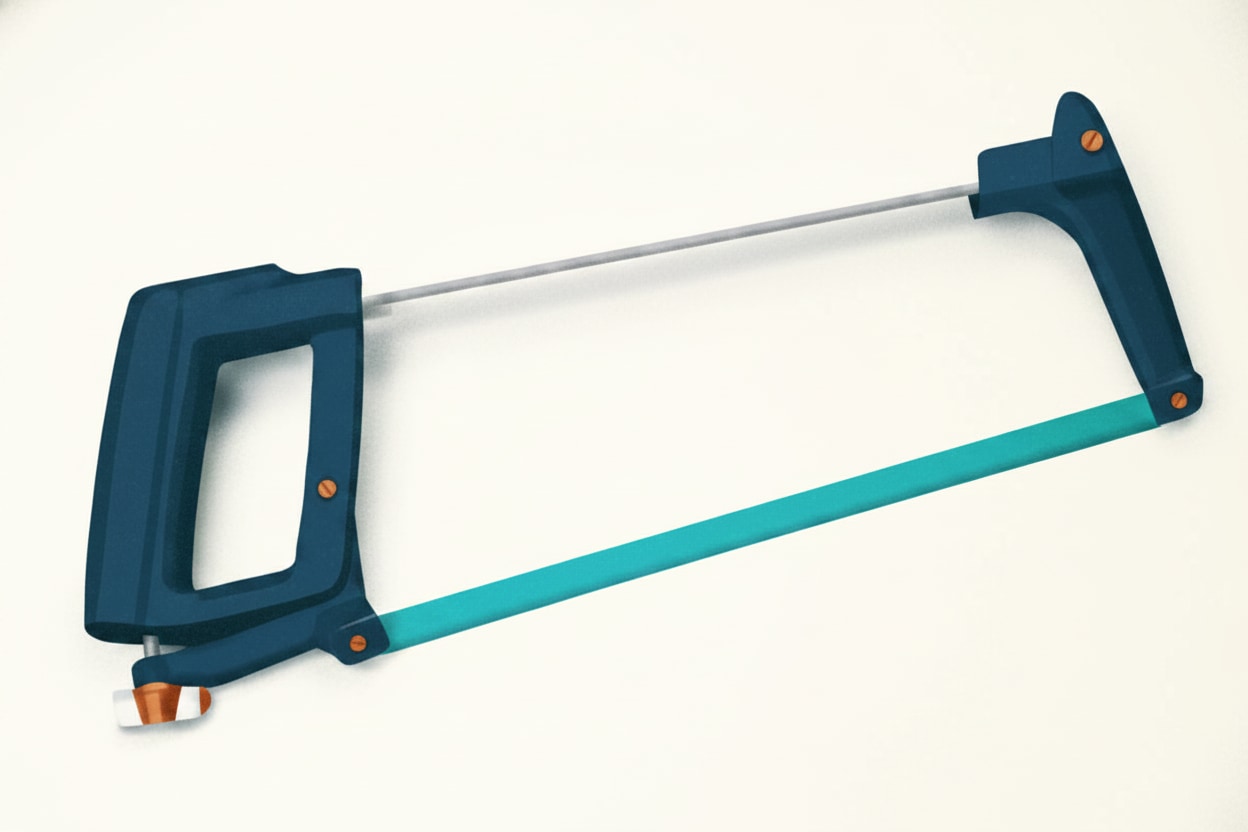
Hacksaw. Metal-cutting saw. Blade installed with teeth facing forward so the cutting happens on the push stroke. Tension set via the wingnut.
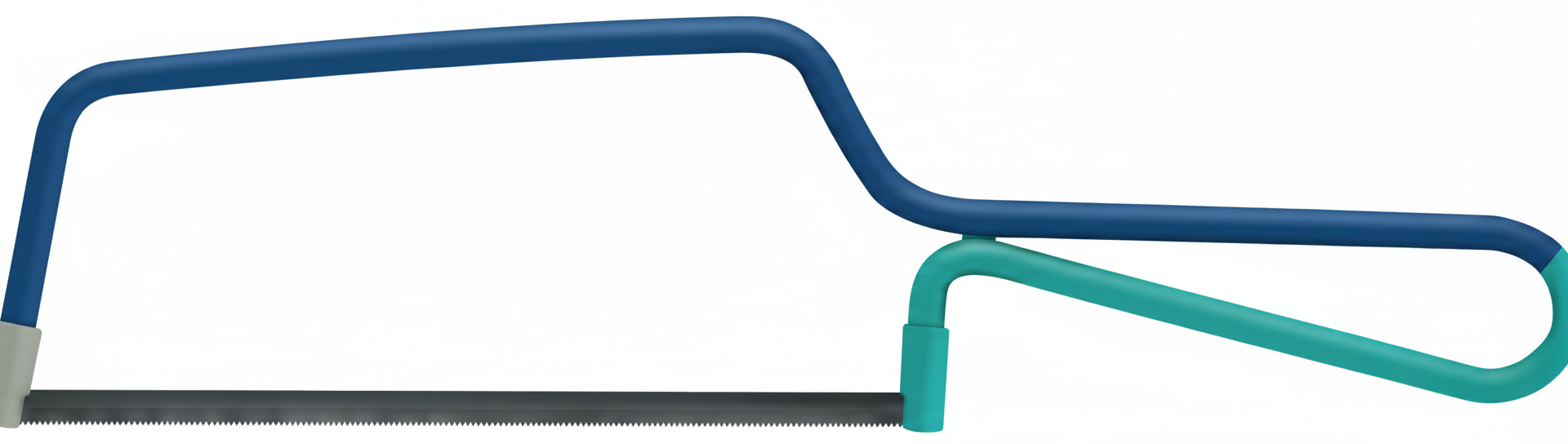
Junior hacksaw. Smaller, one-handed hacksaw. Used for intricate work and tight spaces — making intricate cuts like cutting out worktops for kitchen sinks.
Hard point saw. Standard wood saw. Used for general-purpose wood cutting.
Floorboard saw. Has a curved blade for cutting floorboards in place without damaging surrounding boards. Used for cutting floorboards.
Pad saw (keyhole saw). Narrow-bladed saw for cutting plasterboard or small cutouts. Used for cutting plasterboard.
Jigsaw (covered in the power tools post — not strictly a hand tool but often grouped for exam purposes).
Hacksaw blade fitting rule: when replacing a hacksaw blade, position it so the teeth face forward — cutting happens on the push stroke. Teeth facing backwards (B) means no cutting on the push; loose fit (C) causes blade damage.
A hacksaw is NOT suitable for cutting timber. Hacksaw blades are designed for metal; their tooth spacing is wrong for wood and they clog quickly. Wood saws (hard point, floorboard, pad) are the correct tools.
Safety requirements: check blade tension before each use; check teeth aren't damaged or clogged; ensure the blade is installed correctly (facing the right way).
Vices
Pipe vice and chain vice. Designed to hold round pipe steadily without crushing it. The pipe vice has a V-shaped jaw; the chain vice uses a chain to wrap around and grip the pipe. Used for holding pipe.
Bench vice. General-purpose vice mounted to a workbench. Flat jaws (soft jaws or hard jaws available). Used for holding any workpiece — including metal trunking.
Safety requirements: check jaw alignment and tightness; don't overload beyond the vice's rating; don't use as a hammer.
Cutting copper pipework
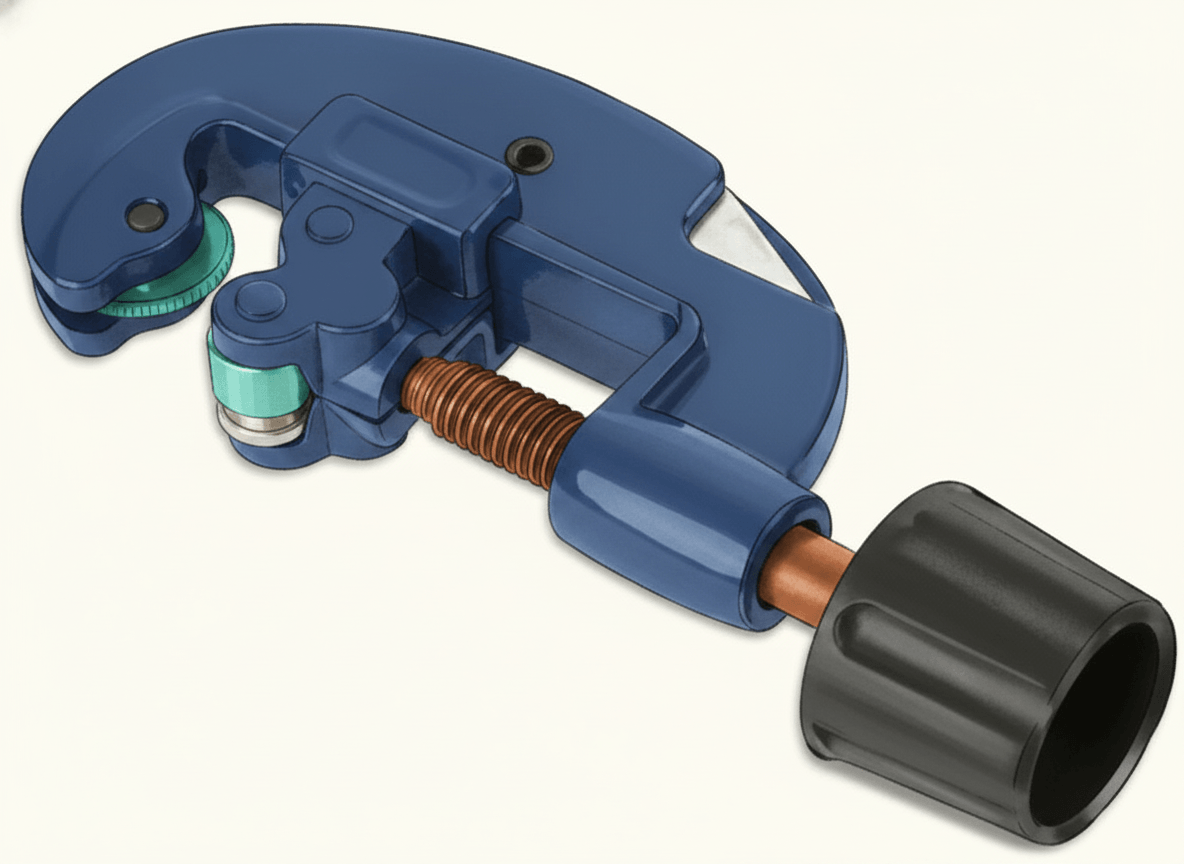
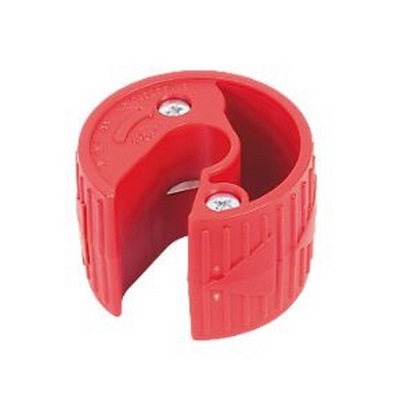
Three tools for cutting copper:
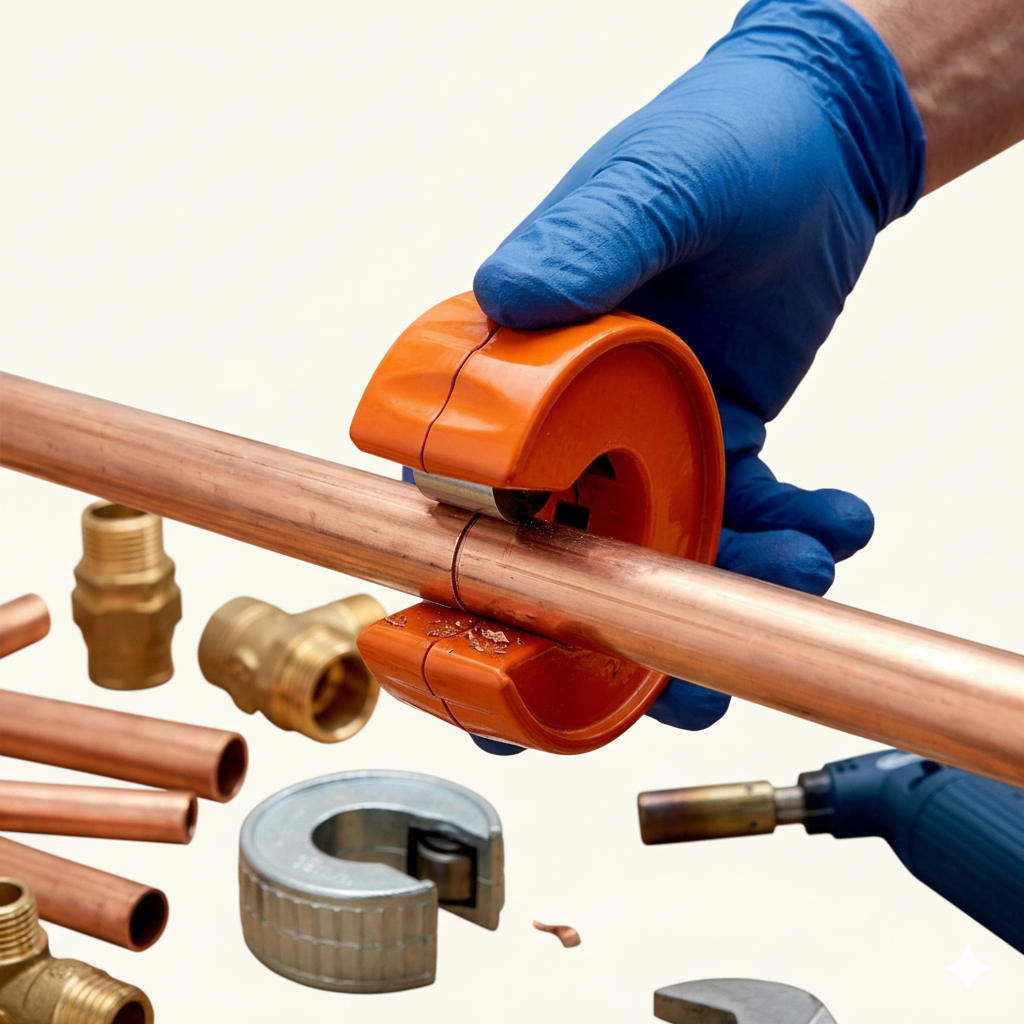
Wheel cutter / adjustable pipe cutter. Clamps around the pipe with a small cutting wheel. As you rotate, you tighten slightly — the wheel scores deeper on each rotation until the pipe snaps cleanly. Used for cutting copper pipes. Different sizes handle different pipe diameters.
Pipe slice. Compact version of the wheel cutter, sized specifically for a single pipe diameter (typically 15mm or 22mm). Faster than an adjustable cutter for its specific size.
Hacksaw. Works but leaves a rougher edge needing more deburring.
A hole saw is NOT used for cutting copper pipework — it's a drill-bit-style attachment for making round holes in flat materials.
Pipe slice pre-use check: cutting wheel free from defects. Worn, damaged, or blunt wheels produce poor cuts and can slip. Don't check the body length (B), the roller angle (C), or the grip type (D) — the wheel is the critical component.
When the cutting wheel in a pipe slice becomes damaged: replace the wheel. Not re-sharpen it (pipe cutting wheels aren't designed to be re-sharpened), not apply lubrication, not reverse it. Replacement is the correct action.
Maintenance: keep cutter clean; replace cutting wheel when blunt or damaged; lubricate rollers and threaded handle if stiff.
Specialist plumbing tools
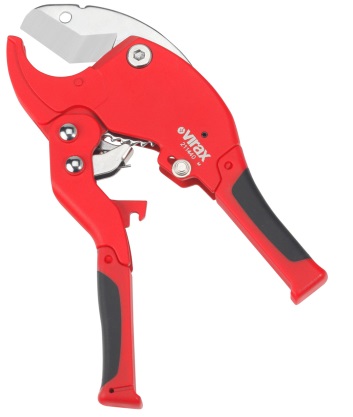
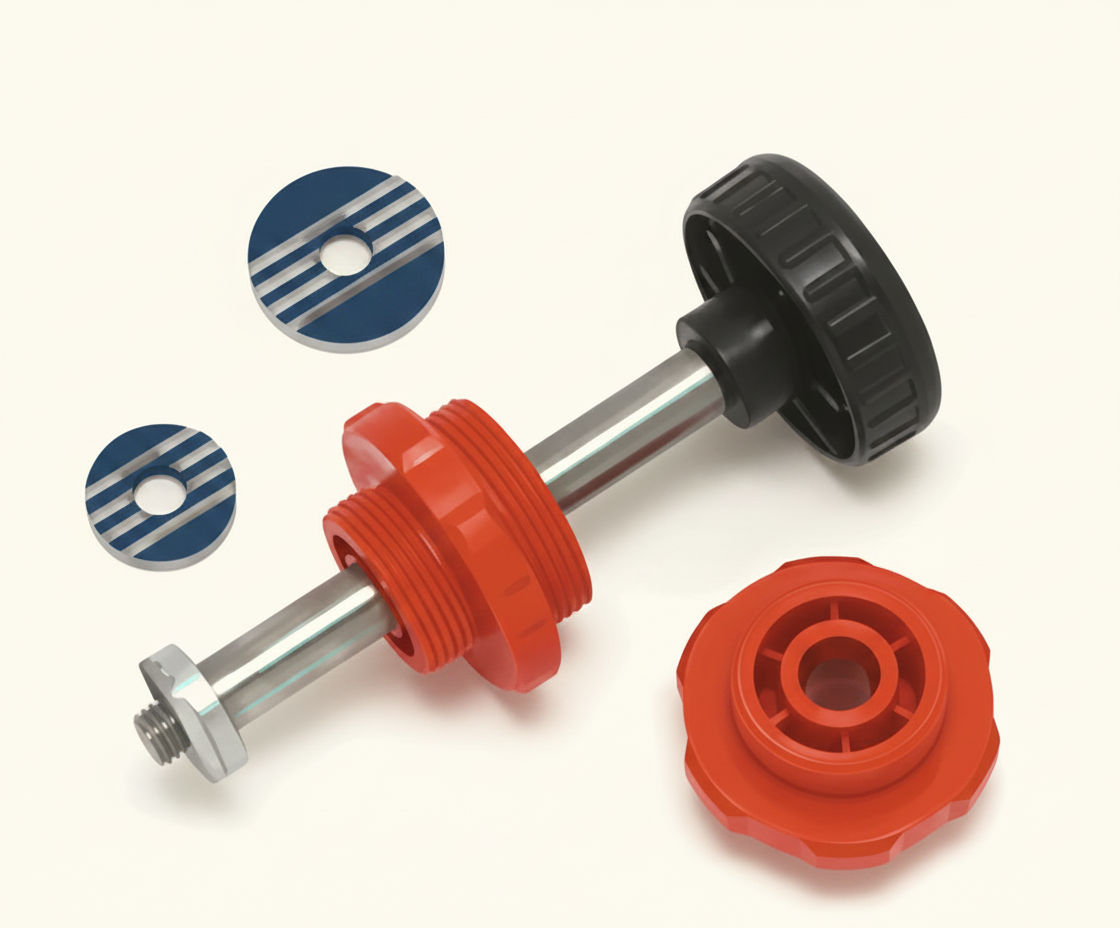
Reseating tool. Grinds down damaged tap seats to fix dripping taps. Used when the valve seat has become worn or scored.
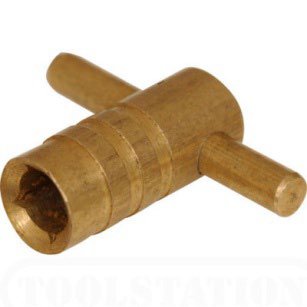
Radiator key / bleed key. Small square-section key for opening and closing radiator air bleed valves. Used for letting air into or out of radiators when filling and draining the system.
Circlip pliers. Specialised pliers for installing and removing circlips on taps and other fittings. Come in inside and outside variants.
Allen keys. Hexagonal-section keys for Allen-head bolts. Used for opening hexagonal-headed bolts (like on heating pumps).
Pipe freezing kit. Temporarily freezes water in a pipe so you can work on fittings without draining the whole system. Electric kits and disposable CO₂-based kits are both available. Both used for temporary decommissioning of pipework.
Hydraulic pressure tester. Pressurises a system above working pressure for soundness testing. Essential for commissioning work.
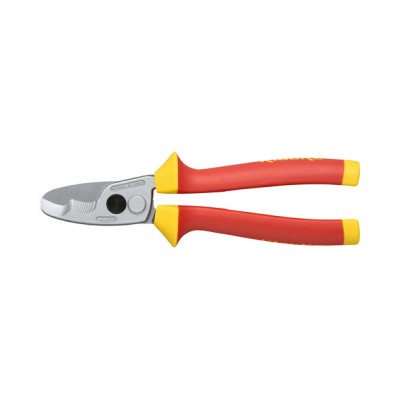
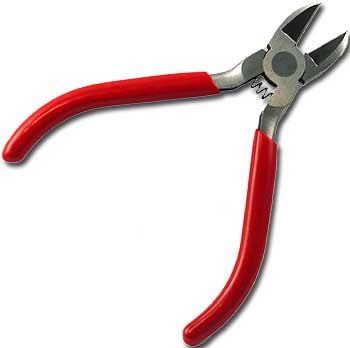
Side cutters / insulated cable cutters. Cut wires cleanly. Insulated versions are rated for work around live wiring (though plumbing work should always involve safe isolation first).
What it looks like on the exam paper
The classic exam question format tests tool identification directly:
- "What is the name of the tool shown below?" (picture provided)
- "Which one of the following is the most suitable tool to use to remove the nut from a basin tap?" (adjustable tap spanner / basin wrench)
- "What type of tool is shown in the following photograph?" (shown a hammer, identify which type)
To cut a waste hole in brickwork, you'd use a club (lump) hammer and cold chisel — the heavy hammer drives the chisel through the hard brick material. A claw hammer (A) isn't heavy enough; a bevel-edge chisel (A) is for wood; screwdrivers (B) aren't striking tools; sledge hammer (D) is overkill for a single hole and hard to control precisely.
Common exam traps
Trap 1: Hacksaw teeth face forward. Push stroke cuts.
Trap 2: A hacksaw is NOT for timber. Wood saws are for wood.
Trap 3: A hole saw is NOT for copper pipe. Wheel cutter, pipe slice, or hacksaw are correct.
Trap 4: Pipe slice check = cutting wheel. Not body length, roller angle, or grip.
Trap 5: Damaged pipe slice wheel = replace it. Don't try to sharpen or lubricate your way out of it.
Trap 6: Basin tap nut = adjustable tap spanner (basin wrench). Not a regular spanner.
Trap 7: Waste hole in brickwork = lump hammer + cold chisel. Not wood chisel or ball pein.
Trap 8: Damaged tools taken out of use immediately. Not repaired on the job; not used "carefully"; not finished and then reported.
Quick revision summary
Before the mock test, eight things you need to be able to produce from memory:
- Four-part tool knowledge: name, use, safety, maintenance
- Pre-use check: clean, moving parts free, blades secured, PPE on, correct tool for task
- Hammers: claw (nails), lump (driving chisels), sledge (walls), ball pein (metalwork)
- Chisels: wood (wood), cold (masonry), plugging (mortar), bolster (bricks); eye protection essential
- Saws: hacksaw (metal, teeth forward), wood saw (timber), floorboard saw (floorboards), pad saw (plasterboard)
- Copper cutters: wheel cutter / pipe slice (check wheel condition); hacksaw works but rougher
- Basin tap nut = adjustable tap spanner (basin wrench)
- Damaged tool = out of use immediately
📝 10-Question Mock Test
Click an option to see whether you got it right. Explanations appear instantly — no submitting at the end.
Specifically designed for the back nuts of basin and sink taps, where standard spanners can't reach. The long handle and pivoting jaw allow access to the confined space under a basin. Options A, B and D can't fit the underside of a basin tap effectively.
The cold chisel is designed for masonry; the lump hammer delivers the heavy, controlled blows needed to drive it through brick. Option A has a bevel-edge chisel (wood). Option B uses a screwdriver (not a chisel). Option D has a sledge hammer (too heavy and imprecise for a single hole) and a bolster chisel (for cutting whole bricks, not making holes).
Cutting happens on the push stroke, so teeth must face forward to bite into the metal. Backwards (B) means no cutting happens. Loose (C) damages the blade. Non-adjustable (D) isn't the design of a hacksaw.
A hole saw is a cylindrical drill attachment for cutting circular holes in flat materials (wood, plastic, metal sheet) — not for cutting pipe. Options A (wheel cutter), B (pipe slice) and C (hacksaw) are all legitimate pipe-cutting methods, each with trade-offs.
Hacksaws are designed for metal; the tooth spacing and design are wrong for timber and will clog quickly. Jigsaws (A), circular saws (B) and wood saws (D) all work on timber.
The wheel is the critical component — worn, damaged, or blunt wheels produce poor cuts and can slip. Body length (B), roller angle (C) and grip type (D) aren't the critical safety-check point for pipe slices.
Pipe cutting wheels aren't designed to be re-sharpened — when damaged, they're replaced. Lubricating (B) doesn't fix a damaged cutting surface. Reversing (D) just puts the damaged edge on the other side of the cut.
The small square-section key that fits radiator bleed valves. Allen keys (A) are hexagonal. Adjustable spanner (C) is too big. Circlip pliers (D) are for circlips on taps.
Specifically designed with a slotted opening that fits immersion heater flanges. Adjustable spanner (A) won't get the correct grip. Basin wrench (C) and mole grips (D) aren't shaped for this job.
Damaged tools cause accidents. Continuing use (A) risks the tool failing mid-task. Fixing it yourself (B) isn't your job unless trained and authorised. Delaying the report to end of day (D) leaves the tool available for someone else to pick up unknowingly.
How PlumbMate puts this into practice
Tool identification is visual recall — matching a name and purpose to an image. Spaced repetition with image-based flashcards is the fastest way to build fluency.
- Flashcards, not essays. One prompt, one answer — the format that research has consistently shown works best for active recall.
- Wrong answers are logged. Every question you get wrong goes into a dedicated collection that resurfaces more frequently in future sessions.
- The 3× rule. You need to get a question right three times before it clears — one lucky guess isn't enough.
- Explanations on every question. Like the ones above, but on every single question in the app.