Power tools do in seconds what hand tools take minutes — but the hazards scale with the speed. Electrocution, trip hazards from cables, fast-moving blades, flying debris, and vibration damage are all real risks. Level 2 expects you to know which tool is which, the correct pre-use checks, how PAT testing works, and the specific electrical rules for site work.
This post is the second in the Level 2 Plumbing Processes sub-cluster. For the others, see the hand tools, pipe materials, jointing, bending and installation posts.
Why power tools need their own rules
Hand tools have one failure mode: they slip or break. Power tools have four:
- Electrocution — cables, plugs, casing damage, wet conditions
- Cable trip hazards — snaking cables across walkways, coiled cables snagging
- Fast-moving parts — blades, drill bits, cutting wheels that don't stop instantly
- Vibration damage — repeated use damages hand and arm nerves and blood vessels (HAVS / VWF, covered in the H&S cluster)
Each of these is addressed by specific rules — which is why power tools get their own regulatory attention.
Common plumbing power tools
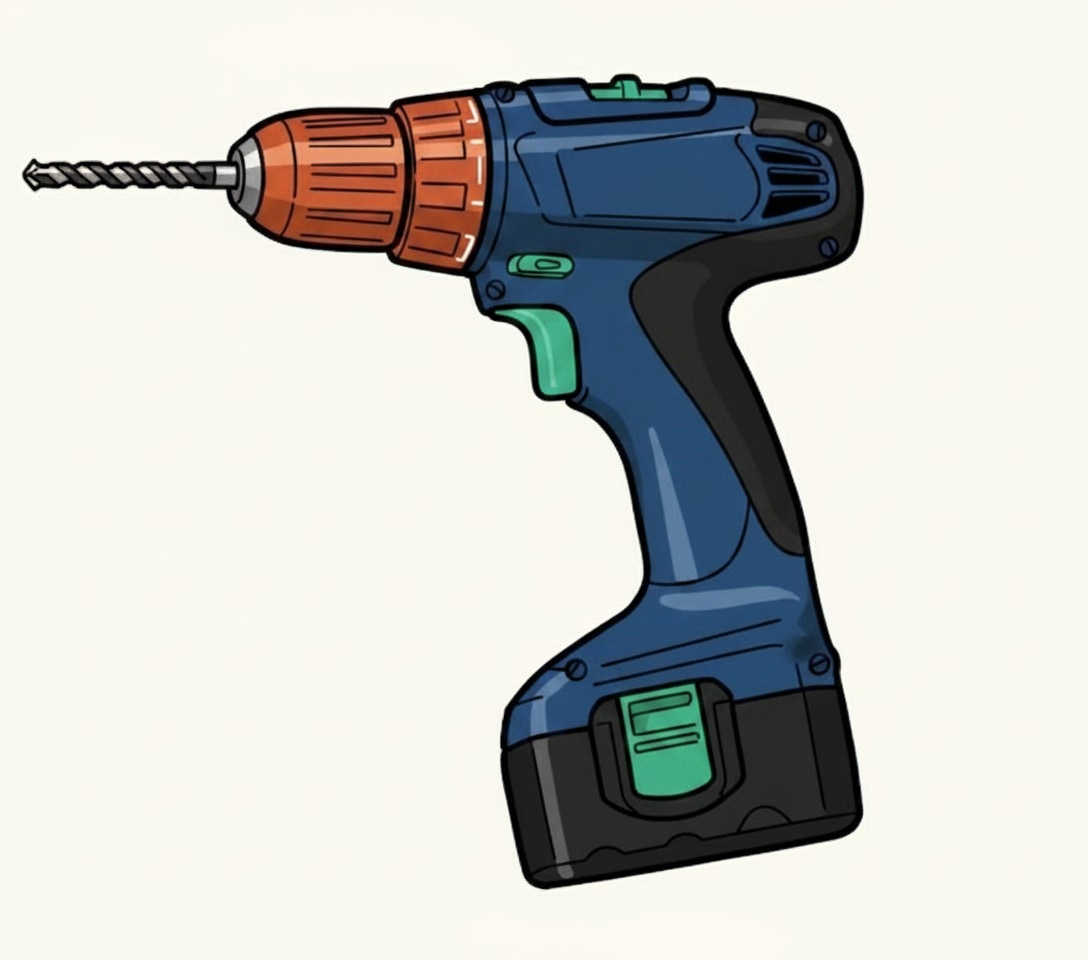
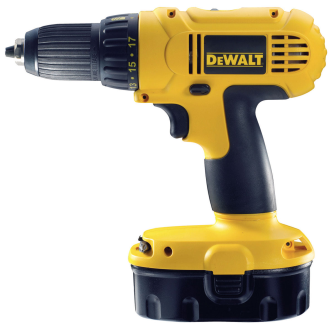
Battery drill (cordless drill). The everyday plumbing power tool. Drills holes in wood, masonry, metal; drives screws. Battery-powered means no trailing cable, which is safer and more convenient on site.
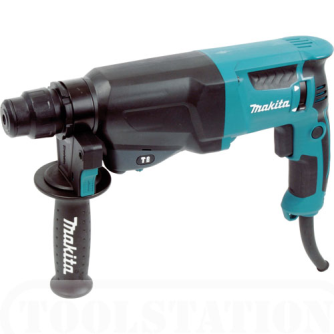
SDS drill. Hammer drill with a special chuck system for rapid bit changes. Used for drilling into masonry, concrete, and brick — the hammer action breaks through hard materials. Also used for chasing walls.
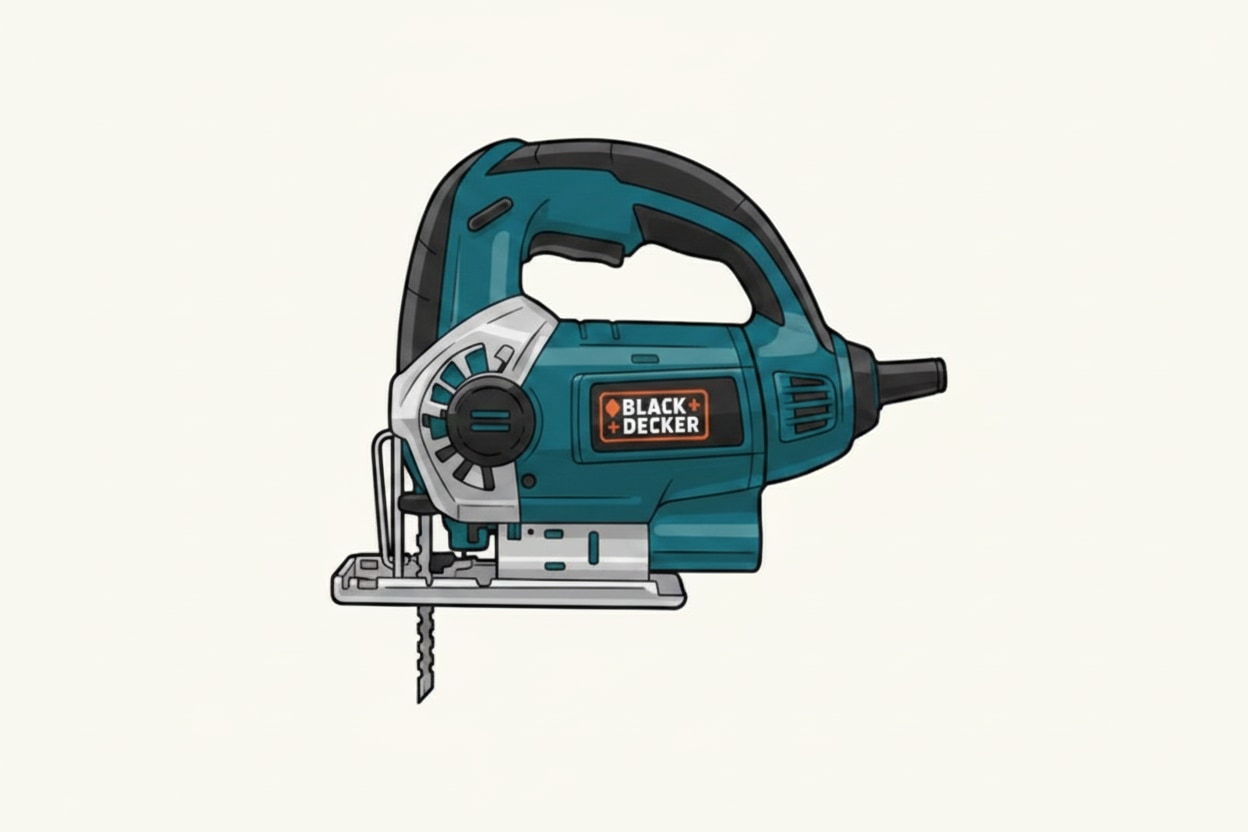
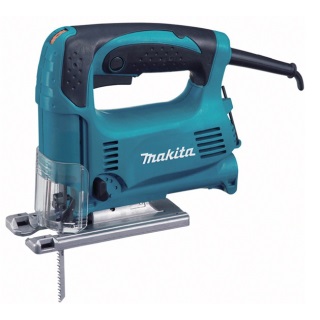
Jigsaw. Reciprocating blade for cutting curves and shapes in wood, plastic, and thin metal. Used for cutting through wooden worktops (e.g., sink cut-outs), cutting out floorboards, making intricate shapes.
Circular saw. Rotary blade for fast straight cuts in timber. Used for cutting floorboards, timber battens, structural work.
Angle grinder / disc cutter. Rotating abrasive disc for cutting or grinding metal and masonry. Used for chasing walls and cutting through metals and masonry. Highly hazardous — one of the most dangerous power tools on site.
Reciprocating saw (Sawzall). Heavy-duty saw with push-pull blade action. Used for demolition work, cutting through composite materials.
Pipe press-fit tool. Electric or battery-powered crimping tool for making press-fit pipe joints. Covered in the jointing post.
Pre-use visual inspection — every power tool, every time
Before using any power tool, make sure you have:
- Received training on how to use the tool
- Selected the appropriate tool for the task
- Followed any risk assessments
- Read and understood the manufacturer's instructions
- Used appropriate PPE for the task and tool
- Carried out a visual inspection
The visual inspection specifically:
- The casing — any mud/grease or cracks
- The cable — any cuts, nicks, or splits (especially near the tool and plug, where the most stress occurs during use)
- The plug — visible damage
- The PAT test certificate — is it in date?
- The blade or cutting wheel — damage, guard intact, correctly fitted
If the tool is in any way damaged, don't use it and take it out of use immediately. Don't try to repair it yourself. Don't try to work around the damage.
If the blade is damaged, have a competent person replace it before the tool goes back in service.
PAT testing — the 3-month rule
PAT (Portable Appliance Test) checks the internal fuses and wiring of corded power tools. It's the key electrical safety check for tools on site.
On a construction site, PAT testing should be carried out at least every 3 months on corded power tools. Any tool being used should have a PAT certificate dated within the last 3 months.
Battery tools don't need PAT testing — there's no mains connection to test. Battery tools use visual inspection instead. When using a battery power tool for the first time, inspect the power tool for damage — not "test the RCD" (not applicable), not "make sure it's colour-coded yellow" (colour coding is about voltage, not battery tools), not "perform a PAT test" (not applicable to batteries).
PAT testing is visible as a small sticker with a date on it. If the sticker has expired or isn't there, the tool shouldn't be in service.
110V on site
The maximum voltage you should use on a building site is 110V.
Why 110V, not 230V?
- 230V is the standard UK domestic supply — but in wet, muddy, cable-damaged site conditions, 230V is dangerous. A shock at 230V can easily be fatal.
- 110V site supply uses a step-down transformer (yellow-coloured box) converting 230V mains to 110V centre-tapped-to-earth. The effective voltage to ground is only 55V, giving a much higher survivability rate if a shock occurs.
Colour coding: site transformers and 110V equipment are yellow. 230V cables and plugs are blue. Yellow means "site-safe low voltage."
For battery tools this doesn't apply — the battery is safer than any mains supply. But corded tools on site should be 110V.
Double insulation
Appliances and cables can be made safer by double insulating them. This means there are at least two independent layers of insulating material between any conductive parts and the user.
Advantages of double insulation:
- If one layer of insulation fails, the second layer still protects the user
- Tools don't need an earth connection (some double-insulated tools are supplied with two-core cable rather than three-core)
- Reduces the risk of electrocution
Many power tools on site are double-insulated — look for the double-square symbol (square within a square) on the casing.
Cable management — avoiding trip hazards
Power tool cables create trip hazards for anyone on site — including the person using the tool. Safe cable management:
- Run the cable above head height where possible — over beams, round scaffolding
- Route round the edges of rooms when running along the floor — keeps cables out of walkways
- Don't coil cables while in use — coiled cables can overheat (induction heating) and damage insulation
- Don't run cables through doorways that could be closed — risk of cable pinching
- Don't run cables through standing water
Hazardous situations to avoid:
- Using an electric drill in damp conditions
- Using a tool with a loose cable
- Using a power tool PAT-tested more than 3 months ago
- Using a circular saw without a blade guard (even with PPE)
- Using a jigsaw without dust mask or goggles
- Winding cables in tight coils while in use
Safe situations:
- Using an electric drill while wearing ear defenders, gloves and goggles
- Securing a power tool cable to the floor or running it above head height
- Using a battery jigsaw with guards in place
PPE for each power tool
Different tools need different PPE. The course material's specific recommendations:
| Tool | Required PPE |
|---|---|
| Jigsaw | Eye goggles (chips fly) |
| Angle grinder | Goggles + dust mask + ear defenders (disc can shatter; dust; loud) |
| Drill | Eye protection; gloves for heavy drilling |
| SDS drill | Goggles + dust mask (masonry dust) |
| Circular saw | Eye protection + hearing protection + dust mask |
| Vibrating tools (hydraulic bender, manual pipe threaders, hammer drills) | Gloves always — reduce vibration transfer to hands |
Which should always be worn when using a jigsaw? Eye goggles. Not gloves (A — can catch in moving blade), not dust mask alone (B — eye protection is primary), not ear defenders alone (C — eye protection is primary).
Gloves must always be worn when operating hydraulic bending machines. Protects hands from vibration and pinch points.
HAVS / VWF — vibration risk
Covered in detail in the H&S cluster, but worth referencing here because power tools are the main cause.
Hand-Arm Vibration Syndrome (HAVS) — previously called Vibration White Finger — causes nerve and blood vessel damage in the fingers and hands. Symptoms include:
- Numbness and tingling in fingers
- Whitening of fingertips
- Reduced grip strength
- Pain in cold conditions
Prevention when using vibrating tools:
- Don't grip the tool too tightly — minimum grip needed to control
- Hold the tool close to your body (not at arm's length)
- Use minimum force needed — let the tool do the work
- Take regular rest breaks to allow hand recovery
- Rotate tasks — don't do vibrating work all day every day
- Use vibration-reducing gloves
If your fingers start tingling while using a vibrating tool: report the symptoms before they cause a problem. Not "carry on but loosen your grip" (that doesn't fix damage already occurring). Not "never use any vibrating tool again" (that's premature; early symptoms may be reversible with proper management). Not "hold it tighter" (worse, not better).
Safe working practices — what can go wrong
Using a damaged tool → injury from tool failure + potential electric shock
Using in damp conditions → electrocution risk
Coiled cables in use → cable heating and insulation damage
Cable trip hazards → falls and injuries
No blade guard → immediate injury risk from exposed blade
No PPE → eye injuries, hearing damage, dust inhalation, hand injury
PAT certificate expired → unsafe electrical condition potentially undetected
Each of these is a preventable hazard. The pre-use inspection + PPE + safe cable routing + in-date PAT sticker covers almost all of them.
Power tool identification on the paper
The course material presents tool pictures and asks you to identify them. The common ones:
- Battery drill — compact, with battery pack visible, pistol grip
- SDS drill — larger than standard drill, special chuck, heavier build
- Jigsaw — narrow vertical blade at front, flat base plate
- Angle grinder — cylindrical motor body with rotating disc at 90° to the motor
Common exam traps
Trap 1: PAT testing = every 3 months on site. Not every 6 months, not annually.
Trap 2: Battery tools don't need PAT testing. Visual inspection instead.
Trap 3: 110V max on site. Yellow colour coding.
Trap 4: Jigsaw PPE = eye goggles. Not gloves (catch risk).
Trap 5: Gloves on hydraulic bending machines. Vibration protection mandatory.
Trap 6: Battery tool first-use check = inspect for damage. Not RCD test, not PAT, not colour coding.
Trap 7: Damaged tool = out of use immediately. Not "finished job and reported later."
Trap 8: Coiled cables = hazard. Heat build-up + insulation damage.
Trap 9: Double insulation = two independent layers. If one fails, the other protects.
Trap 10: Tingling fingers = report symptoms before they worsen. Don't ignore; don't continue.
Quick revision summary
Before the mock test, eight things you need to be able to produce from memory:
- Pre-use check: casing, cable, plug, PAT certificate, blade/guard
- PAT testing every 3 months on corded tools on site
- Battery tools: visual inspection, not PAT
- 110V maximum on construction sites (yellow coded)
- Double insulation = two layers between conductors and user
- Cable management: above head height; round edges; not coiled in use
- Jigsaw = goggles; grinder = goggles + dust mask + ear defenders; vibrating tools = gloves
- HAVS/VWF prevention: don't grip too tightly; rest breaks; rotate tasks; report tingling
📝 10-Question Mock Test
Click an option to see whether you got it right. Explanations appear instantly — no submitting at the end.
On construction sites, the 3-month interval reflects the higher wear and tear on tools. Longer intervals (A, B, D) aren't adequate for site conditions.
The maximum for site use. The step-down from mains 230V reduces the effective shock voltage to survivable levels in wet, muddy site conditions. 230V (B) is domestic only; 415V (C) is industrial three-phase; 12V (D) is too low for most tools.
The colour coding for 110V site equipment. Red (A) isn't a standard code. Blue (B) is 230V industrial. Green (D) isn't used for voltage indication.
Battery tools use visual inspection instead of PAT testing. Options A (RCD) isn't applicable to battery tools. Option C (yellow coding) is for 110V tools, not relevant to battery. Option D (PAT) doesn't apply to battery tools.
The blade throws off chips and debris — eye protection is the primary risk. Gloves (A) risk being caught in the fast-moving blade. Dust mask (B) and ear defenders (C) may also be appropriate depending on the material but goggles are the "always" item.
Protects hands from the vibration and pinch points inherent to the bending operation. Pipe freezing equipment (B) is low-vibration and gloves aren't mandatory. Manual pipe threaders (C) and hammer drills (D) aren't the specific course material answer for mandatory gloves.
Double insulation adds a backup — two independent layers between conductor and user. Options A (current capacity), C (weight) and D (water use) don't describe double insulation's purpose.
Coiled cables can heat up from induction and damage their insulation. Running above head height (A), securing to the floor edge (B), and routing round edges (D) are all safe practices.
Early symptoms (tingling, numbness) are warning signs. Reporting allows proper assessment and prevents escalation to permanent damage. Options A and D keep working in a way that worsens the damage. Option C is unnecessarily drastic — early intervention may prevent progression.
These are the points of maximum mechanical stress during use. The middle of the cable (B) sees less stress. Only at the plug (C) is incomplete — the tool end also flexes. Option D (no damage) is wrong — cables absolutely deteriorate over time.
How PlumbMate puts this into practice
Power tool content is heavy on specific rules and specific figures — ideal spaced-repetition material.
- Flashcards, not essays. One prompt, one answer — the format that research has consistently shown works best for active recall.
- Wrong answers are logged. Every question you get wrong goes into a dedicated collection that resurfaces more frequently in future sessions.
- The 3× rule. You need to get a question right three times before it clears — one lucky guess isn't enough.
- Explanations on every question. Like the ones above, but on every single question in the app.