A heating system's whole purpose is to move heat from the boiler into the rooms that need it — and the point where that transfer finally happens is the heat emitter. For Level 2, you need to recognise the main emitter types, know where they should be fitted, understand how they connect to the pipework, and identify each of the three radiator valves by sight and by function. This post walks you through each in turn, finishing with a ten-question mock test and full explanations.
This is the dedicated deep-dive on emitters and valves within the Level 2 heating cluster. For the broader controls picture — pumps, motorised valves, thermostats and programmers — see the heating controls post. For where all this sits in a complete system, see the Level 2 plumbing heating revision guide.
Heat emitter types you need to recognise
When the Central Heating course material talks about "heat emitters" it means any component that transfers heat from the system water into the room. Most of the time that's a radiator, but the exam will test a few others, and you should be able to identify each one from a photograph.
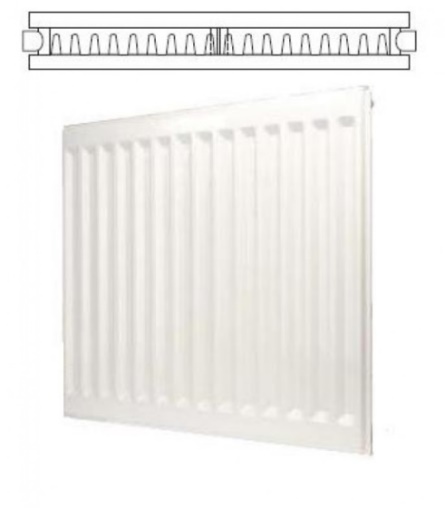
Panel radiators
The most common type. They come in three main variants:
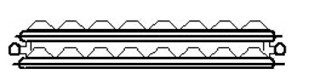
- Single panel — one flat panel
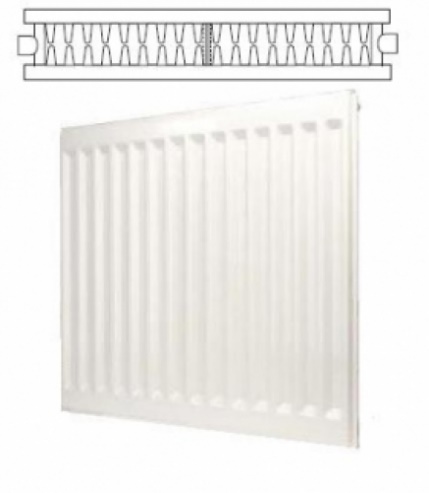
- Single panel with convector — one panel with corrugated fins welded to the back, which increase the surface area (and therefore the heat output)
- Double panel with convector — two panels with fins between them. Highest output per unit length, but deeper, so they stand further off the wall
A useful way to think about convector fins: a radiator gives off around 85% of its heat by convection and only around 15% by radiation. Despite the name, radiators are really convection heaters. Fins dramatically boost the convecting surface area without making the radiator any longer.
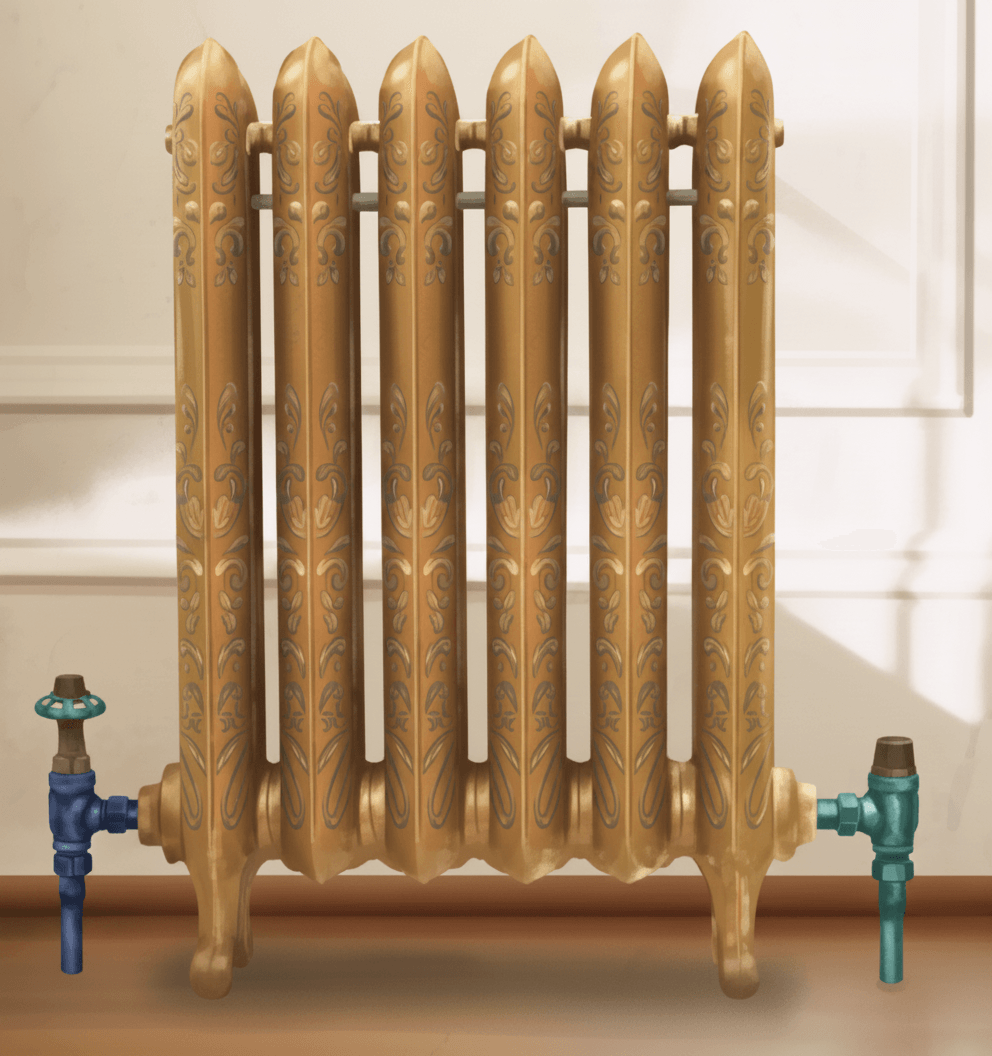
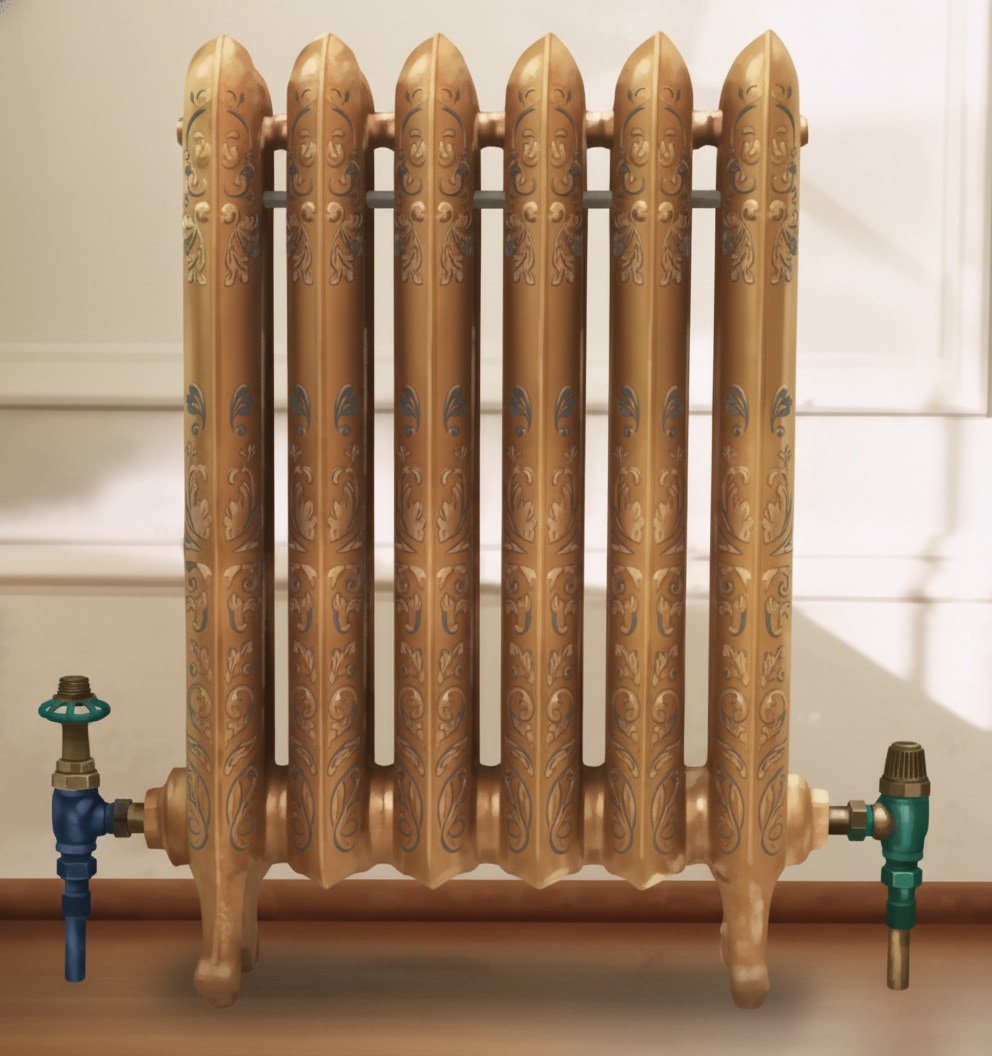
Column radiators
Old-style radiators built from welded columns. Heavy, characterful, still popular in period properties.
Fan convectors
Use an electric fan to speed up convection. You'll see two forms:
- Wall-mounted fan convectors
- Kick-space (or "plinth") heaters, which tuck under kitchen cabinets
Low surface temperature (LST) radiators
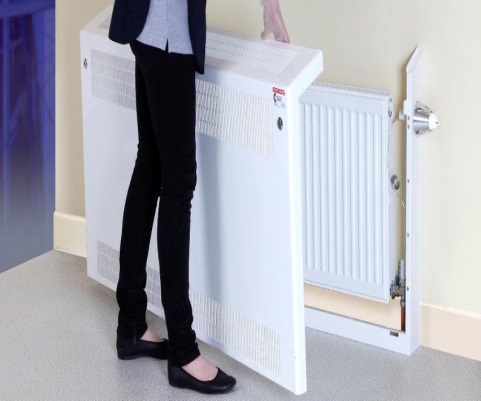
Panel radiators inside a protective casing so the outer surface doesn't exceed a safe touch temperature. Fitted in nurseries, schools, community centres and care homes — anywhere a standard radiator would be a burn risk.
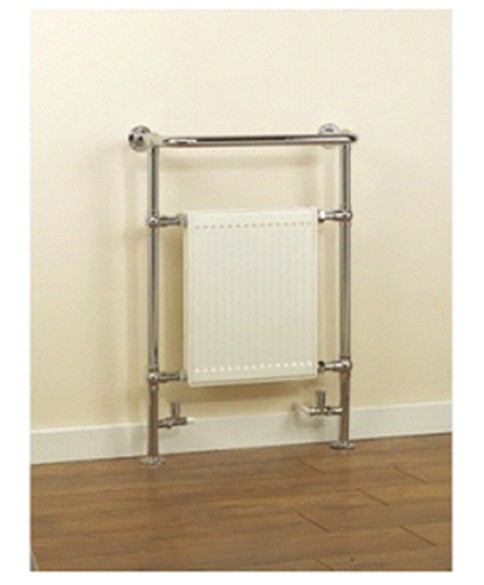
Towel warmers
In bathrooms. Available with or without an integrated panel radiator built in.
Picking and positioning the radiator
Two principles drive radiator choice and placement.
First, the output must match or exceed the heat loss of the room. Heat is lost through the fabric (windows, walls) and through ventilation. A manufacturer's catalogue lists Watts output per model, and you pick a radiator — or a combination of radiators — that at least equals the calculated loss.
Second, the heat needs to distribute evenly. In larger rooms, two or three smaller radiators usually beat one big one. Radiators should be fitted where the room is coldest — typically under windows and on external walls — because that's where the cold draughts start, and placing the emitter there balances the air temperature across the room.
Some installation points that come up in the exam:
- Radiators are fitted approximately 150mm off the floor so air can circulate under them. The bottom feeds the convection current; without that gap, output drops noticeably.
- Radiators should not be fitted directly under an overhanging windowsill — the sill would block the rising warm air.
- On a plasterboard stud wall, fit a timber pad between the studs, behind the plasterboard. Bracket the radiator into that. Plasterboard alone will not hold a full radiator's weight.
How radiators connect to the pipework
Three connection arrangements are worth knowing:
- BOE (Bottom Opposite Ends) — flow at the bottom of one end, return at the bottom of the other. This is the standard arrangement on nearly all modern radiators.
- TBOE (Top and Bottom Opposite Ends) — flow enters the top of one end, return leaves the bottom of the other. Improves convection through the radiator; historically common on one-pipe systems and is still occasionally used.
- BSE (Bottom Same End) — both flow and return enter at the same end of the radiator, using special single entry valves that route the two flows internally. Useful where pipework can only be brought in from one side.
PTFE tape is used on the valve tails going into the radiator. Fifteen to twenty wraps is a realistic starting point, depending on the fitting's thread breadth.
The three radiator valve types
Every radiator has two valves — one at each end. On modern installations they'll typically be a TRV on one end and a lockshield on the other. Older properties may use wheel heads. All three show up in Level 2.
Thermostatic radiator valves (TRVs)
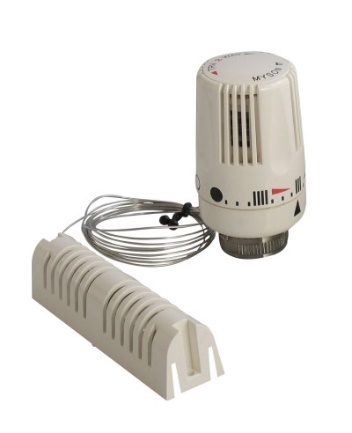
Automatic. Inside the valve head is a heat-sensitive wax capsule that expands as the room warms, closing the valve and reducing flow through the radiator; when the room cools, the capsule contracts and the valve opens again. That's how a TRV controls the temperature of a single room independently of the rest of the system.
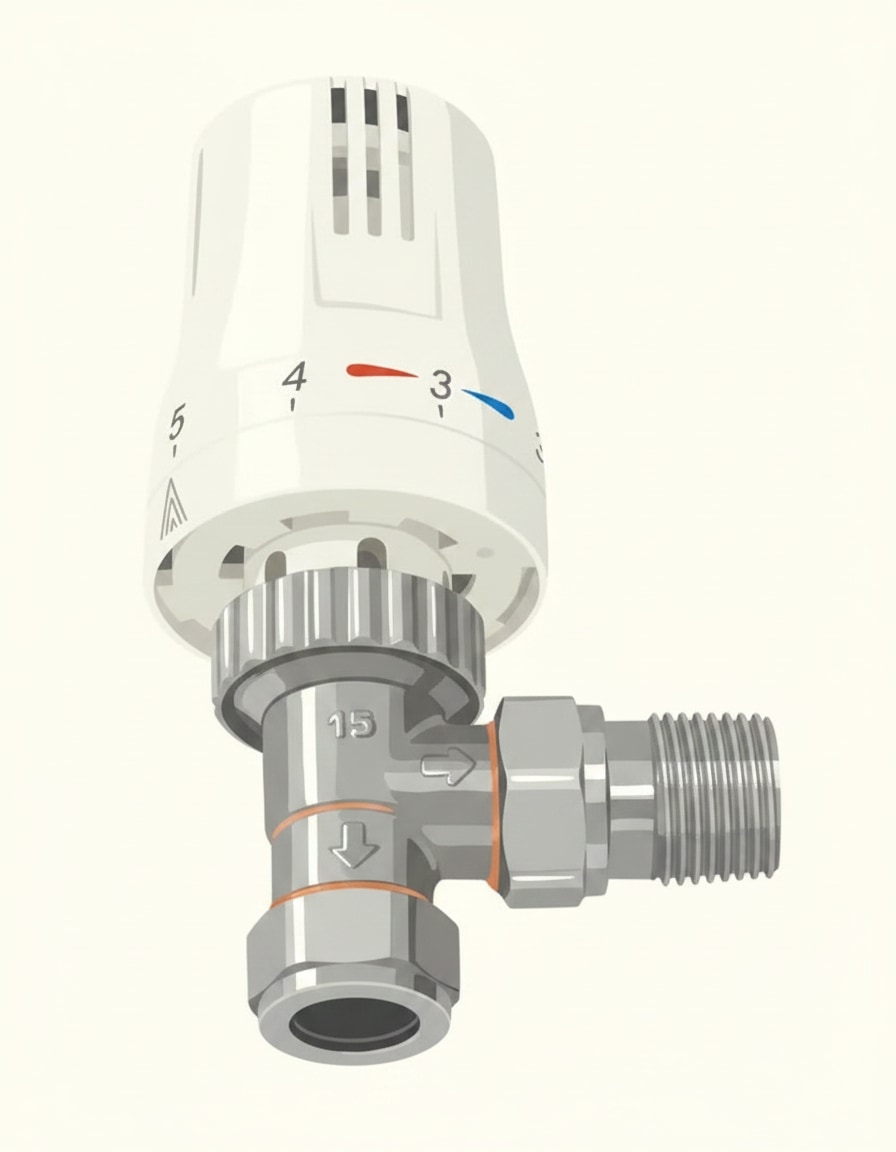
Two rules you must know:
- Do not fit a TRV in the same room as the room thermostat. If you did, the TRV would close off the radiator while the room thermostat is still calling for heat — the boiler would keep firing with nowhere for the heat to go. The rule is that all radiators have a TRV except the one in the room with the main room thermostat.
- If the TRV is positioned behind a sofa, heavy curtain or anything that traps air around the head, the head will warm up too fast and close the valve prematurely — leaving the rest of the room cold. The fix is a TRV with a remote sensor so the sensing happens out in the open room air.
Lockshield valves
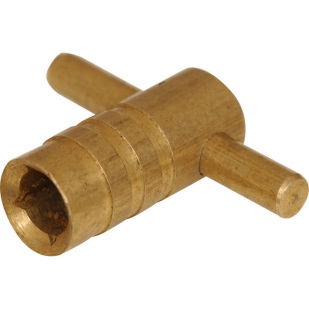
Used on the other end of the radiator from the TRV (or the wheel head, on older systems). They look similar to wheel heads but have a plain plastic cap — you need a spanner or lockshield key to adjust them. Their job is balancing the system, which we'll come to in a moment.
Wheel head valves
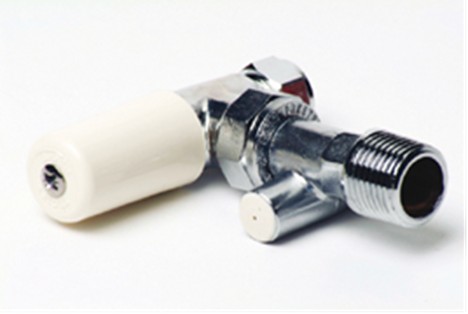
The original manually operated radiator valve. The user turns the top to open or close the valve. You still find these in older properties and the exam will test recognition. Modern properties use a TRV in place of the wheel head.
Balancing the system
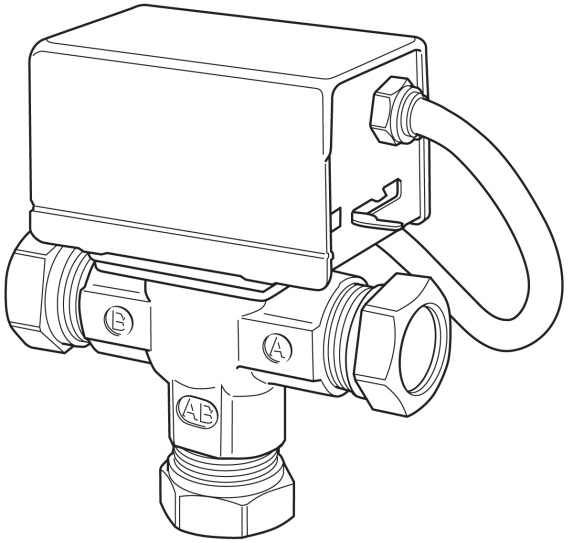
Water in a heating circuit takes the path of least resistance. That means the radiators closest to the pump would otherwise get most of the flow, while the furthest radiators would be starved. Balancing is how you correct this.
The principle: you restrict the lockshield on the radiators nearest the pump (adding resistance) and open the lockshield fully on the radiators furthest from the pump. That pushes water through the far radiators and ensures every radiator reaches a similar temperature in roughly the same time.
A useful number: Delta T (ΔT) is the difference between the radiator's average temperature and the room temperature. Most manufacturers quote radiator output at ΔT 50°C (a flow of 80°C, a return of 60°C, giving a mean of 70°C, in a 20°C room). If a system runs at a lower ΔT, the radiators need to be larger to give the same output.
Common exam traps
Trap 1: "Radiators give off most of their heat by radiation." They don't. Around 85% is convection. The name is misleading — it's kept for historical reasons. This question comes up frequently in Level 2 papers.
Trap 2: TRV in the room with the room thermostat. The rule is clear — it shouldn't be there. A common distractor answer is "fit a TRV to every radiator in every room", which is wrong.
Trap 3: TRV responds to water temperature. No — the TRV responds to room air temperature. It's the cylinder thermostat that responds to water temperature.
Trap 4: Wheel head vs lockshield recognition. On paper or in a photo, the wheel head has a visible turning handle; the lockshield has a plain cap and needs a spanner. If you can turn it by hand, it's a wheel head.
Trap 5: Radiator height off the floor. Standard is 150mm, not 100mm or 200mm. It's a single-number fact worth committing to memory.
Quick revision summary
Eight things to produce from memory before you sit the exam:
- Emitter types: panel (single / single+convector / double+convector), column, fan convector (wall or kick-space), LST, towel warmer
- Heat transfer split: 85% convection, 15% radiation
- Positioning: 150mm off floor, under windows, on external walls, not under an overhanging sill, timber pad on plasterboard walls
- Connection types: BOE (standard), TBOE (older, improves convection), BSE (single entry valves)
- PTFE tape: 15–20 wraps on valve tails
- TRV: wax capsule, responds to room air temperature, not in the room with the main room thermostat, use remote sensor if head is obstructed
- Lockshield: requires spanner, used for balancing, fully open on far radiators, restricted on near radiators
- Delta T (ΔT): typical quoted output is at ΔT 50°C
📝 10-Question Mock Test
Click an option to see whether you got it right. Explanations appear instantly — no submitting at the end.
Despite the name "radiator", around 85% of a panel radiator's heat output is convection — warm air rising off the surface, drawing cooler air in from below, and circulating the room. Only around 15% is true radiation. This is why radiators work best with clear space above, below and in front of them.
The 150mm gap lets cool room air be drawn underneath the radiator, warmed by contact with the rear panel and fins, and then rise as a convection current. Block the gap — or hang the radiator too low — and the convection stalls, so output drops.
Lockshields are anti-tamper balancing valves. They need a dedicated key or a small spanner to adjust, which prevents end-users changing the balance by accident. Wheel heads are manual room-temperature valves; TRVs are automatic; bypass valves protect the boiler.
The TRV's wax capsule senses the air temperature around the valve head, which should reflect the room temperature. That's why an obstructed sensor head gives a false reading — it senses its immediate enclosure, not the room.
The exception exists because if every radiator had a TRV, the room with the thermostat could end up with its radiator closed by its TRV while the thermostat still calls for heat — leaving the boiler running with nowhere to dump its output.
When the head is enclosed by furniture or curtains, the air immediately around the head warms faster than the room as a whole, so the valve closes early. A remote sensor mounted on the wall, away from the obstruction, lets the TRV sense the actual room temperature.
BOE is the standard on nearly all modern installations. TBOE (top and bottom, opposite ends) improves convection through the radiator and appears on older one-pipe systems. TOE and TSS are not standard designations.
Plasterboard alone will not support a full radiator's weight, especially once filled with water. The standard fix is a timber pad fixed firmly between the studs, behind the plasterboard, so the brackets can screw into solid timber.
ΔT is calculated by averaging the flow and return temperatures to find the mean, then subtracting the room temperature. For a flow of 80°C, return of 60°C and room of 20°C: mean is 70°C, ΔT is 50°C — the industry-standard rating condition.
Fifteen to twenty wraps of PTFE on the valve tail's male thread seals the connection into the radiator. Without it the joint tends to weep slowly as the system heats and cools through daily cycles.
Revise this topic the PlumbMate way
PlumbMate turns these facts into something you'll actually remember in the exam:
- Video lessons covering each emitter type, valve type and the balancing process, filmed by a plumbing lecturer
- Topic-specific quiz banks on radiators, TRVs, lockshields and balancing — so you can target the exact areas you keep dropping marks on
- Spaced-retrieval scheduling that brings weaker topics back on the days you're most likely to forget them
- Mock exams that mix heat emitter questions in with the rest of the heating unit, so you practise switching between topics the way the real exam demands
Start your 14-day free trial at plumbmatemastery.co.uk.