Personal Protective Equipment is what keeps you safe when the hazards can't be designed out of the job, and safety signs are how hazards, instructions, and information get communicated on site. Both are heavily regulated, both are reliably tested on Level 2, and both work better when you understand why each rule exists rather than just memorising the content.
This post is the third in the Level 2 Health and Safety sub-cluster. For the others, see the legislation, risk assessment and accidents, hazardous substances, working at height and confined spaces, and fire safety posts.
Why PPE is the last line of defence
PPE should never be the first answer to a hazard. The control hierarchy (covered in the risk assessment post) puts PPE at the bottom deliberately:
- Eliminate the hazard
- Substitute with something less hazardous
- Engineering controls (guards, extraction)
- Administrative controls (training, signs, procedures)
- PPE — only when everything else hasn't removed the risk
Why PPE is last:
- PPE only protects the wearer — doesn't remove the hazard for others nearby
- PPE relies on correct use — wrong size, incorrectly fitted, or damaged PPE protects nothing
- PPE fails without warning — a ripped glove, a cracked goggle lens, a worn-out dust mask filter
- PPE doesn't address the root cause — if you're wearing a dust mask because there's dust, the better answer is dust extraction
But when the other controls can't eliminate the hazard (some always remain), PPE is essential. The Personal Protective Equipment at Work Regulations set out the rules.
The Personal Protective Equipment at Work Regulations
The specific regulations covering PPE in the workplace.
Employer duties:
- Supply PPE free of charge — workers never pay for PPE their employer requires
- Ensure workers know how to use it correctly — proper training in fitting, adjusting, and when to wear
- Ensure PPE is fit for the purpose — correct type for the specific hazard
- Replace it if damaged — cracked goggles, torn hi-vis, ripped gloves all need immediate replacement
- Provide appropriate storage — clean, dry, organised
Employee duties:
- Maintain PPE — keep it clean, check it before use
- Store it properly — don't leave it on the floor, in the rain, or where it could be damaged
- Use it as instructed — correctly fitted, worn when required, not adapted or modified
- Report damage — so it can be replaced; don't try to work with damaged PPE
Types of PPE and what they protect
The standard PPE you'll meet on site, and what each item protects against:
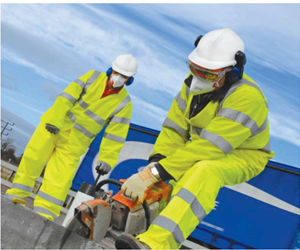
Head — hard hat. Protects against falling objects, overhead hazards, low-level impacts (hitting your head on scaffolding). Mandatory on virtually every construction site.
Eyes — safety goggles or safety glasses. Protects against dust, flying particles, chemical splashes, UV during grinding or welding.
Hearing — ear defenders or ear plugs. Protects against noise-induced hearing loss (covered in the fire safety post's noise section).
Respiratory — dust masks, respirators (RPE). Protects the lungs against dust, fumes, vapours, gases. Different types for different airborne hazards (see RPE section below).
Hands — gloves. Different glove types for different hazards:
- Leather gloves — cutting hazards, rubble handling, coring work
- Chemical-resistant gloves — flux, solvents, drain cleaner, system cleanser
- Waterproof gloves — wet work (to prevent dermatitis)
- Vibration-reducing gloves — when using vibrating tools
Feet — safety boots with steel toecaps. Protects against falling objects, punctures (nails through soles), crush injuries.
Body — overalls, coveralls. Protects skin from chemicals, dust, abrasion. Hi-vis variants combine visibility.
Visibility — high-visibility clothing. Protects against being hit by vehicles on site.
Fall prevention — harness and lanyard. Protects against falls from height.
Working over water — life jacket. Obvious; required when there's a fall risk into water.
High-visibility clothing — the specifics
Hi-vis isn't just a yellow waistcoat — the PPE at Work Regulations require choices appropriate to the specific risks.
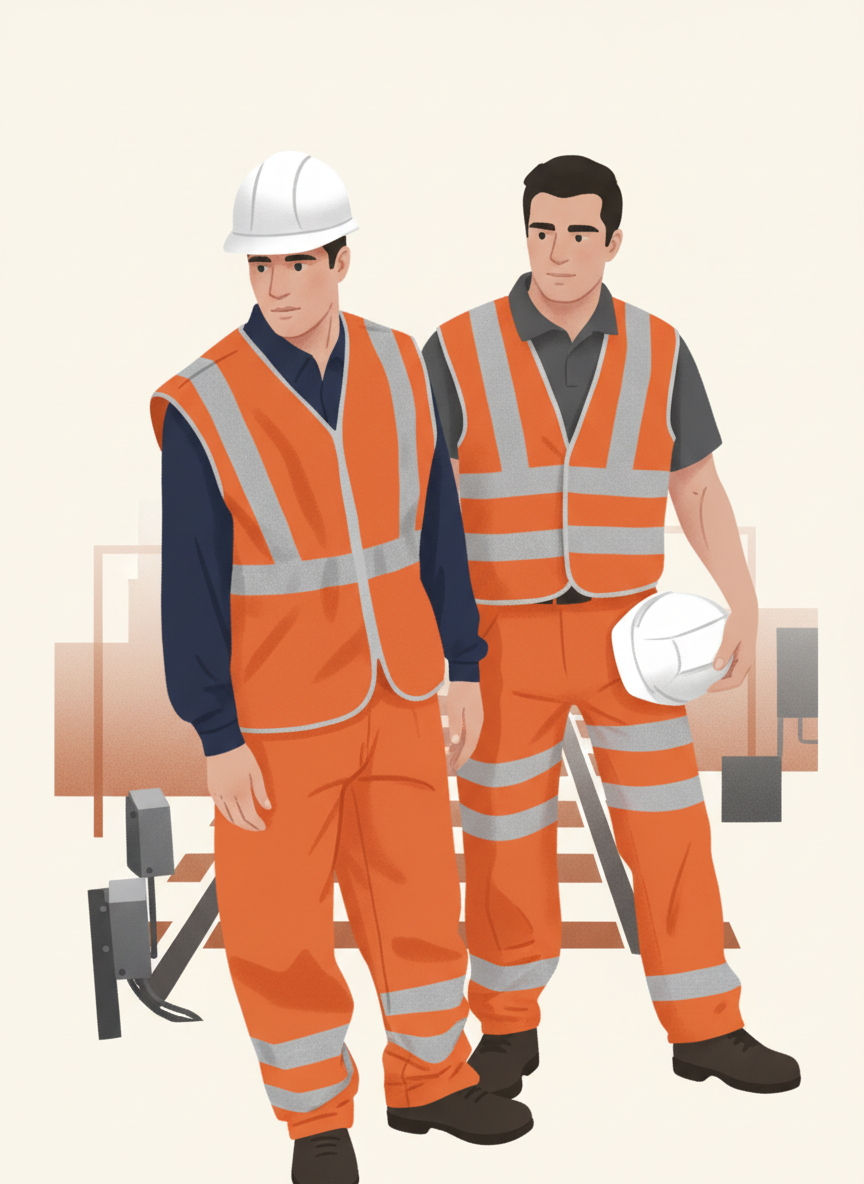
Factors affecting hi-vis choice:
- Lighting conditions — darker conditions need more hi-vis
- Weather conditions — fog and snow reduce visibility, requiring more coverage
- Specific hazards — workers near moving vehicles need full-body hi-vis, not just a waistcoat
The general rule: the darker the conditions, the more hi-vis clothing required. Simple waistcoat for bright daylight in a controlled area; full-body hi-vis for night work or near moving plant.
Respiratory Protective Equipment (RPE)
A specific category of PPE protecting against airborne hazards. The category matters because dust and fumes are among the biggest causes of occupational illness in construction.
Types of RPE:
Dust masks (disposable). Simple paper or fabric masks filtering particulates. Come in FFP ratings:
- FFP1 — low-level nuisance dust
- FFP2 — moderate dust (plaster, general construction)
- FFP3 — high-risk dust (silica, asbestos, lead) — required for the most hazardous dusts
Reusable half-face respirators. Rubber mask covering nose and mouth, with replaceable cartridge filters. Different cartridges for dust, vapour, or gas.
Full-face respirators. Cover the whole face including eyes. Used when eye protection is also needed (chemical splash risk as well as respiratory hazard).
Powered air-purifying respirators (PAPR). Have a battery-powered pump circulating filtered air through the mask. More comfortable for long periods; better seal.
Why RPE wear time matters
Ordinary (non-powered) dust masks are uncomfortable to wear for long periods — they get warm, restrict breathing slightly, and can fog up goggles. Workers tend to loosen them to get relief, which allows unfiltered air to leak in around the edges.
HSE recommendation: don't wear a dust mask for more than 1 hour unless it's a powered mask.
For tasks longer than an hour in a dusty environment, either:
- Use a powered air-purifying respirator (keeps working comfortably for shifts)
- Break the task into sub-hour segments with breaks outside the dust
- Use engineering controls (extraction, dampening) to reduce the dust to levels where RPE isn't required
Five categories of safety signs
The Safety Signs and Signals Regulations cover how hazards, instructions, and information get communicated on site. There are five main categories of sign, each with distinctive colour coding:
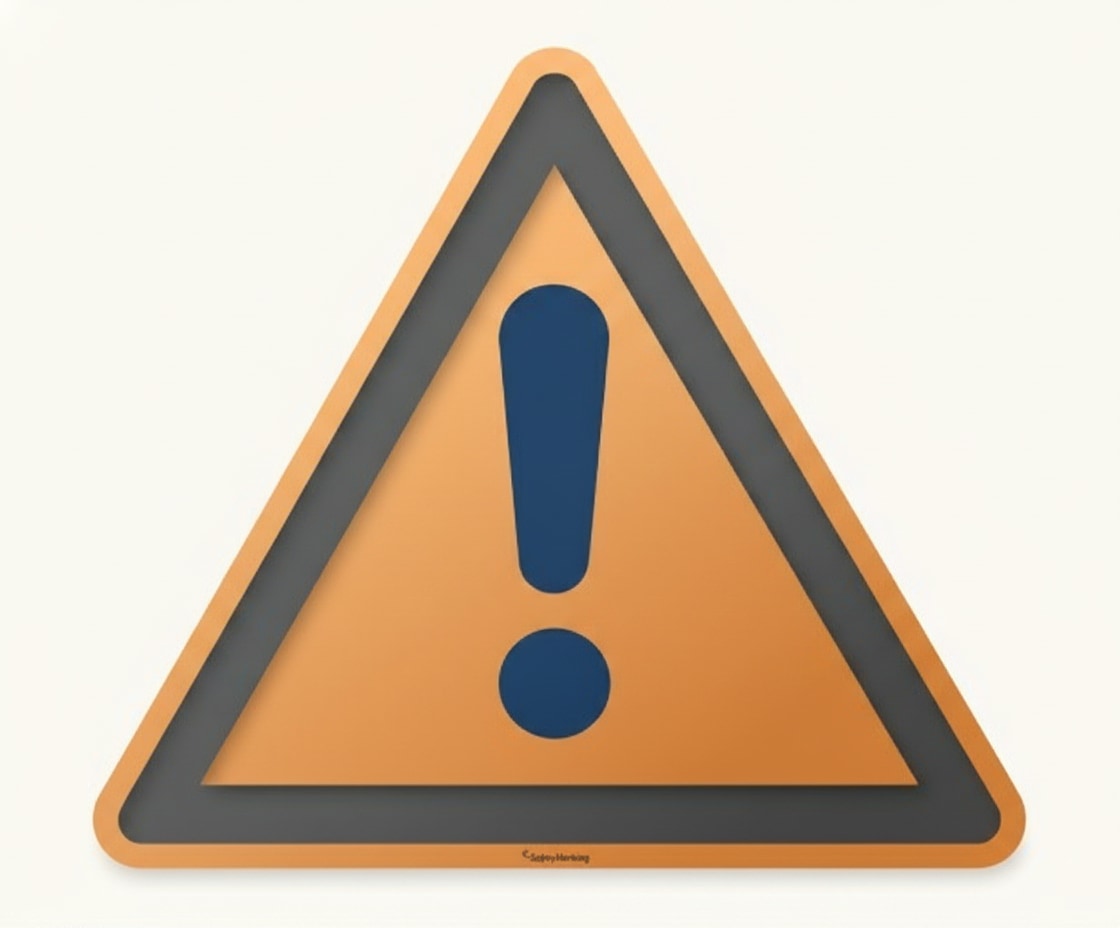

1. Warning signs — YELLOW triangles. Warn of potential hazards. Examples: "Caution — slippery floor," "Forklift trucks operating," "High voltage."
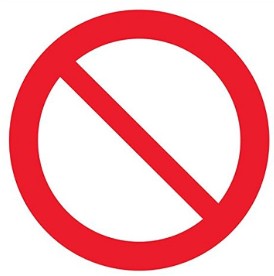
2. Prohibition signs — RED circles with diagonal line. Show what you must NOT do. Examples: "No smoking," "No naked flames," "No pedestrian access."
3. Mandatory signs — BLUE circles. Show what you MUST do. Examples: "Wear hard hat," "Wear eye protection," "Wash hands."
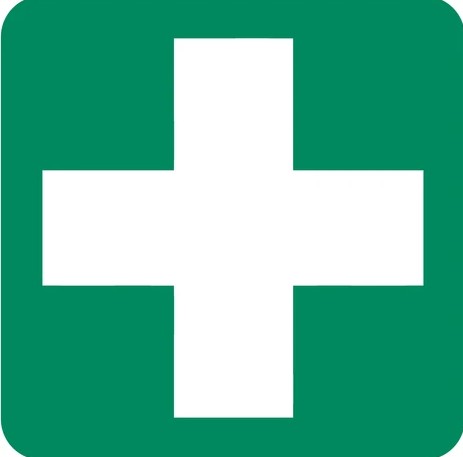
4. Information / Safe Condition signs — GREEN rectangles. Show safety information. Examples: "First aid kit," "Fire exit," "Emergency shower."
5. Fire signs — RED rectangles. Show firefighting equipment locations. Examples: "Fire extinguisher here," "Fire alarm call point," "Fire hose."
Memory aid: colour + shape tells you category before you even read the sign.
| Category | Colour | Shape |
|---|---|---|
| Warning | Yellow | Triangle |
| Prohibition | Red | Circle (with line) |
| Mandatory | Blue | Circle |
| Information/Safe Condition | Green | Rectangle |
| Fire | Red | Rectangle |
Exam questions test colour and category matching directly — "Prohibition signs are identified by which colour?" The answer is red. "Mandatory signs are identified by which colour?" Blue. "Hazard signs?" Yellow.
Reading specific signs
Beyond the categories, exam questions test specific sign meanings. The most common ones you'll see:
Prohibition (red circle with diagonal line):
- No smoking (cigarette with line through)
- No naked flames (flame with line through)
- No pedestrian access (walking figure with line through)
- No access for industrial vehicles
- Do not touch
Mandatory (blue circle):
- Wear hard hat (hard hat symbol)
- Wear eye protection (goggles symbol)
- Wear hearing protection (ear defender symbol)
- Wear safety footwear (boot symbol)
- Wear hi-vis clothing
- Wear respiratory protection
Warning (yellow triangle):
- Slippery surface
- Forklift trucks
- Electrical hazard
- Hot surfaces
- Radiation
Safe Condition (green rectangle):
- First aid point
- Emergency eye wash
- Assembly point
- Fire exit (green with running figure)
- Safe drinking water
COSHH hazard symbols
A separate set of symbols specifically for hazardous substances — typically found on chemical containers and COSHH data sheets. Level 2 expects familiarity with the main ones.
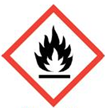
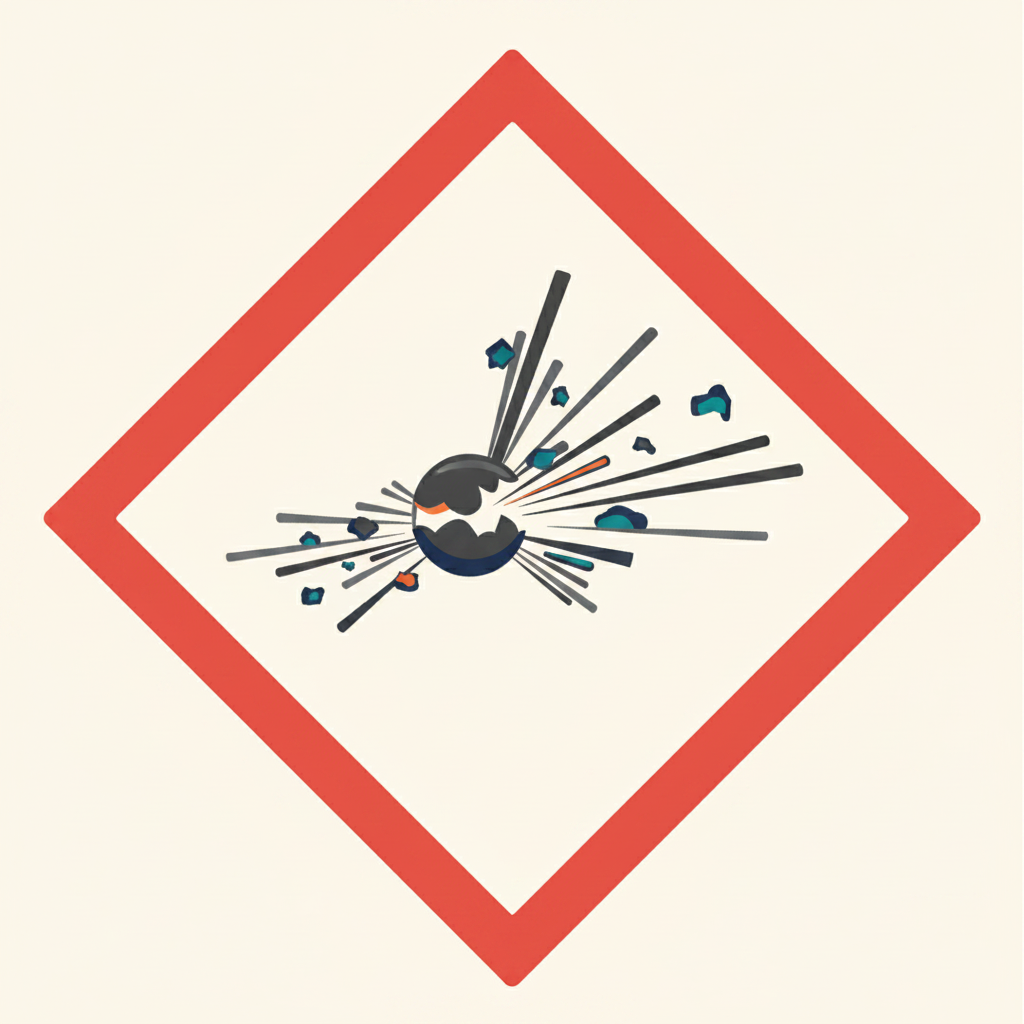
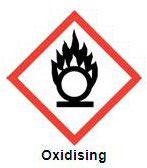
Flammable — flame symbol. On LPG bottles, petrol, oils, solvents.
Explosive — explosion symbol. On compressed gases, some chemicals, blasting materials.
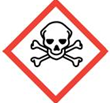
Toxic — skull and crossbones. On poisons (hydrogen cyanide, some solvents). "Toxic" essentially means "you could die if you ingest it."
Corrosive — hand/surface being burned by liquid. On strong acids and alkalis. Common plumbing examples: drain cleaner, system cleanser.
Oxidising — circle with flame above. On chemicals that release oxygen readily, feeding fires. Chlorine bleach is a common one.
Harmful/Irritant — exclamation mark. Catch-all for things causing itchiness, inflammation, dermatitis, or respiratory irritation. Fibreglass insulation, many cleaning products.
Chronic health hazard — figure with starburst on chest. For substances causing long-term illness (cancers, lung diseases). Asbestos and lead fall here.
Dangerous to environment — dead fish and tree. For substances damaging to ecosystems — heavy metals, certain chemicals.
Gas under pressure — gas cylinder symbol. On compressed gas bottles (LPG, acetylene, oxygen).
Exam questions match substances to symbols: LPG → flammable + gas under pressure; petrol → flammable + harmful; drain cleaner → corrosive; asbestos → chronic health hazard.
What to do with unlabelled containers
If you see an unlabelled container of chemicals on site: do NOT take a sniff, do NOT open it, do NOT dispose of it, do NOT taste it. Report it to your supervisor.
Unlabelled chemicals could be anything — including highly toxic or corrosive substances. Even smelling (A) could cause inhalation injury; disposing (B) could contaminate drains or trigger chemical reactions; ignoring (C) leaves the hazard in place.
COSHH data sheets — where to find hazard information
Every hazardous substance should have a COSHH data sheet (also called a Material Safety Data Sheet, MSDS) available from the supplier. Information on the sheet:
- Product name and supplier
- Hazardous ingredients
- First aid measures
- Fire-fighting measures
- Accidental release handling
- Handling and storage
- Exposure controls / PPE required
- Physical and chemical properties
- Stability and reactivity
- Toxicological information
- Ecological information
- Disposal considerations
- Transport information
- Regulatory information
Exam question framing: "Where can you find information about hazardous substances?" — answer: the COSHH data sheet (or MSDS). Not your contract of employment, not the HSE poster, not your time sheet.
Common exam traps
Trap 1: PPE at Work Regulations duties. Employer: supply free, ensure fit for purpose, replace if damaged. Employee: maintain, store properly, use as instructed.
Trap 2: PPE is a last line of defence. Not a first response. Risks should be eliminated or reduced first.
Trap 3: Dust mask wear time. 1 hour maximum for non-powered masks. Powered respirators can be worn longer.
Trap 4: FFP3 for high-risk dust. Silica, asbestos, lead — FFP3 rating. FFP1 isn't enough for these.
Trap 5: Safety sign colours. Yellow = Warning. Red (circle) = Prohibition. Blue = Mandatory. Green = Safe Condition. Red (rectangle) = Fire.
Trap 6: Sign categories. Warning warns, Prohibition prohibits, Mandatory instructs, Safe Condition informs, Fire shows firefighting equipment.
Trap 7: Unlabelled containers. Report to supervisor. Don't smell, open, dispose of, or move.
Trap 8: Hazard info source. COSHH Data Sheet (or MSDS). Not contract of employment, not HSE poster, not time sheet.
Quick revision summary
Before the mock test, eight things you need to be able to produce from memory:
- PPE is a last line of defence — after elimination, substitution, engineering, and admin controls
- PPE at Work Regs: employer supplies free, ensures fit, replaces damage; employee maintains, stores, uses correctly
- Types of PPE: hard hat, goggles, ear defenders, dust mask/respirator, gloves (various), safety boots, hi-vis, harness
- Dust mask wear time: 1 hour max (non-powered)
- FFP3 for silica, asbestos, lead
- Five sign categories: Warning (yellow triangle) / Prohibition (red circle) / Mandatory (blue circle) / Safe Condition (green rectangle) / Fire (red rectangle)
- COSHH symbols: flammable, explosive, toxic, corrosive, oxidising, harmful/irritant, chronic health hazard, dangerous to environment, gas under pressure
- Unlabelled containers: don't touch, don't smell; report to supervisor. Hazard info: COSHH data sheet.
📝 10-Question Mock Test
Click an option to see whether you got it right. Explanations appear instantly — no submitting at the end.
The PPE at Work Regulations place the duty to provide PPE free of charge on the employer. Workers never pay for required PPE. The HSE (B) enforces the regulations but doesn't provide PPE. Customers (D) aren't parties to the employment relationship.
The control hierarchy places PPE last because it only protects the individual wearer and relies on correct use. Risks should be eliminated, substituted, or engineered out first where possible. Options A, C and D misrepresent the regulatory framework.
HSE guidance for non-powered dust masks. Longer wear becomes uncomfortable, leading workers to loosen the mask and allow unfiltered air to leak in. Powered respirators don't have this limit because they actively push filtered air through the mask.
The highest protection rating, required for the most hazardous dusts (silica, asbestos, lead). FFP1 and FFP2 are for lower-risk dusts. "Any rating" (D) is wrong — inappropriate protection is worse than no protection because the worker thinks they're protected when they aren't.
Prohibition signs are red circles with a diagonal line through the prohibited action. Yellow (A) = Warning. Blue (B) = Mandatory. Green (C) = Safe Condition.
Mandatory signs are blue circles showing what workers must do (wear PPE, wash hands, etc.). Options A, C and D are other sign category colours.
Warning/hazard signs are yellow triangles alerting to potential dangers. Options B, C and D are other sign category colours.
Green rectangles show safety information — first aid points, fire exits, assembly points, emergency equipment. The other categories use different colours or shapes.
Unlabelled chemicals could be anything, including highly dangerous substances. Don't touch, don't smell (A — inhalation risk), don't dispose of (B — could cause reactions or contamination), don't ignore (C — leaves hazard in place).
The specific source of chemical hazard information. Signing-on sheets (B), contracts (C) and HSE posters (D) don't contain chemical-specific information.
How PlumbMate puts this into practice
PPE and safety signs content is heavy on matching items to colours, categories, and purposes — ideal spaced-repetition material.
- Flashcards, not essays. One prompt, one answer — the format that research has consistently shown works best for active recall.
- Wrong answers are logged. Every question you get wrong goes into a dedicated collection that resurfaces more frequently in future sessions.
- The 3× rule. You need to get a question right three times before it clears — one lucky guess isn't enough.
- Explanations on every question. Like the ones above, but on every single question in the app.