Showers get a learning outcome of their own in this unit, worth 3 questions, and they turn up again in the components outcome. They are also the fitting customers complain about more than any other — and almost every complaint comes down to one idea: balance.
For the rest of the unit see the hot water revision guide.
The three types of shower
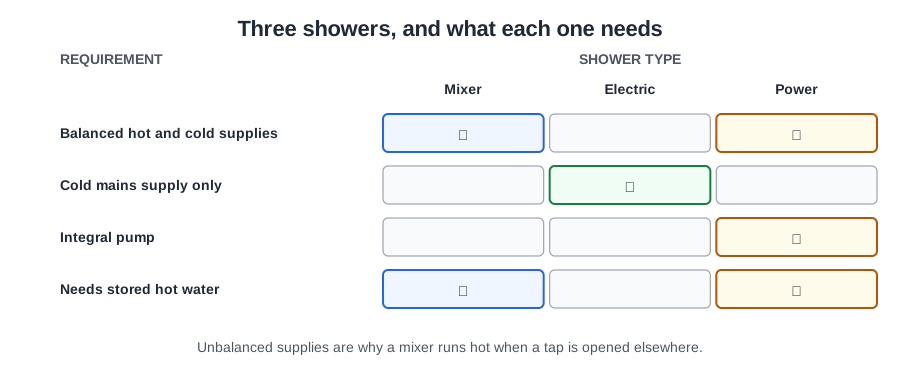
The specification names three, and they differ by where the hot water comes from.
Gravity
Hot from the cylinder, cold from the cold water storage cistern, mixed at a shower valve. Both supplies come from the same cistern in the loft, so both are at the same pressure — which is exactly what a mixer needs.
The limit is head. Pressure comes only from the height of the cistern above the shower head, so a loft cistern and a ground-floor shower give a good one, while a cistern barely above the bathroom ceiling gives a dribble. A minimum of 1 metre of head is generally needed for a gravity shower to work at all.
Pumped
A gravity system with a booster pump added, to overcome exactly that problem. Covered in full below.
Electric
Takes cold water only, straight off the mains, and heats it instantaneously as it passes through. There is no hot supply and no cylinder involved at all.
That makes it independent of the hot water system, which is its great advantage — it works when the cylinder is empty and it can be fitted where there is no hot supply. The trade-off is flow rate: it can only heat so much water per second, so an electric shower delivers less water than a good pumped one, and delivers less still in winter when the incoming mains is colder.
The four installation arrangements
The chapter sets out four ways a shower valve is supplied, and the difference between them is where the two supplies come from and whether they are balanced.
| Arrangement | Hot from | Cold from | Balanced? |
|---|---|---|---|
| Cistern-fed | Cylinder (cistern-fed) | Same cistern | Yes — both at cistern pressure |
| Cistern-fed with booster pump | Cylinder | Same cistern | Yes, and boosted |
| Mains hot and cold | Unvented cylinder | Mains | Yes, if connected correctly |
| Unbalanced supplies | Combi or instantaneous heater | Mains | No — needs a valve that copes |
Why balanced supplies matter
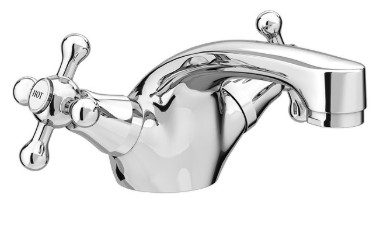
This is the criterion behind most of the marks, and it is worth understanding rather than memorising.
A mixer valve blends two streams. If one arrives at a much higher pressure than the other, it dominates — and the temperature at the head is set by whichever supply is winning rather than by where you set the control.
The consequence everybody has experienced: somebody flushes a WC, the cold pressure drops for a moment, and the shower runs hot. On a badly unbalanced system that is not just unpleasant, it is a scalding risk, and it is why thermostatic valves exist.
Balance means equal pressure and equal flow rate on both supplies, and the way to get it is to take both from the same source:
- Gravity system — hot via the cylinder and cold direct, both from the same cistern. Balanced by design.
- Unvented system — both effectively at mains pressure. But the cylinder runs slightly below mains, so the cold for the shower must be taken after the pressure-reducing valve and before the single check valve. That is what makes the two match, and getting it wrong is a classic fault.
- Combi — hot at mains pressure but limited in flow, cold at full mains. Genuinely unbalanced, which is why a combi shower needs a thermostatic or pressure-balancing valve.
One rule that follows: never take the cold for a shower from the mains and the hot from a cistern-fed cylinder. That is the worst case — two or three bar against a metre of head — and the cold will win every time.
Shower pumps
Two types, and the difference is where they sit relative to the mixing valve.
Twin impeller inlet pump
Fitted before the valve. One electric motor drives two impellers, one boosting the hot supply and one the cold, so both arrive at the valve boosted and still balanced. The water is mixed after the pump.
Single impeller outlet pump
Fitted after the valve. The water is mixed first at cistern pressure, then a single impeller boosts the mixed water to the head. Common with concealed valves and large "deluge" heads.
Head requirements
A pump changes the head rules:
- Without a pump, a gravity shower needs about 1 metre of head.
- With a pump, that 1 metre is no longer needed — but a minimum of 150mm is, because the flow switch that starts the pump has to be lifted by flowing water.
Positive head means water reaches the shower under gravity on its own; the pump senses the flow and starts automatically to boost it. Negative head means the cistern is below the shower outlet, so nothing flows at all and no flow switch can be lifted. That needs a specific negative head pump, started another way — typically a pull-cord switch.
The rule that gets tested
Shower pumps may not be fitted to a mains cold water supply. The Water Supply (Water Fittings) Regulations 1999 prohibit it, except where the water undertaker has given specific permission — because pumping the mains would draw down the pressure for every property on it.
Connecting a pump to the cylinder
A detail with a real failure mode behind it, which is why it turns up in questions.
Air collects at the top of a hot water cylinder. Take the pump's hot supply from an ordinary draw-off and that air goes with it, gets trapped around the impeller, and the pump eventually fails.
Two fittings solve it by taking the hot directly from the cylinder rather than from the draw-off:
- Surrey flange
- Essex flange
Both give an air-free connection. The vent connection is made at 30–60° so air can continue up the open vent and dissipate over the cistern, and the shower's hot connection is taken at 90° to that angled connection.
Two more installation points:
- The cold feed to the cylinder connects higher than the cold take-off for the shower, so that if the cistern runs low the hot runs out first. A shower that suddenly goes cold is a nuisance; one that suddenly goes hot is a scald.
- Run 22mm as far as practical before reducing to 15mm, to keep the flow up.
Shower controls
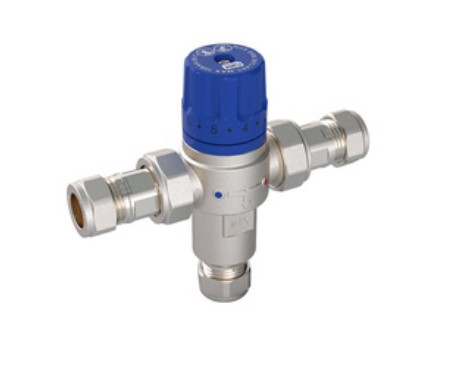
Three named types, and they are really two ideas plus a pressure rating.
- Manual. The user sets the blend by hand. Cheap and simple, and it has no way of reacting if a supply pressure changes — so the temperature moves when somebody runs a tap elsewhere.
- Thermostatic. A thermostatic element inside the valve senses the outlet temperature and adjusts the blend continuously to hold it. If the cold fails entirely it shuts the valve down rather than delivering full hot. This is what makes it the answer to any scalding question.
- Low or high pressure. Not a third mechanism but a rating. A low pressure valve is designed for gravity systems and will barely flow on mains; a high pressure valve is designed for mains or unvented and will barely flow on gravity. Fitting the wrong one is one of the commonest reasons a new shower disappoints.
The exam framing: manual valves react to nothing; thermostatic valves react to temperature; the pressure rating decides whether the valve suits the system at all.
Common exam traps
Trap 1: twin impeller before, single impeller after. Twin impeller boosts hot and cold separately on the way in; single impeller boosts already-mixed water on the way out.
Trap 2: shower pumps are not permitted on mains cold water. Prohibited by the Water Regulations except by permission of the water undertaker.
Trap 3: 1 metre without a pump, 150mm with one. The 150mm is to lift the flow switch, not to drive the shower.
Trap 4: negative head means the cistern is below the outlet. No flow at all, so a standard flow switch cannot start — it needs a negative head pump.
Trap 5: Surrey and Essex flanges are about air, not pressure. They give an air-free hot connection so the pump impeller does not become airlocked.
Trap 6: electric showers take cold only. No hot supply, no cylinder — which is why they still work when the cylinder is cold.
Quick revision summary
Before the mock test, eight things you need to be able to produce from memory:
- Three types: gravity, pumped, electric — and electric takes cold only
- Balance means equal pressure and flow on both supplies; whichever supply dominates sets the temperature
- Never mains cold with cistern-fed hot — the worst possible imbalance
- Unvented: take the shower's cold after the pressure-reducing valve and before the single check valve
- Twin impeller fits before the valve (boosts hot and cold); single impeller fits after it (boosts mixed water)
- Head: 1 metre gravity, 150mm minimum with a pump; negative head needs a negative head pump
- Surrey or Essex flange gives an air-free hot connection so the impeller does not airlock
- Controls: manual, thermostatic (shuts down if the cold fails), and a low or high pressure rating to match the system
📝 16-Question Mock Test
Click an option to see whether you got it right. Explanations appear instantly — no submitting at the end.
An electric shower takes cold straight off the mains and heats it instantaneously as it passes through. There is no hot supply and no cylinder involved, which is why it still works when the cylinder has gone cold.
The element has a fixed output. If the incoming water starts colder, it needs more heat to reach the same outlet temperature — so the shower reduces the flow rate to compensate. Same heater, less water.
Equal pressure and flow rate. A mixer blends two streams, and if one arrives at higher pressure it dominates — so the outlet temperature is set by whichever supply is winning rather than by the control.
The cold is at two or three bar; the hot has perhaps a metre of head. The cold dominates completely and the shower runs cold. It is the worst possible imbalance and it should never be installed.
After the pressure-reducing valve, before the single check valve. The cylinder runs slightly below mains pressure, so taking the cold from after the PRV is what makes the two supplies match. Take it from full mains and the shower is unbalanced.
Before the valve. One motor drives two impellers, boosting the hot and the cold separately so both reach the valve boosted and still balanced. Mixing happens afterwards.
After the valve. The water is mixed first at cistern pressure, then one impeller boosts the mixed water to the head. Common with concealed valves and large deluge heads.
No — the Water Supply (Water Fittings) Regulations 1999 prohibit it, unless the water undertaker has specifically permitted it. Pumping the main would draw the pressure down for every property on it.
150mm. The pump removes the need for a metre of head to drive the shower, but the flow switch that starts the pump still has to be lifted by flowing water — and that needs a small amount of head.
The cistern is below the shower outlet, so gravity gives no encouragement for water to flow at all. Nothing moves, so a standard flow switch never lifts — it needs a negative head pump started another way, typically a pull-cord.
About 1 metre of head between the cistern water level and the shower head. Less than that and the shower will not perform, which is when a booster pump becomes the answer.
Air. Air collects at the top of a cylinder, and drawing the pump's hot supply from an ordinary draw-off takes that air with it. Trapped around the impeller it eventually kills the pump. Both flanges give an air-free connection.
So the hot runs out first. A shower that suddenly goes cold is a nuisance; one that suddenly goes hot because the cold has failed is a scald.
It shuts down. Losing the cold is exactly the situation that scalds somebody, so the valve fails safe by stopping rather than delivering full hot. That is why thermostatic is the answer to any scalding question.
It will barely flow. High pressure valves are designed for mains or unvented supplies; on a gravity system there is not enough pressure to drive them. Fitting the wrong pressure rating is one of the commonest reasons a new shower disappoints.
A manual valve simply holds the blend the user set. If somebody runs a tap and the cold pressure drops, the outlet gets hotter and nothing in the valve corrects it.
How PlumbMate puts this into practice
Shower configurations are visual — which is why the app teaches them as labelling boards rather than as text.
- Label the systems. Drag-and-drop boards for the gravity system, single and twin impeller pump arrangements, and the mixed-supply configurations.
- Wrong answers are logged and resurface more frequently in later sessions.
- The 3× rule. Three correct answers before a question clears.
- Explanations on every question, like the ones above.