Every heating system is a set of decisions about pipe: what it's made of, how it's protected, and how it's held up. Get any of those wrong and the system still works — it just corrodes, wastes heat, or bangs every time the boiler fires.
This outcome is worth 7 questions, 17.5% of the 508 paper. It's also the one people revise last, because it looks like background detail rather than a subject. It isn't: it's a fifth of the marks and it's almost entirely figures and named lists.
For the systems these pipes serve, see the central heating revision guide.
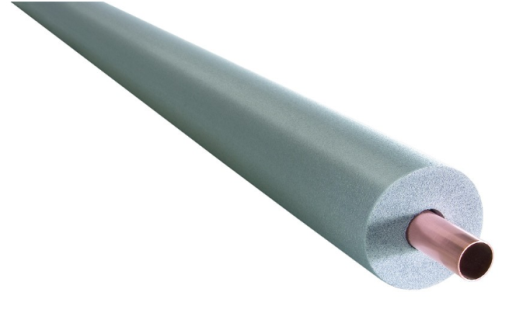
The three pipework materials
| Material | Where it's used, and what to know |
|---|---|
| Copper | The everyday choice. Rigid, joins by capillary, compression or press-fit, and handles system temperatures without complaint. Supplied in straight lengths, and in coils in the softer grades |
| Mild steel | Older installations and larger commercial work. Threaded, very strong, and heavy to work with. You'll meet it far more often in maintenance than in new work |
| Plastic | Now standard for first-fix and universal for underfloor, because it comes in long coils and bends round obstacles instead of needing fittings. But not any plastic — see below |
Barrier tube — and why it isn't optional
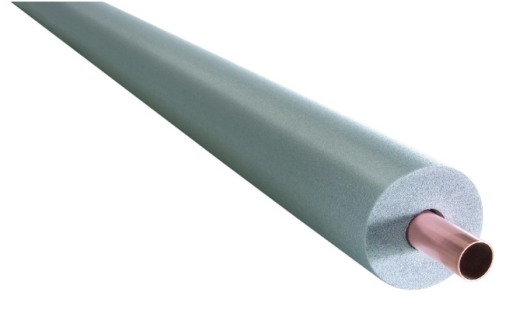
Plastic pipe on a heating circuit must be barrier tube. The reason is worth understanding rather than memorising, because it explains half of what goes wrong in old systems.
Ordinary plastic pipe is slightly permeable to oxygen. Oxygen from the air passes straight through the pipe wall and dissolves into the system water — continuously, for as long as the system exists.
Now put that oxygen together with warm water and steel radiators. The result is corrosion, and the product of that corrosion is magnetite — the black sludge that settles in the bottom of radiators, gives you cold spots at the bottom and hot at the top, blocks the smallest bores first, and eventually destroys the pump.
Barrier tube carries a layer through the pipe wall that stops the oxygen getting in. The same plastic without that layer is perfectly good for cold water, where there's nothing for the oxygen to corrode and the water is replaced constantly. On a sealed heating circuit the same water goes round for years, so anything dissolved into it stays there.
It's also why corrosion inhibitor is dosed into every system. Barrier tube keeps the oxygen out; inhibitor deals with what gets in anyway. They attack the same problem from opposite ends, and neither replaces the other.
Insulating the pipework
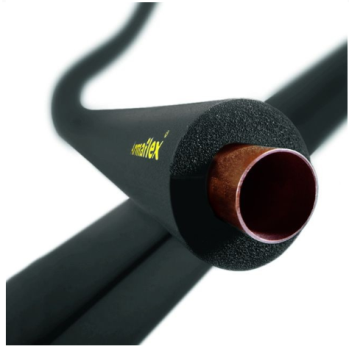
Insulation is required wherever pipework runs on an external wall, or through an unheated space — a loft, a garage, or the void under a suspended floor. Those are the places where the temperature is lowest and swings most.
The five named advantages
- Saves energy. Heat stays in the pipe instead of warming a floor void nobody occupies.
- Good for the environment. The same saving counted as carbon rather than money.
- The draw-off temperature at the outlet is improved. Water arrives hotter than it otherwise would — a performance benefit, not an efficiency one.
- Water stays warmer for longer between uses, so less is run off waiting.
- Frost protection. Heating pipework isn't always hot. Once the system has been off a while, water in a loft freezes like any other.
Notice that only two of the five are about saving energy. The middle one in particular catches people out, because it's about how the system performs rather than what it costs.
The three named types
| Type | Also called | Notes |
|---|---|---|
| Polyethylene | PVC foam | Split foam sleeving that slips over the pipe. The everyday choice — cheap, quick, adequate |
| Nitrile rubber | Expanded rubber | Denser and more flexible, better thermal performance, and it looks better where the insulation itself will be on show |
| Foil backed lagging | — | Reflective outer face, so it reduces radiant heat loss as well as conducted |
You'll see both naming conventions in the trade — the specification says polyethylene and nitrile rubber, most merchants say PVC foam and expanded rubber. Same products.
Clipping and support
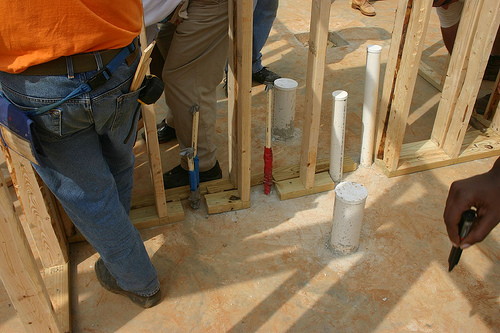
Pipework has to be adequately clipped and supported, and the reason given in the course material is a practical one: so the system doesn't disturb the customer with noise.
Clip spacings
Three materials, two orientations, and the figures differ substantially. Vertical spacings are always wider than horizontal, because a vertical pipe is largely supporting its own weight in line rather than sagging between clips.
Copper
| Size | Horizontal | Vertical |
|---|---|---|
| 15mm | 1.2m | 1.8m |
| 22mm | 1.8m | 2.4m |
| 28mm | 1.8m | 2.4m |
Plastic — far closer, because plastic is flexible and will sag badly between widely spaced clips.
| Size | Horizontal | Vertical |
|---|---|---|
| 15mm | 0.3m | 0.5m |
| 22mm | 0.5m | 0.8m |
| 28mm | 0.8m | 1.0m |
Low carbon steel — the widest of the three, because it's the stiffest.
| Size | Horizontal | Vertical |
|---|---|---|
| ½" (15mm bore) | 1.8m | 2.4m |
| ¾" (20mm bore) | 2.4m | 3.0m |
| 1" (28mm bore) | 2.4m | 3.0m |
The pattern is easier than the numbers: steel widest, copper in the middle, plastic closest — and vertical always wider than horizontal. If you can only remember one figure, make it 15mm copper horizontal at 1.2m, which is the one asked most often.
Clip types
- Standoff clip — for insulated pipework in a visible position, holding the pipe clear of the surface.
- Nail-in clip — under floors, where speed matters and nothing will be seen.
- Galvanised banding — run over the top of the insulation, so the pipe is supported without crushing the lagging.
Don't clip it tight
The one that generates callbacks. Never fix bare heating pipework tightly to a joist. Copper lengthens as it heats, and a pipe that can't slide moves in jerks against the timber instead — which is the ticking and creaking a customer describes as "the pipes banging when the heating comes on".
Clip it so it's held but can still move. Where a pipe passes through a notch, that means not driving the clip home hard against it.
Notching and drilling joists
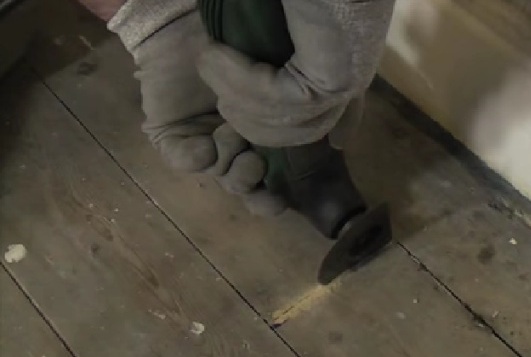
Governed by Part A of the Building Regulations — the structural part — because every notch and hole removes some of the strength the joist was designed to have.
Both sets of rules are expressed as fractions of the joist's span (how far it reaches between supports) and its depth (how deep the timber is).
Notching
| Rule | Limit |
|---|---|
| Closest to the supporting wall you may notch | 0.07 × span |
| Farthest from the supporting wall you may notch | 0.25 × span (span ÷ 4) |
| Maximum depth of notch | 0.125 × depth (depth ÷ 8) |
Drilling
| Rule | Limit |
|---|---|
| Closest to the supporting wall you may drill | 0.25 × span (span ÷ 4) |
| Farthest from the supporting wall you may drill | 0.4 × span |
| Maximum diameter of hole | 0.25 × depth (depth ÷ 4) |
| Closest one hole may be to another | 3 × the diameter of the largest hole |
The logic behind the two zones is worth having, because it makes the numbers stop being arbitrary. Notches go near the ends of the span, where bending forces are lowest, and they're shallow because a notch cuts the top or bottom fibres — exactly where a joist does its work. Holes go nearer the middle, along the neutral axis where the timber is least stressed, and they can be proportionally bigger because a round hole through the centre removes far less strength than a notch of the same size.
So the two zones barely overlap: notch between 0.07 and 0.25 of the span; drill between 0.25 and 0.4.
Chasing walls
A chase is a channel cut into brick or block to run pipes or cables in. Two limits, and they're different from each other:
- Vertical chases — no deeper than one third of the wall thickness.
- Horizontal chases — no deeper than one sixth of the wall thickness.
Horizontal is the stricter of the two, and for the same reason as joists: a horizontal chase cuts across the line the load travels down, so it does more structural damage than a vertical one of the same depth.
Two habits worth having
Once the pipes are run and before the floor goes back down:
- Mark the pipes with tape where they come up through the floor, to identify flow and return. The next person — possibly you, in two years — will not be able to tell by looking.
- Cap the open ends. Debris that gets in during first fix ends up in the system, and eventually in a pump or a valve seat.
Common exam traps
Trap 1: barrier tube is about oxygen, not temperature and not pressure. Oxygen through the wall corrodes steel radiators and produces magnetite sludge.
Trap 2: plastic clip spacings are much closer than copper. 15mm plastic horizontal is 0.3m against copper's 1.2m — four times as many clips.
Trap 3: vertical spacings are wider than horizontal, for every material. Getting this the wrong way round is the commonest slip.
Trap 4: notch shallow near the ends, drill bigger near the middle. Notch depth ÷ 8; hole diameter ÷ 4.
Trap 5: vertical chase one third, horizontal chase one sixth. Horizontal is stricter.
Trap 6: one insulation advantage is about outlet temperature, not saving heat.
Quick revision summary
Before the mock test, eight things you need to be able to produce from memory:
- Three materials: copper, mild steel, plastic
- Plastic on heating must be barrier tube — oxygen through the wall corrodes steel and makes magnetite
- Five insulation advantages: saves energy, good for the environment, improves draw-off temperature, water stays warmer for longer, frost protection
- Three insulation types: polyethylene (PVC foam), nitrile rubber (expanded rubber), foil backed lagging
- Clip spacing pattern: steel widest, copper middle, plastic closest; vertical always wider than horizontal. 15mm copper horizontal = 1.2m
- Clip types: standoff (visible), nail-in (under floors), galvanised banding (over insulation)
- Notching: between 0.07 and 0.25 of span, max depth ÷ 8. Drilling: between 0.25 and 0.4 of span, max diameter ÷ 4, holes 3 diameters apart
- Chases: vertical ÷ 3 of wall thickness, horizontal ÷ 6
📝 16-Question Mock Test
Click an option to see whether you got it right. Explanations appear instantly — no submitting at the end.
Copper, mild steel and plastic. Copper is the everyday choice, mild steel appears in older and larger installations, and plastic is now standard for first fix and universal for underfloor.
Ordinary plastic is slightly permeable to oxygen, which passes through the wall and dissolves into the system water. Oxygen plus warm water plus steel radiators is corrosion, and the product is magnetite sludge. Barrier tube has a layer that stops it.
Magnetite — the product of steel corroding in oxygenated water. It settles in the bottom of radiators, giving cold at the bottom and hot at the top, and it eventually wrecks the pump.
On a cold supply the water is constantly replaced and there are no steel components for oxygen to attack. On a sealed heating circuit the same water circulates for years, so anything dissolved into it stays there and keeps corroding.
The draw-off temperature at the outlet is improved. It is the advantage people miss, because it is about how the system performs rather than what it costs. The other four are: saves energy, good for the environment, water stays warmer for longer, and frost protection.
Nitrile rubber, usually sold as expanded rubber. The three named types are polyethylene (PVC foam), nitrile rubber and foil backed lagging.
On external walls and through unheated spaces — lofts, garages, and voids under suspended floors. Those are where temperatures are lowest and swing most, so both heat loss and freeze risk are highest.
1.2m. Vertically the same pipe goes to 1.8m, because a vertical pipe largely carries its own weight in line rather than sagging between clips. 0.3m is the figure for 15mm plastic horizontally.
It is flexible. Copper is rigid enough to hold a line over 1.2m; 15mm plastic needs a clip every 0.3m or it visibly sags. Four times as many clips for the same run.
A standoff clip, which holds the pipe clear of the surface. Nail-in clips are for speed under floors, and galvanised banding runs over the top of insulation so the lagging is not crushed.
Copper lengthens as it heats. Grip it and it cannot slide, so it moves in jerks against the timber — the ticking and creaking a customer calls "the pipes banging". Clip it so it is held but can still move.
0.125 × depth, or depth ÷ 8. Notches must be shallow because they cut the top or bottom fibres of the joist, which is exactly where it does its structural work.
Between 0.25 and 0.4 of the span. Holes go nearer the middle, along the neutral axis where the timber is least stressed. Notches take the other zone — 0.07 to 0.25, nearer the supports.
Three times the diameter of the largest hole. Holes too close together leave a thin web of timber between them, and the joist then fails between the holes rather than at either one.
One third of the wall thickness for a vertical chase. A horizontal chase is limited to one sixth — stricter, because it cuts across the line the load travels down.
A horizontal chase, limited to one sixth against a vertical chase's one third. It cuts across the path the load takes down through the wall, so it removes more of what the wall relies on.
How PlumbMate puts this into practice
This outcome is almost entirely figures and named lists — exactly what spaced retrieval is built for, and 17.5% of the paper once it sticks.
- Flashcards, not essays. One prompt, one figure.
- Wrong answers are logged and resurface more frequently in later sessions.
- The 3× rule. Three correct answers before a question clears — which matters most for numbers you can guess once.
- Explanations on every question, like the ones above.