You're there to swap a radiator valve. You lift the floorboard and find a cable with the sheath rubbed through, copper showing. Nobody asked you to look at it. It isn't your job, it isn't in your quote, and the customer is waiting. What do you do?
That question is worth 8 marks — 20% of the 502 paper, and it is the outcome students most reliably under-prepare, because it reads like common sense. It isn't quite. The exam wants specific named faults, specific named consequences, a specific person to tell, and a specific two-part action. Guessing sensibly will get you about half of them.
For the rest of the cluster, see the electrical principles revision guide, circuit protective devices, earthing and bonding, and safe isolation.
What "safety critical" actually means
A fault is safety critical when leaving it in place could injure or kill somebody, or start a fire. That's a different test from "it looks untidy" or "it isn't to current standards".
Plenty of things in an older house are not how they'd be done today — a rewireable fuse board, no RCD on the socket circuits, a light switch inside a bathroom. Those are not automatically faults. A fault is something that is wrong now, in a way that removes a layer of protection somebody is relying on.
The other half of this outcome is knowing where your competence stops. As a Level 2 plumber you are qualified to recognise an electrical fault and to make the situation safe. You are not qualified to repair it. The exam tests that boundary as hard as it tests the fault list, because the person who quietly fixes something they don't fully understand is more dangerous than the one who walked past it.
The six faults the specification names
Learn these as a list. Questions are frequently "which of the following is a safety critical fault?" with three plausible distractors, and the distractors are usually real problems that just aren't on this list.
1. Damaged cables and flex
Cuts, nicks, crushing, abrasion, heat damage, or a sheath that has been pulled out of a fitting so the coloured cores are visible outside the enclosure. The danger is direct contact with a live conductor, or a short between conductors.
Plumbers cause this one more than any other trade, and usually by accident: a cable pinched under a pipe clip, a floorboard screwed back down through a cable, a cable resting against a hot flow pipe until the insulation goes brittle. That last one is why cables should be kept at least 25 mm from pipework and 150 mm from electrical apparatus.
2. Loose wires
A conductor that isn't gripped properly in its terminal, or strands escaping from under a screw. Two things go wrong. A loose connection has resistance, and resistance carrying current makes heat — which is why loose terminals scorch and eventually burn. And a conductor that works its way out entirely can touch something it shouldn't.
The tell is discolouration: brown or black staining around a terminal means it has been running hot.
3. Incorrect cables — wrong size or wrong type
Two separate errors under one heading.
Wrong size means the conductor is too thin for the current it carries. A cable is sized for current, so an undersized one runs hot in normal use with nothing obviously wrong. Lighting cable feeding a socket circuit is the classic.
Wrong type means the cable is unsuitable for where it is. Ordinary PVC flex making the final connection to an immersion heater instead of heat-resistant flex is the version plumbers meet, and it will cook in a cylinder cupboard. Indoor cable used outdoors is another.
4. Broken junction boxes
A cracked body, a missing or loose lid, or a box that has been left open. The enclosure is doing two jobs: keeping fingers out, and keeping the joint free of dust and moisture. Break it and live terminals are simply exposed inside a floor void or a loft, waiting for the next person who puts a hand in.
5. Missing earth bonding
No main protective bond to the incoming gas or water service, a bond that has been cut off and never replaced, or a supplementary bond removed during previous work and forgotten.
This is the one that should worry a plumber most, because you are the trade most likely to create it. Cut into a bonded pipe, take the clamp off to get a fitting on, and forget to put it back, and the property loses a layer of protection that nobody will notice until there's a fault. It's also why the temporary continuity bond procedure exists.
6. Incorrect size fuse
Usually oversized, and it is the most invisible fault on the list. A 13 A fuse where a 3 A belongs looks completely normal and the appliance works perfectly — but a fault current of, say, 8 A will now flow indefinitely, because it is nowhere near enough to blow a 13 A fuse and far more than the thin flex was built to carry. The cable overheats while the fuse sits there deciding nothing is wrong.
The rule is in the protective devices post: the fuse protects the cable, not the appliance.
The five consequences of leaving a fault
Named in the specification, and they escalate:
- Electrocution
- Death
- Fire
- Component failure
- Reduced lifecycle of the component
Notice that the last two aren't safety consequences at all. They're there because a fault matters even when nobody is going to be hurt by it — a circuit running hot shortens the life of everything on it, and things fail early and expensively. Those two are the ones people leave out of a list-five-consequences question, because they only think of the dramatic ones.
It's also worth being clear that electrocution and death are not the same entry. Electrocution is the shock event; death is one possible outcome of it. The specification lists both, so list both.
Who is the "responsible person"?
It is whoever has authority over that installation, and it changes with the job. The specification names nine:
| Setting | Who you report to |
|---|---|
| Owner-occupied house | Home owner |
| Rented property | Landlord or managing agent — not the tenant |
| Tenanted flat, day to day | The tenant still needs telling that a circuit is off, even though they aren't responsible for the wiring |
| Construction site | Site manager, site agent, or your supervisor |
| Work affecting another trade | Co-contractors — whoever else is working on or near it |
| Communal areas, blocks of flats | Caretaker or managing agent |
The one that catches people out is the rented property. A tenant cannot authorise electrical work and is not responsible for the installation, so reporting a fault only to the tenant does not discharge your duty. Tell them what you've isolated and why, then tell the landlord or the agent.
What you actually do
Two actions, in this order. That's the whole answer, and it is worth memorising in these words:
Safely isolate, then report to the responsible person.
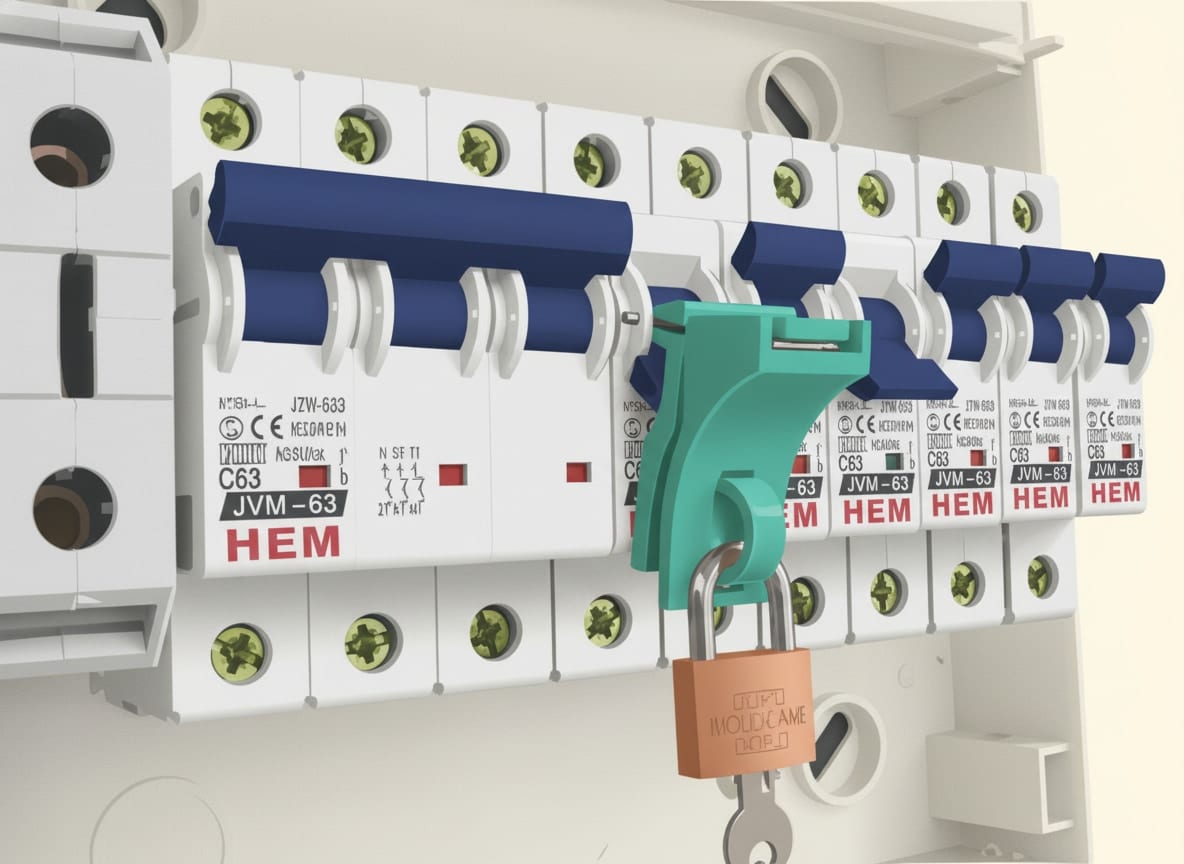
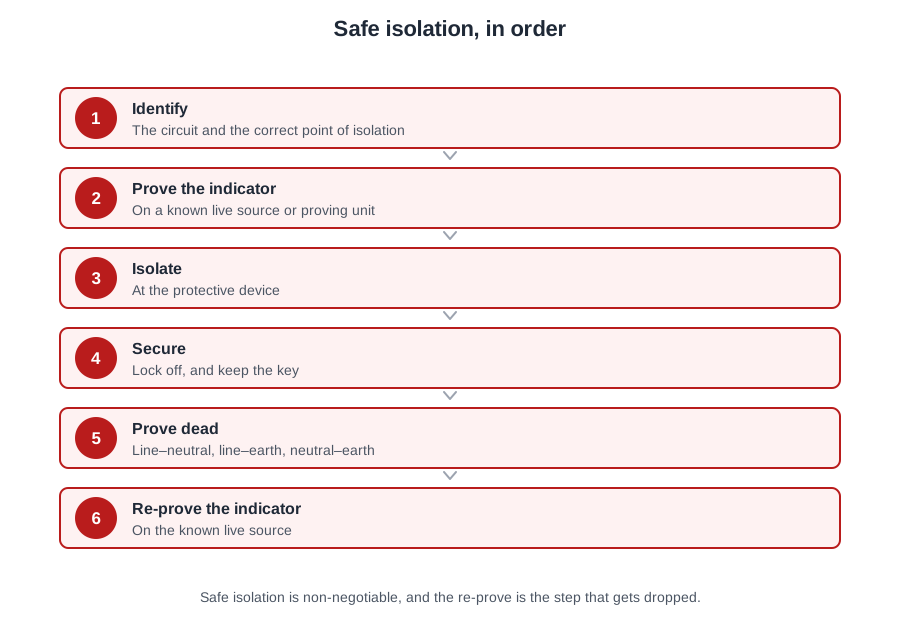
Safely isolate first, because the point is to stop the fault hurting somebody in the meantime. Use the full procedure — see the safe isolation post — and lock off and label so nobody restores it without knowing why it went off.
Then report. Say what you found, where it is, and what you have done about it. If you have isolated a circuit, the person living there needs to know which one and why, or the first thing they'll do is go and switch it back on.
And what you don't do
- Don't repair it. Outside your competence, and the exam is checking you know that.
- Don't leave it live and say nothing because it wasn't the job you were called out for. Finding it makes it yours to report.
- Don't finish your own job first and mention it on the way out. If it's safety critical, it's isolated before you carry on.
- Don't rely on a verbal mention alone. Put it in writing — job sheet, message, email. If it later causes harm, the record of you reporting it is what protects you.
Where plumbers actually find these faults
Everything above is generic. Here is the version for your trade — the five places a plumber is most likely to meet an electrical fault, simply because of where the work takes you.
- Under floorboards. Lifting boards to run pipe is how most damaged cables get discovered, and how a fair number get created. Look before you drill, screw or clip.
- The cylinder cupboard. Immersion heater connections run hot. Look for perished flex, discoloured terminals, and ordinary flex fitted where heat-resistant should be.
- The boiler's fused spur. Check the fuse rating while you're there. A 13 A fuse in a boiler spur is a genuine fault, not a detail.
- Bathrooms. Missing supplementary bonds, and accessories that shouldn't be where they are. A standard switch inside a bathroom instead of a pull cord is worth flagging.
- Anywhere pipework runs beside cable. Heat from a flow pipe degrades insulation over years. If a cable is touching a heating pipe, that is a fault waiting to happen.
None of this makes you an electrician. It makes you the person who was in the loft when it mattered.
Recording it, and handing it over
The specification stops at "report to the responsible person", but how you report matters, and it is the part that protects you.
Put it in writing. A verbal mention in a hallway is not a record. A line on the job sheet, a text, an email — anything dated and specific. Three things need to be in it:
- What you found, described plainly. "Cable sheath damaged, copper visible" beats "dodgy wiring".
- Where it is. Under the floor in the back bedroom, left of the airing cupboard door. Somebody else has to find it.
- What you did about it. Which circuit you isolated, where the lock-off is, and that it must not be restored until an electrician has been.
If the fault is not going to be fixed today, the isolation has to survive you leaving. That means the lock stays on and the label stays up. A note saying "do not switch on" and a switch anybody can reach is not an isolation.
Tell whoever is in the building, even when they aren't the responsible person. In a rented flat the tenant isn't responsible for the wiring, but if their kitchen sockets are dead and nobody has told them why, the first thing they will do is go looking for the switch that turns them back on.
One last thing worth saying to a customer: explain what you are doing before you do it. Isolating a circuit without warning, in somebody's home, on a job they thought was about a leaking valve, goes badly if the first they hear of it is the lights going off.
Common exam traps
Trap 1: Repairing instead of reporting. Any answer option that has you fixing the electrical fault is wrong at Level 2, however reasonable it sounds. Isolate and report.
Trap 2: Reporting to the tenant. In rented property the responsible person is the landlord or managing agent. Telling the tenant is courteous and necessary, but it isn't the answer to "who must be informed".
Trap 3: Forgetting the two non-safety consequences. Component failure and reduced lifecycle are on the list. If a question asks for five consequences and you give three ways of dying, you've lost marks.
Trap 4: Confusing "not to current standards" with "faulty". An old rewireable fuse board is not itself a safety critical fault. A rewireable fuse board with 30 A fuse wire fitted in a 5 A lighting way is.
Trap 5: The order. Isolate then report, not report then isolate. If you report first and walk away, the fault is still live while somebody decides what to do about it.
Quick revision summary
Before the mock test, five things you need to be able to produce from memory:
- The six faults: damaged cables and flex, loose wires, incorrect cables (size or type), broken junction boxes, missing earth bonding, incorrect size fuse
- The five consequences: electrocution, death, fire, component failure, reduced lifecycle of the component
- Responsible persons: home owners, tenants, landlords, site manager, supervisor, co-contractors, site agent, caretakers, managing agents
- The action: safely isolate, then report to the responsible person — in that order, and never repair
- Your competence boundary: recognise and make safe, don't rectify
📝 16-Question Mock Test
Click an option to see whether you got it right. Explanations appear instantly — no submitting at the end.
Broken junction boxes are one of the six named faults. The enclosure keeps fingers out and keeps the joint dry; break it and live terminals are exposed inside a floor void. The other options here are untidy or inconvenient, but none is on the list.
Incorrect cable — wrong type. A cylinder cupboard runs hot, so the final connection needs heat-resistant flex. Ordinary PVC will go brittle. The cable isn't damaged yet, and it isn't the wrong size — it's the wrong specification for the location.
A loose connection has resistance, and current flowing through resistance makes heat. That is why loose terminals scorch and eventually burn. The visible tell is brown or black staining around the terminal — it has been running hot.
Missing earth bonding. Removing a clamp to get a fitting onto a pipe and not replacing it leaves the property without a layer of protection, and nobody notices until there is a fault. It is the reason the temporary continuity bond procedure exists.
Everything looks and works perfectly. But a fault current too small to blow the oversized fuse, yet larger than the cable was built for, can now flow indefinitely. The cable overheats while the fuse decides nothing is wrong. The fuse protects the cable, not the appliance.
Five: electrocution, death, fire, component failure, and reduced lifecycle of the component. Electrocution and death are listed separately — electrocution is the shock event, death is one possible outcome of it.
Component failure and reduced lifecycle of the component. They are on the list because a fault matters even when nobody is going to be hurt — a circuit running hot shortens the life of everything on it. These are the two people leave out when asked for five.
The landlord or managing agent. A tenant cannot authorise electrical work and is not responsible for the installation, so reporting only to them does not discharge your duty. Tell the tenant what you have isolated and why — then tell the landlord.
Building Control is not on the specification's list. The named responsible persons are home owners, tenants, landlords, site manager, supervisor, co-contractors, site agent, caretakers and managing agents — all people with authority over the installation or the work happening around it.
Safely isolate, then report to the responsible person — in that order. Isolating first stops the fault hurting anyone in the meantime. Report first and walk away, and the fault is still live while somebody decides what to do about it.
Replacing the cable. At Level 2 you are qualified to recognise a fault and make the situation safe. Rectifying it is electrical work. Any answer option that has you fixing the fault is wrong, however reasonable it sounds.
Isolate immediately. "Safety critical" means somebody could be hurt in the time it takes you to finish. Your job restarts afterwards; the risk does not wait for you. Reporting it verbally and carrying on leaves the fault live and leaves you with no record.
The distinction matters. Old technology is not automatically a fault. But 30 A fuse wire in a 5 A way means the lighting circuit is effectively unprotected — a layer of protection somebody is relying on has been removed. That is a fault now, not just dated.
25 mm from pipework, and 150 mm from electrical apparatus. Heat from a flow pipe degrades cable insulation over the years, and a faulty cable can arc across to the pipe. Don't confuse this with the 50 mm rule, which is about cable depth in walls.
It has been running hot, almost always because the connection is loose. Resistance at the terminal turns current into heat. It is one of the most reliable visual signs of a fault and costs nothing to look for.
It is evidence that you found it and passed it on. A job sheet, message or email costs nothing and is what protects you if the fault later causes harm. It does not transfer liability to anyone — it simply records that you did your part properly.
How PlumbMate puts this into practice
This outcome is almost entirely named lists — six faults, five consequences, nine responsible persons, two actions. That makes it the cheapest 8 marks on the paper, and exactly the kind of material spaced retrieval clears fastest.
- Flashcards, not essays. One prompt, one answer — the format that research has consistently shown works best for active recall.
- Wrong answers are logged. Every question you get wrong goes into a dedicated collection that resurfaces more frequently in future sessions.
- The 3× rule. You need to get a question right three times before it clears — one lucky guess isn't enough.
- Explanations on every question. Like the ones above, but on every single question in the app.