Once you understand the hot water cylinder and the pipework around it, the next question is how you actually heat the water. Level 2 covers the traditional fossil fuel options (gas, LPG, oil), electric heating (immersion), and the growing range of renewable and low-carbon options (solar thermal, biomass, heat pumps). You also need to know the specific electrical installation requirements for immersion heaters and how multi-coil cylinders let you combine heat sources.
This is the fifth post in the Level 2 hot water sub-cluster. For the others, see the classifications, cylinder types, open vented systems, unvented systems and temperature control posts.
Fossil fuels vs renewable sources
Fossil fuels are carbon-based fuels extracted from the ground — formed over millions of years from ancient organic material. When burnt, they release carbon dioxide (CO₂), which contributes to climate change. The three main fossil fuels used for heating water:
- Natural gas — most common UK fuel; methane delivered via the mains gas network
- LPG (Liquified Petroleum Gas) — propane or butane delivered in bottles or bulk tanks; used where mains gas isn't available
- Oil — typically kerosene delivered by tanker; used in rural areas without mains gas
Renewable sources generate heat without burning fossil fuels or with minimal net carbon emissions. Level 2 covers:
- Electricity (via immersion heater) — renewable depending on where the electricity comes from
- Solar thermal — roof-mounted panels heated directly by sunlight
- Biomass — wood pellets or logs burnt in a biomass boiler (renewable because trees regrow)
- Geothermal — heat extracted from the ground via heat pumps
- Air-source heat pumps — heat extracted from outdoor air
Each heat source has specific installation requirements and trade-offs.
Natural gas, LPG, and oil boilers
Covered in detail in the heating cluster — these are the same boilers that heat radiators. For hot water purposes, a gas/LPG/oil boiler can:
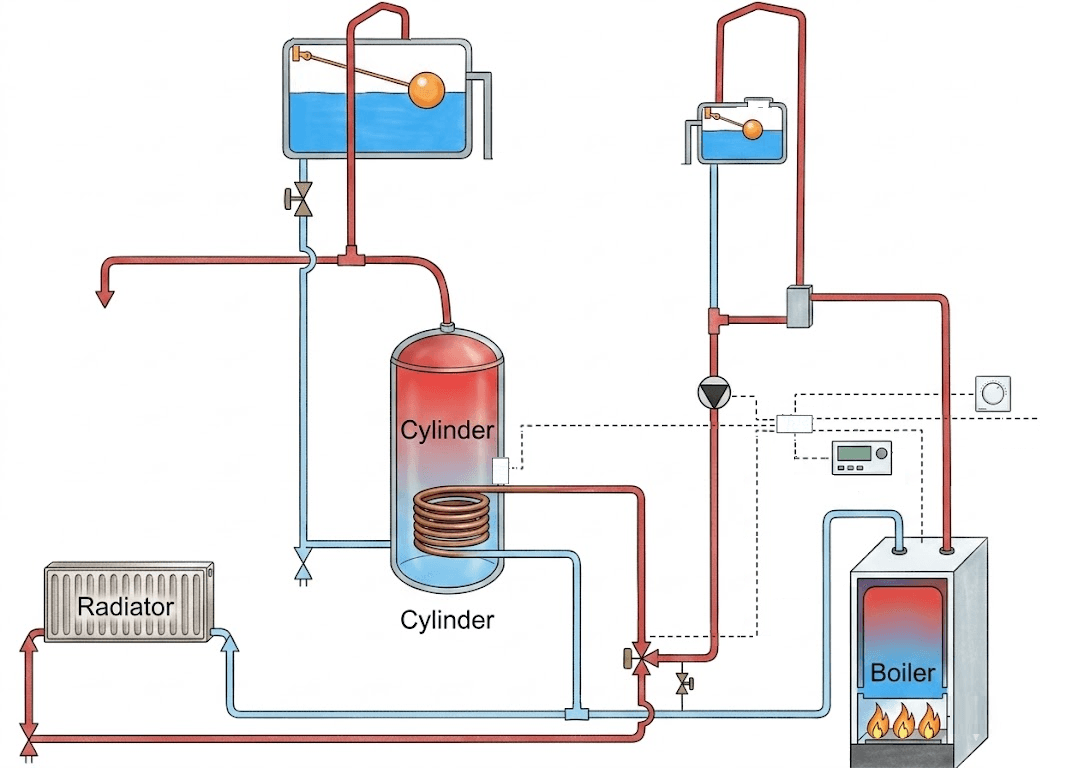
- Feed a cylinder indirectly through a coil — primary water heats the cylinder's secondary water via the heat exchanger
- Provide instantaneous hot water if the boiler is a combi — the same boiler heats domestic hot water directly as it flows through
Combi boilers as an instantaneous heat source:
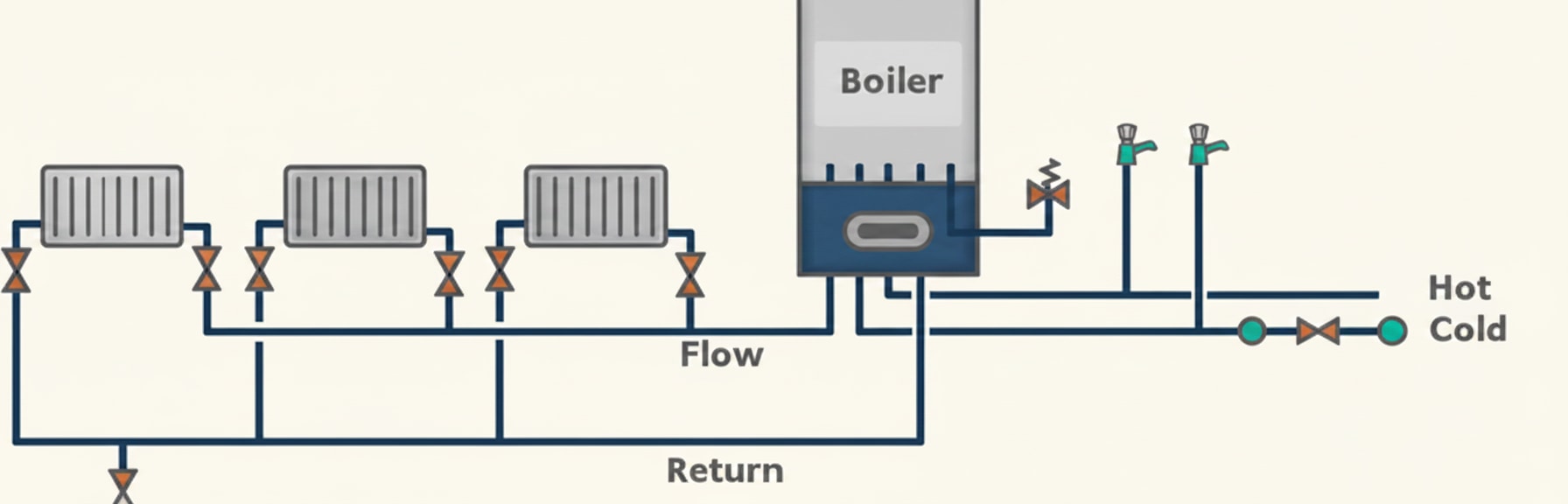
- Minimum 15mm supply pipe into and out (mains pressure means small pipes work)
- Heats both central heating and hot water from the same boiler
- No storage — water heated on demand
- Flow rate limited by the boiler's power output
- Generally not recommended for homes with more than one bathroom because peak demand can exceed what the boiler can deliver
Electricity and immersion heaters
Immersion heaters are electric heating elements fitted into a hot water cylinder. The element sits in the water and heats it directly through electrical resistance heating.
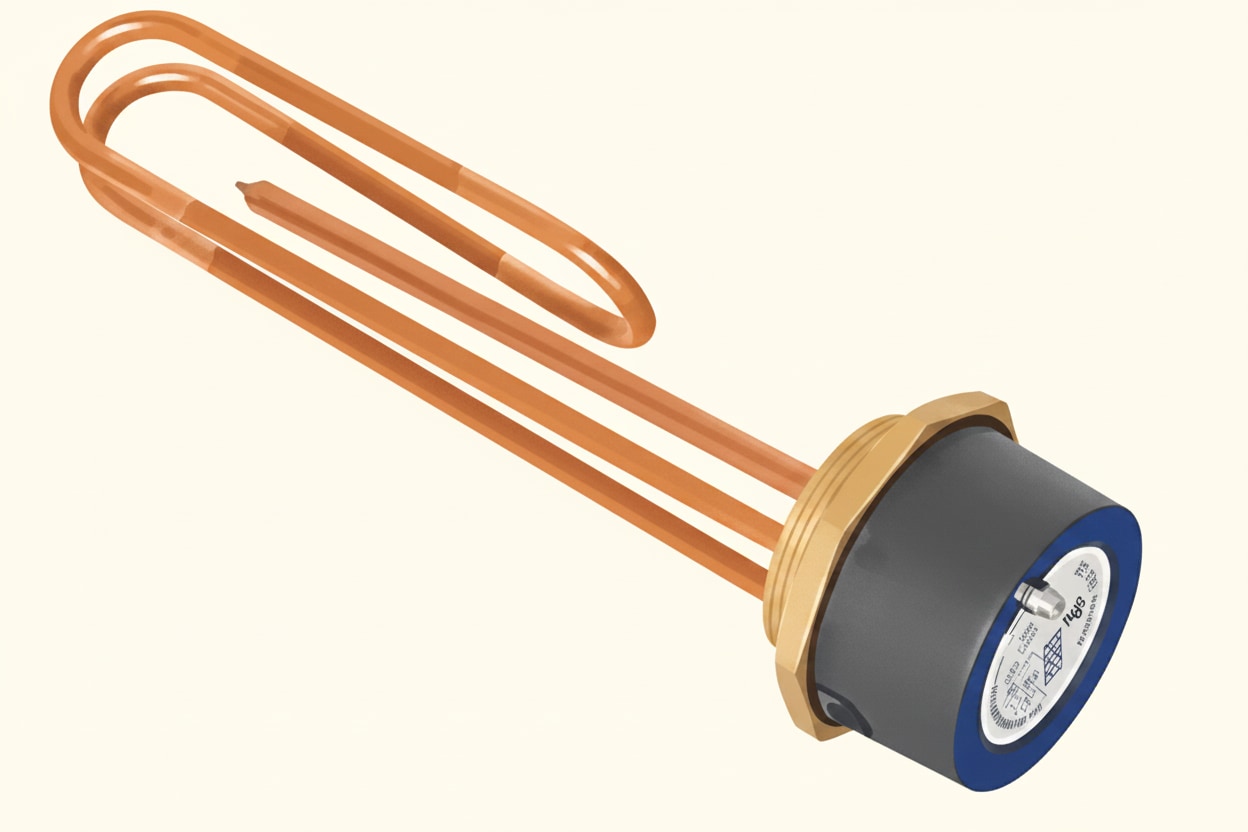
Why they're widely used:
- Works anywhere there's electricity (no gas required)
- Simple to install in an existing cylinder (typically just replaces a blanking plate)
- Reliable backup if the main heat source (boiler) fails
- Can run on off-peak electricity (Economy 7) to reduce running costs
Power: typical immersion heater = around 3kW. That's a significant electrical load — enough that the immersion needs its own dedicated circuit from the consumer unit.
Immersion heater electrical installation
This is the detail Level 2 reliably tests. Memorise these specifications.
Circuit protection:
- 16A miniature circuit breaker (MCB) in the consumer unit — or 15A fuse if using older rewireable-fuse consumer units
- 13A fuse in the fused switched spur near the cylinder
Cable sizes:
- Minimum 2.5mm² twin and earth from the consumer unit to the fused switched spur
- Minimum 1.5mm² heat-proof flex from the spur to the immersion heater
Why heat-proof flex? The cylinder cupboard is warm — it's deliberately housing a hot water cylinder and typically has a radiator or pipework running through it too. Standard PVC flex would degrade in that environment over time. Heat-proof flex is rated for higher continuous temperatures and stays flexible and safe.
Fused switched spur: a dedicated switch + fuse unit fitted near the immersion heater. Lets you isolate the immersion for maintenance without turning off the whole consumer unit; holds the 13A fuse that protects the immersion against faults.
Cross-reference: this content parallels the safe isolation and circuit protection content in the electrical principles cluster.
Immersion heater components and safety
An immersion heater has two main parts:
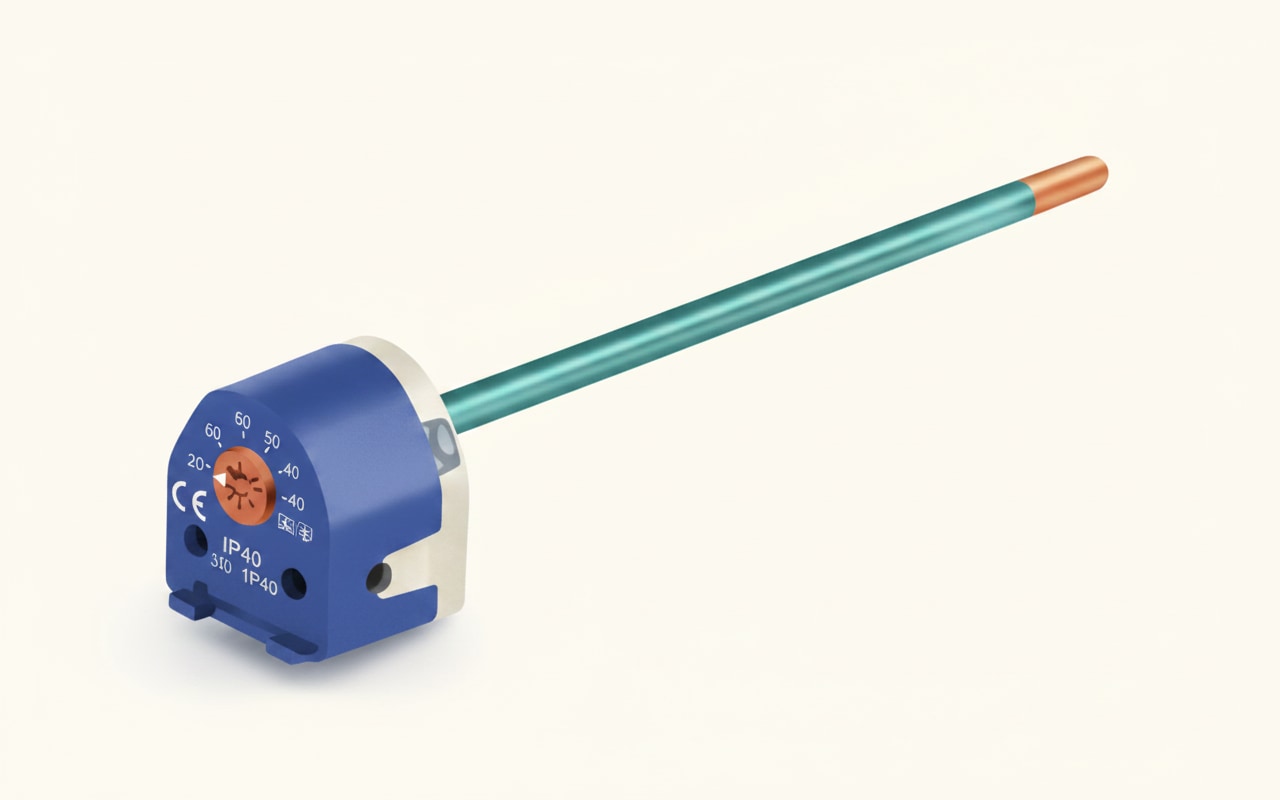
- Element — the actual heating coil, sits in the water
- Thermostat — measures water temperature and cuts the element when target is reached
Modern immersion heaters include a safety cut-out built into the thermostat:
- Set at around 85–90°C
- Switches off the heating element if the water temperature exceeds safe levels
- Usually a manual-reset device — once tripped, it needs manual reset after the fault is fixed
Replacement notes:
- Thermostat — replaceable separately; the thermostat sits in a sheath that can be removed without draining the cylinder
- Element — if the element fails, the whole immersion heater has to be replaced (and the cylinder drained to do so)
Solar thermal
How it works: flat-plate or evacuated-tube collectors mounted on the roof absorb solar energy and heat a transfer fluid (typically a glycol/water mix). The transfer fluid circulates through a coil in the hot water cylinder, transferring heat to the stored water.
Key installation requirement: a twin-coil cylinder is needed, because solar thermal is usually supplementary — a gas boiler or immersion heater provides the main heat, and solar thermal adds additional heat when available. The two heat sources need separate coils:
- Lower coil — solar thermal (at the bottom of the cylinder, where the coolest water is, so the solar contribution is maximised)
- Upper coil — gas boiler or other primary heat source (higher in the cylinder, to heat just the top for immediate draw-off when solar alone isn't enough)
Why solar needs a backup heat source:
- Solar thermal rarely achieves the 60°C minimum storage temperature required to prevent Legionella
- UK weather means sunlight availability is inconsistent — winter, cloudy days, evenings all need backup heating
Stored water must be heated to at least 60°C periodically to kill bacteria — this is a legal requirement.
Biomass
How it works: a biomass boiler burns wood pellets, wood chips, or logs to produce heat. Because wood is a renewable fuel (trees regrow), biomass is classed as a low-carbon alternative to fossil fuels.
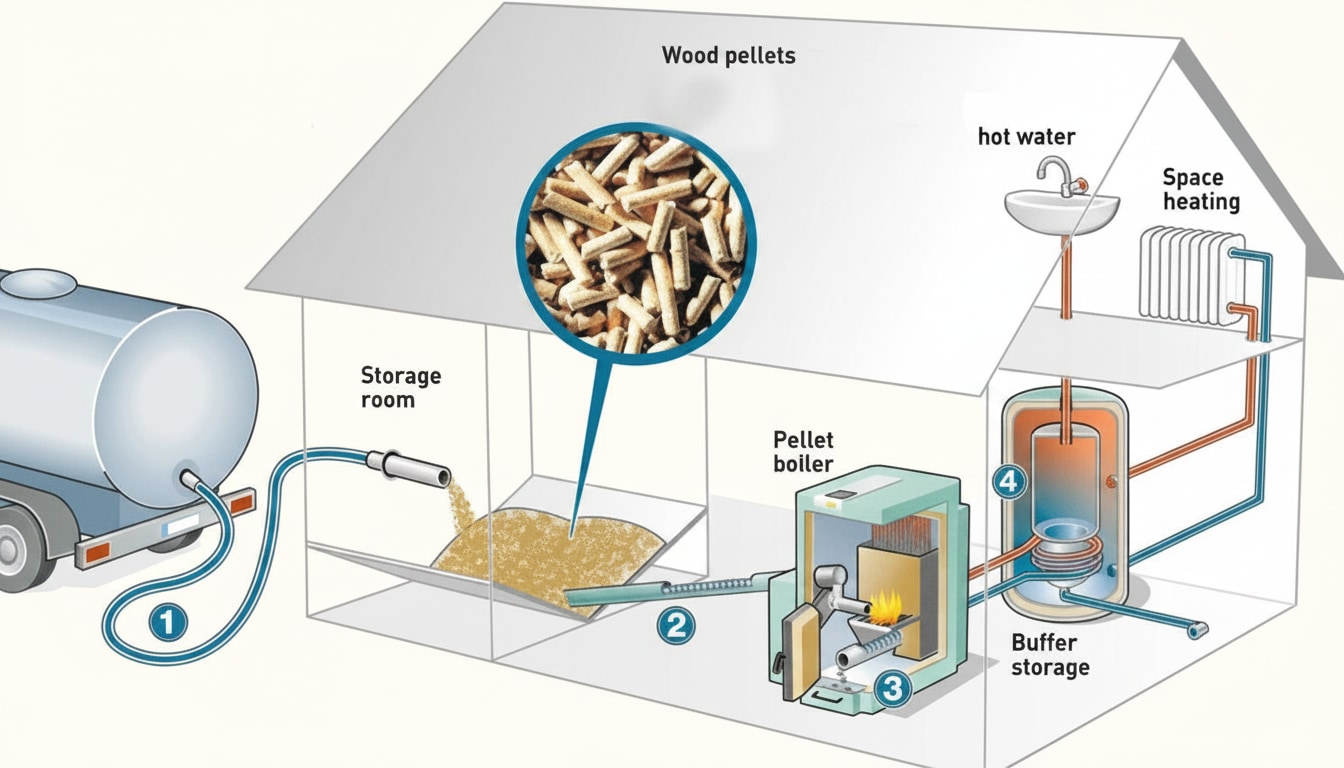
Key characteristic: solid fuel. Biomass boilers behave differently from gas or oil boilers because solid fuel continues burning even after the thermostat calls for no more heat. You can't instantly turn off a fire.
Consequence: biomass systems need somewhere for the heat to go when the cylinder is fully heated. This is called a heat leak — typically a heat leak radiator that the primary water can circulate through when the cylinder zone valve closes. The heat leak is usually a towel rail on smaller systems, or a dedicated radiator in an attic or cellar on larger systems.
Why biomass is the only type allowed to use gravity circulation: because solid fuels can't be instantly shut off, gravity primary circulation is an acceptable option (it keeps water moving through the boiler even when the pump is off or fails). For gravity circulation:
- Minimum primary pipework size: 28mm (compared to 22mm minimum for fully-pumped systems)
- Larger pipes overcome the limited driving force of gravity circulation
Geothermal and heat pumps
Heat pumps use the same refrigeration cycle as a fridge (but in reverse) to move heat from a cold source to a warmer destination. Two main types for domestic hot water:
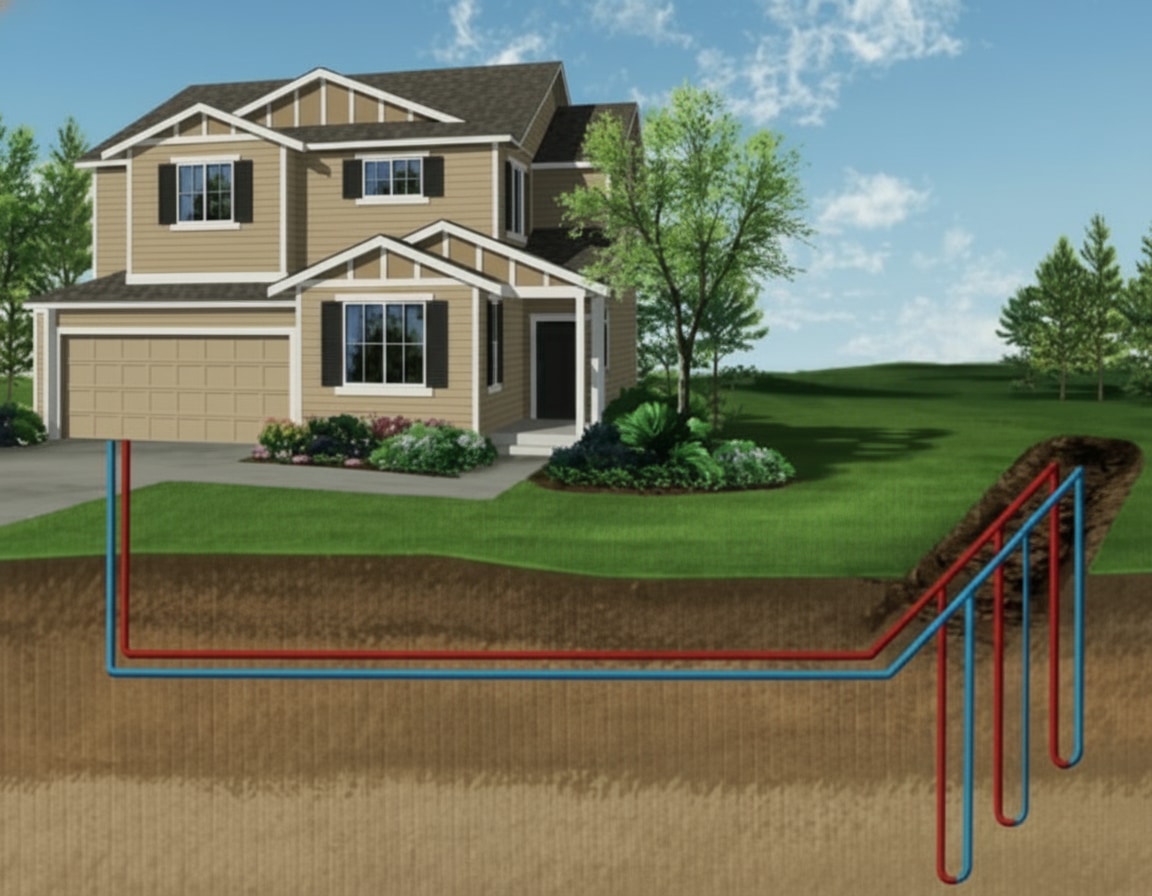
- Ground-source (geothermal) — extracts heat from the ground via buried pipes
- Air-source — extracts heat from outdoor air
Heat pumps deliver water at relatively low temperatures (typically 45–55°C) compared to gas or oil boilers. For hot water systems this matters because:
- Stored water might not reach the 60°C Legionella threshold on heat pump alone
- Usually combined with an immersion heater booster that periodically raises the temperature to kill bacteria
- Multi-coil cylinders with a dedicated heat pump coil are common
Multi-coil cylinders
A cylinder with more than one coil — each coil connects to a different heat source. Let you combine:
- Twin coil: typically gas boiler + solar thermal, or gas + heat pump
- Triple coil: gas + solar + heat pump, or gas + solar + immersion
- Quad coil: four independent heat sources on one cylinder
Each coil is positioned in the cylinder according to the heat source's characteristics:
- Low coils for low-temperature sources (solar thermal, heat pump) — they work best on the coolest water
- High coils for high-temperature sources (gas boiler) — they heat just the top of the cylinder for fast draw-off
This tiered arrangement lets low-temperature renewables contribute efficiently while still meeting the 60°C minimum storage temperature via the high-temperature backup source.
Localised water heaters
For outlets far from a central hot water system, or where installing central hot water isn't practical.
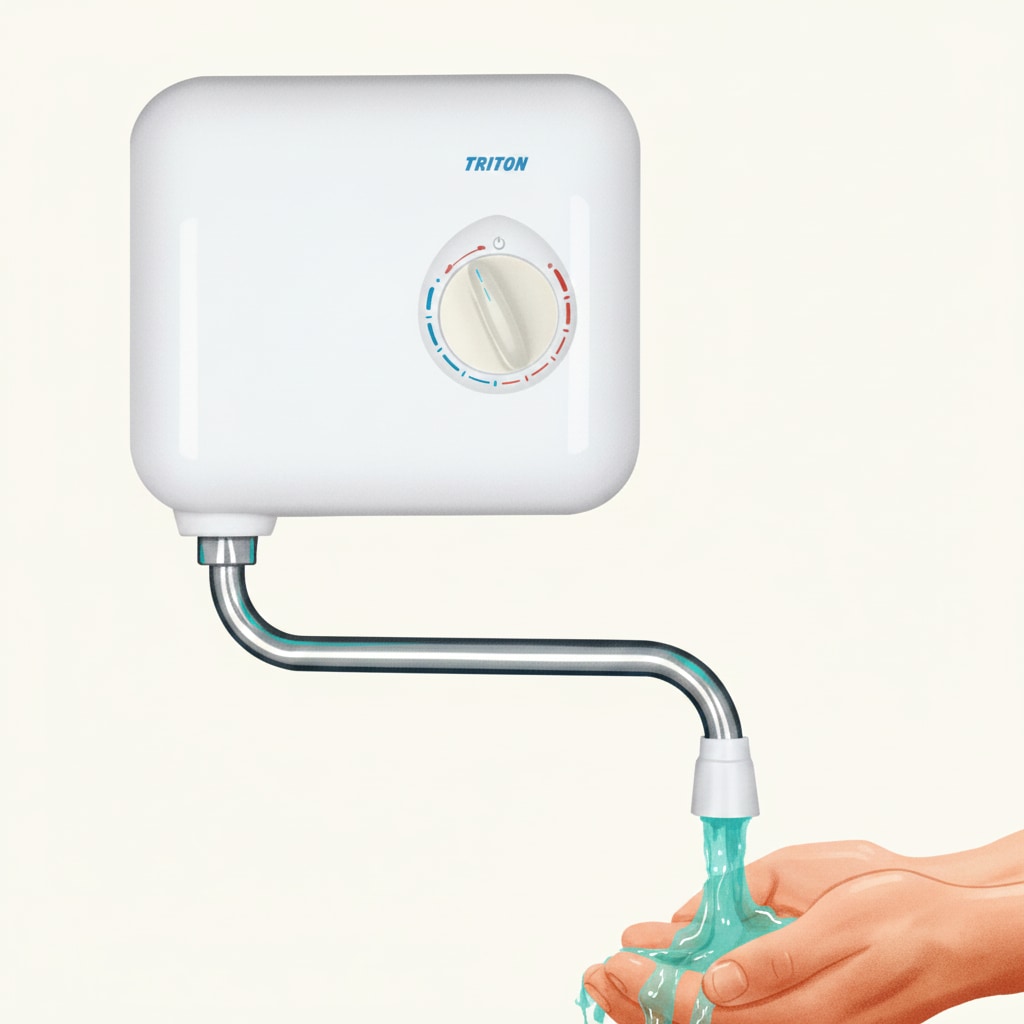
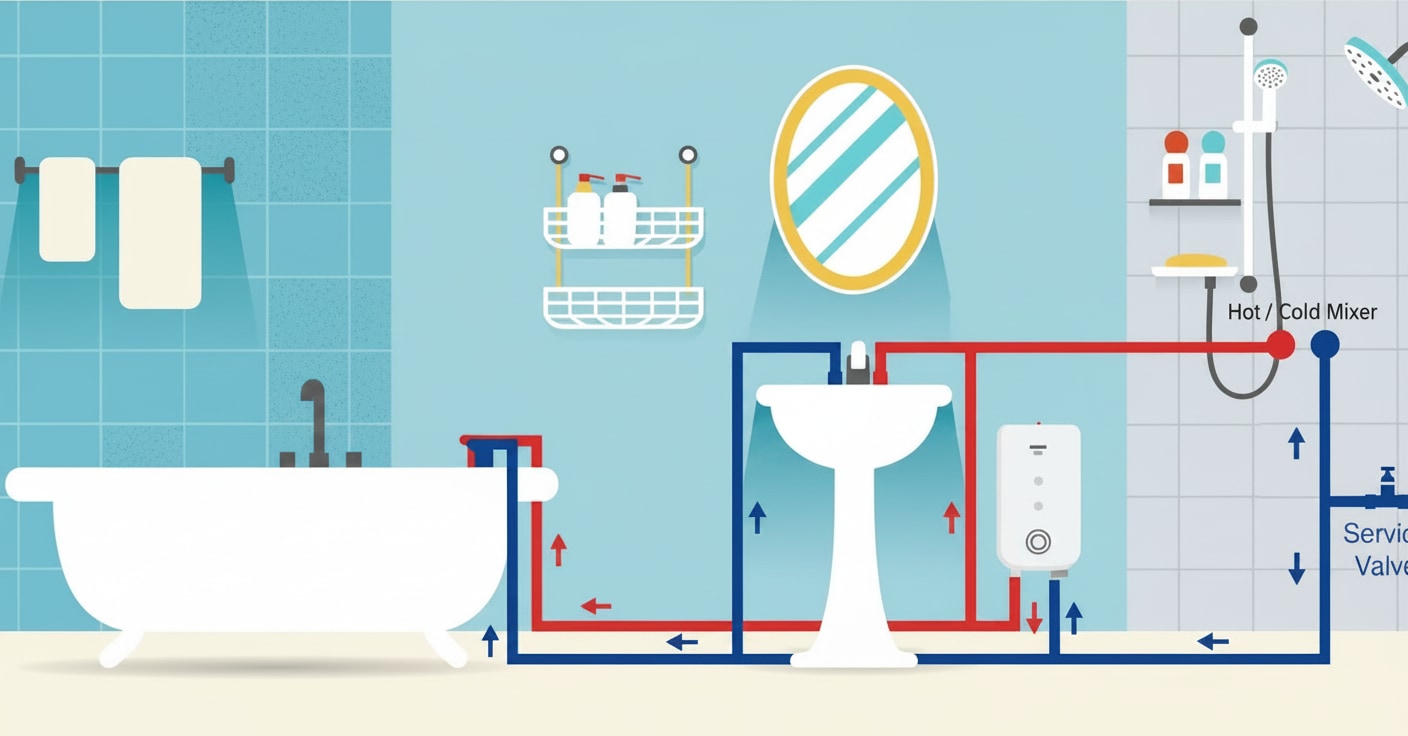
Single-point water heater. Feeds one outlet (one tap). Typically electric or gas. Examples:
- Undersink heater — a small electric cylinder (10–30 litres) under a sink
- Over-sink heater — similar, mounted above the sink
Standard electrical supply: high-pressure mains in, 15mm pipework in and out.
Multipoint water heater. Feeds a small group of outlets (typically 2–4) from a single heater. Usually gas-powered; common in flats where a full central hot water system isn't installed.
Both use heat exchangers to transfer heat from the fuel (gas flame, electric element) to the water. When asked "how does a multipoint heater transfer heat from burning fuel to the water system?" — the answer is heat exchanger.
Legionella and storage temperature
A rule that applies to every hot water storage system, regardless of heat source:
- Stored water ideally 60°C minimum, 65°C maximum
- Legal requirement: stored water must be heated to at least 60°C periodically to kill Legionella bacteria
- Upper limit of 65°C: in temporary hard water areas, exceeding 65°C causes limescale to deposit on heating elements and cylinder walls
The 60°C / 65°C window is the sweet spot: hot enough to kill bacteria, cool enough to avoid limescale damage.
Solar thermal and heat pump systems often can't reach 60°C reliably — the solution is a supplementary heat source (boiler or immersion) that periodically brings the stored water up to the kill temperature.
Common exam traps
Trap 1: Immersion heater circuit specs. 16A MCB / 13A fuse / 2.5mm T&E / 1.5mm heat-proof flex. Four specific figures. Exam questions test any of them.
Trap 2: Why heat-proof flex? Because the cylinder cupboard is warm. Standard PVC flex would degrade; heat-proof stays safe.
Trap 3: Gravity primary minimum 28mm (solid fuel only). For biomass or other solid fuel boilers using gravity circulation. Pumped systems are minimum 22mm.
Trap 4: Solar thermal needs a twin-coil cylinder. Because solar thermal is a supplementary heat source — needs another heat source for reliable hot water.
Trap 5: Legionella storage minimum 60°C. Stored hot water must periodically reach 60°C to kill bacteria. Not 55°C — and the reason is speed rather than a hard cut-off: at 55°C it takes 20–30 minutes to kill most of the bacteria, at 60°C about two minutes. Not 75°C either (higher than needed, causes limescale problems).
Trap 6: Biomass heat leak radiator. Solid fuel can't be instantly turned off, so the system needs somewhere to dump excess heat when the cylinder is fully heated. The heat leak radiator is that somewhere.
Trap 7: Multipoint water heater uses a heat exchanger. Not a "heat converter", not a "heat diverter", not a "heat extractor" — heat exchanger.
Quick revision summary
Before the mock test, seven things you need to be able to produce from memory:
- Three fossil fuels: natural gas, LPG, oil (all CO₂ emitters when burnt)
- Immersion heater electricals: 16A MCB / 13A fuse / 2.5mm T&E / 1.5mm heat-proof flex; safety cut-out at 85–90°C
- Renewable sources: electricity, solar thermal, biomass, geothermal, air-source heat pumps
- Solar thermal needs twin-coil cylinder — supplementary heat source + backup
- Biomass = solid fuel = needs heat leak radiator + can use gravity circulation (28mm primary)
- Multi-coil cylinders (twin/triple/quad) for combining heat sources
- Legionella: 60°C min stored water (legal requirement); 65°C max (limescale threshold)
📝 10-Question Mock Test
Click an option to see whether you got it right. Explanations appear instantly — no submitting at the end.
Fossil fuels are carbon-based fuels formed from ancient organic material. Natural gas (methane), LPG, and oil are all fossil fuels. Solar (B), ground source (C) and air source (D) are all renewable or low-carbon — they don't involve burning carbon-containing material.
The standard MCB size for domestic immersion heaters. If rewireable fuses are in use rather than MCBs, the equivalent figure is 15A. Option B (13A) is the fuse size in the fused switched spur — a different component. Options A (6A) and D (30A) don't match the standard immersion circuit.
The spur-to-immersion run uses 1.5mm² heat-proof flex — smaller than the 2.5mm² T&E upstream because this section is short and the load is protected at 13A. Option C (2.5mm² T&E) is for the spur's supply from the consumer unit.
Cylinder cupboards are deliberately warm spaces holding a hot water cylinder and often pipework from a heating system. Heat-proof flex uses a higher-temperature insulation that doesn't degrade in those conditions. The other options describe unrelated considerations.
Gravity circulation has weak driving force (just the density difference between hot and cold water). Larger pipes overcome the resistance to flow. 22mm is the minimum for fully-pumped systems; 28mm is required when gravity is doing the work. Options A and D don't match the rule.
Heat exchangers are the standard component for transferring heat from burning fuel to water in any gas or oil appliance. Options A, B and D are plausible-sounding distractors but not real component types for this application.
The legal minimum for killing Legionella bacteria. Below 60°C the bacteria survive and multiply. 40°C (A) is actively in the growth range. 50°C (B) is the growth-limiting edge but not reliably lethal. 75°C (D) is higher than needed and causes limescale problems in temporary hard water areas.
Solar thermal is supplementary — it needs a primary heat source (gas boiler or immersion) to reliably reach 60°C storage temperature. The twin coil lets both heat sources contribute to the same cylinder. Options A, C, and D don't support dual heat sources.
Solid fuels can't be instantly turned off — they continue burning and producing heat after the thermostat calls for no more. Gravity circulation keeps water moving through the boiler even without a pump, allowing the heat to dissipate. Pumped-only operation with a solid fuel boiler would be dangerous if the pump failed during a burn cycle.
The heat leak radiator accepts the heat that the boiler can't stop producing immediately when the cylinder is up to temperature. The other options describe features unrelated to heat leak design.
How PlumbMate puts this into practice
Heat source content mixes principles (fossil vs renewable) with specific facts (cable sizes, temperature thresholds). Spaced repetition handles both together.
- Flashcards, not essays. One prompt, one answer — the format that research has consistently shown works best for active recall.
- Wrong answers are logged. Every question you get wrong goes into a dedicated collection that resurfaces more frequently in future sessions.
- The 3× rule. You need to get a question right three times before it clears — one lucky guess isn't enough.
- Explanations on every question. Like the ones above, but on every single question in the app.