A magnet tells you half of this lesson. It sticks to ferrous metal and not to copper, brass or lead — and rust is a ferrous problem.
The common types of material
| Material | What it is | In plumbing |
|---|---|---|
| Ferrous metals | Metals containing iron | Low carbon steel pipe, cast iron. Rust unless protected |
| Non-ferrous metals | Metals with no iron | Copper, lead, aluminium, zinc. Do not rust |
| Alloys | Two or more metals mixed | Brass (copper and zinc) for fittings; solder; gunmetal |
| Thermoplastics | Plastics that soften when heated and can be reshaped | Polythene, PVC, ABS, polypropylene — pipe and fittings |
| Thermo-setting plastics | Plastics that set hard once formed and cannot be softened again | Toilet seats, some handles and casings |
| Ceramics | Clay based, fired hard | Basins, WCs, tiles. Hard and easy to clean, but brittle |
The magnet test
A magnet sticks to ferrous metal and not to copper, brass or lead.
It is genuinely useful on site as well as in an exam. An old pipe that a magnet grabs is steel or iron; one it ignores is copper or lead. And that tells you immediately how the pipe is likely to be jointed and what condition to expect it in.
Thermoplastic against thermosetting
The prefix is the clue. Thermo means heat.
- Thermoplastic — heat makes it plastic, meaning it softens and can be reshaped. All the pipe you use.
- Thermosetting — heat set it, once, and it cannot go back.
This is why a plastic pipe must be kept away from a boiler or a flue: it is a thermoplastic, so heat softens it. A thermosetting plastic in the same place would not.
The properties of materials
- Strength — how much load it carries before it fails.
- Hardness — how well it resists scratching, denting and wear.
- Ductility — how far it can be drawn out or bent without breaking. Copper is ductile, which is why it can be bent cold.
- Malleability — how well it can be hammered or pressed into shape. Lead is very malleable, which is why it was used for roof flashings.
- Insulation — how well it resists letting heat or electricity through. Plastics insulate; metals do not.
- Tensile strength — how much pulling force it takes before it snaps.
Ductility and malleability get confused
They are close, and the difference is the kind of force:
- Ductile — can be drawn out or bent. Think of drawing a wire, or bending a pipe.
- Malleable — can be hammered or pressed into shape. Think of beating lead over a tile.
The examples in the list are the ones to remember, because they are the ones you will be given: copper is ductile, lead is malleable.
Atmospheric corrosion
Atmospheric corrosion is metal being attacked by the air around it.
It needs both oxygen and moisture — which is why metal rusts in damp air and not in dry. Take either away and it stops. That single fact explains every prevention method below.
The causes
- Moisture in the air — humidity, rain, and condensation on cold pipework.
- Oxygen.
- Pollution — sulphur and other industrial gases dissolve in moisture and make it acidic, which speeds corrosion up.
- Salt — near the coast, or from road salt.
Why ferrous metals suffer worst
This is the part worth understanding, because it explains why copper and lead survive a century outdoors and steel does not.
Rust flakes off and exposes fresh metal underneath, so it keeps going. The corrosion product does not protect anything — it falls away and lets the process start again on the metal below. Rust works all the way through.
Copper and lead form a surface film instead, which protects the metal below — the green on old copper and the grey on lead. That film is corrosion too, but it stays put and seals the surface, so it stops.
How it is prevented
- Painting — keeps oxygen and moisture off the metal.
- Galvanising — a zinc coating on steel.
- Insulating against condensation — removes the moisture rather than the oxygen.
- Keeping different metals apart where they would react with each other.
All four are the same idea: take away one of the two things corrosion needs, or keep two reactive metals from touching.
🔢 The numbers worth memorising
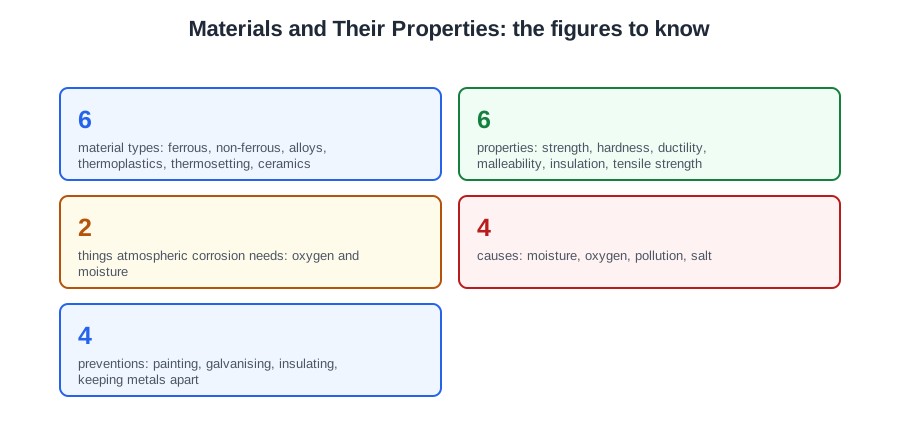
- 6
- material types: ferrous, non-ferrous, alloys, thermoplastics, thermosetting, ceramics
- 6
- properties: strength, hardness, ductility, malleability, insulation, tensile strength
- 2
- things atmospheric corrosion needs: oxygen and moisture
- 4
- causes: moisture, oxygen, pollution, salt
- 4
- preventions: painting, galvanising, insulating, keeping metals apart
⚠️ Where people go wrong
- Calling brass a non-ferrous metal. It is an alloy — copper and zinc.
- Swapping ductility and malleability. Ductile is drawn or bent; malleable is hammered or pressed.
- Mixing up thermoplastic and thermosetting. Thermoplastic softens with heat; thermosetting cannot go back.
- Saying corrosion needs only moisture. It needs oxygen as well, which is why dry metal does not rust.
- Thinking the green on copper is damage. It is a protective film, unlike rust, which flakes off.
📝 8-Question Self-Test
Straight from the Level 1 course question bank. Click an option to see whether you got it right — the explanation appears instantly, and there is nothing to submit.
Non-ferrous metals contain no iron — copper, lead, aluminium, zinc. A magnet will not stick to them.
Non-ferrous metals contain no iron, so they do not rust.
Brass is an alloy of copper and zinc, used for fittings. Solder and gunmetal are the other alloys named.
Metals (ferrous and non-ferrous), alloys, plastics (thermo-setting and thermoplastics), and ceramics. Ferrous metals contain iron and stick to a magnet; non-ferrous do not.
Thermoplastics soften every time they are heated and can be reshaped and recycled — polythene, PVC, pipe and waste fittings. Thermo-setting plastics set once, permanently, and burn rather than soften if heated again.
An alloy is two or more metals mixed to get properties neither has alone. Brass is copper and zinc, and it machines and threads far better than either on its own. Solder and gunmetal are alloys too.
Ceramics are fired clay. Basins, WCs and tiles. Hard, completely resistant to water and chemicals, and brittle — which is why a dropped basin does not dent, it shatters.
Thermosetting plastics set once, permanently, and burn rather than soften if heated again — which is exactly what you want in a WC seat and an electrical fitting. Thermoplastics soften every time and are used for pipe and waste fittings.
- Start here: Plumbing Science for Level 1 — the whole unit in one piece
- All 72 Level 1 guides — one per lesson, across all ten units
- The Level 1 glossary — 620 terms in plain English