Water is unusual: it expands when it freezes. Almost nothing else does, and that single oddity is why a burst pipe is a plumbing job at all.
The three states
- Solid — ice.
- Liquid — water.
- Gas — steam, or water vapour.
Which state it is in depends only on its temperature. Same substance, same molecules, different amount of heat energy in them.
The changes, and the temperatures
| Point | Temperature | What happens |
|---|---|---|
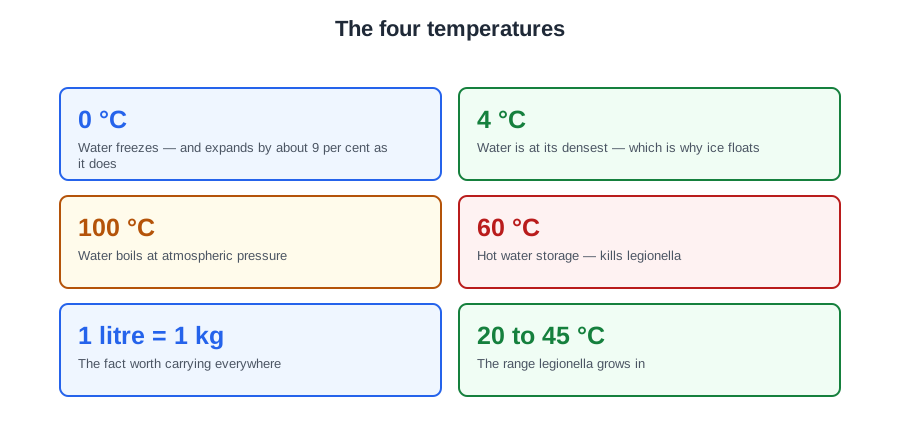
| Freezing | 0 °C | Water becomes ice |
| Maximum density | 4 °C | Water is at its heaviest for its volume |
| Boiling | 100 °C | Water becomes steam |
Boiling is at normal atmospheric pressure. That qualification is worth noticing now, because it comes back later: raise the pressure and water boils above 100 °C, which is the whole principle behind an unvented hot water system.
The expansion of water
Water is unusual, and both figures matter in plumbing.
Water to steam: about 1600 times
A small amount of water becomes a very large amount of steam.
Picture it: one cupful of water becomes about 1600 cupfuls of steam, and it wants that space immediately. That is why an uncontrolled boiling system is so dangerous — a sealed vessel that starts making steam is not leaking, it is filling with something 1600 times the volume of what was there.
Water to ice: about 10%
Nearly every other substance shrinks when it freezes. Water grows.
The reason is that water molecules arrange themselves into an open crystal structure as they form ice, and that structure takes up more room than the jumble of liquid water.
Two consequences you will meet on site:
- A frozen pipe splits. The ice needs 10% more room and the pipe cannot give it.
- The split is only found when it thaws and starts leaking. While it is still frozen, the ice is plugging the hole it just made.
That second point catches people out every winter. A customer rings about no water; you thaw the pipe; and now there is a leak that was not there five minutes ago. It was — you just could not see it.
Which is the whole reason pipework in a loft space, a garage or any other unheated place gets lagged. Insulation slows the heat loss enough to keep the water above freezing, and it costs a fraction of the ceiling it saves.
Why 4 °C matters
This is the fact that looks like trivia and is not.
Because water is densest at 4 °C, the coldest water in a pond sinks only until it reaches 4 °C. Water colder than that is lighter, so it stays on top. And ice, being lighter still, floats.
That is why ponds freeze from the surface down rather than solid, and why fish survive the winter.
It matters to you for a related reason: water in a tank or a pipe stratifies by temperature. The coldest water is not always at the bottom, and the hottest water always is at the top — which is exactly why hot water is drawn off the top of a cylinder.
The four figures this outcome asks for
- Freezing: 0 °C
- Maximum density: 4 °C
- Boiling: 100 °C
- Expansion to steam ×1600, to ice +10%
🔢 The numbers worth memorising
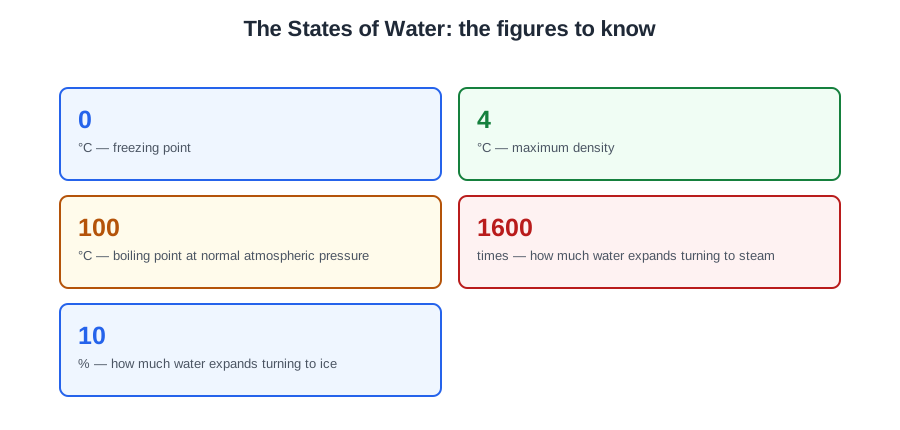
- 0
- °C — freezing point
- 4
- °C — maximum density
- 100
- °C — boiling point at normal atmospheric pressure
- 1600
- times — how much water expands turning to steam
- 10
- % — how much water expands turning to ice
⚠️ Where people go wrong
- Saying water shrinks when it freezes. It expands by about 10 per cent, which is why pipes split.
- Thinking maximum density is at 0 °C. It is at 4 °C.
- Quoting the boiling point without the condition. It is 100 °C at normal atmospheric pressure.
- Expecting a frozen pipe to be leaking. The ice plugs the split until it thaws.
- Mixing up the two expansion figures. 1600 times for steam; 10 per cent for ice.
📝 8-Question Self-Test
Straight from the Level 1 course question bank. Click an option to see whether you got it right — the explanation appears instantly, and there is nothing to submit.
Water is heaviest for its volume at 4 °C. It is why ponds freeze from the surface down.
Solid (ice), liquid (water) and gas (steam or water vapour).
Which state water is in depends only on its temperature.
Gas. Ice is the solid state and water the liquid state.
100 °C at normal atmospheric pressure.
Freezing at 0°C, maximum density at 4°C, boiling at 100°C. Water gets denser as it cools down to 4°C and then turns round and gets lighter again, which is why ice floats and a pond freezes from the top down.
Solid, liquid and gas. Solid at 0°C and below, maximum density at 4°C, liquid between 0°C and 100°C, and gas above 100°C.
Warm water is less dense, so it rises and the top is hottest: top 65°C, middle 60°C, base 55°C. That stratification is why the coil goes in at the bottom and the draw-off comes from the top. The paper lists the positions and temperatures in scrambled columns.
- Start here: Plumbing Science for Level 1 — the whole unit in one piece
- All 72 Level 1 guides — one per lesson, across all ten units
- The Level 1 glossary — 620 terms in plain English