A blowtorch is the most dangerous thing most plumbers carry, and the one they think about least. It is a naked flame, fed from a pressurised bottle of flammable liquid, used in lofts and under floorboards where nobody can see what is smouldering behind you. Add an oxy-acetylene set for lead welding and you have a gas that becomes unstable above 15 PSI sitting next to a cylinder of pure oxygen that makes everything else burn harder.
This is Learning Outcome 4 of the Level 2 health and safety unit, and it is worth 8 of the 42 marks on the 501 exam — more than working at height and confined spaces put together. Half of those marks are about gases and equipment rather than fire itself, and that is the half students skip.
This post is the seventh in the Level 2 Health and Safety sub-cluster. For the others, see the legislation, risk assessment, PPE and signs, hazardous substances, working at height, excavations and confined spaces and fire safety posts.
The four gases you need to know
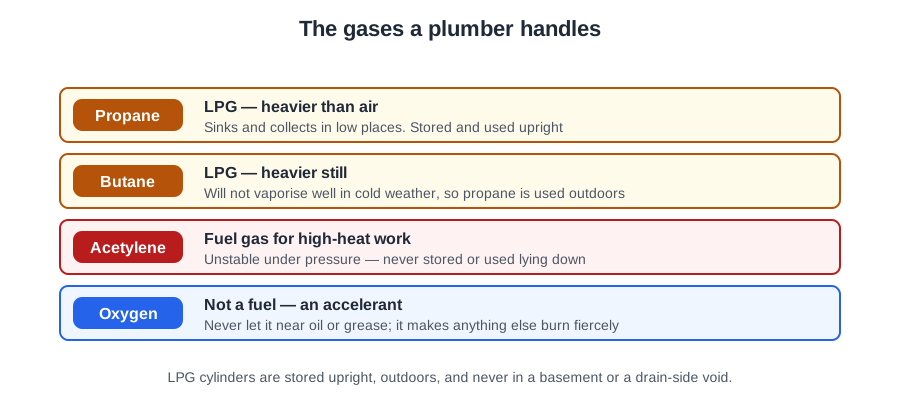
The exam range names four: propane, butane, oxy-acetylene and nitrogen. In practice you will also meet MAPP. Every cylinder is colour coded, and the thread direction tells you whether what is inside will burn.
- Propane — red. Left-hand thread. The plumber's everyday gas, for soldering copper tube and fittings.
- Butane — blue. Left-hand thread. The other bottled LPG, used indoors and for portable appliances rather than on site.
- MAPP — yellow. Left-hand thread. Also for soldering, but a much hotter flame than propane. Distinctive garlic smell, usually sold in small cylinders.
- Acetylene — maroon. Left-hand thread. Used with oxygen for welding and brazing. Plumbers mostly meet it lead welding.
- Oxygen — black with white shoulders. Right-hand thread. Not a fuel. It hardens the flame and raises the temperature.
- Nitrogen — grey with black shoulders. Right-hand thread. Inert, used for pressure testing systems.
Why the threads differ, and why it matters. Fuel gases have left-hand threads; oxygen has a right-hand thread. That is not a manufacturing quirk, it is a safety device. It makes it physically impossible to put a fuel fitting on an oxygen cylinder, no matter how tired or rushed you are. The design removes the mistake rather than relying on you remembering it.
It follows that if the regulator thread does not fit the bottle, it is the wrong regulator. Do not reach for an adaptor. That is the single rule most likely to save your eyebrows.
LPG — propane and butane
LPG is the family name for a group of carbon-based flammable gases found in coal and oil deposits. The family includes methane, ethane, butane and propane, but only butane and propane are sold as bottled LPG.
- It is a colourless liquid that evaporates into gas in open air. One litre of liquid propane makes 250 litres of gas.
- It has no natural smell. A distinctive odour is added so a leak can be detected.
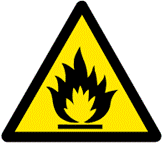
- It burns or explodes when mixed with air in the right ratio and met with a source of ignition. Even a small quantity makes an explosive mixture.
- It is heavier than air. A leak sinks, flows a long way along the ground, and collects in drains, gullies, cellars and trenches.
The main risks are fire and explosion, carbon monoxide poisoning, asphyxiation, and extreme cold burns from the liquid itself.
Propane or butane? Propane boils at −42°C; butane boils at only −4°C. A bottle only gives off gas if the liquid inside can boil, so on a cold winter morning a butane bottle can stop producing gas altogether while propane carries on working. That is why propane is the site gas and butane tends to be used indoors or for portable appliances.
The trench question. A favourite in the exam: why is extra care needed with LPG in an excavation? Because LPG is heavier than air and sinks, so it concentrates in the trench rather than dispersing. It is not that the gas is somehow "stronger" down there, and it has nothing to do with trench stability or pressure — it is simply that the gas goes where you are.
Acetylene and oxygen — a different set of rules
Acetylene is lighter than air and rises, which is the exact opposite of LPG. Students who learn "gas sinks" as a single rule get this wrong. A leak of acetylene gathers at high level — a roof space, or the top of a plant room — not in the trench. It is colourless and odourless, though it smells of garlic when contaminated, and burned without oxygen it gives a sooty flame full of carbon.
Acetylene must never be allowed to exceed 15 PSI. Above that pressure it becomes unstable and can ignite spontaneously or explode with no external source of ignition at all. In normal use you open the regulator very slowly, watching the low-pressure gauge, until the working pressure reads about 0.14 bar (2 PSI) — well under the limit.
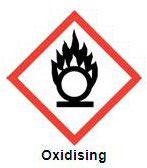
Oxygen does not burn. That surprises people. What it does is act as a powerful oxidising agent: organic materials burn rapidly in its presence. So oxy-acetylene must never be used near jointing compounds or grease, and if you find any oil or grease on a regulator or a cylinder valve, the equipment does not get used. Oxygen does not start the fire — it makes whatever does catch burn far more fiercely than it otherwise would.
Storing and transporting cylinders
Most of this is one idea repeated: keep the fuel away from the oxidiser, keep the pressure down, and keep the bottle upright.
- Keep full cylinders separate from empty ones.
- Store oxygen at least 3 metres from acetylene or LPG, or separate them with a wall.
- Keep all cylinders away from combustible materials, sources of ignition, and any corrosive, toxic or oxidising material.
- Store on a hard surface — not soft ground — in a secure, ventilated, open-air compound, normally a lockable cage so only authorised people can get to it. The store must be clearly signed.
- Acetylene and LPG cylinders stay upright in use, in storage and in transport, even when empty. Upright matters for a specific reason: laid on its side, the cylinder can discharge liquid instead of gas.
- Oxygen may be stacked horizontally, no more than four high, wedged so it cannot roll.
- Fit dust caps to protect the threads in storage and transport.
- Shield cylinders from direct sunlight and heat. Heat raises the internal pressure, which can force a leak past the valve or, in the extreme, burst the cylinder.
- Never lift a cylinder by its control valve, and never subject one to a shock or a fall.
- Move them on a purpose-designed trolley made to BS 2718. A three-wheeled trolley is more stable than a two-wheeled one.
The van question. Under the Packaged Goods Regulation, LPG cylinders carried in an enclosed van mean two powder fire extinguishers must be carried. Not one. The cylinders travel upright, dust caps on, in a van that is ventilated if at all possible.
The bottle assembly, part by part
You are expected to name the components and say what each one is for.
- Gas bottle — holds the gas.
- Pressure regulator — gives a regular, even flow of gas to the hose and torch. Screwed into the bottle valve. Check it every single time. Remember the fuel-gas regulator tightens anticlockwise, because it is a left-hand thread.
- Flashback arrester — stops a flame flashing back into the bottle, and protects the regulator. Also called a flame trap.
- Hoses — carry the gas from the regulator to the torch. On an oxy-acetylene set they are colour coded: red for acetylene, blue for oxygen.
- Blowtorch or nozzle — where the gas leaves and the flame is lit.
On modern single-bottle torches several of these are built into one unit, but the checks are the same.
Checking heat producing equipment before use
The assessment criterion asks you to describe a visual inspection for general condition. In plain terms: does anything look damaged, and is anything leaking?
- Flashback arresters and non-return valves fitted in BOTH the oxygen and the acetylene lines, and in good condition. One in the fuel line alone is a common and dangerous misunderstanding — a flame can travel back along either line.
- Hoses the correct colours, free from cuts, splits and wear, as short as practicable, and not taped together.
- Regulators the correct type for the gas, with an undamaged adjusting screw.
- A bottle key in each bottle, so it can be shut off fast in an emergency.
- Bottles chained securely to a sound trolley, with no damage to the bottles or valve assemblies.
- No oil or grease anywhere near the oxygen side.
Then, with the gas on, test every joint with leak detection fluid — it bubbles where gas is escaping. Never a naked flame. Never the smell of gas alone. On an oxy-acetylene set the answer to "what gets checked for leaks?" is both cylinders, both gauges and all hose connections — not just the acetylene side, and not just the torch end.
Check the whole set at least annually, and take regulators out of service after five years.
Flashback — what it is and why it happens
A flashback is the flame burning back inside the torch body, and you hear it before you understand it: a high-pitched whistling sound. It happens when the flame speed exceeds the gas flow rate, so the flame travels back through the mixing chamber into the hoses.
The usual causes are gas pressures set too low (giving too low a gas velocity), a hose leak, or a loose connection. Which is why the arresters matter, and why the pre-use checks are not a formality.
Shutting down and hot work
Order matters when you shut an oxy-acetylene set down: close the acetylene blowpipe valve first, then the oxygen. Then close both cylinder valves, back off each regulator handle anticlockwise until loose, and bleed the pressure out of each line in turn.
Before you light anything at all you must be trained in the safe use of the equipment, the precautions, the correct type of fire extinguisher, and the means of escape, raising the alarm and calling the fire brigade. Many companies operate a written hot work permit — it records what work is being done, how, when, and what precautions apply.
Practical fire precautions for soldering, straight from the trade:
- Always carry a dry powder or CO2 extinguisher when soldering or welding.
- Use heat-proof mats next to wall coverings and skirting boards.
- Move furniture and carpets away from the area.
- Never point the torch at combustible material.
- Under a suspended floor, check what is beneath before you solder — and do not replace the boards until you are certain nothing is smouldering.
- Lead welding on a flat roof: damp off the substrate first.
Common exam traps
- "All gases sink." LPG sinks. Acetylene rises. The two behave in opposite directions and the exam asks about both.
- "Oxygen is flammable." It is not. It is an oxidiser. The danger is what it does to everything else.
- Flashback arresters in the fuel line only. They go in both lines.
- "An empty cylinder can lie down." No. Acetylene and LPG stay upright even when empty, because there is always residual gas.
- One extinguisher in the van. An enclosed van carrying LPG needs two.
- Testing for leaks with a flame. Leak detection fluid, every time.
- Using an adaptor to make a regulator fit. If the thread does not fit, it is the wrong regulator.
Quick revision summary
- Colours: propane red, butane blue, MAPP yellow, acetylene maroon, oxygen black with white shoulders, nitrogen grey with black shoulders.
- Fuel gases = left-hand thread. Oxygen = right-hand thread.
- Only butane and propane are bottled LPG. Propane boils at −42°C, butane at −4°C, so propane is the site gas.
- 1 litre of liquid propane = 250 litres of gas. LPG is heavier than air; acetylene is lighter.
- Oxygen stored 3 m from fuel gases or behind a wall. Acetylene and LPG upright always.
- Acetylene never above 15 PSI. Working pressure about 0.14 bar (2 PSI).
- Flashback arresters in both lines. Hoses red acetylene, blue oxygen.
- Leaks: leak detection fluid. Shut down: acetylene first, then oxygen.
- Enclosed van with LPG: two powder extinguishers. Trolley to BS 2718.
📝 10-Question Mock Test
Click an option to see whether you got it right. Explanations appear instantly — no submitting at the end.
Acetylene is maroon. Propane is red, oxygen is black with white shoulders, and nitrogen is grey with black shoulders. Colour coding lets you identify the contents at a glance, which matters most when cylinders are stored together.
Fuel gases have left-hand threads and oxygen has a right-hand thread. It is a physical safeguard that makes the wrong connection impossible rather than merely discouraged. It also means that if a regulator will not fit, it is the wrong regulator — never force it with an adaptor.
LPG is heavier than air, so a leak sinks and collects at the lowest point rather than dispersing. It can flow a long way along the ground and gather in drains, gullies, cellars and trenches — exactly the enclosed low places a plumber ends up working in.
Acetylene is lighter than air and rises — the opposite of LPG. This catches people out because they learn "gas sinks" as a single rule. It matters when you are working out where a leak will gather: high level for acetylene, low level for LPG.
Oxygen is an oxidiser: organic materials burn rapidly in its presence. That is why oxy-acetylene must never be used near grease or jointing compound, and why oil found on a regulator or cylinder valve means the equipment must not be used. The 15 PSI limit belongs to acetylene, not oxygen.
Three metres, or a wall between them. The reason follows from what oxygen does: if a fuel gas leak meets a leaking oxygen cylinder, an ordinary fire becomes an intense one. Keeping the oxidiser away from the fuel is the whole purpose of the separation.
Laid on its side, the cylinder can discharge liquid rather than gas. And "empty" is never truly empty — there is always residual gas, so the rule applies in use, in storage and in transport regardless. Oxygen is the exception that may be stacked horizontally, no more than four high and wedged against rolling.
Two, not one — the "one extinguisher" option is the distractor that catches most people. The cylinders also travel upright with dust caps fitted, and a ventilated van is preferable to an enclosed one wherever possible.
Both lines. Fitting one to the fuel gas alone is a common misunderstanding — a flashback can travel back along either line and reach the regulators. Non-return valves stop one gas flowing into the other's line, but they are used in addition to arresters, never instead of them.
Leak detection fluid bubbles wherever gas is escaping. A flame is obviously catastrophic, a dry cloth tells you nothing, and smell is unreliable — the odour in LPG is added artificially and acetylene is odourless unless contaminated. On an oxy-acetylene set you test both cylinders, both gauges and all hose connections.
How PlumbMate puts this into practice
Gas safety is almost entirely specific figures and fixed sequences — colours, threads, distances, pressures, the order you shut a set down. Exactly the material spaced repetition is built for.
- Flashcards, not essays. One prompt, one answer — the format that research has consistently shown works best for active recall.
- Wrong answers are logged. Every question you get wrong goes into a dedicated collection that resurfaces more frequently in future sessions.
- The 3× rule. You need to get a question right three times before it clears — one lucky guess isn't enough.
- Explanations on every question. Like the ones above, but on every single question in the app.