Working at height is still the single biggest cause of workplace deaths in the UK. Ladders that slip, scaffolds that collapse, roofs that give way under workers who didn't realise they were fragile. It is also one of the most heavily examined topics at Level 2, because almost all of it comes down to specific figures and specific procedures — ladder classes, angles, handrail heights, inspection intervals — which makes it easy to test and easy to lose marks on.
This post is the fifth in the Level 2 Health and Safety sub-cluster. For the others, see the legislation, risk assessment and accidents, PPE and signs, hazardous substances, and fire safety posts.
The Work at Height Regulations 2005
Work at height means work in any place where, if there were no precautions in place, a person could fall a distance liable to cause personal injury. Three specific examples from the course material:
- Working on a scaffold or a ladder
- Working on a flat roof
- Working at or below ground level if you could fall into an opening in a floor or a hole in the ground
That last point surprises students. "Height" doesn't mean "above ground" — it means any situation where a fall could cause injury. Falling into an open manhole while working at ground level is working at height under the regulations.
Key rule from the regulations: the answer to "at what height are you considered to be working at heights?" is any distance above or below ground level where a fall could cause injury. Not 3 metres, not 5 metres — any distance.
Employer duties under the Work at Height Regulations 2005
The employer's specific obligations:
- Consider other options to working at height where possible — do the work from the ground if you can
- Ensure workers can get safely to and from where they work at height
- Provide suitable, stable, strong equipment for the specific job
- Maintain and check equipment regularly — every 7 days by a competent person
- Ensure workers are trained in the equipment's use
Worker duty: every time you use a piece of access equipment you should check it before use. Not just the weekly formal inspection — every single time. Damaged ladders, loose scaffold boards, failed podium wheels can all develop between inspections.
Ladders — the three classes
Ladders are classified by the maximum weight they can carry:
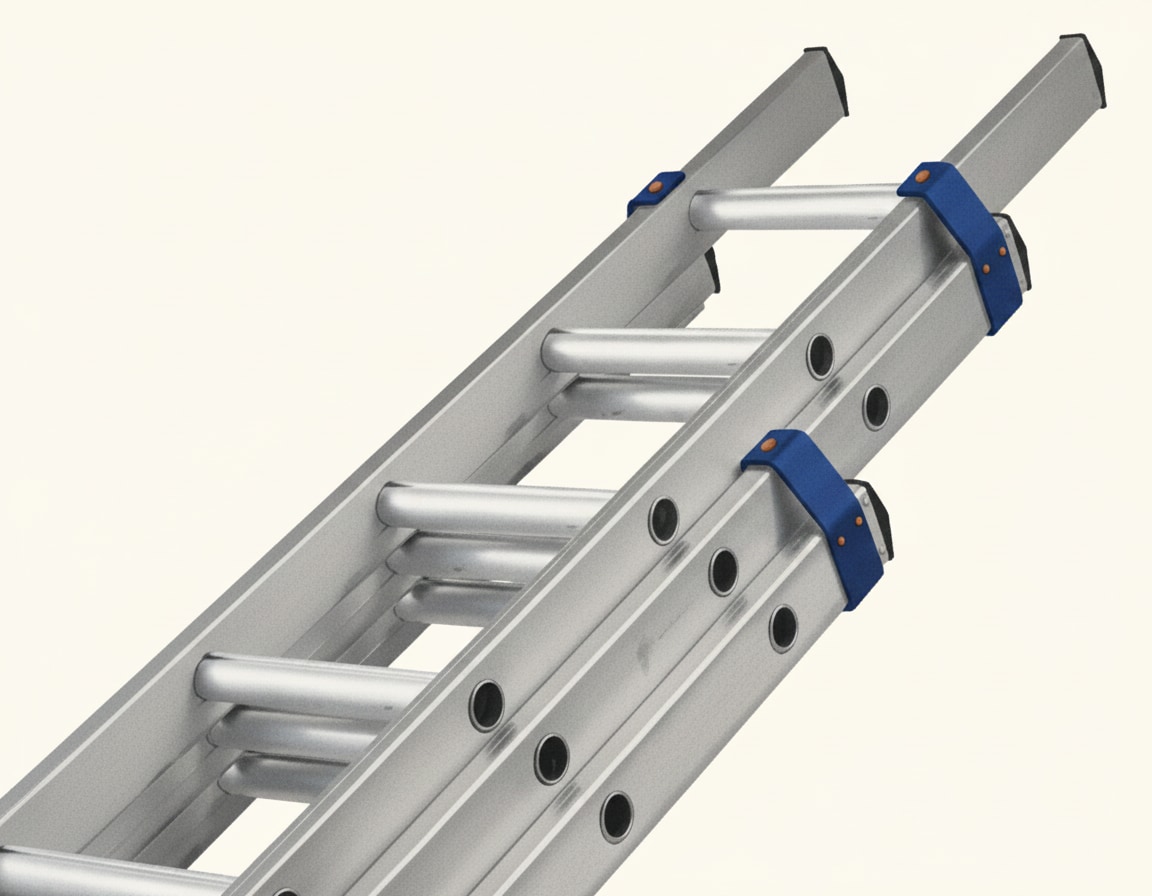
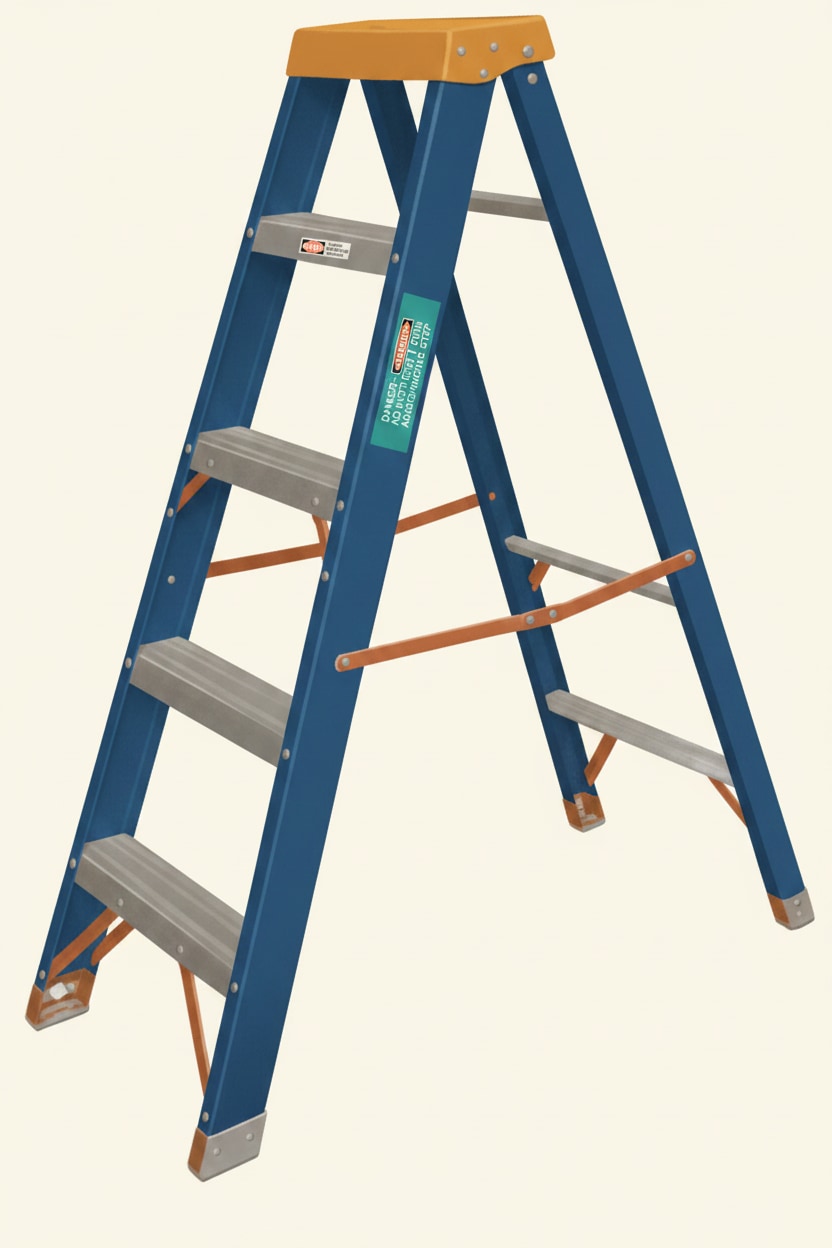
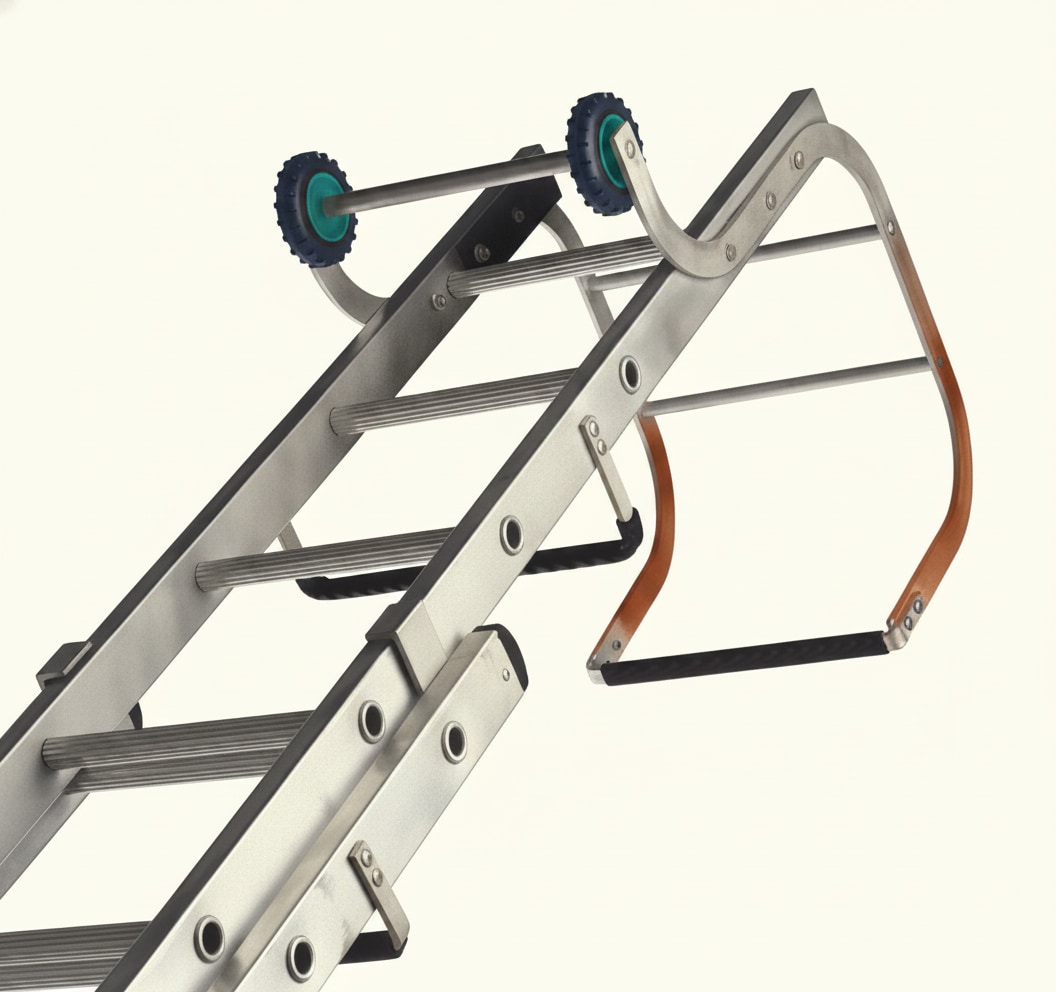
The current standard is BS EN 131, which replaced the old British Standards for ladders. It splits ladders into two grades rather than three classes:
- EN 131 Professional — for trade and site use
- EN 131 Non-professional — for domestic use
You still need the old class system, though, because it is what most training material and exam questions use, and because plenty of ladders in circulation are still marked with it:
- Class 1 — 175kg maximum (industrial use)
- Class 2 — 150kg maximum (trade/commercial use)
- Class 3 — 125kg maximum (domestic/household use)
Only Class 1 ladders should be used on a construction site. The reason: construction work involves heavy materials, tools, and sometimes multiple workers on the same ladder in close sequence. Class 2 and Class 3 aren't rated for the loads that construction work generates.
Memory aid: Class 1 for construction, Class 3 for domestic. You'd use a Class 3 at home to change a lightbulb; Class 1 on a building site.
Setting up a ladder — the checks
Before climbing any ladder, a specific sequence of checks:
1. Ground conditions. Is the ground soft or uneven?
- Soft ground: ladder could sink under load
- Uneven ground: ladder could topple
- Fix: level the ground, use a stable base, or move to solid ground
2. Surrounding hazards. Are there overhead cables, obstructions, or other hazards near where you're setting up?
3. Damage check. Any cracks, splits, loose rungs, worn feet? Don't use a damaged ladder — report it to your supervisor. If a rung is damaged, the ladder is out of service until repaired or replaced.
4. Painted wooden ladders — avoid. Paint can hide defects like cracks or rot. Never paint a ladder.
5. Secure the ladder — tie at the top; secure or foot at the bottom.
6. Correct angle — 1:4 ratio, or 75°. For every 4 metres of ladder height, the base sits 1 metre from the wall.
7. Extension above access point. The ladder should project at least 1 metre past the point you wish to access — this gives you something to hold as you step off.
The 1:4 ratio — worked examples
The 1:4 (or 75°) rule gives the safest angle that combines enough grip at the foot with enough reach at the top.
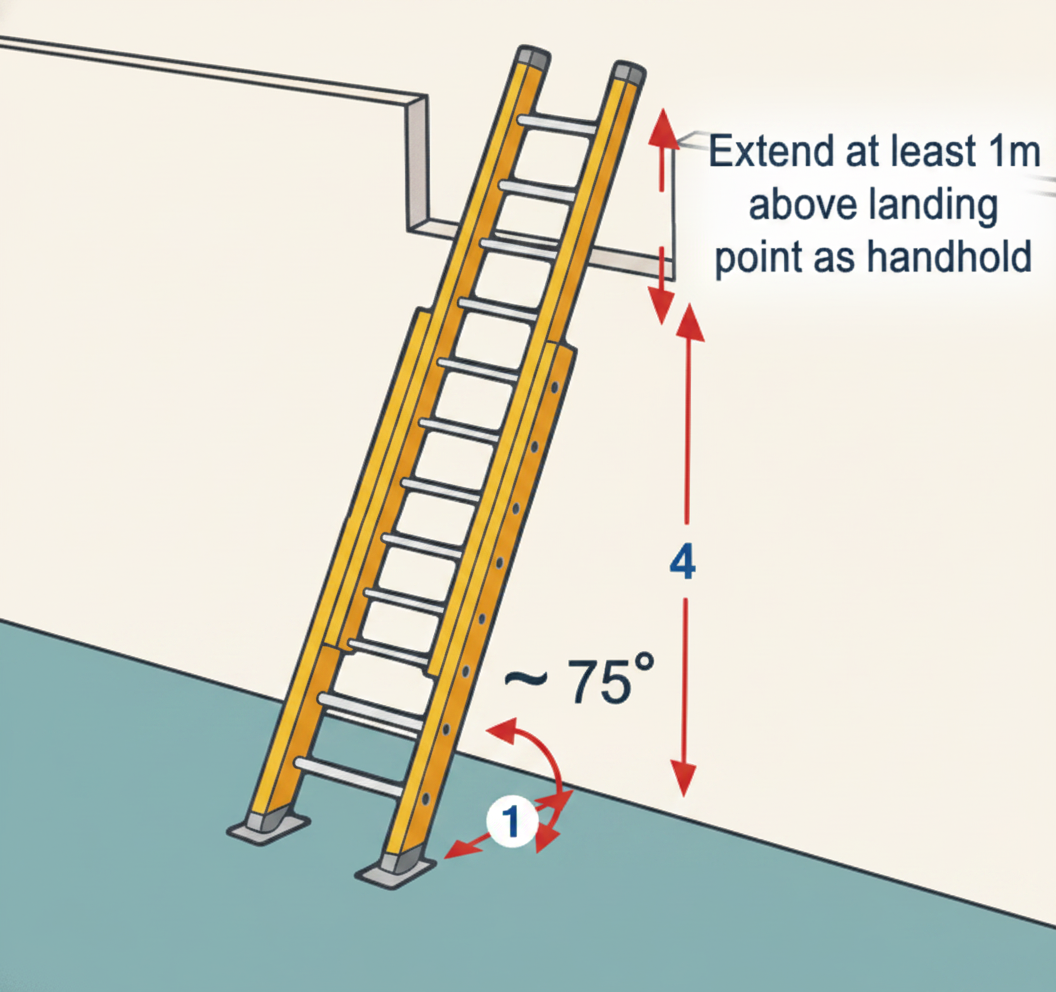
Worked examples:
- Ladder reaches 4 metres in height → base 1 metre from the wall
- Ladder reaches 5 metres in height → base 1.25 metres from the wall
- Ladder reaches 3 metres in height → base 0.75 metres from the wall
- Ladder reaches 6 metres → base 1.5 metres from the wall
Any steeper (e.g., base closer than 1:4) and the ladder could tip backward. Any shallower and the feet could slip out from under the base.
Using a ladder safely
Once the ladder is set up correctly:
- Maintain three points of contact at all times — two hands and one foot, or two feet and one hand. If you slip, you can catch yourself more easily.
- Don't overreach. If you can't reach comfortably, move the ladder. Overreaching is a major cause of ladder falls.
- Don't work from a ladder for more than 30 minutes. Ladders are access equipment first, work platforms second. For longer tasks, use a proper platform.
- Only one person on a ladder at a time. Never two people, regardless of how heavy the materials are or how short the task is.
Checking a ladder before use is done by: the person about to use it. Not the supervisor, not the safety rep, not the site manager. The user checks the ladder.
If you discover a broken ladder: report it. Don't attempt to fix it yourself. Don't continue using it "but stay clear of the broken part." Don't leave it for later. Don't simply tell other workers.
Preventing ladders from slipping
The best way to make a ladder secure: tie the top of the ladder to the structure you're accessing. Not holding the bottom, not wedging with wood, not having someone's foot on the bottom rung.
Having someone stand with their foot on the bottom rung provides only partial support and only while they're actually there — it's a last resort for short tasks where the ladder can't be tied. It's not equivalent to proper fixing.
Types of access equipment
Extension ladder. Extendable ladder — used to access work areas (roofs, scaffolds) or for short periods of work.
Pole ladder. Access ladder with two "poles" on each side, rungs fitted between. Used for access or short work.
Step ladder. Folds into a set of steps. Key rules:
- Face the ladder towards the work (the ladder is most stable in this orientation)
- Don't climb too high — your belt line should not go above the top step
- Don't use for loft access — use an extension or pole ladder
Ceiling ladder. Fixed or fold-down ladder for loft access. If not fitted, use an extension or pole ladder — never a step ladder for loft work.
Telescopic ladder. Each section slides inside the one below, so it collapses to roughly the length of a single section — useful when you are working out of a van and space is tight. Two things to watch. Check that every section has locked out fully before you put weight on it, because a partly engaged catch is the usual way these fail. And keep the mechanism clean, since grit in the sections stops them locking properly. Beyond that it is still a ladder: the same 1:4 ratio, secured footing and duty rating all apply.
Roof ladder. Has rollers on one side so it can be rolled up the roof, and a large hook on the other to flip over the ridge. Ideally accessed from a scaffold, but if reached via another ladder, that ladder must extend at least 1 metre above the roof and be firmly secured first.
Podium (also known as a hop-up). Access equipment for jobs just out of reach of floor level. Low platforms, typically with guardrails.
Mobile tower scaffold. Taller than a podium. Has toe boards fitted to prevent tools and materials being kicked off the edge.
For podiums and mobile tower scaffolds with wheels:
- Lock the wheels before climbing or using
- Never move a podium or mobile scaffold with people or tools on it
Podium safety:
- Wheels locked before use
- Podiums can topple if you over-reach sideways — don't lean outside the footprint
- Podiums are work equipment and must be inspected every 7 days
- Podiums are NOT "safe and can't topple over" — they absolutely can
Scaffold types
Independent scaffold. Can stand on its own because it has at least four supporting legs. Suitable for most construction work.
Putlog scaffold. One side is supported by the building wall itself; cannot stand without the wall's support. Used in specific construction circumstances.
Mechanical access alternatives:
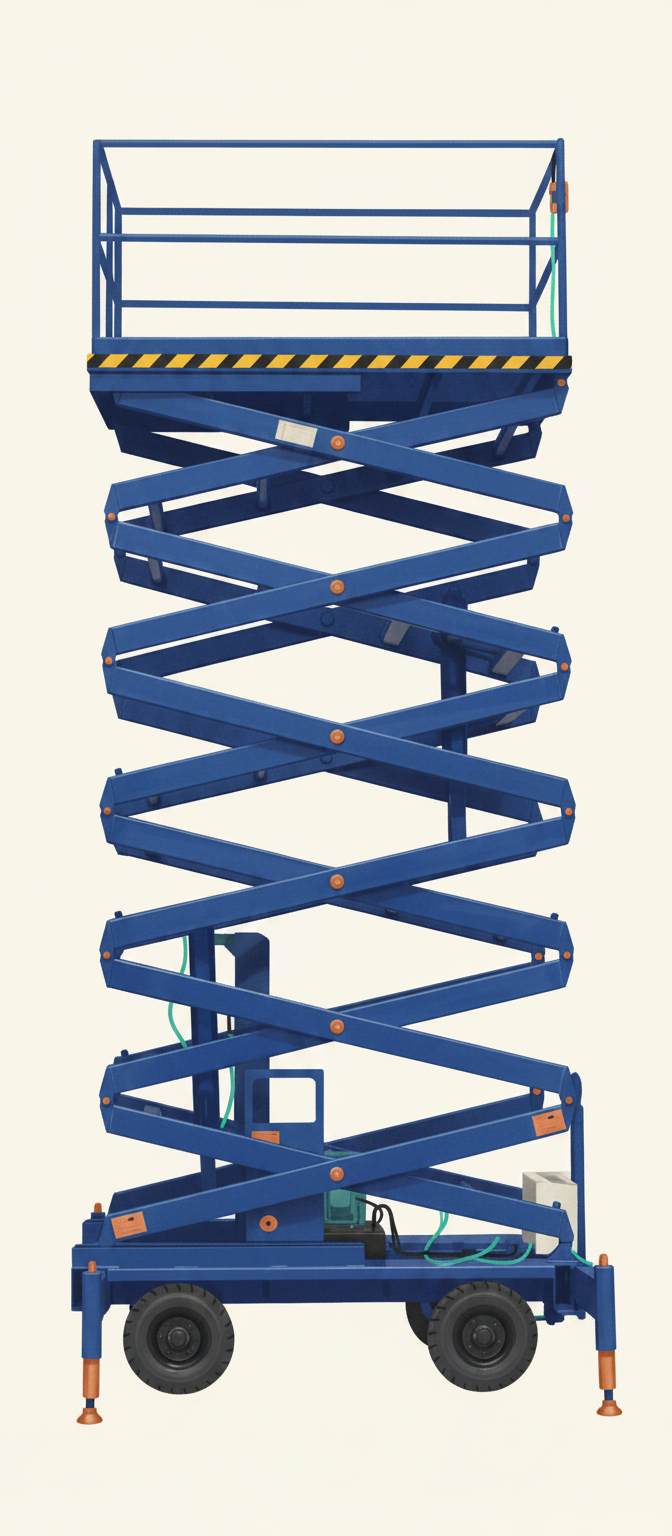
- Scissor lift — vertical-only access platform
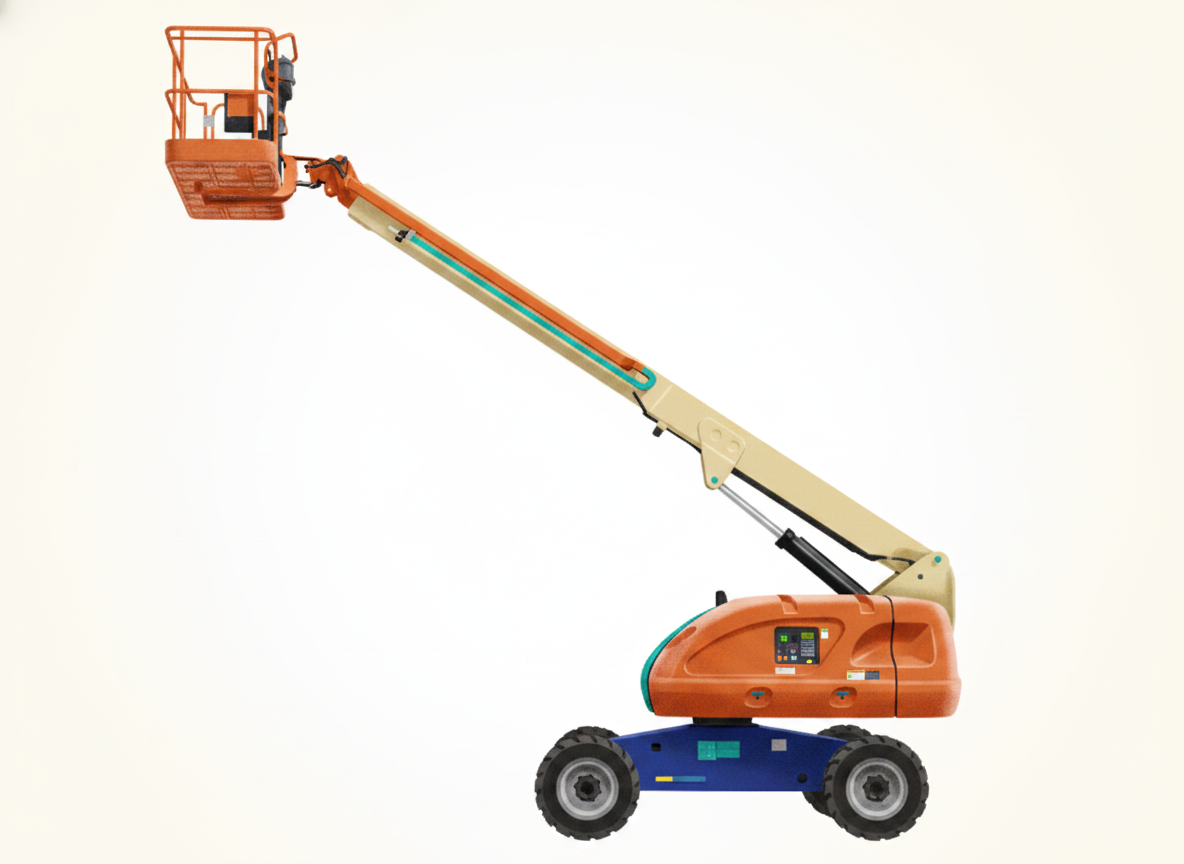
- Cherry picker — boom-mounted platform that can extend out horizontally as well as up
Scaffold handrails:
- Minimum handrail height: 950mm
Flat roofs and edge protection
On flat roofs, edge protection (barriers, guardrails) is normally required. Falls from flat roofs account for a significant number of construction deaths because workers feel secure on a level surface and forget about the edges.
In which of the following would edge protection normally be used? On a flat roof — not inside a loft space, not below ground level, not under a suspended floor (those all have their own hazard types but edge protection isn't the main control).
Fragile roofs
Some roofs are fragile — old asbestos cement sheeting, polycarbonate sheeting, glass skylights, rotten timber. Fragile roofs can't take the weight of a person walking on them.
Crossing a fragile roof requires crawling boards — wide boards that spread your weight across multiple structural members. Running across quickly (A) or walking slowly (B) both risk going through the roof; knowing where signs are (D) isn't enough.
To avoid people falling through fragile roof panels:
- Try to cover the panels with a material that can take the weight (crawling boards, plywood spread across joists)
- Warning signs alone aren't enough
Stacking materials on a scaffold
To stop stacked materials falling off the edge of a scaffold: fit brick guards — mesh panels that go around the working area to prevent materials rolling or being kicked off.
Warning signs on a stack (B), stacking on a slope away from the edge (C), or covering with netting (D) are less reliable. Brick guards are the physical barrier that catches materials before they can fall.
Working over water
If there's a risk of falling into water, two PPE items are needed:
- Harness and lanyard — to prevent the fall
- Life jacket — in case the fall happens anyway
Wellington boots, waterproof jackets, and waterproof trousers might be worn for comfort but don't address the drowning risk.
Uneven ground and mobile scaffolds
Which of these would you NOT put a mobile tower scaffold on? An uneven surface — like a playground with asphalt hollows, or a gravelled area with soft patches. A mobile tower needs a flat, stable base. An abandoned parking lot, concrete walkway, or asphalt road is all right if they're level and solid.
Excavations and confined spaces
Both are covered in their own guide, because both carry a separate set of regulations — CDM 2015 for excavations, the Confined Spaces Regulations 1997 for the rest. Note that they belong to this topic at all for one reason: the Work at Height Regulations define working at height as any distance above or below ground level, so a trench is work at height.
→ Excavations and Confined Spaces: A Level 2 Plumbing Guide — trench support and the 1.2m rule, edge protection, the inspection duty, avoiding underground services, the specified risks, permits, and why you never enter to rescue someone.
Common exam traps
Trap 1: "At height" = any distance where a fall could injure. Including below ground level. Not a specific height limit.
Trap 2: Only Class 1 ladders on construction sites. Class 1 = 175kg. Class 3 (125kg) is for domestic use only.
Trap 3: 1:4 ratio / 75° angle. Base 1m out for every 4m up. Memorise the worked examples.
Trap 4: Ladder extends 1m above access point. Minimum — for safe step-off.
Trap 5: 3 points of contact, 30-minute max working time.
Trap 6: Ladder checked by the person about to use it. Not the supervisor, not the site manager.
Trap 7: Best way to secure a ladder = tie at the top. Not holding bottom, not wedging.
Trap 8: Don't paint ladders — paint hides defects.
Trap 9: Step ladders face the work; belt line not above top step.
Trap 10: Scaffold handrail 950mm minimum.
Trap 11: Edge protection on flat roofs.
Trap 12: Brick guards stop materials falling from scaffold.
Trap 13: Mobile tower scaffold needs level surface and locked wheels. Never moved with people/tools on.
Quick revision summary
Before the mock test, six things you need to be able to produce from memory:
- "Working at height" = any distance above or below ground where a fall could injure
- Ladder classes: 1 = 175kg (site use); 2 = 150kg; 3 = 125kg (domestic)
- Ladder setup: check damage → 1:4 / 75° angle → tie at top → 1m above access → 3 points of contact → 30-min max
- Check ladders before every use (personal check); formal inspection every 7 days
- Scaffold types: independent (stands alone), putlog (uses building wall); handrail min 950mm
- Podium/mobile tower: lock wheels, toe boards on towers, never move with people/tools on
📝 8-Question Mock Test
Click an option to see whether you got it right. Explanations appear instantly — no submitting at the end.
The regulations define working at height by the risk of injury from a fall, not a specific metric height. An open manhole at ground level is working at height under the regulations because you could fall in and be seriously injured.
Only Class 1 is suitable for construction work because of the loads involved. Class 2 and 3 are for domestic/trade use with lighter loads. "Any class" (D) is wrong — using the wrong class can lead to ladder collapse under load.
5 metres height × 1/4 = 1.25m base distance. The 1:4 ratio gives the 75° angle. Option C (1m) is the answer for a 4m ladder.
Three points of contact (two hands and a foot, or two feet and a hand) keeps you stable and means you can catch yourself if you slip. Four points (A) is impossible while climbing; one or two (B, D) don't give enough security.
The best way to secure a ladder — a fixed point at the top prevents the ladder sliding or toppling. Option B (foot on bottom rung) is partial support only; options C and D are less reliable than top fixing.
The user checks their own equipment before each use. This is in addition to the formal weekly inspection by a competent person. The supervisor, safety rep, and site manager have other responsibilities.
The Work at Height Regulations 2005 specify 950mm as the minimum handrail height. Lower figures don't give enough fall prevention; higher isn't wrong but isn't required.
Physical barriers around the edge of the platform stop materials rolling or being kicked off. Warning signs (B) rely on everyone noticing and not accidentally bumping the stack; leaning away (C) gives some help but won't stop anything actually falling; netting (D) can work for light items but isn't the primary solution.
How PlumbMate puts this into practice
Working at height content is heavy on specific figures, specific procedures, and equipment classifications. Ideal spaced-repetition material.
- Flashcards, not essays. One prompt, one answer — the format that research has consistently shown works best for active recall.
- Wrong answers are logged. Every question you get wrong goes into a dedicated collection that resurfaces more frequently in future sessions.
- The 3× rule. You need to get a question right three times before it clears — one lucky guess isn't enough.
- Explanations on every question. Like the ones above, but on every single question in the app.