A mixer tap that lets hot and cold meet inside it can push one supply into the other. That is why British mixers are built the way they are.
The types of tap
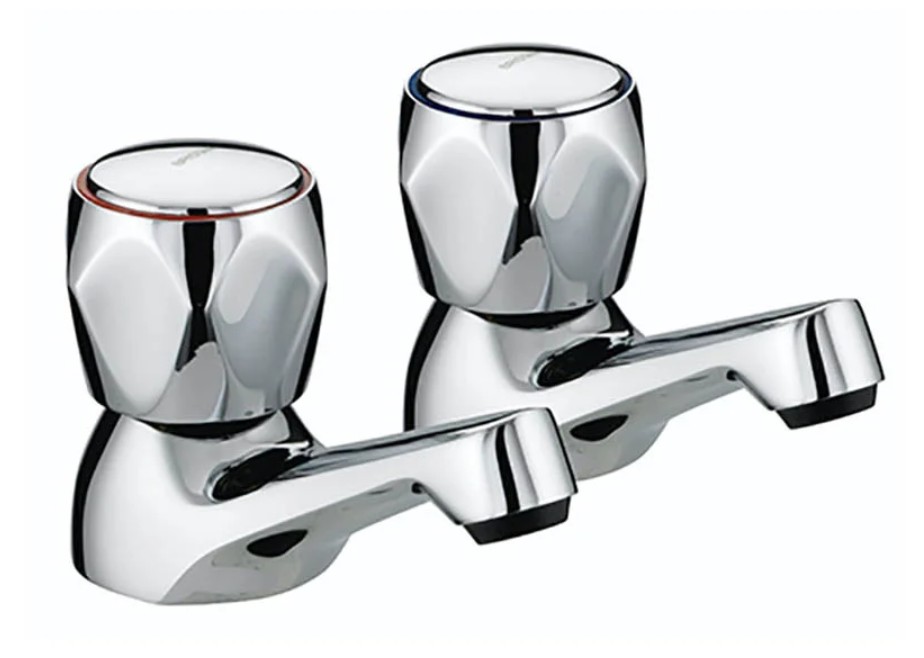
Pillar taps
Rise vertically through a hole in the appliance. The standard tap on a basin or a bath.
The tail sizes are worth learning as a pair, because they follow the pipe sizes from Unit 109:
- Basins and bidets — 15 mm diameter tails.
- Baths — 22 mm diameter tails.
Bigger tails on a bath for the same reason as bigger pipe: a bath needs to fill in a sensible time.
High necked pillar taps
Kitchen sinks. A taller spout, so a bucket fits underneath.
That is the actual reason, and it is the answer a question wants. It is not styling.
Bi-flow mixer taps
Baths, basins and kitchen sinks. Hot and cold arrive at one spout but stay in separate channels until they leave it, so the two supplies cannot mix inside the tap.
See below for why that matters — it is the most important idea in this lesson.
Bib taps
Cleaners’ sinks and Belfast sinks. They come out of the wall rather than up through the appliance.
An outside tap is a bib tap too, which is the easiest way to picture one.
How a tap shuts off
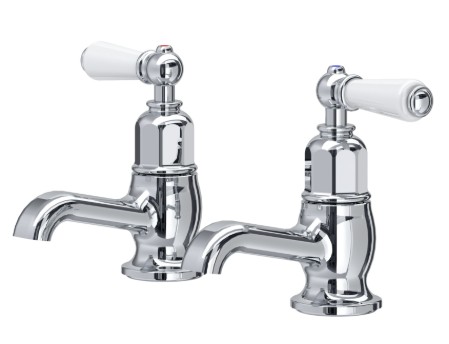
The traditional tap
A rubber washer pressed onto a seating by a threaded spindle. Turning the handle winds the spindle down until the washer closes on the seat.
- Several turns to open.
- When the washer wears, it drips.
That is the entire cause of a dripping tap, and it is why re-washering is the repair.
The ceramic disc tap
Two ceramic discs with holes in them. Turning one lines the holes up and the water flows; turning it back moves them out of line and it stops.
- A quarter turn goes from off to full on.
- There is no washer to wear.
Ceramic discs are extremely hard and seal against each other directly. The failure mode is different: grit gets between the discs and scores them, and then the whole cartridge is replaced rather than a washer.
One side effect worth knowing: a quarter turn tap closes very quickly, which makes water hammer more likely. See the lesson on noise faults.
Open one yourself
Reading how a tap shuts off is one thing; watching the discs turn past each other is another. This is the real cutaway from the course — drag the handle round and watch the two ceramic discs line up, then close. The labels move with the parts, so you can name each one while it is working.
No account needed. Nothing to install.
That is one of hundreds of interactive tasks across Levels 1, 2 and 3. They record your score when you are signed in. Try it all free for 14 days — no card needed.
Why bi-flow matters
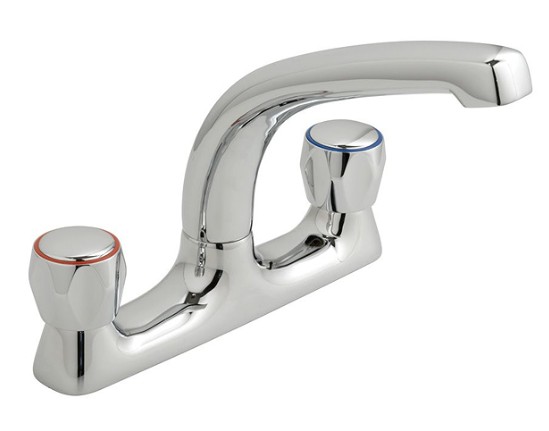
This is the part worth understanding rather than memorising, and it explains something about British plumbing that puzzles people.
In a stored system, the hot and cold are at different pressures — mains cold, and gravity hot from a cistern. That is a common British arrangement and it is unusual internationally.
Now imagine a mixer that let the two meet in a single chamber inside the tap. The higher pressure would win. So:
- Mains cold could be pushed back into the hot pipework, or
- stored water could be pushed back towards the main.
That second one is the serious one. Stored water has sat in a cistern in a loft; it is not fit to drink. Pushing it back towards the main is backflow, and preventing backflow is one of the main purposes of the Water Regulations.
A bi-flow tap keeps the two apart until the last moment — the water only meets in the air below the spout — so neither can reach the other’s pipework.
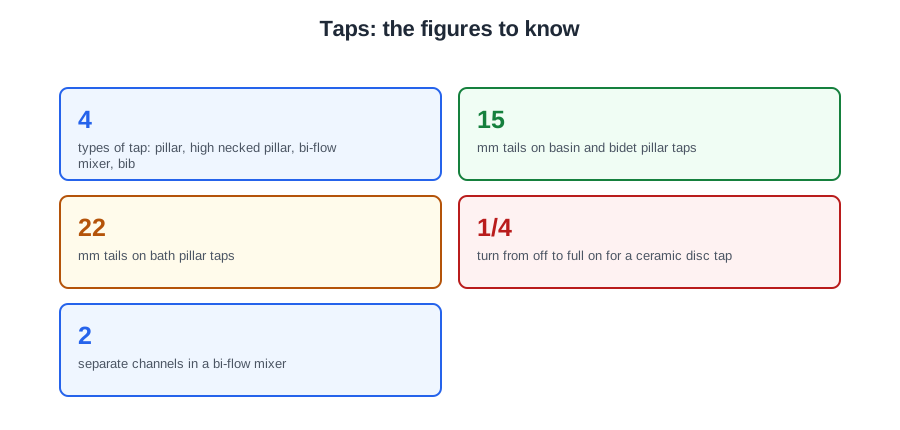
🔢 The numbers worth memorising
- 4
- types of tap: pillar, high necked pillar, bi-flow mixer, bib
- 15
- mm tails on basin and bidet pillar taps
- 22
- mm tails on bath pillar taps
- 1/4
- turn from off to full on for a ceramic disc tap
- 2
- separate channels in a bi-flow mixer
⚠️ Where people go wrong
- Saying a high necked tap is for looks. It is so a bucket fits underneath.
- Trying to re-washer a ceramic disc tap. There is no washer — the cartridge is replaced.
- Not knowing why bi-flow exists. It stops hot and cold at different pressures reaching each other’s pipework.
- Mixing up the tail sizes. Basins and bidets are 15 mm; baths are 22 mm.
- Forgetting that a bib tap comes out of the wall.
📝 8-Question Self-Test
Straight from the Level 1 course question bank. Click an option to see whether you got it right — the explanation appears instantly, and there is nothing to submit.
Bath pillar taps have 22 mm tails. Basins and bidets have 15 mm.
Pillar taps have 15 mm tails on basins and bidets, and 22 mm tails on baths.
Bib taps come out of the wall and are used on cleaners' sinks and Belfast sinks.
Pillar taps for basins and bidets have 15 mm diameter tails; pillar taps for baths have 22 mm diameter tails.
High necked pillar taps for kitchen sinks. Same tap, taller spout, so a kettle or a saucepan will go underneath it.
Bi-flow means the hot and the cold stay in separate channels the whole way and only meet in the air below the spout.
Bib taps for cleaners sinks and Belfast sinks. A bib tap comes out of the wall rather than standing on the appliance.
22 mm on a bath against 15 mm on a basin, for the same reason a bath waste is 40 mm and a basin waste 32 mm: the volume is bigger.
- Start here: Installation, Repair and Maintenance for Level 1 — the whole unit in one piece
- All 72 Level 1 guides — one per lesson, across all ten units
- The Level 1 glossary — 620 terms in plain English