Half the job is knowing which repair you are looking at. Dripping from the spout, weeping at the spindle and stiff to turn are three different faults with three different fixes.
Before anything: isolate
Every repair on this list starts the same way, and the third step is the one people learn the hard way.
- Turn off the supply — a service valve if there is one, otherwise the internal stop valve.
- Open the tap to drain the pipe and prove the water is off. Proving it is the point: a valve that looks shut is not evidence.
- Put the plug in and cover the basin, so nothing small disappears down the waste.
A jumper or a gland nut down a waste pipe turns a fifteen-minute repair into a very long afternoon.
Re-washer a pillar tap or stop valve
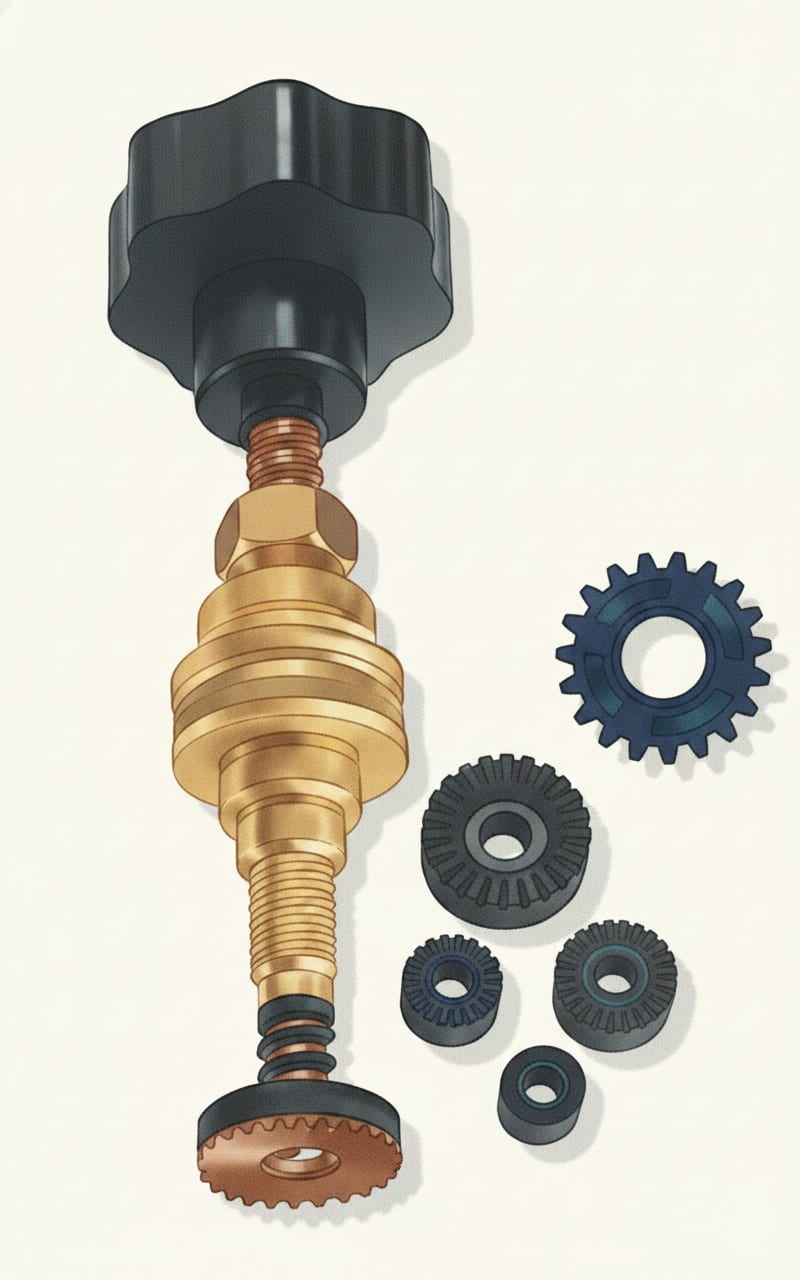
The fault: a dripping tap. The rubber washer that seals against the seating has hardened or worn.
Isolate, remove the head and headgear, lift out the jumper — the small part that carries the washer — undo the small nut, fit a new washer of the right size, and reassemble.
If the tap still drips with a new washer, the seating is scored and needs re-cutting, or a nylon seat fitting. A scored seat is a rough surface, and a new washer cannot seal against it any better than the old one could.
Re-pack the packing gland
The fault: water weeping up the spindle when the tap is open — not from the spout, but around the handle.
The gland is the seal around the spindle where it passes out of the tap body.
Tighten the gland nut a little first; that alone fixes it more often than not. If it does not, undo the nut and re-pack the gland with new packing material, then tighten it just enough to seal without making the tap stiff.
Re-grease the spindle
The fault: a tap that has become stiff to turn.
Strip it down, clean the thread and spindle, and apply silicone grease.
Silicone grease, specifically, and for two reasons: it is safe with drinking water, and it does not attack rubber. Never use oil or ordinary grease on a water fitting — petroleum-based products swell and destroy rubber washers and O rings, and they should not be near drinking water.
Check the rubber O ring on the tap head
The fault: water escaping around the head or the spout of a mixer.
An O ring is a small rubber ring that seals a moving part. Inspect it for flats, splits and hardening, and replace like for like with a smear of silicone grease.
Like for like matters — an O ring that is close but not right will either not seal or will make the part stiff.
Replace a ceramic disc
The fault: a ceramic disc tap that drips, or grits when turned.
A ceramic disc tap has no washer, so it is not re-washered — the whole cartridge is replaced. Dripping or grittiness means grit has got between the discs and scored them.
Note whether it is the hot or the cold side, as they are handed — one opens clockwise and the other anticlockwise. Fit the wrong one and the tap works backwards.
Replace the gate in a gate valve
The fault: a gate valve that turns but does not shut the water off.
It has usually lost its gate — the wedge has come off the spindle inside, so the spindle turns freely and nothing moves.
Drain the system, remove the headgear, and refit or replace the gate. On an old valve it is often quicker and more reliable to replace the whole valve, and that is a perfectly good answer.
Replace the washer in a drain valve
The fault: a drain valve that weeps after use.
A worn washer, and because it sits at the lowest point it drips into the floor unnoticed. That is what makes it worth checking after any job where you have drained down.
Drain below the valve, remove the spindle, fit a new washer.
Repairing float operated valves
Three repairs, and they apply to all the FOV patterns — Portsmouth and all three diaphragm types.
- Re-washer the FOV — the usual fix for a valve that will not shut off, or one that hums. On a Portsmouth it is the washer in the piston; on a diaphragm valve it is the diaphragm.
- Renew the FOV — replace the whole valve where the body or seat is worn, or to upgrade an old Portsmouth to a modern diaphragm type.
- Renew the float — a float that has taken in water sits low, so the valve never fully closes and the cistern overflows. Unscrew the old float and fit a new one.
That last one is a good diagnosis to have in your head: an overflowing cistern with a valve that seems to work is often simply a float full of water.
Afterwards, check the level
The water should sit about 25 mm below the warning pipe.
Adjust it by bending the arm on a Portsmouth valve, or with the adjusting screw on a diaphragm one.
The summary worth memorising
Match the fault to the repair:
- Dripping from the spout → the washer.
- Weeping at the spindle → the gland.
- Stiff to turn → grease.
- Overflowing cistern → the float valve washer, or a waterlogged float.
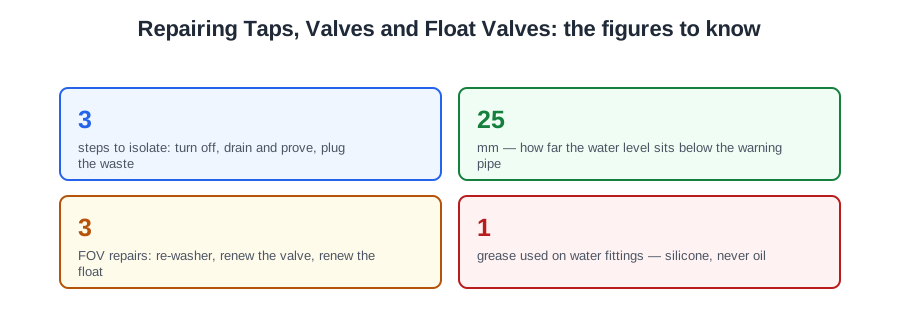
🔢 The numbers worth memorising
- 3
- steps to isolate: turn off, drain and prove, plug the waste
- 25
- mm — how far the water level sits below the warning pipe
- 3
- FOV repairs: re-washer, renew the valve, renew the float
- 1
- grease used on water fittings — silicone, never oil
⚠️ Where people go wrong
- Trying to re-washer a ceramic disc tap. Replace the cartridge instead.
- Using oil or ordinary grease. Only silicone grease is safe with drinking water and kind to rubber.
- Fitting a new washer to a scored seat. It will still drip — the seat needs re-cutting.
- Confusing a drip from the spout with a weep at the spindle. Washer against gland.
- Forgetting a ceramic cartridge is handed. Note whether it is the hot or the cold side.
- Not checking the level after an FOV repair. It sits about 25 mm below the warning pipe.
📝 8-Question Self-Test
Straight from the Level 1 course question bank. Click an option to see whether you got it right — the explanation appears instantly, and there is nothing to submit.
Dripping from the spout is a worn or hardened washer. If it still drips with a new washer, the seating is scored.
The gland is the seal around the spindle. Tighten the gland nut, or re-pack the gland if that does not stop it.
Drips from the spout when closed means the washer. Weeps around the spindle when open means the gland.
Re-pack packing gland to tap or stop valve. PTFE string or gland packing goes under the gland nut.
Silicone, because it does not attack rubber and it is approved for use on drinking water. A stiff tap is not a broken one.
Check rubber O ring on tap head. It is another leak that looks like a gland fault until you take the head off.
Replace ceramic disc. Two ceramic discs slide across each other, and when it drips the cartridge is replaced rather than repaired.
Replace gate in gate valve. Gate valves fail by the gate corroding off the spindle, so the handle turns and nothing moves.
- Start here: Installation, Repair and Maintenance for Level 1 — the whole unit in one piece
- All 72 Level 1 guides — one per lesson, across all ten units
- The Level 1 glossary — 620 terms in plain English