Planned maintenance costs a little, regularly, at a time you choose. Unplanned costs a lot, at the worst possible moment. That is the whole argument.
Planned preventive maintenance
Checking things before they fail.
It is usually found on larger installations — schools, hospitals, commercial buildings, blocks of flats — and it ensures systems, equipment and appliances are checked at regular intervals for optimum performance.
What a planned inspection checks
- Float operated valves
- Appliance taps
- Stop valves
- Gate valves
- Isolation valves
Notice that four of the five are valves. There is a reason.
Why valves in particular
Valves that are never operated seize. The spindle corrodes in place, limescale builds around the moving parts, and the packing hardens.
So part of planned maintenance is simply turning them off and on again so they still work when they are needed.
That sounds almost too simple to be a job, and it is one of the most valuable things on the list. The moment you actually need a stop valve is during an emergency — a burst, a flood, water coming through a ceiling. A stop valve that has not moved in fifteen years will not move then either, and there is no time to fit a new one.
Unplanned maintenance
Work that happens because something has already gone wrong. Usually classed as breakdowns, repairs and emergencies.
- Burst pipes
- Running overflows
- Dripping taps
- Blockages
This is most of the work in domestic plumbing, and it is why the trade is reactive: almost nobody has a maintenance contract on their house.
Why maintenance must be speedy and efficient
Five reasons, and they are assessed, so it is worth being able to give more than one.
1. Cost to the environment in wastage of water
A dripping tap or a running overflow wastes water continuously, day and night. It never stops, and nobody is watching it.
2. Damage to the environment in contamination of water
A fault can let contaminated water back into the supply. That is backflow, and it is a public health matter rather than a nuisance.
3. Cost to owners due to possible damage to property
A leak left running destroys ceilings, floors and electrics. Water damage is expensive out of all proportion to the fault that caused it — a fifty pence washer against a replaced ceiling.
4. Cost to owners due to possible damage to other property
For example in flats and apartments, where a leak on one floor damages the homes below.
This is the one people forget, and it is the one that generates the largest claims. A small leak in a top floor flat can reach four homes.
5. Inconvenience of having no services
Water, electricity or heating.
And it is worth saying plainly: for an elderly or ill person, no heating and no hot water is more than inconvenient. It is a health risk. That is why a heating failure in January is prioritised differently from the same failure in July, and it is a reasonable thing to take into account when you are deciding what to do first.
The argument in one line
Planned costs a little, regularly, at a time you choose. Unplanned costs a lot, at the worst possible moment.
Which is the answer to any question asking why planned preventive maintenance is worth doing.
🔢 The numbers worth memorising
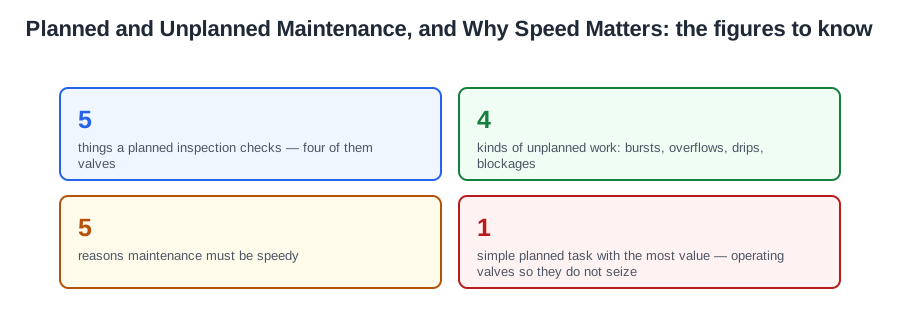
- 5
- things a planned inspection checks — four of them valves
- 4
- kinds of unplanned work: bursts, overflows, drips, blockages
- 5
- reasons maintenance must be speedy
- 1
- simple planned task with the most value — operating valves so they do not seize
⚠️ Where people go wrong
- Treating planned maintenance as an inspection only. Operating the valves is part of it.
- Giving one reason for speed when five are named.
- Forgetting damage to other property. In flats, one leak reaches several homes.
- Calling a dripping tap trivial. It wastes water continuously and it is on the unplanned list.
📝 8-Question Self-Test
Straight from the Level 1 course question bank. Click an option to see whether you got it right — the explanation appears instantly, and there is nothing to submit.
Unplanned maintenance is breakdowns, repairs and emergencies: burst pipes, running overflows, dripping taps and blockages.
Planned preventive maintenance is usually found on larger installations, and ensures systems, equipment and appliances are checked at regular intervals for optimum performance.
A planned inspection checks float operated valves, appliance taps, stop valves, gate valves and isolation valves — and part of it is simply turning them off and on so they still work when needed.
Valves that are never operated seize, and then do not work on the day they are needed.
Getting the system working again as soon as possible is the answer the paper marks correct. Behind it sit the reasons in the Range: water wasted, water contaminated, and damage to the owner’s property and to other people’s.
Unplanned maintenance is usually classed as breakdowns, repairs and emergencies.
Damage to other property — in flats and apartments a leak on one floor damages the homes below — is one of the named reasons maintenance must be speedy.
The five reasons are wasted water, contamination of water, damage to the owner's property, damage to other property, and the inconvenience of having no services.
- Start here: Installation, Repair and Maintenance for Level 1 — the whole unit in one piece
- All 72 Level 1 guides — one per lesson, across all ten units
- The Level 1 glossary — 620 terms in plain English