Stopcock or gate valve is the pair everybody muddles. The answer is not really about the valve — it is about how much pressure is behind it.
The working principle
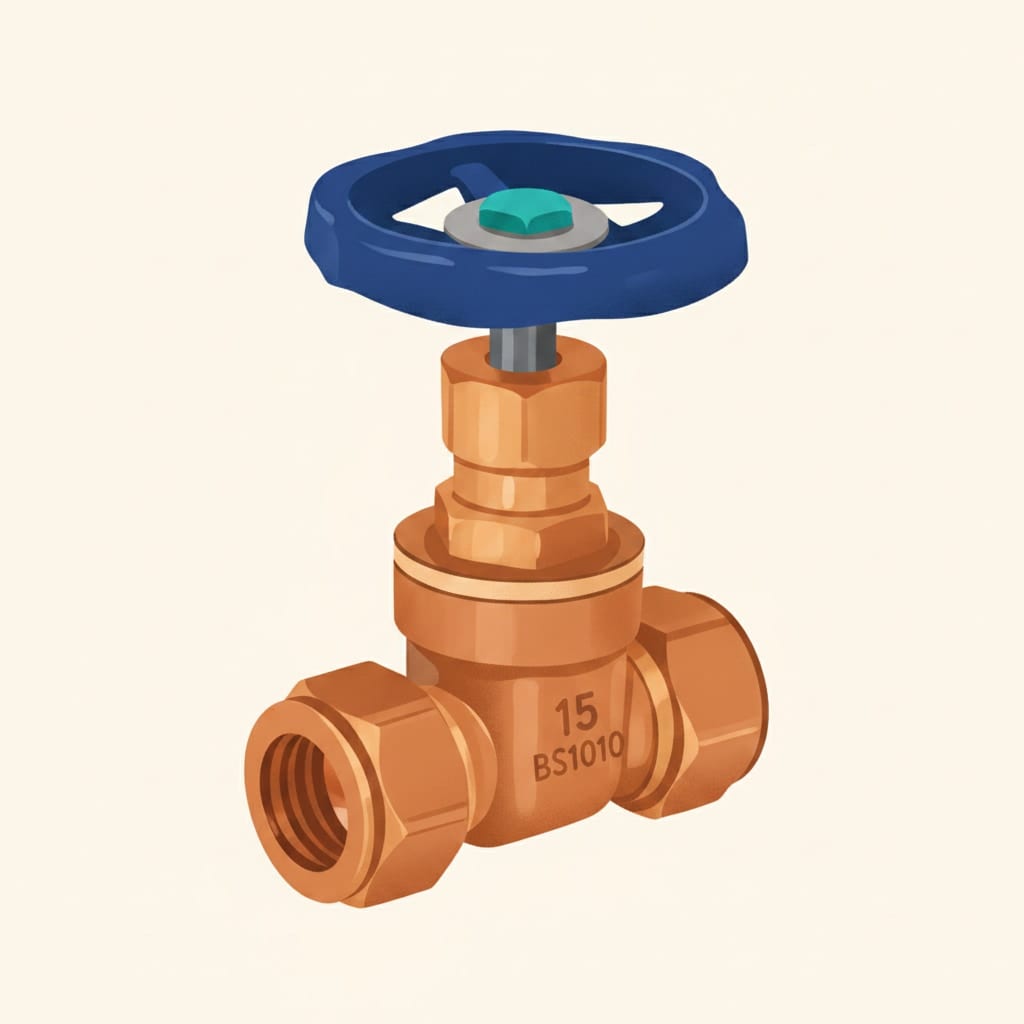
A valve controls the flow of water — stopping it, starting it, or letting it through in one direction only.
Three ideas explain where each type belongs, and if you understand these three the rest of the lesson follows.
Low pressure
A valve on a gravity-fed pipe from a cistern has very little pressure behind it, so it must not restrict the flow. There is nothing spare to lose.
That is why gate valves are used there: a gate valve opens to the full bore of the pipe, so the water runs through as though the valve were not there.
Height pressure
Pressure from a stored system comes from the height of the water above the outlet. Nothing else. The higher the cistern, the greater the pressure.
The figure to remember: roughly 10 m of height gives 1 bar.
Which tells you something useful straight away — a cistern in a loft is perhaps 3 m above a first floor shower, so that shower has about 0.3 bar. That is why gravity showers are weak, and why nothing on the gravity side can afford a restriction.
Appliance isolation
Small service valves let one appliance be shut off for repair without draining the whole house. Fitting them is one of the kindest things you can do for whoever works on the system next.
Cold water valves
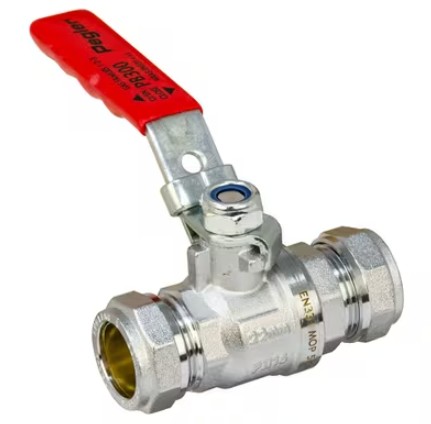
- External stop valve — in the footpath or at the boundary of the property, in a covered box. Belongs to the water supplier and shuts off the whole property. Turned with a stopcock key, because it is down a small chamber out of reach.
- Internal stop valve — where the supply enters the building, usually under the kitchen sink. This is the one you use to isolate the house.
- Service valves — small isolating valves at appliances: behind a WC, under a basin. Usually a slotted head turned with a screwdriver.
- Drain valve — at the lowest points of the system, to drain it down for repairs. Lowest, because water runs downhill and that is where it collects.
Hot water valves
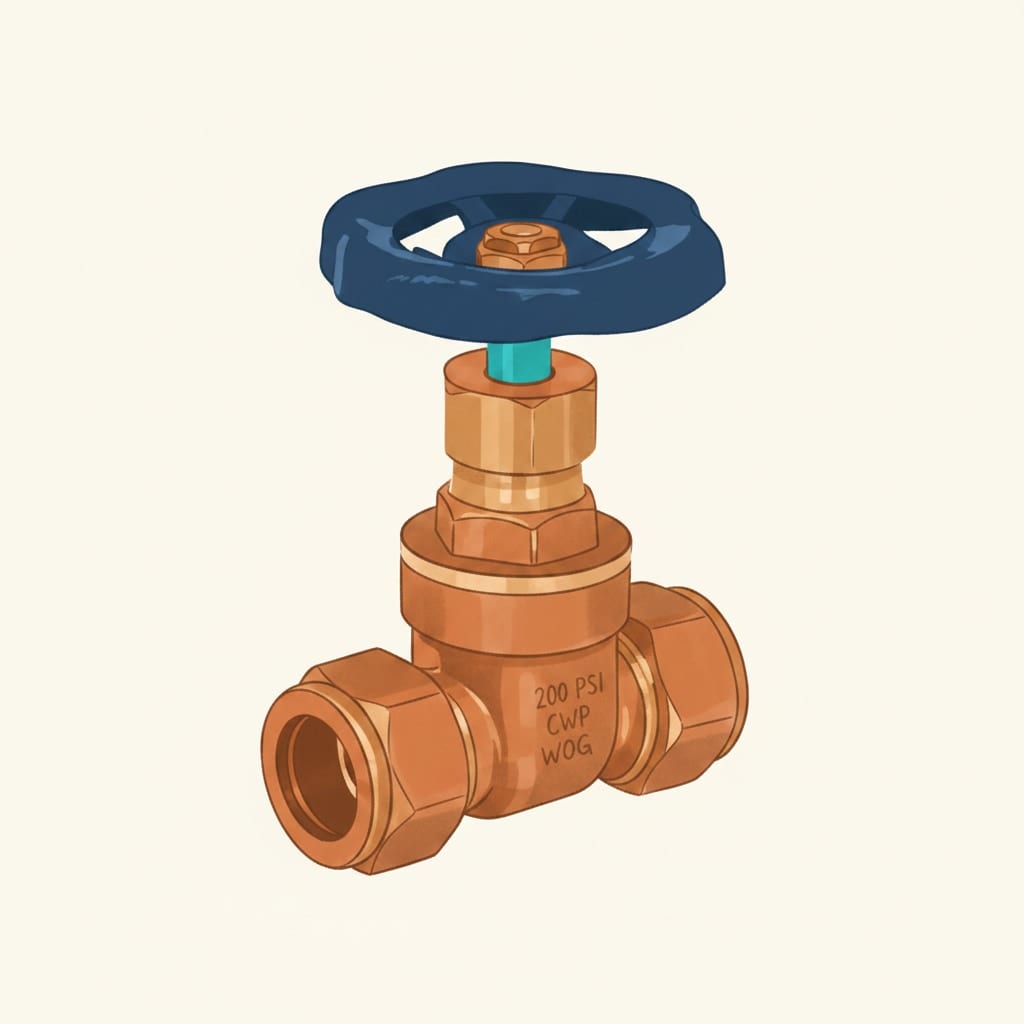
- Gate valve — on low pressure gravity pipework: the outlets of a cistern and cylinder. A gate lifts clear of the bore so the flow is not restricted. Recognised by its round wheel head.
- Appliance service valve — isolates one hot appliance for maintenance.
- Drain valve — to drain the hot water system down.
Stopcock or gate valve?
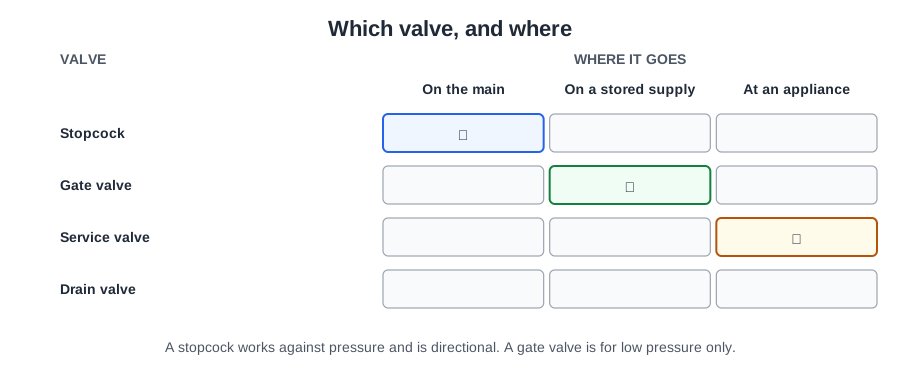
This is the distinction the lesson is really testing, so here it is in full.
| Stopcock | Gate valve | |
|---|---|---|
| Head | Crutch or lever | Round wheel |
| Used on | Mains pressure | Low pressure gravity |
| Flow | Restricts it slightly | Full bore, no restriction |
The reasoning is the whole answer: a stopcock turns the water through a right angle and past a washer, which costs a little pressure. On the mains you can spare it. On a gravity pipe with 0.3 bar behind it you cannot, so a valve that opens to the full bore is used instead.
Fitting a stopcock on a gravity cylinder outlet is a real mistake with a real consequence: the bath fills noticeably more slowly, and nobody can work out why.
One more reason it matters
A stopcock is directional — there is an arrow on the body, and it must be fitted the right way round. A gate valve is not; it works either way. That is another practical difference worth carrying onto site.
🔢 The numbers worth memorising
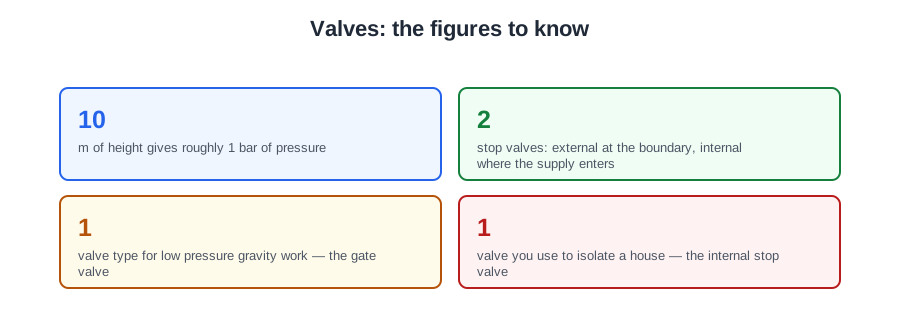
- 10
- m of height gives roughly 1 bar of pressure
- 2
- stop valves: external at the boundary, internal where the supply enters
- 1
- valve type for low pressure gravity work — the gate valve
- 1
- valve you use to isolate a house — the internal stop valve
⚠️ Where people go wrong
- Fitting a stopcock on low pressure gravity pipework. It restricts the flow you cannot spare.
- Confusing the heads. A stopcock has a crutch or lever; a gate valve has a round wheel.
- Thinking the external stop valve is yours to use routinely. It belongs to the water supplier.
- Putting a drain valve anywhere but the lowest point.
- Fitting a stopcock backwards. It is directional and has an arrow on the body.
📝 8-Question Self-Test
Straight from the Level 1 course question bank. Click an option to see whether you got it right — the explanation appears instantly, and there is nothing to submit.
Gravity flow from a cistern has little pressure behind it, so the valve must not restrict it. A gate lifts clear of the bore.
The flat gate is wound up clear of the bore, which leaves the full waterway open. That is a gate valve, and it is used where the push is only the height of the water above it.
A service valve on the tail of a tap, a WC or a washing machine, turned with a screwdriver. Fitting them is the single kindest thing you can do for whoever comes next.
Pressure in a stored system comes from the height of the water above the outlet. Roughly 10 m of height gives 1 bar.
A gravity-fed pipe has very little pressure behind it, so the valve must not restrict the flow. A gate lifts clear of the bore; a stopcock restricts it slightly.
The three working principles are high pressure, low pressure and appliance isolation. Appliance isolation is the small service valve on a tap, WC or washing machine tail.
A stop valve presses a washer down onto a seat across the flow, which seals against real pressure. A gate winds up clear of the bore, which suits a gravity feed.
Height pressure: the head between the water level in the cistern and the outlet is what pushes the water out.
- Start here: Installation, Repair and Maintenance for Level 1 — the whole unit in one piece
- All 72 Level 1 guides — one per lesson, across all ten units
- The Level 1 glossary — 620 terms in plain English