Almost every plumber ends up making this decision. Most make it late, on an accountant’s advice, without understanding what they are choosing between.
The short answer
Sole trader: one person, simple to set up, and personally responsible for the debts. Partnership: the same, shared between two or more. Limited company: a separate legal thing from its owners, so their own money is protected if it fails — which is exactly what the word "limited" means.
Our Level 1 lesson covers this for the exam. What follows is what it means when it is your name on the paperwork.
What "personally responsible for the debts" really means
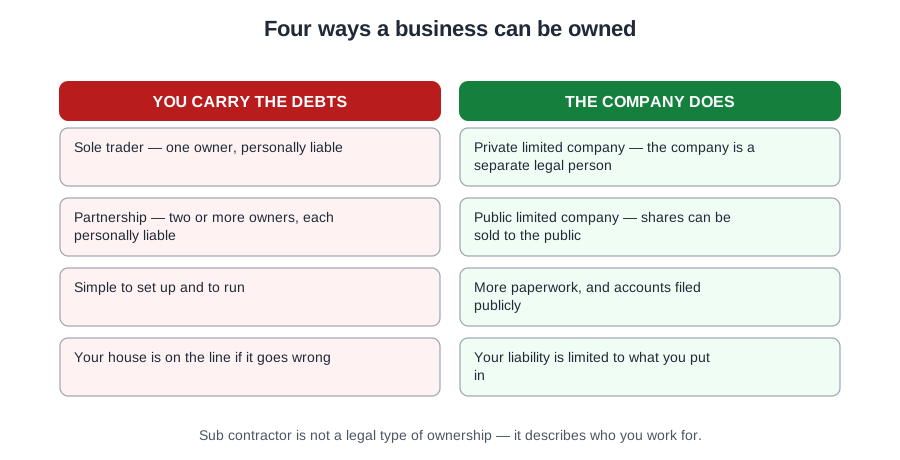
This is the sentence people learn for the test without thinking about. As a sole trader there is no line between you and the business. If the business owes £20,000, you owe £20,000 — and that can reach your savings and, in the worst case, your house.
In a limited company the company owes it. If the company cannot pay, the company fails, and the owner's own money is generally out of reach. That protection is the entire reason limited companies exist.
Two things weaken it in practice, and both catch plumbers out. Banks routinely ask a director for a personal guarantee on borrowing, which puts your own money back on the line. And limited liability never covers your own negligence or a health and safety breach — you cannot incorporate your way out of a bad installation.
The paperwork, honestly
Sole trader is genuinely simple: register with HMRC for Self Assessment, keep records, file one tax return a year.
A limited company is a different amount of work. It is registered at Companies House. It files annual accounts and a confirmation statement, both public — anyone can look up your company and read them. It pays Corporation Tax, and you pay yourself through a mixture of salary and dividends, each taxed differently. Most people running one pay an accountant, and that cost is part of the decision.
When does going limited start to make sense?
There is no clean threshold, and anybody who gives you one is guessing. But the arguments usually line up like this:
- Risk. The bigger the jobs and the more people you employ, the more the liability protection is worth.
- Tax. Above a certain level of profit the salary-and-dividend route can leave more after tax — but the figure moves with every Budget, so treat any number you read as out of date.
- Who your customers are. Some commercial clients and main contractors will only place work with a limited company.
- Cost and hassle. Accounts, filings and an accountant's fee against a single tax return.
Get this one from an accountant who knows the trade, not from a forum. It is the sort of decision that is cheap to get right early and expensive to unpick later.
The insurance nobody mentions at Level 1
Neither structure removes the need for cover, and the structure does not change what you need:
- Public liability — for damage you cause to somebody's property or person. A flood from a joint you made is the classic plumber's claim.
- Employers' liability — legally required the moment you employ anybody, including most apprentices.
- Tools cover — because vans get broken into, and a tool theft ends your working week either way.
Sub contractor is not a legal type
Worth separating, because the exam separates them and so does real life. Sole trader, partnership and limited company describe how a business is owned. Main contractor and sub contractor describe who engaged whom on a particular job. A limited company can be a sub contractor; so can a sole trader. They are answers to different questions.
If you end up sub contracting, look into the Construction Industry Scheme. Under CIS a contractor deducts tax from your payments before you get them and passes it to HMRC. It is not optional and it surprises people the first time their invoice is paid short.
What comes next
You do not have to decide any of this now, and most people do not decide for years. But it explains why the types-of-company lesson is on a plumbing course at all: a large share of this trade ends up self-employed, and this is the first time anyone puts the options in front of you.
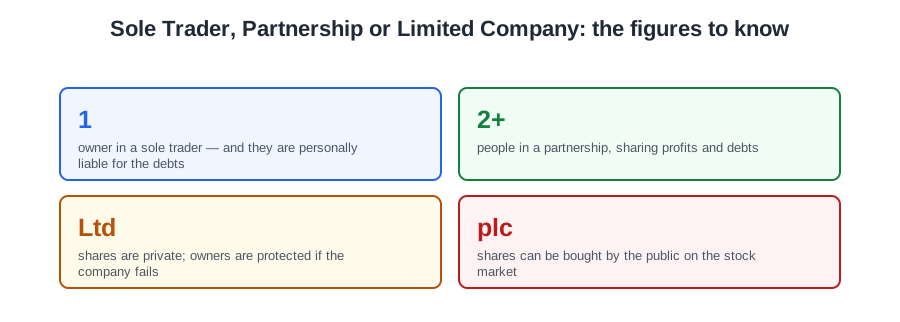
🔢 The numbers worth memorising
- 1
- owner in a sole trader — and they are personally liable for the debts
- 2+
- people in a partnership, sharing profits and debts
- Ltd
- shares are private; owners are protected if the company fails
- plc
- shares can be bought by the public on the stock market
⚠️ Where people go wrong
- Thinking "limited" means a small company. It means the owners’ liability is limited.
- Mixing the two lists. Size and role is one question; legal type is another. A firm has an answer from each.
- Saying the sub contractor holds the contract with the client. They do not — the main contractor does.
- Forgetting that a partnership carries the same personal responsibility for debts as a sole trader.
📝 8-Question Self-Test
Straight from the Level 1 course question bank. Click an option to see whether you got it right — the explanation appears instantly, and there is nothing to submit.
A limited company is legally separate from its owners, so their personal money is protected if the business fails.
A sole trader owns the business personally, so they keep the profit and carry the debts.
Plumbing firms specialise as domestic plumbers, heating engineers, industrial plumbers, drainage specialists and maintenance engineers.
Heating engineer is one of the five plumbing specialisms: domestic plumber, heating engineer, industrial plumber, drainage specialist and maintenance engineer.
The plumbing specialisms are domestic plumber, heating engineer, industrial plumber, drainage specialist and maintenance engineer. Alarm engineer is electrical.
Electrical firms specialise as domestic electricians, industrial and commercial electricians, maintenance electricians and alarm engineers.
Four: domestic electrician, industrial and commercial electrician, maintenance electrician, and alarm engineer.
Industrial and commercial electricians work on factories, shops, offices and warehouses — one of the four specialist electrical organisations named.
Going deeper: the same ground at Level 2
Level 1 gives you the shape of this. The Level 2 guides below take it considerably further — the regulations, the calculations and the detail you will need next. Free to read, same as these.
- Start here: The Construction Industry for Level 1 Plumbers — the whole unit in one piece
- All 72 Level 1 guides — one per lesson, across all ten units
- The Level 1 glossary — 620 terms in plain English