The six bodies are a memory test. What sits behind them — who sets apprentice rates, who can inspect your work — is the part that turns up in your working life.
The short answer
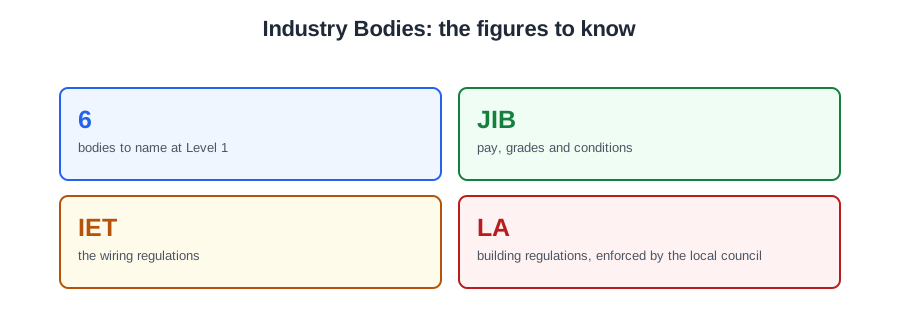
Six bodies at Level 1: the JIB (pay, grades and conditions), the Water Authority (water supply and sanitation), the IET (the wiring regulations), the ECA (trade association for electrical contractors), the APHC (the same for plumbing and heating), and the local authority (building regulations).
Our Level 1 lesson does the exam version. This is what each one means once you are earning.
How apprentice pay is actually set
Two floors sit under any apprentice wage, and it is worth knowing which is which.
The first is the law. There is a National Minimum Wage apprentice rate, which applies in your first year and while you are under 19. After that, once you are 19 or over and past the first year, you move to the normal age band. Nothing can pay below it, and it changes every April — so look up the current figure on the government site rather than trusting a number in an article.
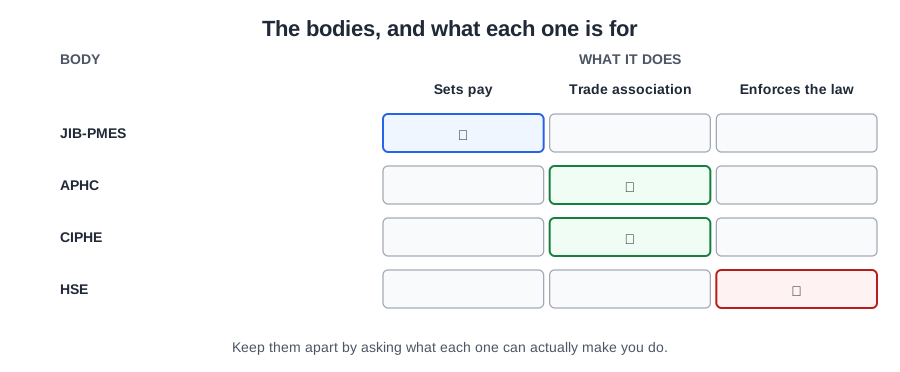
The second is the industry agreement. In electrical contracting the JIB sets graded rates that step up as you progress, which is what it means to be "on a grade". That is the JIB's whole purpose, and it is why the exam pairs it with grades, wages, allowances and benefits.
Plumbing has historically had an equivalent arrangement of its own. The practical point is the same either way: industry rates are usually well above the legal minimum, and knowing that an agreed rate for your stage exists is worth something the first time somebody offers you a wage. Ask what you will be on, and ask when it goes up.
The two bodies you will actually meet
Building control — the local authority
Some work is notifiable, which means building control has to be told and the work inspected and signed off. Unvented hot water storage is the obvious plumbing example. Getting a completion certificate matters later: it is what a solicitor asks for when the house is sold, and its absence is a problem for the homeowner years after you have gone.
There is a route round the paperwork for registered installers. Competent person schemes let a suitably qualified person certify their own work and notify it themselves, rather than paying for an inspection. That is one of the concrete reasons qualifications and registrations are worth having.
The water undertaker
The Water Authority is not only the people who supply the main. Your installation has to comply with the Water Supply (Water Fittings) Regulations, and the water undertaker can inspect it. Certain work has to be notified to them in advance.
What they care about most is backflow — anything that could let used water back into the drinking supply. That is why tap outlets sit above the spill-over level of a basin, why an outside tap needs a check valve, and why a hose left in a bucket is a genuine problem rather than a fussy one. It is a whole unit at Level 2 and 3, and this is where it starts.
Is joining a trade association worth it?
The APHC for plumbing and heating, and the ECA on the electrical side, are membership bodies for firms rather than regulators. They do not license you and you do not need them to trade.
What they sell is technical and legal advice on the phone, help with employment problems, and credibility with customers. For a sole trader in their first year that is usually not worth the fee. For a firm employing people, one employment dispute handled properly can pay for several years of it. It becomes a real decision the day you take somebody on.
The one that is not on the Level 1 list
Ask any plumber which body matters most and they will say Gas Safe — and it is not on your Level 1 list at all, because it is not a Level 1 topic. Gas work is legally restricted: you must be Gas Safe registered to work on gas, which needs separate assessment beyond your plumbing qualification.
Worth knowing now so the shape of the career is clear: plumbing qualifications get you plumbing; gas is a further, separate step.
What comes next
At Level 2 the water regulations stop being "a body that can inspect you" and become a set of rules you design to — backflow prevention, fluid categories, and the requirements for storage and materials. The bodies become the standards they publish.
🔢 The numbers worth memorising
- 6
- bodies to name at Level 1
- JIB
- pay, grades and conditions
- IET
- the wiring regulations
- LA
- building regulations, enforced by the local council
⚠️ Where people go wrong
- Swapping the ECA and the IET. The IET writes the electrical regulations; the ECA supports electrical contractors.
- Swapping the Water Authority and the local authority. Water supply and sewers against building regulations.
- Saying the JIB sets the wiring regulations. The JIB is pay and conditions.
- Forgetting the APHC is the plumbing and heating body — the one that is actually ours.
📝 8-Question Self-Test
Straight from the Level 1 course question bank. Click an option to see whether you got it right — the explanation appears instantly, and there is nothing to submit.
The Joint Industry Board deals with grades, wages, allowances, benefits, employment advice and industrial agreements.
The Association of Plumbing and Heating Contractors supports contractors and encourages training, knowledge and professional advice.
The Water Authority deals with water resources and uses, quality of service, infrastructure, water supply and sanitation.
The IET — Institution of Engineering and Technology — is responsible for the wiring regulations and for international standardisation of regulations.
The JIB — Joint Industry Board — sets grades, wages, allowances and industrial agreements.
The Local Authority is responsible for building regulations, and checks that building work meets the law.
The ECA is the Electrical Contractors Association. Keep it apart from the APHC, which does the same job for plumbing and heating.
The ECA supports electrical contractors, works to build a sustainable industry, and works to enhance the profile of the industry. The IET writes the wiring regulations; the JIB deals with pay and conditions.
Going deeper: the same ground at Level 2
Level 1 gives you the shape of this. The Level 2 guides below take it considerably further — the regulations, the calculations and the detail you will need next. Free to read, same as these.
- Start here: The Construction Industry for Level 1 Plumbers — the whole unit in one piece
- All 72 Level 1 guides — one per lesson, across all ten units
- The Level 1 glossary — 620 terms in plain English