Five trades is the easy part. The part nobody writes down is the order they work in, and what happens to everybody else when one of them is late.
The short answer
Five trades: electrician, plumber, carpenter, bricklayer, plasterer. The plumber does hot and cold water supply, central heating, bathroom installation, and sanitation and drainage — the widest list of the five.
That is the exam answer, and our Level 1 lesson covers it properly. What follows is the part that only makes sense once you have stood on a site.
First fix and second fix
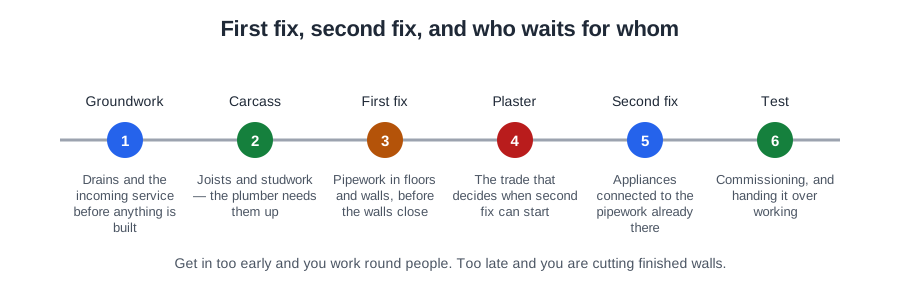
Almost every trade splits its work in two, and the words come up constantly.
First fix is everything that goes in while the walls and floors are still open — your pipework, the electrician's cable, the carpenter's structural timber. It gets buried.
Second fix is everything that goes on afterwards, once the plasterer has been and the decorator is nearly done — taps, radiators, sanitaryware, sockets, switches, door furniture.
Between the two sits the plasterer, and that is the pinch point of the whole job. Anything you did not do at first fix means cutting a finished wall open at second fix, which is somebody else's work destroyed and somebody else's argument.
The order, and who waits for whom
Roughly, on a new build:
- Groundworkers and the bricklayer put up the shell.
- The carpenter puts the roof on and the floors in.
- The roof goes on and the building becomes watertight — which is the moment the inside trades can start.
- Plumber and electrician first fix, working around each other in the same walls and floors.
- The plasterer closes it all up.
- Plumber and electrician second fix, then the decorator.
What that means in practice: you are never working alone, and you are almost never working at your own pace. If the roof is late, your first fix is late. If your first fix is late, the plasterer is late, and so is everybody after them. Programme pressure on a plumber usually comes from something that happened three trades ago.
Getting on with the other trades is part of the job
This sounds like advice about manners. It is not — it is about not having your work ruined.
The carpenter needs to know where your pipes run before they board a floor, or a nail goes through a pipe and nobody finds out until the system is filled. Mark your runs. The electrician wants the same courtesy from you, because a hole drilled blind through a stud finds cable just as easily as a nail finds pipe.
The plasterer will cover anything you leave, including a joint you meant to come back to. Get your first fix signed off before it disappears.
And the bricklayer builds the wall you are going to want a hole in. Ask early, and it gets built in. Ask late, and you are core drilling.
Where the plumber sits in all of this
Look at the four jobs the standard gives the plumber against two or three for everyone else. That width is the trade. It is also why a domestic plumber's week is genuinely varied — a bathroom, then a boiler, then a drain — and why the qualification takes longer than people expect.
It is worth knowing that the wide list narrows later if you want it to. Heating engineers, drainage specialists, industrial plumbers and maintenance engineers are all plumbers who chose one part of it. You do not have to decide now, and most people decide by accident, based on who employs them first.
What comes next
At Level 2 the same trades come back, but the questions change from "who does what" to "how does your work interact with theirs" — notching and drilling joists to the permitted zones, working around electrical safe zones, and who signs off what. The joins between trades stop being a fact to learn and start being a set of rules with numbers attached.
🔢 The numbers worth memorising
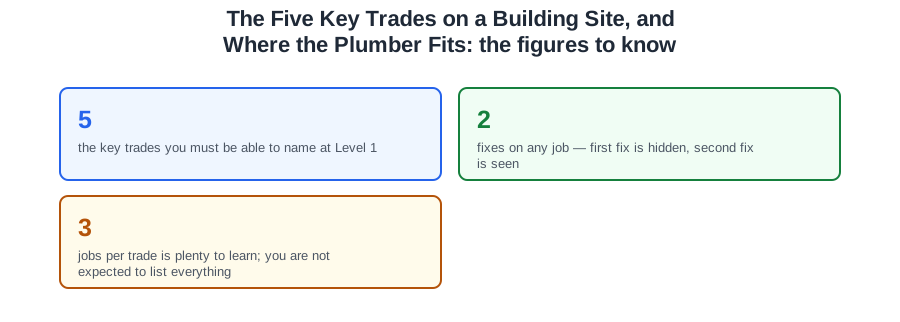
- 5
- the key trades you must be able to name at Level 1
- 2
- fixes on any job — first fix is hidden, second fix is seen
- 3
- jobs per trade is plenty to learn; you are not expected to list everything
⚠️ Where people go wrong
- Listing only water and heating for the plumber. Sanitation and drainage are on the list too, and they are the half people forget.
- Mixing up the plasterer and the bricklayer. The bricklayer builds the wall; the plasterer covers it.
- Thinking dry lining is a different trade. It is not — plastering and dry lining are both the plasterer.
- Answering only one direction. If you have only learned trade→job, a question phrased job→trade will still catch you.
📝 8-Question Self-Test
Straight from the Level 1 course question bank. Click an option to see whether you got it right — the explanation appears instantly, and there is nothing to submit.
The five key trades are electrician, plumber, carpenter, bricklayer and plasterer.
The carpenter hangs doors, installs windows and installs timber roofs.
The five key trades are electrician, plumber, carpenter, bricklayer and plasterer. Plastering and dry lining is the plasterer's work.
Five: electrician, plumber, carpenter, bricklayer and plasterer.
A plumber's work covers hot and cold water supply, central heating, bathroom installation, and sanitation and drainage.
Bathroom installation is one of the four areas of plumbing work, alongside hot and cold water supply, central heating, and sanitation and drainage.
Lighting wiring, power supply wiring and maintenance are the three jobs the standard names for the electrician.
Hanging doors, installing windows and timber roof installation are the three jobs the standard names for the carpenter.
Going deeper: the same ground at Level 2
Level 1 gives you the shape of this. The Level 2 guides below take it considerably further — the regulations, the calculations and the detail you will need next. Free to read, same as these.
- Start here: The Construction Industry for Level 1 Plumbers — the whole unit in one piece
- All 72 Level 1 guides — one per lesson, across all ten units
- The Level 1 glossary — 620 terms in plain English