Three classes, and putting something in the wrong one is an offence rather than an untidiness. Two items in particular are not where people expect them to be.
The short answer
The four the paper asks you to classify: solvents — hazardous; tiles — inert; electrical equipment — hazardous; water based glue — non hazardous.
The regulations covering the disposal of motors, fluorescent tubes and printed circuit boards are the Waste Electrical and Electronic Equipment Regulations, known as WEEE.
The three classes exist because of what they cost
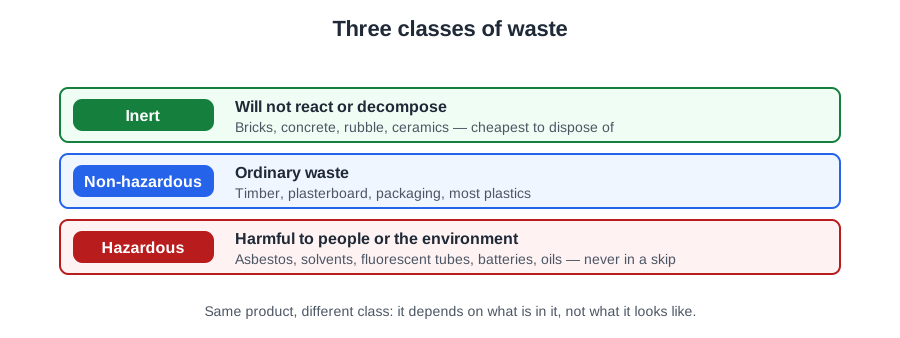
Landfill tax is charged at two rates, and the gap between them is the reason anybody sorts anything. The standard rate is now well over £100 a tonne. The lower rate, for inert waste that will not react with anything, is a few pounds a tonne. Hazardous waste costs more again, because it needs separate containers, a licensed carrier, a licensed site and its own paperwork.
A mixed skip is charged at the worst thing in it. One tin of solvent tipped into a skip of rubble converts the whole load, which is the commercial version of the same point the exam is making.
Same product, different class
The pairing of solvents and water based glue is not an accident. It is the whole idea the question is built on: what decides the class is not the type of item but what is in it. Solvent weld cement and the cleaner beside it are hazardous. The water based adhesive on the next shelf of the same van is not.
So you cannot answer from the name of the product. Read the tin, and where it matters, read the safety data sheet the supplier has to provide.
Inert is worth taking literally: chemically dead. It will not rot, burn, react or leach. Tiles are fired ceramic and nothing further is ever going to happen to them — bury one for a century and it is still a tile. That is why inert waste is the cheapest to be rid of and the most likely to be reused as fill.
Why a fluorescent tube must never go in a skip
A fluorescent tube makes light by passing current through mercury vapour. There are only a few milligrams in a tube, but they are milligrams of a metal that is toxic and that evaporates at room temperature. Break one in the back of a van and you have released it into the space you then sit in for the rest of the day.
Tubes are hazardous waste. They go to a lamp recycler, where they are crushed inside a sealed machine that captures the mercury and separates the glass, the phosphor powder and the metal end caps. Most merchants and civic sites will take them, but they want them whole and they want warning.
Of the three items the paper names, the tube is the one most often got wrong, because it looks like glass rather than like electrical equipment.
What happens to the rest at a WEEE plant
Depollution comes first, and it is done by hand: batteries out, capacitors out, mercury switches and lamps out, refrigerant recovered from anything that holds any. Only then does the material go to the shredder, where a magnet lifts the steel out, an eddy current throws the aluminium sideways, and the plastics are separated by density.
Printed circuit boards go somewhere else again, for metal recovery. A tonne of circuit boards holds far more gold, silver and palladium than a tonne of mined ore, which is why recovering them is worth doing rather than merely required. Motors go the same way for their copper windings.
Refrigerant is the one to be careful about on site. A fridge, an air conditioning unit or a heat pump holds gas that must be recovered by a certified person before the appliance is scrapped. It has never been a skip item, and the fine for treating it as one is not small.
What comes next
Level 2 turns this into COSHH: assessing a substance before you use it, reading a safety data sheet properly, and the control hierarchy that puts protective equipment last rather than first. Asbestos gets a lesson of its own, because it is the hazardous waste most likely to be sitting in an old boiler you are about to strip out.
🔢 The numbers worth memorising
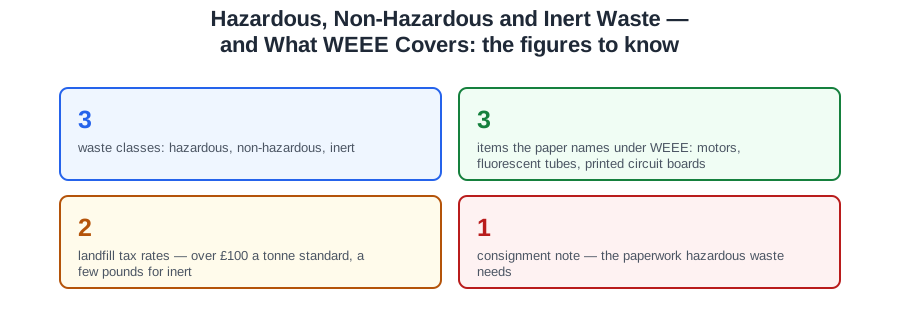
- 3
- waste classes: hazardous, non-hazardous, inert
- 3
- items the paper names under WEEE: motors, fluorescent tubes, printed circuit boards
- 2
- landfill tax rates — over £100 a tonne standard, a few pounds for inert
- 1
- consignment note — the paperwork hazardous waste needs
⚠️ Where people go wrong
- Calling clean scrap lead hazardous waste. It is hazardous to work with, not as waste — though the qualification’s list puts lead under hazardous.
- Treating all glues and paints the same. Water based are non-hazardous; solvent based are hazardous.
- Thinking inert means harmless rubbish. It means chemically inactive — it will not rot, burn or react.
- Forgetting that hazardous waste needs a consignment note, not an ordinary transfer note.
- Putting a fluorescent tube in the skip. It contains mercury, and it is on the WEEE list the paper names.
- Answering the classification question from the type of item rather than what is in it.
📝 8-Question Self-Test
Straight from the Level 1 course question bank. Click an option to see whether you got it right — the explanation appears instantly, and there is nothing to submit.
Hazardous waste includes asbestos, waste electrical equipment and solvents. Scrap metal, clean scrap lead included, is not hazardous waste.
WEEE covers motors, control equipment, lamps, printed circuit boards and drills.
Inert waste is chemically inactive — bricks, glass, ceramics and tiles, sand and gravel — so it can often be used as fill.
Solvent based glues and paints are hazardous. Water based ones are non-hazardous — the base is what decides.
WEEE keeps electrical goods out of landfill because they contain both valuable materials worth recovering and harmful ones that should not be buried.
Control equipment such as programmers, thermostats and control boxes is named under the WEEE regulations.
The Waste Electrical and Electronic Equipment Regulations cover disposal of anything electrical so that it is recovered and recycled rather than buried. Write the full name and put the initials after it.
The three examples the paper names are motors, fluorescent tubes and printed circuit boards. Fluorescent tubes matter most in practice: they contain mercury, they break easily, and they should never go in a skip.
Going deeper: the same ground at Level 2
Level 1 gives you the shape of this. The Level 2 guides below take it considerably further — the regulations, the calculations and the detail you will need next. Free to read, same as these.
- Start here: Environment and Sustainability for Level 1 Plumbers — the whole unit in one piece
- All 72 Level 1 guides — one per lesson, across all ten units
- The Level 1 glossary — 620 terms in plain English