Environmental practice is not only about what the customer ends up with. It is also about how the job is run — and most of it saves the firm money at the same time.
The short answer
The good working practice that conserves energy and protects the environment is reducing transportation costs. The option that shows energy conservation is sourcing materials locally and using renewable sources — note that it names two things, so read it to the end.
Five methods of reducing material wastage: measure, cut and set out pipe and cable runs accurately; plan work activities carefully; reuse off cuts of pipe and cable; take care when fixing appliances, because a damaged appliance has to be replaced; and avoid leaving plugs, screws and other fixings lying around.
What a second trip to the merchants actually costs
“Reduce transportation costs” sounds like something written for a policy document until you price a single wasted journey.
A thirty mile round trip in a van costs a few pounds in fuel. The expensive part is the hour: an hour of a fitter’s time is worth £40 to £60 to the firm, and the customer is not paying for it because nothing happened on the job while it was going on. Two of those a week and a month has lost a day.
That is why this is the environmental measure employers actually enforce. It shows up in the accounts, so it gets planned: one delivery to site rather than three collections, a check of the list before leaving, and the fittings for the whole run ordered together rather than as they are discovered.
The most expensive waste on the list is not an offcut
Take care when fixing appliances is the method people leave out, and it is the one with the largest number attached to it. A chipped bath, a cracked basin or a scratched shower tray is not a 300 mm end of pipe. It is a whole unit, a second delivery, a day lost, tiling that was cut around the old one, and a customer standing there watching.
So the habit is to leave appliances boxed until the last possible moment, lay a board across a bath before anybody kneels on it, and keep the cardboard on until the tiler has gone.
Plugs, screws and fixings are the other end of the same idea. Individually they are pennies. Trodden into a floor and swept up with the packaging, they get bought again on every job, which is the real reason tidiness keeps appearing on lists that look as though they are about something else.
The hierarchy behind the whole subject
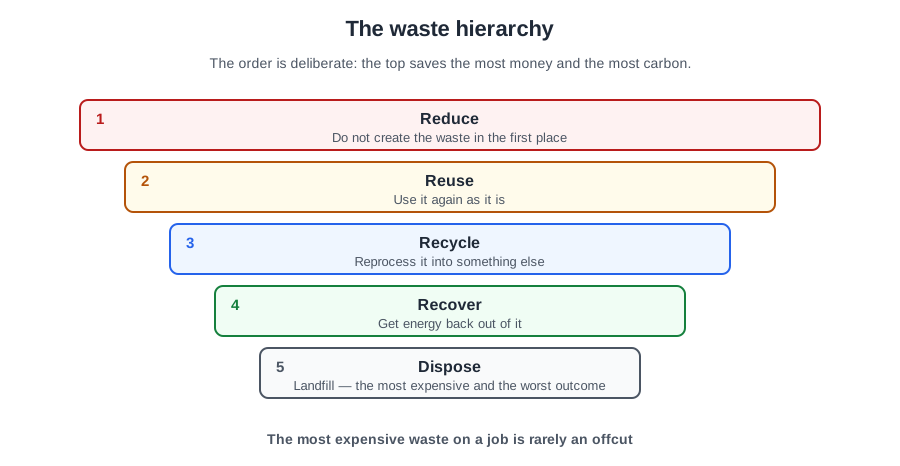
Everything on that list is really one principle: prevent, reuse, recycle, recover, dispose, in that order of preference. That is the waste hierarchy, and it is the frame the whole waste system is built on.
It explains why measuring accurately outranks recycling. Preventing waste sits at the top and disposal is the last resort, so the firm that sets out a run properly never has to pay for the skip, the carrier or the replacement material at all. Recycling is what you do with the waste you failed to prevent.
Rainwater and grey water are two different systems
They get muddled constantly, so keep them apart. Rainwater harvesting collects roof water into a tank. Grey water recycling reuses the water that has already been through baths, showers and basins.
Both are for jobs that do not need water fit to drink: flushing a WC, watering a garden, washing a vehicle. Neither may be connected to a drinking outlet, and where a mains top-up feeds the tank it has to arrive through a proper air gap so that nothing can ever be drawn back into the supply. The pipework is marked and coloured differently for the same reason — the next person in the building must not be able to mistake it for the cold main.
Grey water is much the harder of the two. It carries soap, skin and hair, and it turns septic within a couple of days, so it has to be treated rather than simply stored. Rainwater off a roof is far cleaner and is the one you are more likely to meet.
What comes next
At Level 2 the separation of those systems becomes formal: fluid categories, backflow prevention, and the air gaps and devices the Water Regulations require between anything reclaimed and anything drinkable.
🔢 The numbers worth memorising
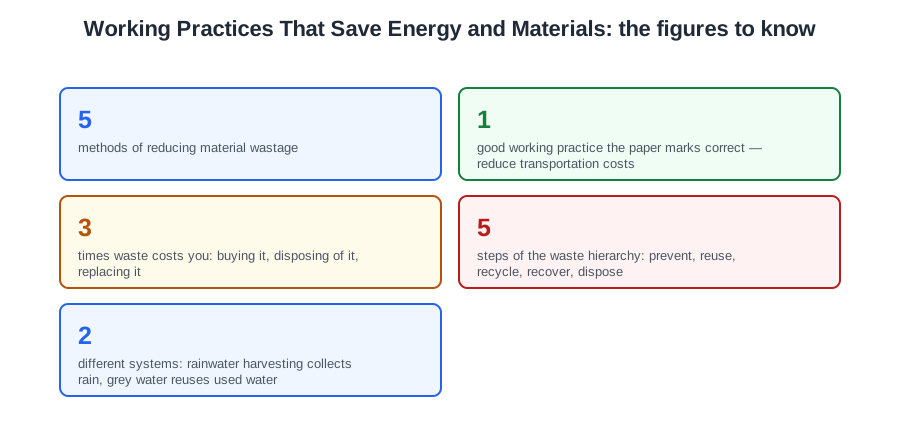
- 5
- methods of reducing material wastage
- 1
- good working practice the paper marks correct — reduce transportation costs
- 3
- times waste costs you: buying it, disposing of it, replacing it
- 5
- steps of the waste hierarchy: prevent, reuse, recycle, recover, dispose
- 2
- different systems: rainwater harvesting collects rain, grey water reuses used water
⚠️ Where people go wrong
- Mixing rainwater harvesting with grey water recycling. One collects rain; the other reuses water already used.
- Suggesting either can supply a drinking outlet. Neither can, and the systems must stay separate.
- Knowing only three methods of reducing material wastage. There are five, and two of them have to come out of your own head.
- Leaving out taking care when fixing appliances. A cracked basin is the most expensive waste on a job.
- Answering the energy conservation question with one thing. The option names two — sourcing materials locally and using renewable sources.
📝 8-Question Self-Test
Straight from the Level 1 course question bank. Click an option to see whether you got it right — the explanation appears instantly, and there is nothing to submit.
Grey water recycling reuses water from baths and basins for flushing a WC or watering a garden.
Accurate measuring and setting out, good housekeeping, and reusing offcuts all reduce waste.
Sourcing locally and reducing transportation both cut the fuel used getting materials to site.
Most waste is offcuts — measuring twice and cutting once too short. Accurate measuring and setting out is the biggest single saving.
Reusing offcuts is one of the named methods of reducing material wastage. Waste costs three times: you paid for it, you pay to dispose of it, and you pay again for the replacement.
Fewer trips and fuller loads means less fuel. Sourcing locally, using low energy appliances, rainwater harvesting and grey water recycling are the others named.
Reducing transportation costs is the answer the paper marks correct. Fewer journeys and fuller loads. It is also the environmental measure firms genuinely enforce, because it is the one that saves them money.
True. Material cut to the wrong length is the biggest single source of waste on a plumbing job, and it cannot be uncut. Measure twice.
Going deeper: the same ground at Level 2
Level 1 gives you the shape of this. The Level 2 guides below take it considerably further — the regulations, the calculations and the detail you will need next. Free to read, same as these.
- Start here: Environment and Sustainability for Level 1 Plumbers — the whole unit in one piece
- All 72 Level 1 guides — one per lesson, across all ten units
- The Level 1 glossary — 620 terms in plain English