The people dying of it now were exposed in the 1980s. Nothing hurt at the time, and nothing warned them. That is the whole problem.
The short answer
If you suspect asbestos: stop work and inform your supervisor. Do not drill it, cut it, sweep it or bag it. Removal is licensed work.
It is found in insulating material in the building fabric, sheeting for roofs, floors and walls, coatings such as Artex, gutters, flues, heat proofing materials and gaskets.
Why it is still the biggest killer in this industry
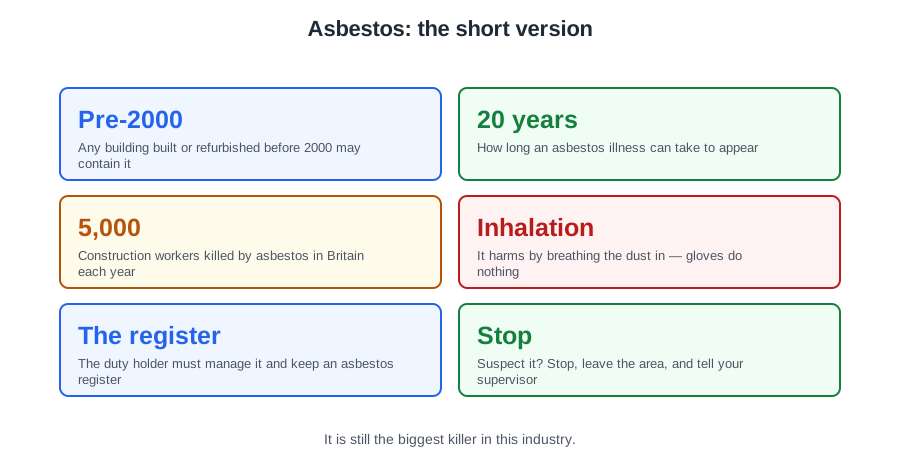
Asbestos was banned outright in the UK in 1999, and it still causes more work-related deaths than anything else in construction — thousands a year. The reason is latency: the illnesses take thirty or forty years to appear, so the deaths now are from exposure in the seventies, eighties and nineties.
Which means the exposures happening today produce deaths in the 2050s and 2060s. Nothing about that is visible to the person being exposed. There is no cough, no taste, no symptom, and no test that tells you it happened.
Mesothelioma is the one almost only ever caused by asbestos, and there is no cure. There is no known safe level of exposure, which is why the rules are absolute rather than a matter of judgement.
Where a plumber actually meets it
Look at the list from our side of the trade and it stops being abstract:
- Pipe lagging — old insulation on heating pipes, often in cellars and plant rooms. Among the most dangerous forms because it releases fibres so easily.
- Old boiler flues and the panels behind fires.
- Artex ceilings and walls — extremely common in houses built or decorated between the 1960s and the 1980s. Drilling one to fix a pipe clip is the everyday version of this.
- Cement gutters and downpipes, and garage and outbuilding roofs.
- Under floorboards and behind bath panels, where old insulation board turns up.
- Gaskets in old pipework and plant.
Notice how many are things you go looking for. Plumbers and electricians meet asbestos more than most trades precisely because our work means opening buildings up.
The duty to manage, and the asbestos register
Whoever is responsible for a non-domestic building has a legal duty to manage the asbestos in it: find out whether it is there, record it, assess the risk, and tell anyone liable to disturb it.
In practice that means an asbestos register, and on a commercial job you are entitled to see it before you start cutting into anything. Asking for it is a completely normal request and a very good habit.
Ordinary homes have no such duty and no register. Which is why, in a house built before 2000, the working assumption is that anything you cannot identify might be asbestos.
The three categories of work
Worth knowing so you understand where the line is. Licensed work — the most dangerous materials, only by an HSE-licensed contractor. Notifiable non-licensed work — lower risk but still notified and recorded. Non-licensed work — the lowest risk materials, still requiring training.
All three need training you will not have at Level 1. Asbestos awareness training is a separate short course that most employers put people through, and it is about recognising and avoiding rather than removing.
What comes next
Asbestos awareness is a course in its own right, and you will sit it. At Level 2 it becomes part of a wider treatment of hazardous materials and COSHH — but the Level 1 answer never changes: stop, do not disturb, report.
🔢 The numbers worth memorising
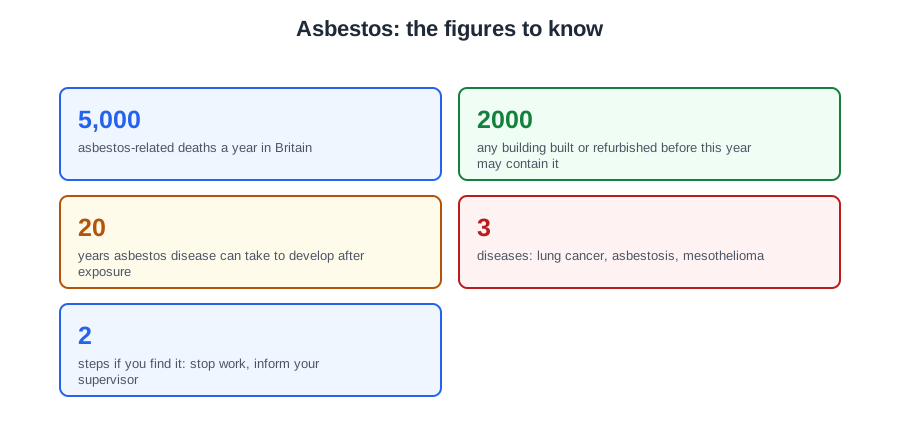
- 5,000
- asbestos-related deaths a year in Britain
- 2000
- any building built or refurbished before this year may contain it
- 20
- years asbestos disease can take to develop after exposure
- 3
- diseases: lung cancer, asbestosis, mesothelioma
- 2
- steps if you find it: stop work, inform your supervisor
⚠️ Where people go wrong
- Thinking asbestos is an old-factory problem. Ordinary houses from before 2000 are full of it.
- Trying to identify it by eye. Only a laboratory can, and guessing wrong is not recoverable.
- Sweeping or bagging it up to be helpful. Disturbing it is the whole danger.
- Forgetting that Artex is on the list. Drilling a textured ceiling is a common exposure.
- Giving a long answer to what to do. It is two steps: stop work, tell your supervisor.
📝 8-Question Self-Test
Straight from the Level 1 course question bank. Click an option to see whether you got it right — the explanation appears instantly, and there is nothing to submit.
Asbestos illnesses can take 20 years to appear. That delay is what makes it so dangerous — nothing warns you at the time.
Coating materials such as Artex are on the standard's list, along with insulating materials, sheeting, asbestos cement gutters and flues, heat proofing and gaskets.
Stop work and inform your supervisor. Nothing else — you must not drill, cut, sweep, move or sample it.
Mesothelioma is the cancer of the lung lining, and it is caused almost only by asbestos. Asbestosis is scarring of the lung tissue rather than a cancer, and asbestos causes ordinary lung cancer as well.
Around 5,000 a year, decades after it was banned — more than any other cause of work-related death, and plumbers are among the worst affected trades.
Before the year 2000. That is later than most people assume, which is exactly why it catches people out.
Insulating material in the building fabric — lagging on old pipes and boilers, and insulating board — is one of the named situations, along with sheeting, Artex coatings, asbestos cement gutters and flues, heat proofing and old gaskets.
Stop work, inform your supervisor. Everything else waits for someone qualified.
Going deeper: the same ground at Level 2
Level 1 gives you the shape of this. The Level 2 guides below take it considerably further — the regulations, the calculations and the detail you will need next. Free to read, same as these.
- Start here: Safe Working for Level 1 Plumbers — the whole unit in one piece
- All 72 Level 1 guides — one per lesson, across all ten units
- The Level 1 glossary — 620 terms in plain English