Around a fifth of Britain’s carbon emissions come from heating and running homes. That is why so much of the regulation you meet as a plumber is really about energy.
The short answer
Why it matters: to prevent the release of harmful gases into the atmosphere. That is the answer to lead with.
The methods, and the paper hands you double glazing and asks for two others: system controls (thermostatic), improved insulation, low energy lighting, draught proofing, and A rated appliances.
The ozone answer, and what it actually refers to
The answer guide also accepts to avoid damaging the ozone layer. It is worth knowing that it is there, and worth knowing what it means, because the two are not the same problem.
Damage to the ozone layer was caused by CFCs and similar refrigerant gases, not by carbon dioxide. They sit together on the answer list because both are gases released from buildings that do harm in the atmosphere, but if you are asked why carbon emissions matter, write harmful gases into the atmosphere and move on.
The concern behind the older answer has not gone away, incidentally — it has moved. The refrigerant inside a heat pump or an air conditioning unit is a powerful greenhouse gas in its own right, which is why only a certified person may recover it and why nobody scraps that kind of appliance with the gas still in it.
The order that saves the most
Stop losing the heat. Control what you put in. Then generate it more cleanly. In that order, because the three compound in that direction and not the other way.
Insulate a house properly and it needs less heat, so a smaller appliance will do — cheaper to buy, cheaper to run, and less likely to spend its life short cycling because it is twice the size the building needs. Fit an expensive new heat source into a house with an empty loft and you have bought a larger version of the same problem.
It matters more with a heat pump than it ever did with a boiler. A heat pump works at a flow temperature of around 45 to 55 °C where a boiler runs at 70 to 80, so the emitters have to be bigger and the house has to hold on to what it is given. That is why a properly run heat pump job starts with the insulation and the heat loss, not with the appliance.
Draught proofing has a limit, and it is a safety limit
Sealing gaps is the cheapest measure on the list and one of the most effective, because warm air leaving through a gap takes its heat with it. But there is a difference between a draught and purpose provided ventilation, and it is a difference a plumber has to be able to see.
An open flued appliance — an older boiler, a gas fire, a solid fuel stove — needs air to burn and needs its combustion products to leave. Block the air bricks and the trickle vents and you can starve it, which produces carbon monoxide, and you can trap moisture, which produces mould on the cold corners.
So: seal the letterbox, the gaps around doors and the draughts through floorboards. Never seal a ventilator serving an appliance. On this one measure the energy answer and the gas safety answer point in opposite directions, and the safety one wins.
Controls are the plumber’s own measure
Of the six methods, this is the one that is entirely yours. A room thermostat, a programmer and thermostatic radiator valves, so the heating runs where and when it is wanted.
The detail worth carrying forward is boiler interlock: the controls must be able to switch the boiler off, not merely close a valve somewhere. A system where every radiator is satisfied and the boiler carries on firing into a bypass is burning fuel to heat nothing, and it is a common enough fault to be worth looking for. TRVs alone do not give you interlock, because a TRV controls a radiator and knows nothing about the boiler.
What comes next
At Level 2 this becomes arithmetic. You calculate heat loss room by room using U-values, size the emitters from that figure, and meet the energy standards in the Building Regulations rather than simply knowing they exist. The order in this post is the order those calculations assume.
🔢 The numbers worth memorising
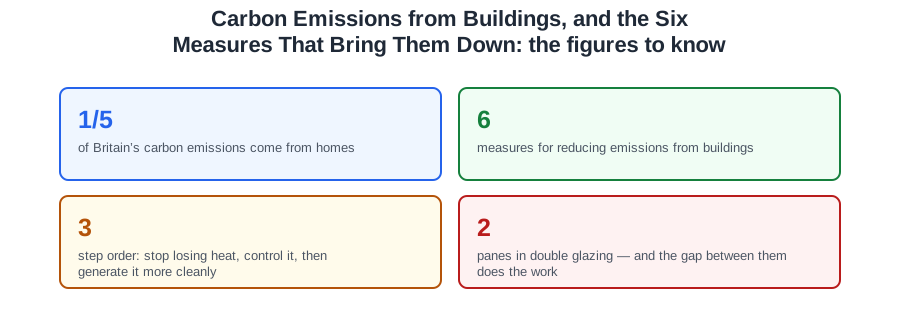
- 1/5
- of Britain’s carbon emissions come from homes
- 6
- measures for reducing emissions from buildings
- 3
- step order: stop losing heat, control it, then generate it more cleanly
- 2
- panes in double glazing — and the gap between them does the work
⚠️ Where people go wrong
- Listing only the heat source. Controls, insulation, glazing and draught proofing are all on the list.
- Getting the order backwards. Insulating first means a smaller heat source will do.
- Forgetting the legal angle. The Building Regulations require new work to meet energy standards.
- Treating pipe insulation as trivial. It is named in the measure, and it is one of the cheapest savings on any job.
📝 8-Question Self-Test
Straight from the Level 1 course question bank. Click an option to see whether you got it right — the explanation appears instantly, and there is nothing to submit.
Draught proofing, insulation, double glazing, thermostatic controls, low energy lighting and A rated appliances all reduce emissions.
Carbon dioxide is the main greenhouse gas, fossil fuels cannot be replaced, and lower emissions usually mean lower bills.
Around a fifth, which is why so much of the regulation a plumber meets is about energy.
Lower emissions and lower bills come from the same thing: using less fuel.
Insulation stops the heat escaping. The order that saves most is always the same: stop losing the heat first, control it second, generate it more cleanly third.
Both cut heat loss — double glazing through the windows, draught proofing through the gaps around doors, windows and floors.
The answer guide wants the release of harmful gases into the atmosphere. It also accepts avoiding damage to the ozone layer. Heating buildings is one of the largest single uses of energy in Britain, so what happens to a heating system genuinely counts.
The mark scheme accepts avoiding damage to the ozone layer alongside preventing the release of harmful gases. Worth knowing it is there — though ozone depletion is caused by CFC refrigerant gases rather than by carbon dioxide, so lead with harmful gases if you are asked.
Going deeper: the same ground at Level 2
Level 1 gives you the shape of this. The Level 2 guides below take it considerably further — the regulations, the calculations and the detail you will need next. Free to read, same as these.
- Start here: Environment and Sustainability for Level 1 Plumbers — the whole unit in one piece
- All 72 Level 1 guides — one per lesson, across all ten units
- The Level 1 glossary — 620 terms in plain English