Power tools do in seconds what a hand tool does in minutes — and they injure people in roughly the same proportion.
The short answer
The four faults to look for are a damaged plug, a damaged lead, missing safety parts such as a guard, and an out of date PAT label.
110 V is the site standard and its plug is yellow. 230 V is the blue plug and is usually not permitted on site.
Why site tools run at 110 volts
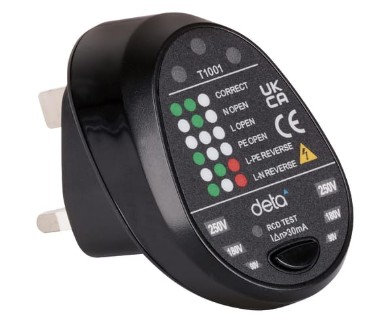
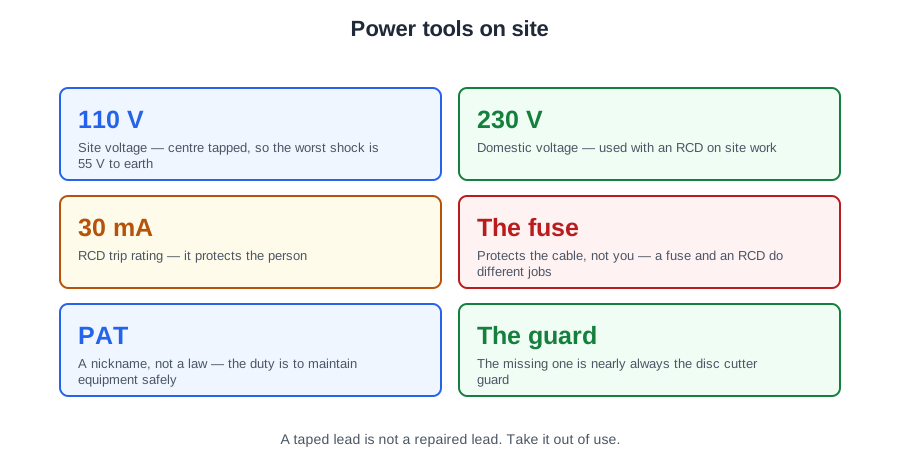
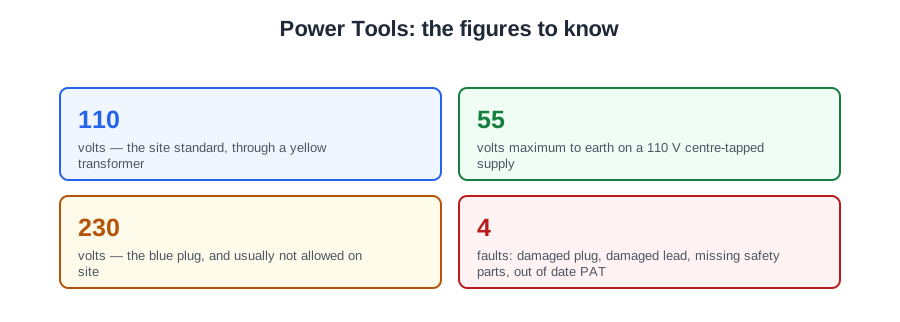
The reason is better than "because it is lower". A site transformer is centre tapped to earth, which means the 110 volts is split either side of the earth point — so the most you can ever be exposed to, between a live conductor and earth, is 55 volts.
Fifty-five volts through a person is a real shock and can still hurt. It is much less likely to kill than 230 volts, and that difference is the whole design. It is not that 110 V tools are gentler; it is that the transformer halves the voltage that can reach you through wet hands, wet ground and a damaged lead.
The colour code runs all the way up, and it is worth knowing: yellow 110 V, blue 230 V, red 400 V. On a commercial site the yellow plug is the one you are allowed to use, and a blue plug in a socket is usually somebody's extension lead for a kettle.
PAT is a nickname, not a law
There is no regulation called "PAT testing". What exists is the Electricity at Work Regulations 1989, which say electrical equipment must be maintained so that it does not cause danger. Portable appliance testing is simply the standard way firms show they have done that.
Two things follow. First, there is no legally fixed interval — a hire company might test a breaker monthly and an office might test a desk lamp every four years, both correctly, because the interval follows the risk. Second, the label is evidence, not the check. A tool with an in-date sticker and a lead you can see copper through is still a dangerous tool, and the pre-use visual inspection is the one that catches it.
A taped lead is not a repaired lead
This is the one that trips people up in the real world more than in the exam. Insulating tape over a nicked lead looks like a repair and is not one: the tape hides the damage, comes loose in the cold, and gives no mechanical strength where the cable is flexing.
A damaged lead is either replaced or the tool is taken out of service. The same goes for a plug with a cracked body or a cord grip that has let go — if the outer sheath is not clamped, every tug pulls on the terminal screws instead.
Guards, and why the missing one is always the same guard
Missing safety parts almost always means a retracting blade guard on a circular saw, wedged back because it was catching on the cut. That guard is the only thing between a spinning blade and your leg on the swing back to the bench, and a saw is at its most dangerous in the second after you release the trigger, while the blade is still turning and the tool is already moving.
Why battery tools took over
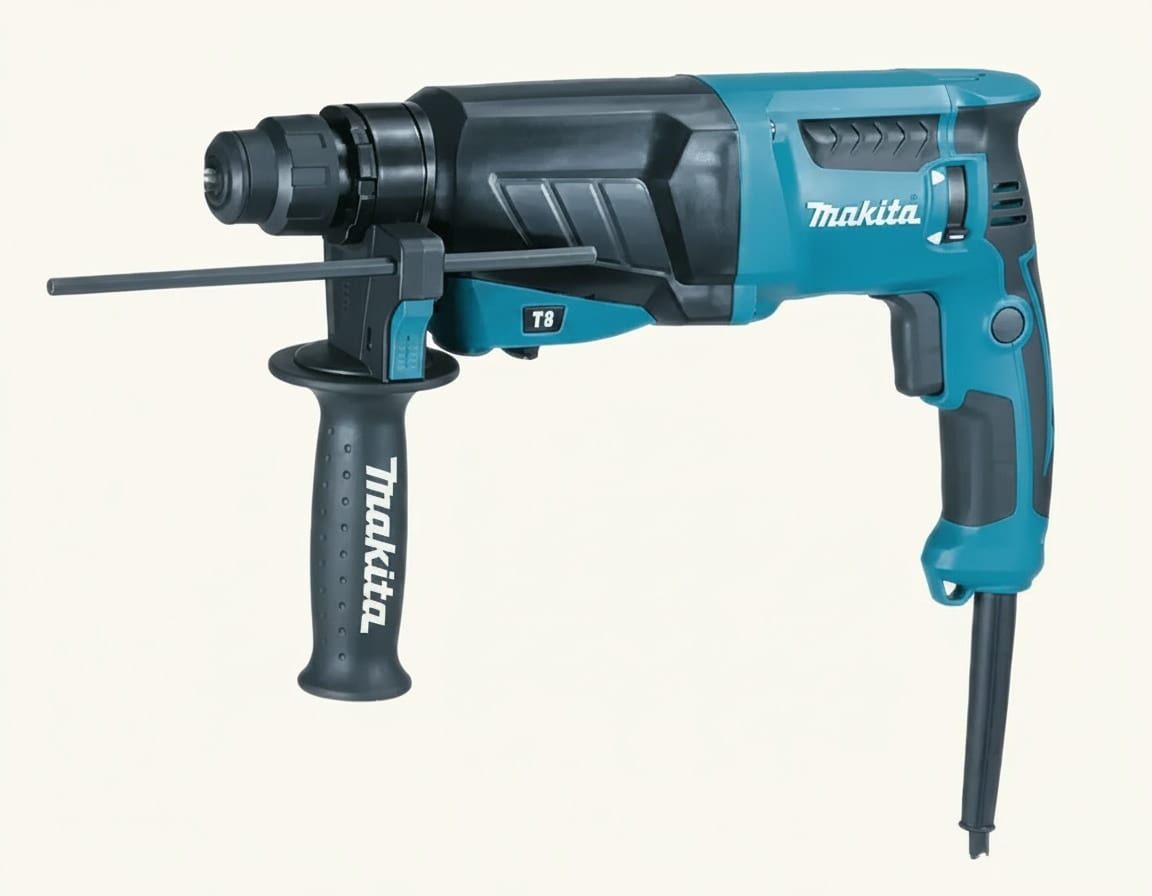
The exam answer is that there is no trailing lead — nothing to trip over, nothing to cut through, nothing to drag through a puddle. That is genuinely why they are safer, not the convenience.
In practice the trade has gone almost fully cordless for drills, drivers and small saws, and most firms now standardise on one battery platform so the same packs fit everything in the van. Corded and 110 V kit survives where the current draw is high: breakers, big grinders, mixers.
What comes next
Level 2 goes further into the electrical side — isolation, proving dead, and the safe use of tools around live services. The 55 V figure is worth carrying forward, because it is the reason for a rule you will follow for the rest of your working life.
🔢 The numbers worth memorising
- 110
- volts — the site standard, through a yellow transformer
- 55
- volts maximum to earth on a 110 V centre-tapped supply
- 230
- volts — the blue plug, and usually not allowed on site
- 4
- faults: damaged plug, damaged lead, missing safety parts, out of date PAT
⚠️ Where people go wrong
- Saying battery tools are safer because they are convenient. The reason is no trailing lead to trip over or cut.
- Treating a taped lead as repaired. A taped repair is one of the named faults.
- Using a saw with the guard removed. The guard is what stops the blade reaching you.
- Ignoring the PAT label. No label or an expired one means the tool has not been checked.
- Confusing yellow and blue. Yellow is 110 V site kit; blue is 230 V.
📝 8-Question Self-Test
Straight from the Level 1 course question bank. Click an option to see whether you got it right — the explanation appears instantly, and there is nothing to submit.
110 V through a transformer is far less likely to kill you than 230 V, which is why sites insist on it.
A jig saw cuts curves and shapes, and can cut into the middle of a board. A circular saw does fast straight cuts.
Faults include damaged plugs, damaged lead, missing safety parts and an out of date PAT label.
110 V through a transformer is far less likely to be fatal than 230 V — which is the whole reason for the yellow plugs and the transformer.
An SDS drill has a hammer action and a special chuck, for drilling masonry and concrete quickly.
Damaged leads — cuts, nicks, taped repairs, or the lead pulling out of the tool or the plug — are one of the four named faults.
Missing safety parts are one of the four named faults. A guard is not something removed to work faster — it is the part that stops the blade reaching you.
The jig saw cuts curves and shapes and can cut into the middle of a board. The circular saw does fast straight cuts.
Going deeper: the same ground at Level 2
Level 1 gives you the shape of this. The Level 2 guides below take it considerably further — the regulations, the calculations and the detail you will need next. Free to read, same as these.
- Start here: Site Preparation for Level 1 Plumbers — the whole unit in one piece
- All 72 Level 1 guides — one per lesson, across all ten units
- The Level 1 glossary — 620 terms in plain English