A fixing has to hold a full radiator or a full cistern for twenty years. Nearly every failure comes from the wrong fixing in the wrong surface, and usually that surface is plasterboard.
The short answer
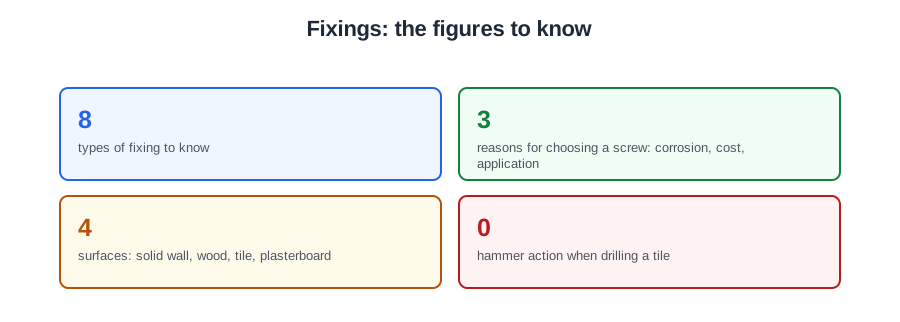
Eight fixings to know, and three reasons for choosing a screw: corrosion resistance, cost, and application.
Four surfaces, four different answers. Solid wall — masonry bit with hammer action, wall plug and screw. Wood — pilot hole and screw. Tile — tile bit, slow speed, no hammer, then change bits for the wall behind. Plasterboard — a fixing designed for plasterboard, or better still find the timber.
Plasterboard is where nearly every fixing fails
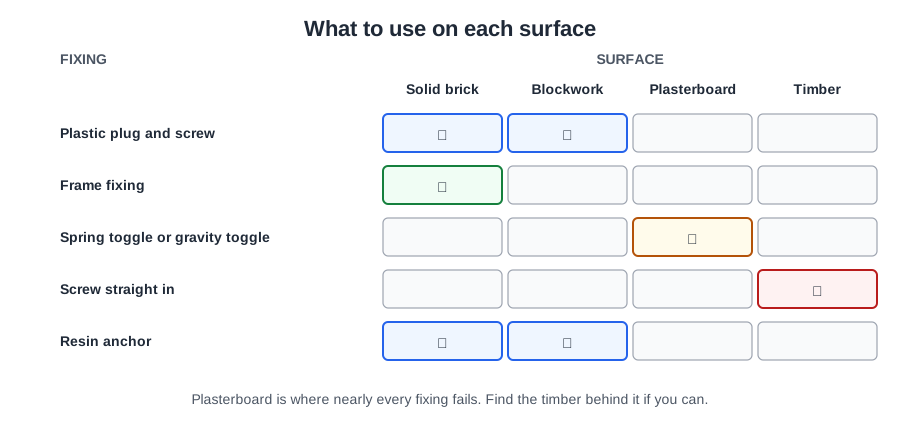
Worth understanding what plasterboard actually is: gypsum plaster in a paper sandwich, usually 12.5 mm thick, with nothing behind it but a void. An ordinary wall plug relies on being squeezed into solid material. In plasterboard it has nothing to squeeze against, so it turns in the hole and then pulls out, taking a cone of plaster with it.
The proper plasterboard fixings all solve the same problem — spreading the load onto the back face of the board. Spring toggles swing open behind it, gravity toggles drop open, metal self drive anchors bite a wide thread through it, and hollow wall anchors compress from behind as you tighten them.
They work well for a towel rail or a shelf. They do not work for a radiator or a cistern, and that is the exam point and the real one.
Do the arithmetic on a radiator
People underestimate this because a radiator is light when you carry it in. A large double panel radiator is around 30 kg empty and holds the better part of ten litres, and water is a kilogram a litre — so it is close to 40 kg hanging on two brackets, permanently, warming and cooling and being leaned on.
A close coupled cistern is the same story: the ceramic plus nine litres of water plus somebody's weight when they sit on the pan and lean back.
So on a stud wall you find the stud and fix into timber, or you get a noggin or a plywood pattress put in behind the board before it is closed up. On a new build that means talking to the carpenter at first fix, which is exactly the kind of thing the work schedule and the drawings exist to let you do.
Tiles: two bits, one hole
Drilling tile is the sequence people get wrong. Hammer action shatters a glazed tile, and the drill wanders across the glaze before it bites. So: tile bit, slow speed, no hammer, and a bit of masking tape over the spot to stop the tip skating.
Then — and this is the step that gets skipped — change the bit once you are through the tile. A tile bit in the brick behind it will not get far, and pushing harder is how you crack the tile you have just successfully drilled.
Brass, and why it shears
Brass screws are used where corrosion matters or where they will be seen, and they are soft. Drive one into hardwood without a pilot hole and the head twists off, leaving a brass stub in a hole you now cannot use.
The trade fix is old and still works: drive a steel screw of the same size first to cut the thread, take it out, then put the brass one in. It costs ten seconds and saves the job.
Why not nails
Nails hold by friction alone. Vibration — and pipework vibrates every time a boiler fires and every time a tap slams shut — works them loose over months. They also cannot be undone, and a pipe clip is a thing somebody will need to remove one day, possibly you, possibly in a hurry.
What comes next
Level 2 brings bracket spacings for each pipe material, and the reason plastic pipe needs more clips than copper. The fixing choice underneath is the same decision you are making here: what is the surface, what is the load, and what happens in twenty years.
🔢 The numbers worth memorising
- 8
- types of fixing to know
- 3
- reasons for choosing a screw: corrosion, cost, application
- 4
- surfaces: solid wall, wood, tile, plasterboard
- 0
- hammer action when drilling a tile
⚠️ Where people go wrong
- Using an ordinary wall plug in plasterboard. It pulls straight out.
- Hanging a radiator or cistern on plasterboard alone. Find the stud or fit a pattress.
- Using hammer action on a tile. Slow speed, tile bit, no hammer — then change bits for the wall.
- Driving a brass screw without a pilot hole. Brass is soft and the head shears off.
- Using nails on pipework fixings. They work loose under vibration and cannot be undone.
📝 8-Question Self-Test
Straight from the Level 1 course question bank. Click an option to see whether you got it right — the explanation appears instantly, and there is nothing to submit.
Fix to the stud if you can find it. If not, use a plasterboard fixing — an ordinary plug pulls straight out.
Corrosive properties, cost and the application all decide the choice. Brass does not rust, so it suits damp places.
A mirror screw is a countersunk screw with a threaded hole in the head to take a chrome dome cap — used for mirrors and bath panels.
Self tapping screws cut their own thread as they go, and are used in sheet metal and plastic.
Plasterboard fixings — spring toggles, self drilling plugs and similar — spread the load behind a hollow board. An ordinary plug pulls straight out.
Brass does not rust, so it is used where damp or appearance matters. It is softer than steel, so drill a pilot hole first.
Corrosive properties are one of the stated reasons for choosing screws: plain steel rusts and will stain and eventually fail somewhere damp.
Drill the tile on slow speed with no hammer action using a tile bit, then change to a masonry bit for the wall behind. Tape over the spot to stop the bit wandering.
Going deeper: the same ground at Level 2
Level 1 gives you the shape of this. The Level 2 guides below take it considerably further — the regulations, the calculations and the detail you will need next. Free to read, same as these.
- Start here: Site Preparation for Level 1 Plumbers — the whole unit in one piece
- All 72 Level 1 guides — one per lesson, across all ten units
- The Level 1 glossary — 620 terms in plain English