Learn four shapes and you never have to read a safety sign again. The ones worth actually reading are on the tin in your hand.
The short answer
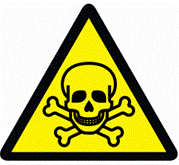
Four types, decided by shape and colour. Red circle with a bar — do not. Yellow triangle — be careful. Blue circle — you must. Green rectangle — safety, or the way out.
That is the exam answer. The signs that will actually change what you do are somewhere else entirely.
The system is deliberate, and it is international
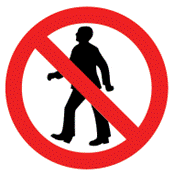
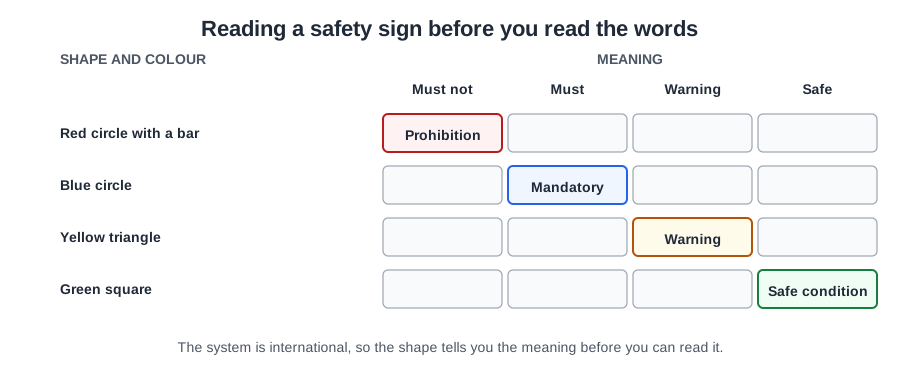
The shapes and colours are standardised, which is why a sign works in a country whose language you do not read. Shape carries the grammar — forbid, warn, instruct, inform — and colour reinforces it. That is also why the symbols are pictures and not words.
Fire equipment signs are the ones people miss: red, but red squares, and they mark where something is rather than forbidding anything.
The labels that matter more: hazardous substances
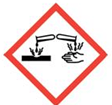
Wall signs tell you about the site. The orange or red diamonds on the product in your hand tell you about the thing you are about to open, and plumbers handle a lot of them: solvent cement, cleaning fluid, flux, jointing compound, descaler, leak sealant.
The pictograms to know on sight are flammable, corrosive, toxic, harmful or irritant, and the one that looks like a person with a shaded chest — a serious longer-term health hazard, which is the one people ignore because nothing happens on the day.
Behind each is a safety data sheet, which the supplier has to provide and which says what the risks are, what protection to use, and what to do if it goes wrong. Under COSHH your employer has to assess these substances before you use them. Most apprentices never see a data sheet; asking for one is a completely reasonable thing to do.
Permits to work
On larger and industrial sites some jobs cannot start until a permit is issued. The ones a plumber meets are hot works — anything involving a flame, which is soldering — and confined space entry.
A hot works permit usually requires the area cleared of combustibles, a fire extinguisher to hand, and a fire watch for a period after you finish. That last part is not bureaucracy: a smouldering joist can take an hour or more to show itself, and the classic soldering fire starts after everyone has gone home.
When there is no sign at all

Domestic work has no signage. Nobody puts a triangle on a customer's loft hatch. The habits you build on a signed site are the ones that have to carry over to a house where nothing is marked and nobody has assessed anything — which is where most plumbers spend their careers.
What comes next
At Level 2 the substance labels become COSHH proper: assessing what you are using, controlling exposure, and the hierarchy that puts PPE last rather than first.
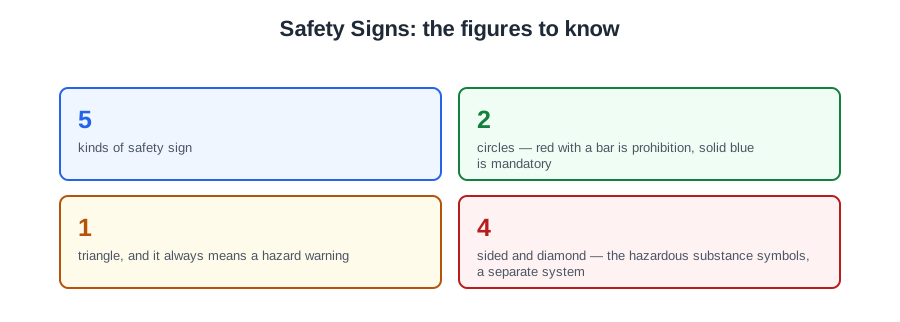
🔢 The numbers worth memorising
- 5
- kinds of safety sign
- 2
- circles — red with a bar is prohibition, solid blue is mandatory
- 1
- triangle, and it always means a hazard warning
- 4
- sided and diamond — the hazardous substance symbols, a separate system
⚠️ Where people go wrong
- Mixing prohibition and mandatory. Both are round: red with a bar means must not, solid blue means must.
- Calling a green sign a warning. Green is safe condition — exits, first aid, assembly points.
- Confusing the red fire equipment rectangle with a red prohibition circle.
- Trying to fit the diamond hazardous substance symbols into the five sign types. They are a separate system.
📝 8-Question Self-Test
Straight from the Level 1 course question bank. Click an option to see whether you got it right — the explanation appears instantly, and there is nothing to submit.
Mandatory signs are solid blue circles and mean you must. Nearly every PPE sign on a site is one of these.
A solid blue circle is a mandatory sign: it means you must. Nearly every PPE sign on site is one of these.
Prohibition is the only sign type with the diagonal bar through it. If it has the bar, it is telling you not to.
Round and solid blue is a mandatory sign: you MUST do this. Eye protection must be worn, for instance.
Green — it is a safe condition sign showing the way out. A RED square shows where the fire equipment is, which is what catches people out.
Prohibition. It is the only sign type with the diagonal bar through it, and it always means do not — no smoking, no entry, no naked flames.
The Range names signs, safety notices, mandatory signs, prohibition signs, hazard warning signs, information signs and hazardous substances. A planning notice is not a safety sign.
A hazard warning sign is a yellow triangle telling you something is there. An information sign gives you information rather than an instruction. Both sit alongside safety notices, mandatory and prohibition signs.
Going deeper: the same ground at Level 2
Level 1 gives you the shape of this. The Level 2 guides below take it considerably further — the regulations, the calculations and the detail you will need next. Free to read, same as these.
- Start here: Safe Working for Level 1 Plumbers — the whole unit in one piece
- All 72 Level 1 guides — one per lesson, across all ten units
- The Level 1 glossary — 620 terms in plain English