Build the change first and you have no agreed basis for recovering the money or the time.
The short answer
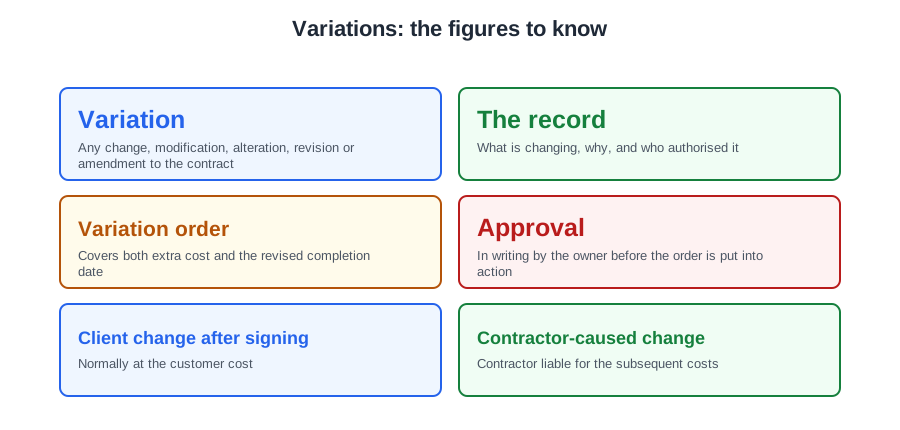
A variation is any change, modification, alteration, revision or amendment to the original contract and to how the work is to be carried out. However small it looks, it must be recorded and authorised in writing by whoever holds contractual authority before it is built. Three things go in the record every time: what is changing, why, and who authorised it.
Why a small change is not a small matter
You are half way through first fix when the client says the en-suite basin would look better on the opposite wall. About 4 m of extra pipework. Friendly client, small change, and the temptation is to run the pipe and sort the paperwork later.
The drawings and the specification are the contract. They are what you priced. Anything departing from them changes what you are owed and, very often, when you can finish. Build it first and you have no agreed basis for recovering either. Nearly every construction project meets a change, which is why most contracts contain a variation clause — a term saying in advance how changes will be instructed, priced and recorded.
Where variations come from
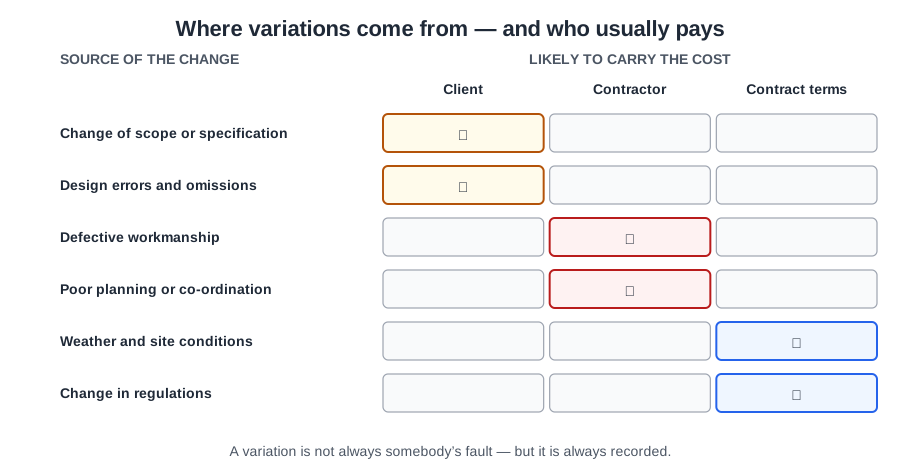
Four families of cause, and they point at who is likely to carry the cost:
| Source | Typical causes |
|---|---|
| Owner or client | Change of plans or scope, change of specification, change of schedule, indecision holding up a decision |
| Consultant or designer | Errors and omissions, ambiguous or inadequate details, conflicts between contract documents, a design change |
| Contractor | Defective workmanship, lack of co-ordination, unavailable skills or equipment, poor planning |
| Other | Weather, differing site conditions, safety considerations, a change in government regulations |
That last group matters: a variation is not always somebody's fault. A change in the Building Regulations part way through a long contract is nobody's error, but it is still a change to the work.
Who can authorise one
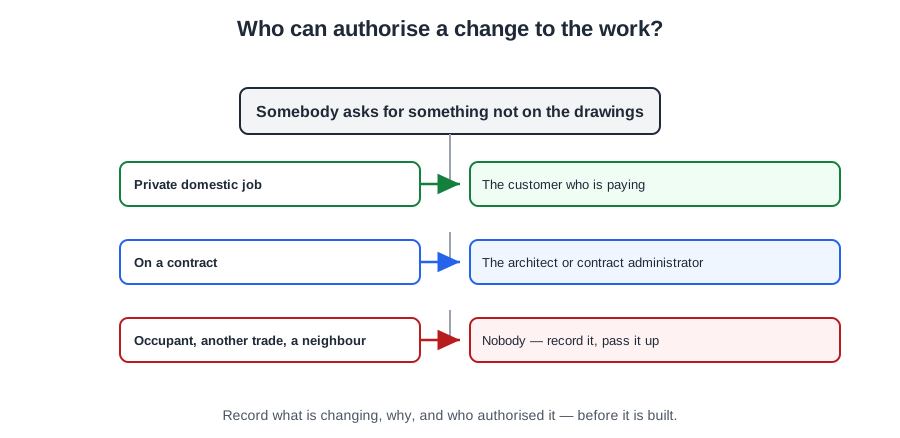
Only the person who holds contractual authority. On a private domestic job that is the customer who is paying. On a contract it is whoever the contract names — typically the architect or contract administrator, sometimes the client's representative or the main contractor's project manager. It is never the occupant, never another trade's foreman, and never the operative who was asked.
So when a client asks an apprentice for a change on a Tuesday afternoon, the apprentice's job is not to decide. It is to stop, record what has been asked, and pass it to the supervisor. Any departure from the contract drawings or specification goes through change control before it is built.
The wrong answers are worth naming, because they are the ones people reach for. Running the pipe and putting the hours on a daywork sheet leaves you claiming for work nobody instructed. Refusing outright because the drawings were signed off at tender stage is also wrong — contracts anticipate change, that is what the variation clause is for. And an apprentice's sketch handed to the client is not an agreed record of anything.
The variation order
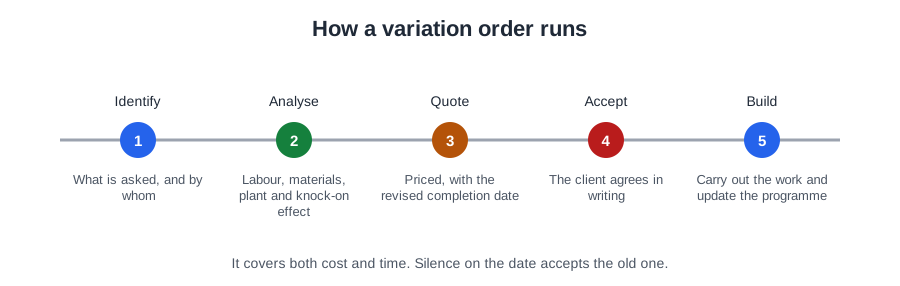
A variation order is the document that records an agreement made with a client to alter the work specified in a building contract. Any variation changing the agreed contract price must be agreed and approved in writing by the owner before the variation order can be put into action.
Crucially it covers both cost and time. A change nearly always pushes the finish date, and if the order says nothing about that, the contractor has quietly accepted the same completion date with more work in it.
- The change is identified and recorded — what is being asked for, and by whom.
- The effect is analysed: extra labour, materials and plant, and the knock-on effect on the rest of the programme.
- A priced variation quotation is issued, showing the extra cost and the revised completion date.
- The client accepts it in writing.
- Only then is the work carried out, and the programme updated.
A verbal agreement on the doorstep leaves nothing to show when the customer disputes the final account six weeks later. Written communication gives a permanent record; settling the price at final account stage invites an argument over both the money and the delay. An instruction to change what is used or how it is done should come as a letter, a signed variation order or a site instruction form — never as a verbal request.
Who bears the cost
For private work, the general rule: if the customer suggests changes after the contract has been signed, the customer bears the costs of the delay and of the additional material and design. But the reverse holds too — if the variation is caused by poor installation or an inability to complete a task properly, the contractor could be liable. If the clerk of works decides the routing of exposed pipework is not acceptable, that alters the agreed design and the contractor pays to put it right.
Written quotations usually carry an exclusions section listing what the price does not cover — making good plaster, lifting fitted carpets, removing asbestos. Exclusions protect the contractor only for what they actually name. If a private customer's job turns out to include items not specifically listed in the exclusions, the company bears the extra cost — not the customer's insurer, not the merchant, not the local authority. A vague exclusions list is a bill waiting to happen.
Getting agreement early also saves money in its own right: one of the real costs of a variation is the time the whole agreement process takes while the gang stands about waiting to know what to build.
Materials: three changes in disguise
The specified product cannot be got
The specification calls for a particular make of thermostatic mixing valve; the merchant now quotes six weeks and offers an equivalent. An alternative is normally permitted, provided the performance, functional and visual aspects of the design can be assured — and deciding that is the designer's job, not the merchant's. The supervisor checks the alternative against the specified performance and gets written approval before ordering. A supplier's assurance that something is like for like is not approval. The substitution is a variation, and the written approval records what was fitted and why.
Fitting it on the merchant's word transfers the risk to you. Leaving the valve out for snagging hands over an incomplete system. Ordering the specified valve anyway protects the specification and wrecks the date.
The building is not as drawn
The builder's opening for the boiler flue is 150 mm out of position and cannot be used as drawn. The rule is blunt: any discrepancy — an out-of-tolerance substrate, edge, surface or opening — should be reported immediately, before undertaking subsequent operations. Not at the weekly progress meeting, not after the boiler is on the wall.
The reason is partly technical and partly commercial. Core-drilling a new hole or shifting the appliance may breach the flue clearances shown on the drawings. And the moment you build over somebody else's error without reporting it, the error becomes yours.
The delivery is damaged
Materials from third parties are inspected on receipt to confirm the delivery is what was ordered or specified, and to confirm as far as reasonably possible its quality, viability, conformity and type. The documentation is checked and the delivery signed for — sign for what arrived, not for what the note says arrived.
The same applies to client-supplied materials: the same inspection and acceptance or rejection as for the contractor's own. So when a client's sanitaryware is unpacked and one basin is chipped and the WC pan has a hairline crack, the supervisor rejects the damaged items and refers them to the client and the supplier immediately. Damaged items are discarded, clearly labelled and kept separate from sound goods so they cannot be fitted by mistake.
Fitting them anyway makes the contractor responsible for appliances that were already defective. Replacing them quietly from your own stock and adding them to the invoice is an unauthorised variation. Stopping all work until the client buys a new suite is a wild over-reaction to two damaged items.
In all three cases the answer is the same shape: stop, report, get it agreed in writing, then build. What changes is who you report to — the designer for a substitution, the main contractor or clerk of works for a discrepancy, the client and supplier for damaged goods.
🔢 The numbers worth memorising
- Variation
- Any change, modification, alteration, revision or amendment to the contract
- The record
- What is changing, why, and who authorised it
- Variation order
- Covers both extra cost and the revised completion date
- Approval
- In writing by the owner before the order is put into action
- Client change after signing
- Normally at the customer cost
- Contractor-caused change
- Contractor liable for the subsequent costs
- Discrepancy
- Report immediately, before undertaking subsequent operations
⚠️ Where people go wrong
- Doing the extra and putting it on a daywork sheet,You are claiming for work nobody instructed. Get it authorised first.
- Refusing because the drawings were signed off,Contracts anticipate change — that is what the variation clause is for.
- Taking the instruction from the occupant or another trade,Only whoever holds contractual authority can vary the work.
- Pricing cost but not time,A variation order states the revised completion date too, or you have accepted the old one.
- Relying on a vague exclusions list,Anything not specifically listed becomes the company cost.
- Accepting a merchant word that a product is equivalent,Substitution needs the designer written approval on performance, function and appearance.
- Working over a builder error,Report it before the next operation, or the error becomes yours.
📝 10-Question Self-Test
Straight from the Level 3 course question bank. Click an option to see whether you got it right — the explanation appears instantly, and there is nothing to submit.
A written quotation is a fixed price for the work described, and the exclusions list is what carves things out of it, so anything not specifically excluded counts as included and the company carries the cost. The customer’s insurer is tempting because somebody has to pay, but insurance covers loss or damage, not a gap in your own quotation.
Any departure from the contract drawings or specification is a variation and must go through the change-control route before it is built: what is changing, why, and who authorised it. CIBSE Commissioning Code B requires all parties to have documentation procedures for variations to contract, with documentary backup of what was changed, how and why. Building the change first leaves the contractor with no agreed basis for recovering the extra time and cost.
BS 8000-0 clause 4.1 requires materials from third parties to be inspected to confirm the delivery is what was ordered or specified, so a different make is a departure to be dealt with rather than accepted. A supplier's assurance is not approval: the substitution is a variation, and all changes are to be confirmed in writing, so the designer's written agreement is what makes the record show what was fitted and why.
Extra work should be priced and its effect on the programme stated, and the customer's agreement obtained in writing before it starts; this is the documented change-control mechanism that the standards expect. Doing the work first and invoicing later invites dispute over both cost and time, and a verbal agreement leaves no evidence if the client later queries the account.
BS 8000-0 clause 5.3 says any discrepancies, such as out-of-tolerance substrates, edges, surfaces or openings, should be reported immediately before undertaking subsequent operations. Cutting a new hole or moving the appliance without agreement can breach the flue clearances on the drawings and shifts responsibility for the error onto the plumbing contractor.
Day work sheets record the additional labour, materials and plant that come out of a change, and are used where the cost of that change is difficult to estimate in advance. A time sheet records an employee's hours for wages; it does not charge the client for extra work.
Any variation that changes the agreed contract price must be agreed and approved in writing by the owner before the variation order is put into action, and the order has to state both the cost and the time effect. Fitting it first and adding a figure to the invoice leaves a charge the client never agreed to.
A variation is any change, modification, alteration, revision or amendment to the original contract and to how the work is to be carried out. The City and Guilds chart of causes of variation orders, which is trade teaching rather than a standard, puts weather, differing site conditions, safety considerations and changes in government regulations in a group of other variations that are nobody's fault. A variation does not require blame.
Rerouting the pipework alters the agreed design, so it is a variation: a discussion has to take place with the contractor and the reasons for the change and its impact on time and cost must be put to the customer. Identifying a problem and holding contractual authority to instruct the change are two different things.
An instruction to change what is used or how it is done should come as a letter, a signed variation order or a site instruction form, because written communication provides a permanent record that can be shown to the client and to the quantity surveyor. A personal diary records only what the supervisor wrote, and a daywork sheet is a record of hours, not an instruction.
Going further: the lessons behind this article
This article is the public answer. Unit 336 of the Level 3 course takes the same ground to the depth the exam and the synoptic assignment ask for, in 3 lessons:
- Variations: what counts as a change to the contract
- Variation orders: pricing extra time and extra cost
- Materials changes: substitutions, discrepancies and damaged goods
- Site procedures: the Unit 336 guide — every article on this unit in one place
- All PlumbMate articles — Level 1, 2 and 3
- The Level 3 course — the whole 8202-35 Diploma