A large house has an en suite over the garage, thirty metres of pipe from the cylinder. The customer runs the tap for the best part of a minute before the water turns warm. That wasted water, and the heat that leaked out while it stood, is what a secondary circulation exists to stop.
The short answer
A secondary circulation returns the hot draw-off to the storage vessel in a continuous pumped loop, so the distribution pipework is always hot and the water at the tap is hot almost at once. The pipe going out is the secondary flow; the pipe coming back is the secondary return.
When is a run long enough to need one? Here are the maximum recommended lengths of uninsulated hot water draw-off pipe:
| Outside diameter | Maximum length |
|---|---|
| 12 mm | 20 m |
| Over 12 mm up to and including 22 mm | 12 m |
| Over 22 mm up to and including 28 mm | 8 m |
| Over 28 mm | 3 m |
The lengths look arbitrary until you notice what they have in common: each holds roughly the same volume. The underlying rule is that a dead leg on a secondary circulation system should not exceed a volume of 0.5 litres. Dead legs are insulated and kept as short as practicable.
The pump
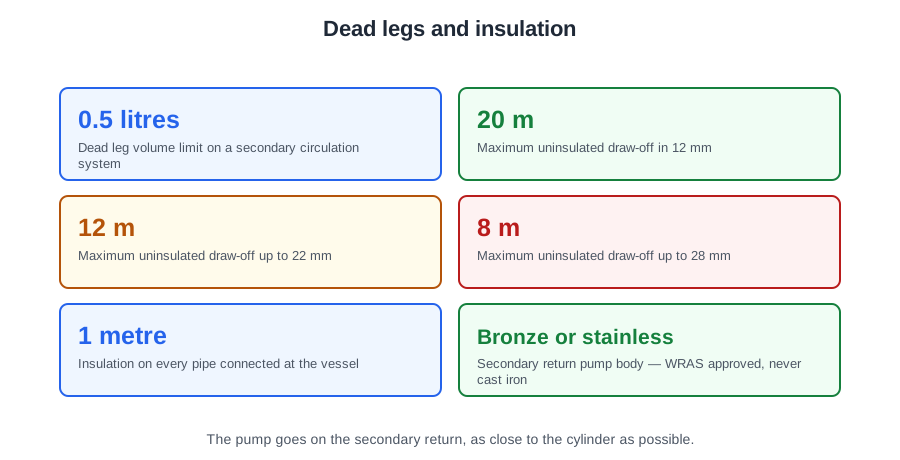
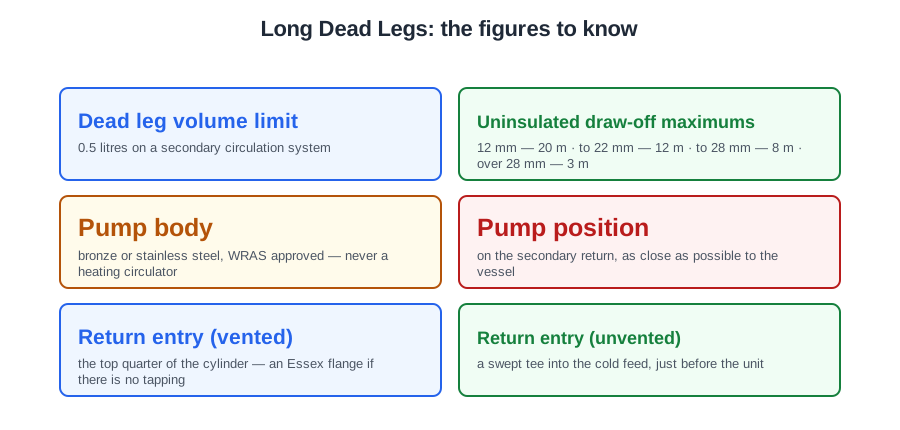
The circulator must have a bronze or stainless steel body and be WRAS approved. A central heating circulator has a cast iron or steel body and would rust, discolouring water that people drink and wash in, so one must never be used.
On a domestic system the pump goes on the secondary return, as close as possible to the storage vessel, pumping into it, with isolating valves either side. Wiring and earthing it is electrical installation work under BS 7671.
Reverse circulation must be impossible, or the coolest water would be pushed out to the taps and the store would never reach 60 °C. A non-return (single check) valve on the return, between the pump and the cylinder, prevents it.
Where the return enters
On an open vented cylinder the return enters about a quarter of the way down — the top quarter of the cylinder, three quarters of the way up from the bottom — so the top of the store stays the hottest part. Where no tapping exists, an Essex flange makes the connection.
An unvented vessel usually has no secondary tapping at all, and one cannot be made in the vessel. The return is instead taken into the cold feed with a swept tee, just before the feed enters the unit, with the check valve after the pump and before the tee.
Controls
The pump must not run twenty-four hours a day. It is controlled by a time clock set to the periods of demand, with pipe thermostats (aquastats) that stop the pump when the circuit is up to temperature and start it when the water cools. On an office block, fitting a time clock is the straightforward way to cut the energy used by the storage vessel.
On large systems: a shunt pump stirs the cylinder during low demand to remove cold layers; a cylinder thermostat holds the store at a maximum of 60 °C; a pipe thermostat on the secondary flow holds it at a minimum of 50 °C; and a motorised valve on the return close to the vessel stops water being drawn back through the return when the pump is off.
Balancing
Left to itself, circulating water takes the shortest branch and the far outlets go cold. Lockshield bronze valves throttle the easy branches, fitted as close to the terminal fittings as possible, and the system is balanced during commissioning.
The purpose is to meet the design flow rate requirements at the terminal fittings, so every outlet stays hot: at least 50 °C at the outlet within a minute, with the return to the cylinder at 50 °C or more (55 °C in healthcare). Flow rate at an outlet is measured with a weir gauge.
Three rules from BS 8558 that are easy marks:
- Fit no standby pump, and no automatic air eliminators or air bottles — each creates a stagnant pocket.
- A towel rail must not be connected to a secondary hot water circuit. Connect it to the primary or heat it electrically.
- Every pipe kept hot by the circulation is insulated along its entire length, with heat loss no greater than 7.89 W/m at 15 mm, 9.12 W/m at 22 mm and 10.07 W/m at 28 mm.
Trace heating: the other answer
Where a return pipe is impractical — a single remote outlet, a refurbishment where the second pipe cannot be run, or a circuit whose return temperature cannot be guaranteed — the alternative is trace heating.
An electric heating cable is laid directly against the pipe along its whole length, with the thermal insulation wrapped over the top of both. The cable is self-regulating: it puts out more heat where the pipe is cold and less where it is already warm, so it cannot cook the pipe.
The water inside is held at temperature, so the outlet runs hot almost instantly — with no secondary return, no circulator and no pump running costs.
BS 8558 recognises it directly: where it is not practical to recirculate, or where the minimum return temperature cannot be guaranteed, a single pipe system with electrical self-regulating trace heating may be installed to maintain at least 50 °C, eliminating the dead leg right up to the draw-off point. It becomes necessary when the pipework is so long, and holds so much water, that drawing the cool water off would take an unreasonable time.
Two practical points: time the element to the periods when hot water is most used, so the energy stays small; and where a system cannot deliver at the required temperature in the required time, Approved Document G expects the layout to be improved rather than the temperature raised.
🔢 The numbers worth memorising
- Dead leg volume limit
- 0.5 litres on a secondary circulation system
- Uninsulated draw-off maximums
- 12 mm — 20 m · to 22 mm — 12 m · to 28 mm — 8 m · over 28 mm — 3 m
- Pump body
- bronze or stainless steel, WRAS approved — never a heating circulator
- Pump position
- on the secondary return, as close as possible to the vessel
- Return entry (vented)
- the top quarter of the cylinder — an Essex flange if there is no tapping
- Return entry (unvented)
- a swept tee into the cold feed, just before the unit
- Insulation heat loss
- 7.89 W/m at 15 mm · 9.12 at 22 mm · 10.07 at 28 mm
- Trace heating
- self-regulating cable maintaining at least 50 °C
⚠️ Where people go wrong
- Using a central heating circulator on a secondary circuit. Cast iron rusts, and that water is drunk.
- Leaving out the non-return valve. Reverse circulation pushes the coolest water to the taps and the store never reaches 60 °C.
- Taking the return into the top of an unvented cylinder. There is usually no tapping and one cannot be made — it goes into the cold feed.
- Fitting a standby pump, an air bottle or an automatic air eliminator on a secondary circuit. Each is a stagnant pocket.
- Connecting a towel rail to the secondary circulation.
- Balancing with the valves at the cylinder end. Lockshields go near the terminal fittings.
- Raising the store temperature to get hot water faster at a far outlet. Improve the layout — that is what AD G expects.
📝 10-Question Self-Test
Straight from the Level 3 course question bank. Click an option to see whether you got it right — the explanation appears instantly, and there is nothing to submit.
A weak main cannot properly supply an unvented cylinder or a mains-fed thermal store, because both depend on mains pressure and flow at the moment the tap is opened. A centralised stored system fills slowly through the day and gives its contents up quickly, so a bath can still be run. Over-sink heaters would leave the bath and basins unserved.
D1 runs from the safety valve to the tundish; D2 runs from the tundish onwards. D2 is sized at least one pipe size larger than the valve outlet so it can carry the discharge freely, and it gets larger still if the run is long or has many bends.
Water hammer is a pressure surge made when moving water is stopped suddenly, and a quarter-turn tap does exactly that. The single check valve makes it worse, because it seals the only route back towards the main and leaves the shock wave nowhere to go. On a cold feed from a storage cistern the pressure is low and the cistern absorbs the surge anyway.
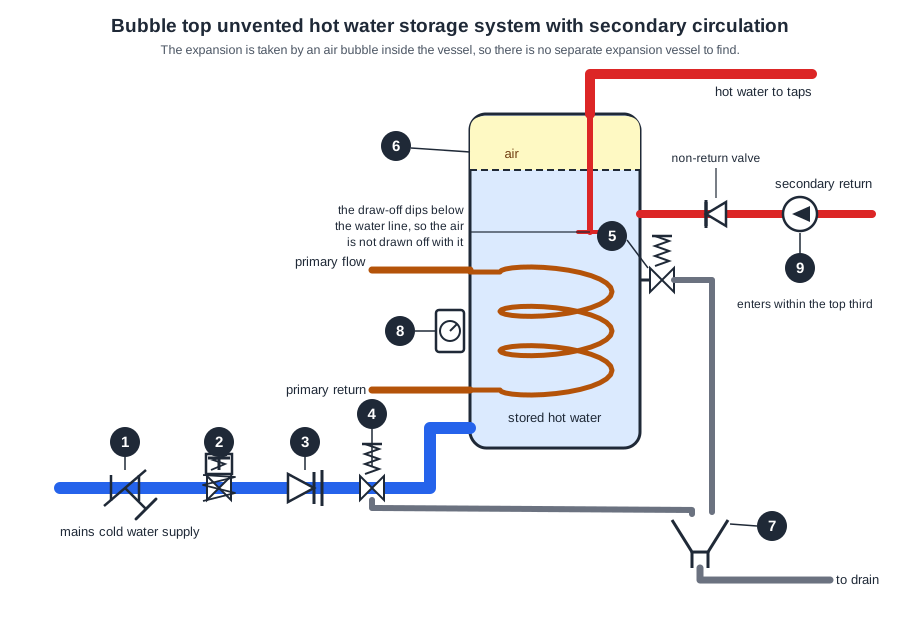
Component 1 is the line strainer, a fine mesh filter that keeps grit and debris carried in by the main out of the controls downstream. It sits immediately before the pressure reducing valve, because one piece of grit on a reducing valve seat will make it pass, hunt or stick. Nothing in the inlet group shuts the supply off when pressure falls.
The water in a secondary loop is drinking water being circulated constantly, so a cast iron heating circulator would rust and discolour it. A bronze or stainless steel body does not corrode, which is why the pump must be that material and WRAS approved. Noise is not the reason, and no circulator works in either direction of flow.
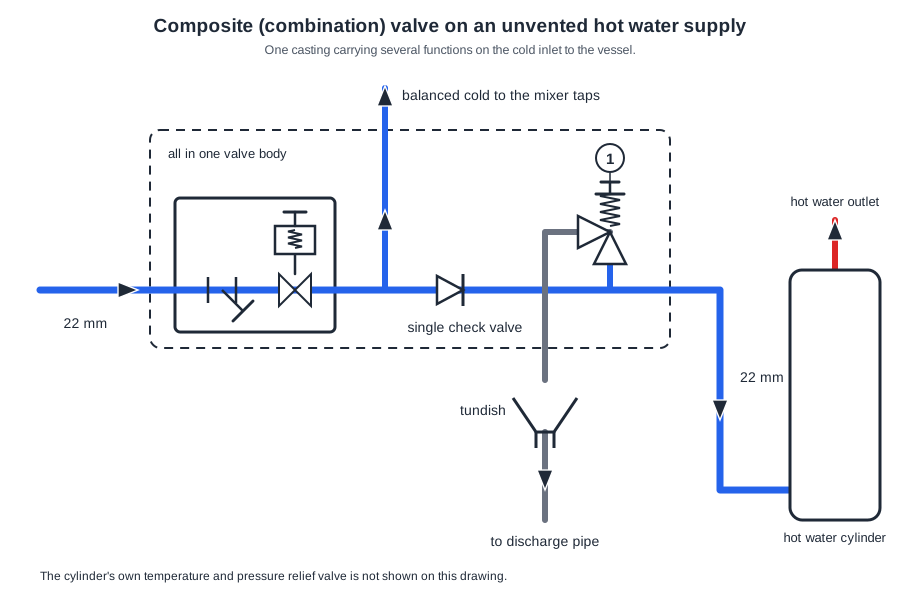
The inner box on the inlet contains two things: the hatched square is a line strainer, and the valve beside it, with a spring and adjuster on top, reduces the incoming main to the working pressure the cylinder is rated for. The strainer goes first to protect that seat. A “double check valve” would be drawn as two check symbols in series and does nothing to pressure.
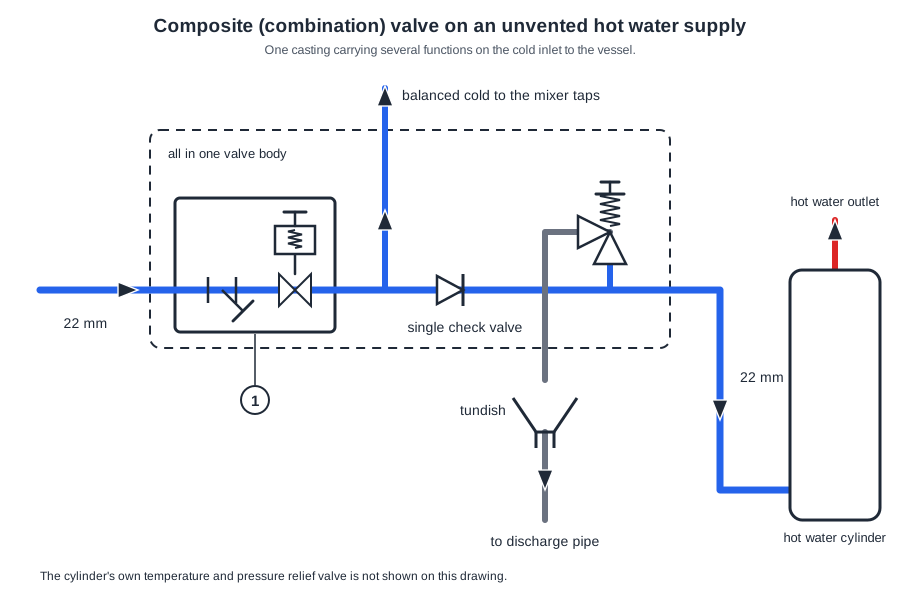
1 is the inner box at the inlet, holding two fittings in one body: the diagonally hatched square is a line strainer, and immediately after it sits a spring-topped pressure reducing valve. Strainer first, so grit can never lodge in the reducing valve seat. A “temperature and pressure relief valve” lets water out and would be drawn piped to the tundish, as the relief valve further along is.
The vent must rise clear of the cistern so that expansion, or thermo-circulation if the heating controls fail, cannot discharge over it: 150 mm plus 40 mm for every metre of system height. BS EN 806-2 clause 19.2.7 gives that figure for gravity circulation systems and the withdrawn BS 6700 clause 5.3.9.2 has the same words; BS 8558 sets no figure but gives the reason, that the vent is taken sufficiently high above the overflow level of the feed cistern to prevent thermo-circulation and the collapse of the cistern. A pumped circuit needs a separate allowance for the pump head.
That is trace heating: a self-regulating electric heating cable laid along the pipe with the insulation wrapped over both, holding at least 50 °C right up to the draw-off point. Primary circulation tempts, but that is the boiler-to-cylinder circuit; it heats the store, not the distribution pipework the learner is being asked about.
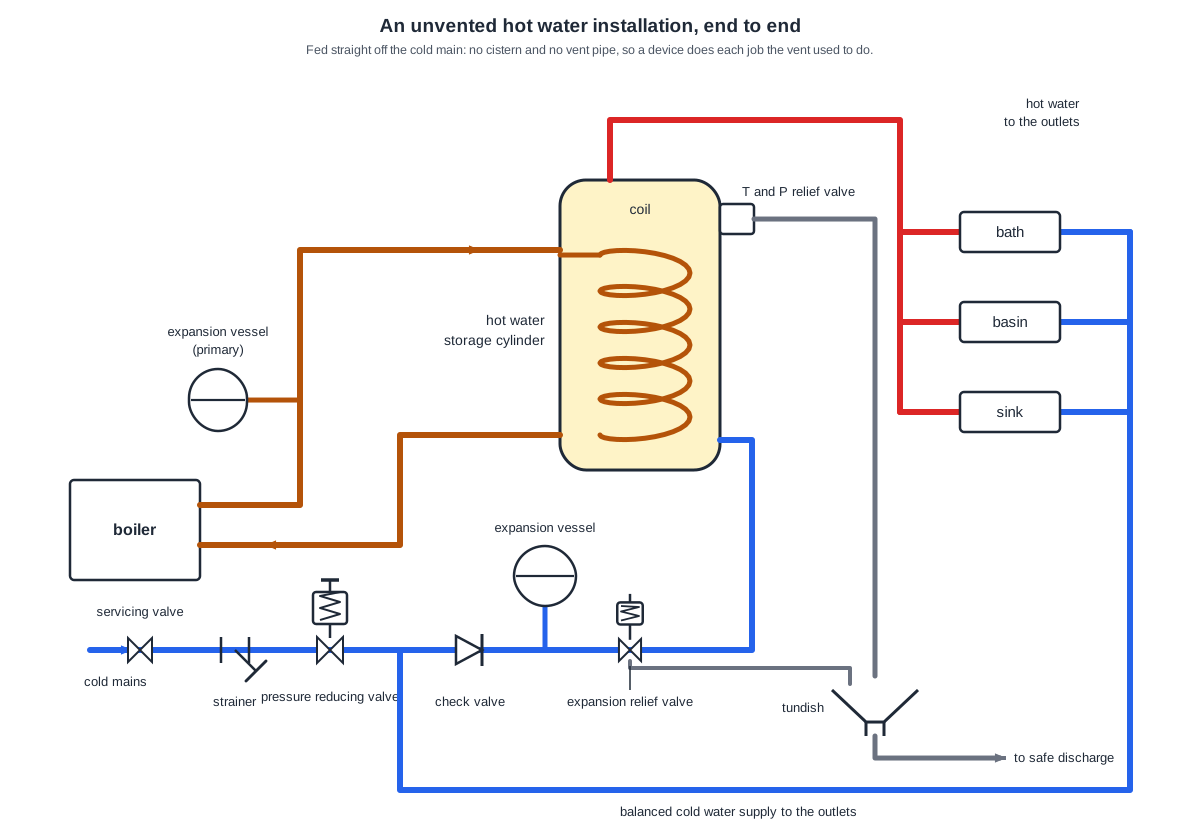
Trace the two circuits. The boiler water stays inside the coil, so the stored water is heated indirectly. The storage side is fed straight from the cold mains through the inlet control group, with relief valves and a tundish to safe discharge rather than a vent pipe, so it is unvented; and the primary has an expansion vessel instead of a feed and expansion cistern.
Going further: the lessons behind this article
This article is the public answer. Unit 332 of the Level 3 course takes the same ground to the depth the exam and the synoptic assignment ask for, in 2 lessons:
- Secondary circulation: pump position, balancing and controls
- Long dead legs: the limits, trace heating and upgrades
- Hot water systems: the Unit 332 guide — every article on this unit in one place
- All PlumbMate articles — Level 1, 2 and 3
- The Level 3 course — the whole 8202-35 Diploma