A facilities manager rings: the backflow valve on the incoming main has been dripping from a port on its underside for a week, and someone has suggested capping it. Do not. That port is the valve doing its job.
The short answer
Where an air gap cannot be arranged, a mechanical backflow prevention device puts a physical barrier in the pipe. They wear, they can be fitted backwards, they need access and testing, and none of them reaches fluid category 5.
Read the device table as a ladder. One check valve is category 2. Two in series is 3. The RPZ with its relief valve is 4. And anything with an atmospheric vent is X for back pressure, like the tap gaps.
| Type | Device | Back pressure | Back siphonage |
|---|---|---|---|
| BA | Verifiable backflow preventer with reduced pressure zone (RPZ valve) | 4 | 4 |
| CA | Non-verifiable disconnector, zones differing by not more than 10% | 3 | 3 |
| DB | Pipe interrupter with atmospheric vent and moving element | X | 4 |
| DC | Pipe interrupter with permanent atmospheric vent | X | 5 |
| EA / EB | Verifiable / non-verifiable single check valve | 2 | 2 |
| EC / ED | Verifiable / non-verifiable double check valve | 3 | 3 |
| HA | Hose union backflow preventer (existing house taps only) | 2 | 3 |
| HUK1 | Hose union tap with built-in double check valve (replacement only) | 3 | 3 |
| HC | Diverter with automatic return (integral to bath/shower mixers) | X | 3 |
Verifiable means the device has test points so faults can be diagnosed in place: one on a type EA, two on a type EC, three on an RPZ.
The rules that apply to all of them
From the guidance to Schedule 2 paragraph 15, echoed by BS 8000-15 clause 3.7.6:
- Readily accessible for inspection, maintenance and renewal.
- Not outside the premises, except types HA and HUK1, which are made for outside taps.
- Not buried, and if vented, verifiable or fitted with a relief outlet, not in chambers below ground or anywhere liable to flooding. A flooded chamber puts contaminated water at the vent.
- For category 4 devices, a line strainer immediately upstream, with servicing valves upstream of the strainer and downstream of the device.
- For an RPZ or similar, a relief outlet ending in a type AA air gap not less than 300 mm above floor level.
- Check valves closing sharply set up hydraulic impulses; where water hammer is a problem, fit shock arrestors.
So a double check valve in a chamber under a path is the right device in the wrong place. It fails the Regulations before it fails the pipe.
Type DC: no moving parts, category 5 one way
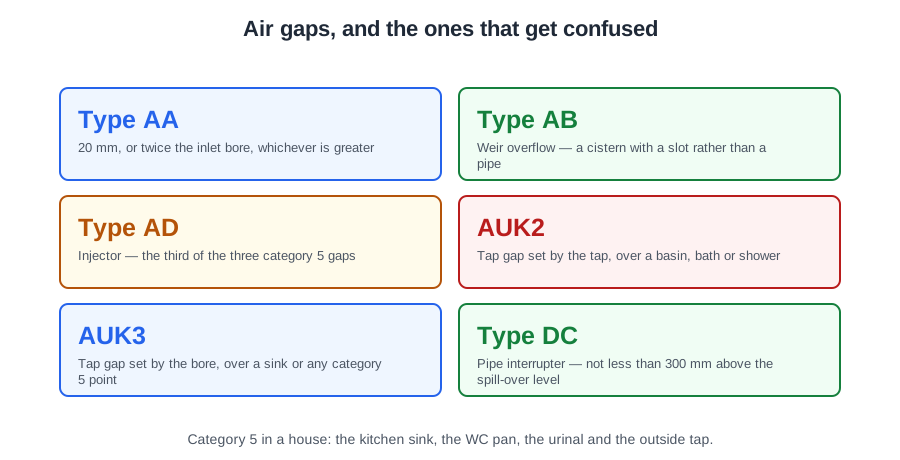
A pressure flushing valve on a WC or urinal has no cistern, so no interposed air gap — and a urinal is category 5. The type DC pipe interrupter with permanent atmospheric vent is a brass fitting with no moving parts and air apertures that are permanently open. In normal flow water passes straight through; if back siphonage starts, air is drawn in through the apertures and the siphon breaks before any water climbs back.
Being open to air, it gives no back pressure protection. For back siphonage it is rated to category 5.
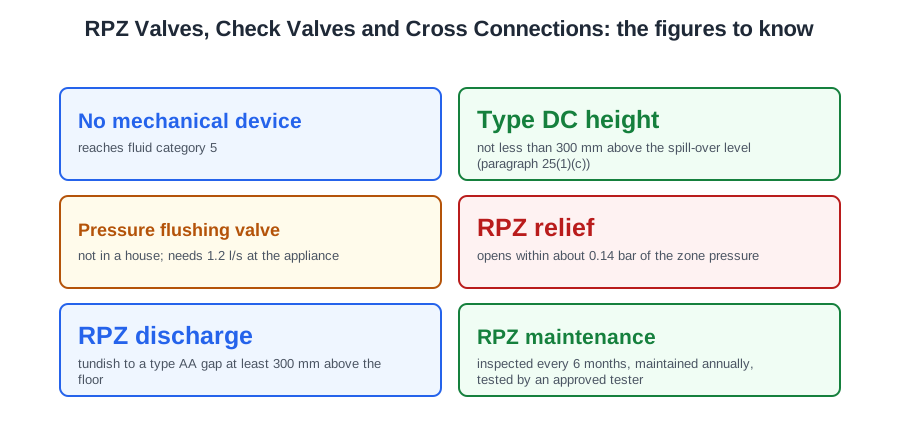
Schedule 2 paragraph 25(1)(c) requires the interrupter not less than 300 mm above the spill-over level of the pan or urinal. (Older guidance gave 150 mm above a urinal sparge outlet; if the question wants the Regulation figure, give 300.) The conditions follow from how it works: fitted vertically, discharging downwards; no tap, valve or flow restrictor downstream, because a closed valve after it would put pressure behind it; no reduction in pipe size downstream; and accessible for replacement.
The same paragraph limits the flushing valve itself: it may not be fitted in a house, and not anywhere that 1.2 litres per second cannot be achieved at the appliance, because a flushing valve needs that flow to clear the pan.
The RPZ valve, and what the drip means
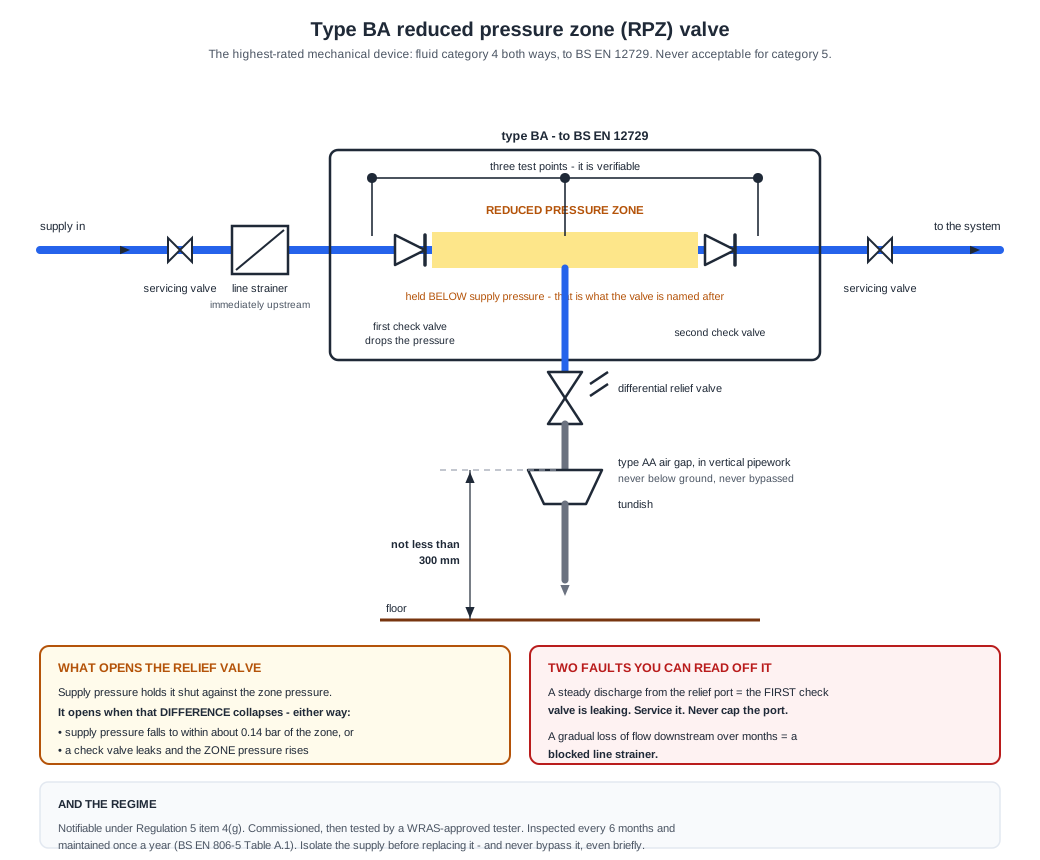
Type BA is the highest rated mechanical device, protecting to category 4 both ways. Inside are two check valves, a differential relief valve between them, and three test points.
The first check valve is spring loaded to drop the pressure, so the middle chamber is a reduced pressure zone held below supply pressure, and supply pressure holds the relief valve shut. If supply pressure falls to within about 0.14 bar of the zone pressure, or a check valve leaks and the zone pressure rises, the relief valve opens and dumps the zone to drain — so contaminated water can never reach the supply side.
That is the facilities manager's drip. A steady discharge from the relief port means the first check valve is leaking. The valve needs servicing, not a cap. (A gradual loss of flow downstream over months is usually a blocked line strainer instead.)
An RPZ is made to BS EN 12729. It needs a line strainer immediately upstream and servicing valves either side. The relief port discharges through a tundish to a type AA air gap at least 300 mm above the floor, in vertical pipework. It is never below ground and never bypassed, even briefly. It is notifiable (Regulation 5, item 4(g)) and must be commissioned and then tested by a WRAS-approved tester; BS EN 806-5 Table A.1 has it inspected every 6 months and maintained once a year.
Its uses are whole site and zone protection, category 4 processes, and permanent connections to large heating systems. It is not acceptable for category 5: rainwater needs an air gap, however good the valve.
Single and double check valves
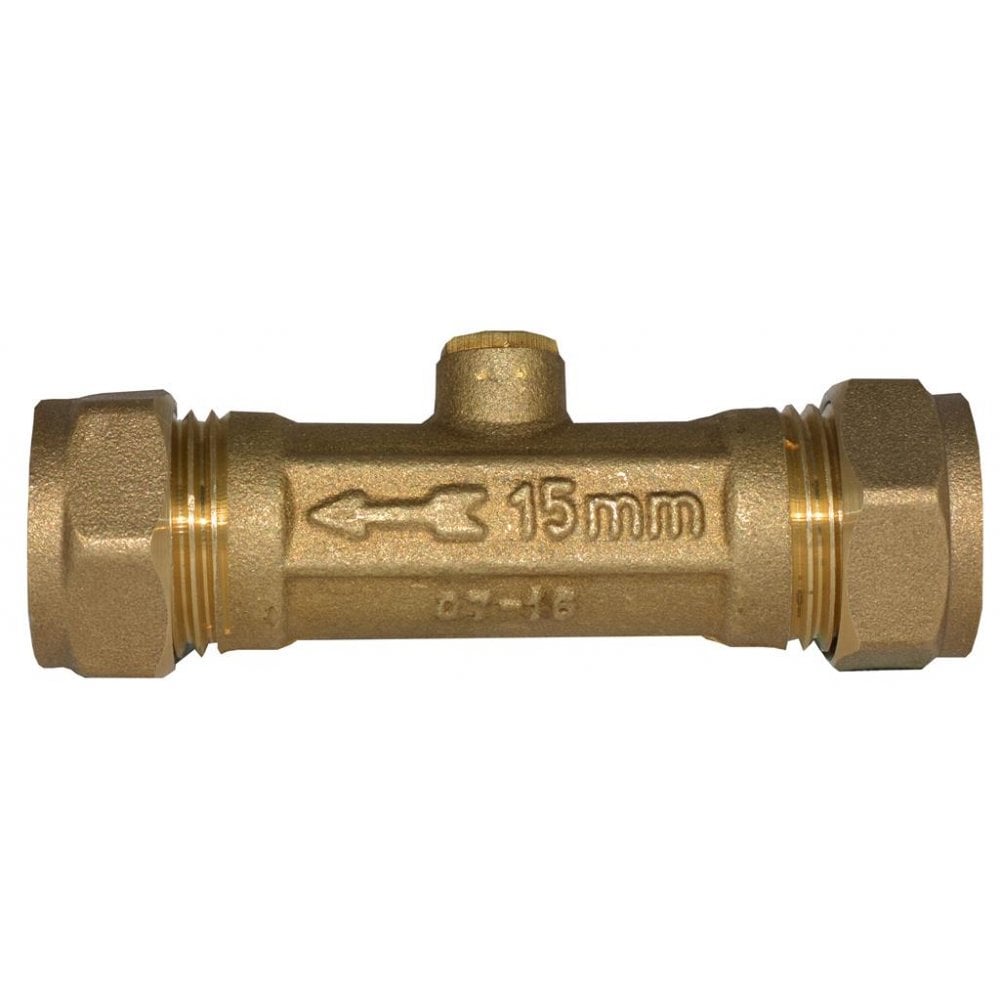
A shower runs hot for a second when the kitchen cold tap is opened. Hot water has crossed into the cold supply through a mixer, because nothing stopped it. The cure is the simplest device there is.
A single check valve is a spring-loaded one-way valve, rated 2 and 2. Type EA has a test nipple and is verifiable; type EB is identical without one. Made of DZR brass to BS 6282-1 or BS EN 13959, suitable to 90 °C. Its uses: both feeds to a single-outlet mixer tap or shower valve, where hot (category 2) could cross into cold; the check valve in the inlet group of an unvented cylinder; the outlet of each pump in a boosted set; rarely used branches; and the mains back-up branch to a rainwater cistern where a dead leg is unavoidable.
Two cautions: on a hot supply, expansion against a closed check valve can overpressure it — and BS EN 806-5 has EB valves replaced every 10 years.
A double check valve is two single check valves in series in one body, rated 3 and 3. Type EC has two test points, type ED none. It is the domestic workhorse, because most of what a house can send back is category 3: a new hose union bib tap with the valve inside the building; a filling loop to a sealed heating system, on the supply side only; submerged inlets to baths and basins; bath and shower mixers with hoses.
In one line: hot crossing into cold, or expansion pushing back, is category 2 and takes a single check valve. Anything a hose, a bath or a heating circuit could send back is category 3 and takes a double. A whole site or a category 4 process takes the RPZ.
Filling loops and outside taps
Schedule 2 paragraph 24 forbids a permanent heating connection without an approved backflow device. House heating water is category 3, so a temporary filling connection through a type EC or ED double check valve is accepted in a house; the withdrawn BS 6700 (clause 5.3.5.5) also allowed it on a non-domestic installation under 40 kW. The valve goes on the supply side of the loop, never the heating side, and the flexible loop is disconnected after use.
Where the connection is to stay, the word "permanent" changes the device:
- Temporary loop, house or under 40 kW — category 3 — EC/ED, removed after use.
- Permanent fill, category 3 system — type CA disconnector. A small RPZ without test points: two check valves with a disconnection chamber that opens to atmosphere when upstream pressure is lost, discharging via a tundish. Zone pressures differ by not more than 10%.
- Permanent fill, commercial system with inhibitor — category 4 — type BA RPZ valve.
Note why: heating primaries in a house are category 3; outside a house they are category 4, and a large system dosed with inhibitor is category 4 whoever owns it.
Outside taps. A new hose union bib tap in a house garden is category 3 and gets a double check valve inside the building, protected from frost. For an existing unprotected tap there are two devices — the only mechanical devices allowed outside:
- Type HA, the hose union backflow preventer, screws onto the tap outlet. Rated 2 and 3. Permitted only, fitted continuously, on an existing hose union tap in a house with no other protection.
- Type HUK1, a replacement tap with two single check valves built in and a test point. Rated 3 and 3. Permitted only as a replacement for an existing unprotected tap.
And a porous or permeable irrigation hose lying in soil is category 4, beyond a double check valve. It takes a type DB pipe interrupter with atmospheric vent and moving element, in addition to the double check valve on the tap.
Cross connections: the offence is the connection
A plumber runs a pipe from the supply to a rainwater tank, fits a gate valve, leaves it shut, and tells the client to open it only in a drought. Nothing has flowed. It is already an offence.
Schedule 2 paragraph 14(2): no supply pipe, distributing pipe or pump delivery pipe drawing from them shall convey, or be connected so that it can convey, non-wholesome water. Being connected is enough. The closed valve counts. So does a hose from an outside tap dropped into the tank for an afternoon.
A later amendment added "unless a device for preventing backflow is installed in accordance with paragraph 15" — which relaxes the ban only as far as paragraph 15 allows, and paragraph 15 says the device must suit the category. Rainwater and greywater are category 5, so the only qualifying devices are the type AA, AB and AD air gaps. No RPZ qualifies. No double check valve qualifies. And treatment does not change the fluid category — filtered, UV-treated rainwater is still category 5.
So the systems are designed apart. A rainwater or greywater system has its own collection pipework, storage, pump and dedicated distributing pipework, and nothing else. The mains back-up enters the cistern through a type AA or AB air gap at or upstream of the point where the two waters meet (BS 8515 clause 4.7.2). The water meets; the pipes never join.
Identification, and the test that proves it
Paragraph 14(1) requires non-wholesome fittings to be clearly identified so as to be easily distinguished from any supply or distributing pipe. The test is comparative: not "is this pipe labelled?" but "could someone standing here mistake it for the wholesome supply?" A green band on a green pipe fails that test.
Colour banding is to BS 1710: the basic colour for water is green, with code bands between the green saying which water — drinking water is green, auxiliary blue, green; reclaimed water is green, black, green. BS 8525-1 says greywater pipework, including buried back-up pipes, must not be blue, because blue is the potable colour underground. BS 8515 Annex C wants permanent labels at intervals of not more than 0.5 m, at least 100 mm long, green, with RAINWATER in black letters at least 5 mm high. Taps on non-wholesome water are labelled "Not drinking water" in all premises except a house.
And before handover, BS 8525-1 clause 5.5 requires an air test of the wastewater connections and a dye test of the greywater distribution pipework to prove no cross connection with any potable supply. The dye goes into the non-wholesome system before the final connection to the mains back-up, and every wholesome outlet in the building is run and checked clear. If any tap runs coloured, the job stops until it is found.
🔢 The numbers worth memorising
- No mechanical device
- reaches fluid category 5
- Type DC height
- not less than 300 mm above the spill-over level (paragraph 25(1)(c))
- Pressure flushing valve
- not in a house; needs 1.2 l/s at the appliance
- RPZ relief
- opens within about 0.14 bar of the zone pressure
- RPZ discharge
- tundish to a type AA gap at least 300 mm above the floor
- RPZ maintenance
- inspected every 6 months, maintained annually, tested by an approved tester
- EB check valves
- replaced every 10 years (BS EN 806-5)
- Temporary filling loop
- EC/ED in a house or under 40 kW, on the supply side, removed after use
- Reclaimed water banding
- green, black, green — drinking water is green, blue, green (BS 1710)
- Rainwater labels
- every 0.5 m, at least 100 mm long, 5 mm letters (BS 8515 Annex C)
⚠️ Where people go wrong
- Capping a dripping RPZ relief port. The drip is the valve working — a steady discharge means the first check valve is leaking.
- Fitting a check valve in a chamber below ground. Mechanical devices are accessible, inside, not buried and not in a floodable chamber.
- Using a double check valve on a permanent heating connection. Permanent means CA at category 3, BA at category 4.
- Assuming filtering or UV upgrades rainwater. Treatment does not change the fluid category — it is still 5.
- Thinking a closed valve is not a connection. Paragraph 14(2) catches anything connected so that it can convey.
- Fitting a type DC and then putting a valve downstream of it. A closed valve after an interrupter puts pressure behind it.
- Using blue for buried greywater pipework. Blue is the potable colour underground.
📝 10-Question Self-Test
Straight from the Level 3 course question bank. Click an option to see whether you got it right — the explanation appears instantly, and there is nothing to submit.
Two check valves in series with a relief valve on the chamber between them, discharging through a tundish: a reduced pressure zone valve. Lose the pressure in that middle chamber and the relief valve dumps it to drain, so the device is rated for fluid category 4, where a commercial heating system with inhibitor sits. A “garden tap on a private house” only needs a double check valve.
A type HUK1 is a hose union tap with a double check valve built in, accepted for replacing an existing hose union bib tap.
An RPZ valve is a type BA device made and tested to BS EN 12729; its flow, pressure loss and relief characteristics are published by the manufacturer.
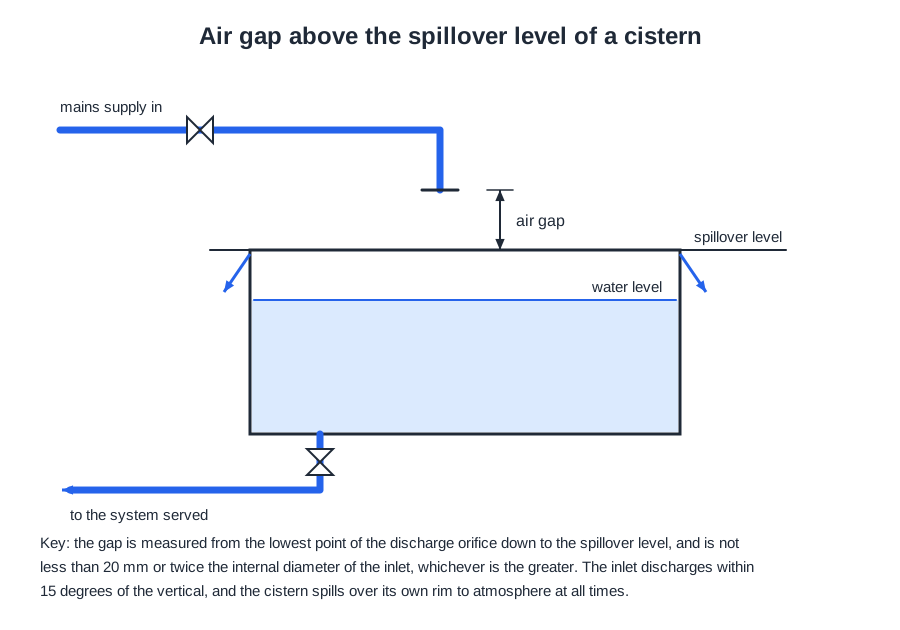
An unrestricted air gap: the inlet discharges into open air above the spillover level of a cistern that spills over its own rim, so nothing can be drawn back into the main. Recycled water is fluid category 5, and Schedule 2 paragraph 15(3) makes the device match the highest category downstream. At that category only an air gap will do; a washing machine supply is handled by check valves.
The exception is in Schedule 2 paragraph 14(2): pipework carrying non-wholesome water may be connected to the wholesome supply only where a device for preventing backflow is installed in accordance with paragraph 15, because the device stops the non-wholesome water ever reaching the supply. Clear identification of the non-wholesome pipework is demanded separately by paragraph 14(1), but it only warns people; it cannot prevent backflow.
An RPZ valve is a tested and approved assembly; if it will not reach its quoted figures the manufacturer must be consulted.
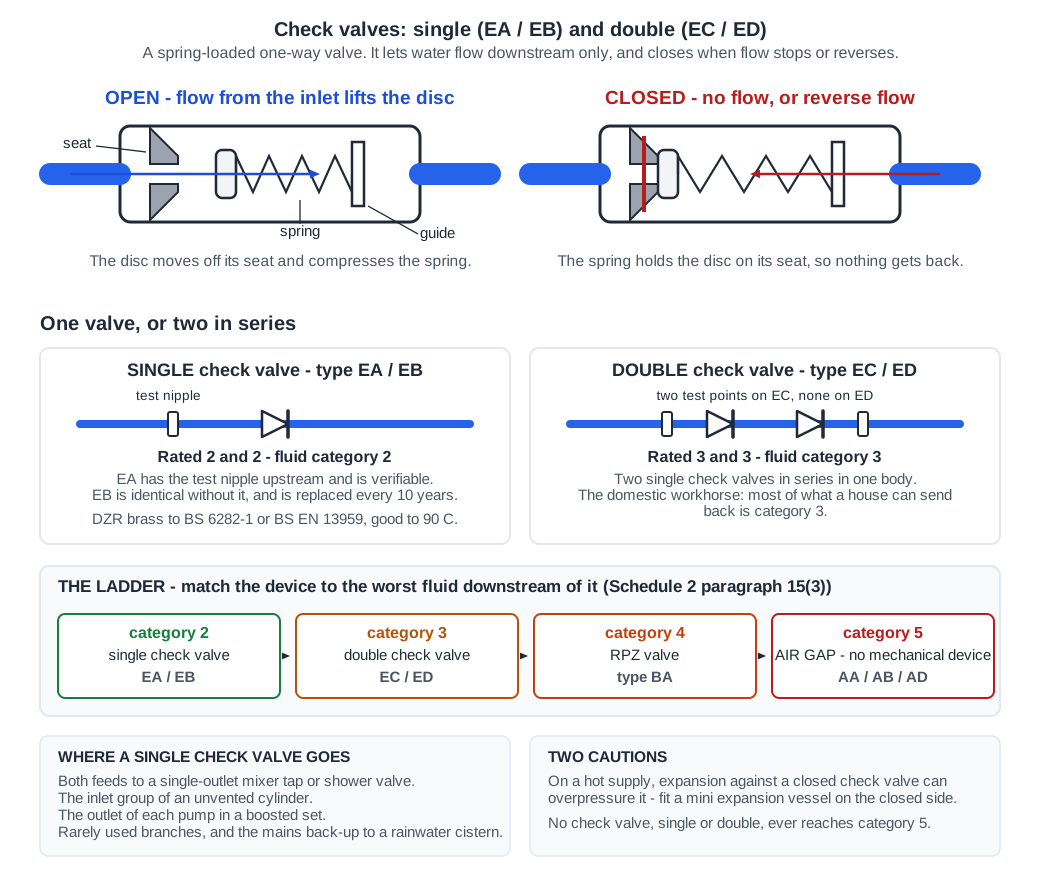
A single spring loaded disc lifts only under flow from the inlet and reseats against any reverse flow, so it holds back water pushed the wrong way by pressure. On an unvented hot water system that is what keeps expanded hot water out of the cold main. The supply to a “garden tap” will not do: a hose reaches worse contamination, so it needs two check valves in series.
A mixer with a single outlet lets hot and cold meet inside the body, so each supply needs a single check valve against category 2 cross-flow (hot water is category 2 by the change of temperature): BS EN 806-2 clause 9.5 requires check valves on the hot and cold feed connections where a common shut-off device is incorporated in the outlet nozzle, backed by BS 8558 4.3.7.3 c). A bi-flow mixer keeps the two waterways separate right to the spout, so that requirement is not triggered; BS 8558 4.3.23.3 mentions bi-flow fittings only to exempt them from the recommendation that mixers be fed at comparable pressures. Pillar and bib taps carry one supply only.
BS 1710 gives water the basic identification colour green, and adds an auxiliary blue code band to show the water is fresh, so the banding reads green, blue, green. Blue is never the base colour for a water pipe: in BS 1710 light blue is the basic colour for compressed air, which is why blue either side of green is wrong.
And from Module 6: a temporary connection is still a connection.
Going further: the lessons behind this article
This article is the public answer. Unit 331 of the Level 3 course takes the same ground to the depth the exam and the synoptic assignment ask for, in 5 lessons:
- Mechanical backflow devices: type DC, installation rules and ratings
- RPZ valves and single and double check valves
- Filling loops and outside taps: protecting heating and garden connections
- Cross connections: keeping rainwater and greywater apart from the mains
- Identifying non-wholesome pipework and testing for cross connections
- Cold water systems: the Unit 331 guide — every article on this unit in one place
- All PlumbMate articles — Level 1, 2 and 3
- The Level 3 course — the whole 8202-35 Diploma